A New Day at IPANM


information & issues

Welcome to IPANM’s Information & Issues webpage!

IPANM is not afraid to take strong stances on many current issues threatening our industry. We have to! Seemingly minor changes to regulations or rules can have a major impact on the financial solvency of our small oil & gas producers. While we will never compromise on our duties to protect human health, fresh water and the environment in our daily activities, we will fight unnecessary government overreach when new regulatory proposals are not based on sound science and do little to protect the environment.

Below, we’ve identified serious issues facing our producers. Please click on the corresponding button to learn more about each issue and IPANM’s stance on the issue. (Note: Some of this content may be restricted for members only. To access this exclusive content, please join our association!)

RECENT NEWS: All Issues

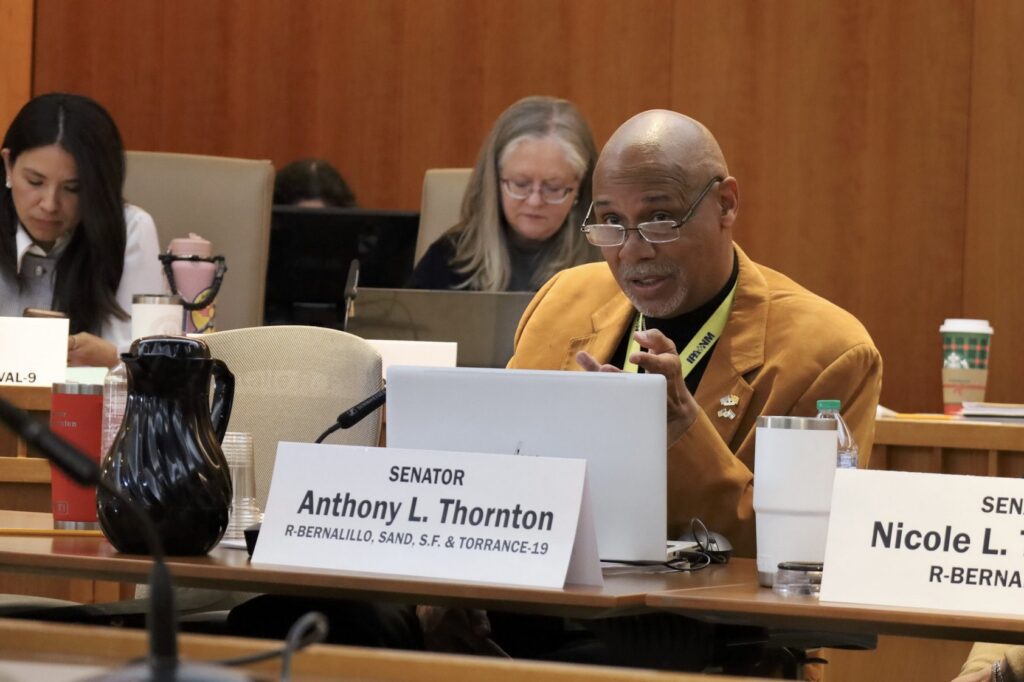
Sen. Ant Thornton (R) District 19 (Jan. 23, 2026) -   Public debates often stall not because people reject evidence, but
ABQ Journal (Jan. 8, 2026) - With less than two weeks until the start of a 30-day legislative session, a
IPANM (Dec. 19, 2025) - After the urging of IPANM and many other industry trade groups, the Trump administration has
Politico (Nov. 26, 2025) - EPA finalized a rule Wednesday that pushes back implementation of the Biden administration’s landmark crackdown on
WEA, NMOGA, & IPANM in Santa Fe New Mexican (Nov. 21, 2025) - Are we facing an energy emergency? The
Santa Fe New Mexican (Nov. 14, 2025) - A persistent effort to change New Mexico’s water regulations to allow for
IPANM (Nov. 6, 2025) - The nomination of former U.S. Representative Steve Pearce (NM CD-02) will benefit all New Mexicans,
Santa Fe New Mexican (Nov. 2, 2025) - by Rep. Mark Murphy (D-59 Roswell) Opinion Editorial - The state of New
By George Sharpe Oct 26, 2025 In 2000, Merrion Oil & Gas acquired 20 low producing wells from ConocoPhillips. Today,
ABQJournal (Oct. 21, 2025) — Gov. Michelle Lujan Grisham’s trade mission to Japan this year is showing signs of paying

This content is for members only.

Please login here! If you have any questions about your membership, please email megan@ipanm.org.

ABQ Journal (Jan. 8, 2026) – With less than two weeks until the start of a 30-day legislative session, a budget battle could be brewing at the Roundhouse.

A key New Mexico legislative panel rolled out an $11.1 billion budget plan Wednesday that features significantly less proposed spending growth than a plan unveiled last month by Gov. Michelle Lujan Grisham.

Specifically, the Legislative Finance Committee’s spending plan would increase year-overyear state spending by about $268 million, or roughly 2.5%. In contrast, the governor’s budget recommendation

calls for spending to increase by about $503 million, or roughly 4.6%, over current levels.

The difference between the dueling spending plans is primarily attributable to higher proposed spending amounts in the governor’s budget in two areas: Health care administrative costs imposed by a new federal budget bill and a universal child care initiative announced in September.

Several legislators have expressed misgivings about the hefty price tag and rollout of the universal child care plan, which made New Mexico the first state in the nation to offer free child care to all families regardless of income levels.

During a Wednesday news conference at the state Capitol, Rep. Nathan Small, D-Las Cruces, said the LFC’s budget plan does not include an additional $160 million to prop up the program for the coming year that was included in the executive plan.

He said lawmakers are keenly focused on addressing affordability issues for New Mexico families, but indicated the Legislature is not fully on board with removing income limits for receiving state-paid child care.

“We have to do that in a responsible way that financially works,” said Small, who is the LFC’s chairman.

See Full Story


IPANM (Dec. 19, 2025) – After the urging of IPANM and many other industry trade groups, the Trump administration has issued a final rule extending new federal oil & gas bonding increases for an additional year. The move fulfills a promise personally made by acting-BLM secretary Bill Groffy to IPANM Executive Director Jim Winchester earlier this month following IPANM’s plea for quick action to reverse the Biden-era Bonding Rule that went into effect in 2024.

“IPANM members face an unfair and disproportionate impact from bonding increases, and we appreciate that President Trump, Department of the Interior Secretary Doug Burgum, and acting-BLM Secretary Bill Groffy recognized this,” said Jim Winchester, IPANM Executive Director. “As this is step one in fixing this specific rule, we look forward to future action from the BLM to permanently rescind the flawed Biden-era Bonding Rule.”

The extension also formally negates this notice that hundreds of New Mexico-based operators received earlier this fall that indicated payment of a new $500,000 blanket bond was due by June 22, 2026. At the time, IPANM advised members to NOT submit the new bond increase due to future action from the Trump administration.

As cited by IPANM partner trades the Domestic Energy Producers Alliance (DEPA) and the National Stripper Well Association (NSWA), had the new bonding increases moved forward:

  • Nearly 21,000 small oil and gas operators nationwide would face a twenty-fold increase in bonding requirements.
  • Thousands of small producers could be forced to shut down, resulting in the loss of many thousands of jobs.
  • Rural communities would experience reduced tax revenues and strain on essential public services.
  • The U.S. could lose up to:
    • 164,000 barrels of oil per day
    • 1.4 billion cubic feet of natural gas per day
    • 172,000 stripper oil and gas wells
  • Premature well closures could increase public financial exposure if wells are abandoned due to operator insolvency.

IPANM also is involved with a lawsuit filed by a group of industry trades against the provisions of the Biden-era Bonding Rule. That lawsuit is on hold as the Trump administration moves forward to formally rescind the existing rule. The Trump BLM has indicated that the formal rescinding of the Biden-era Bonding Rule will occur in 2026.

IPANM also remains heavily engaged post-hearing rulemaking regarding a new proposed New Mexico Oil Conservation Division bonding rule covering wells, and a new proposed New Mexico State Land Office bonding increase per lease. Those proposals threaten to disproportionately increase bonding levels on New Mexico state lands

Politico (Nov. 26, 2025) – EPA finalized a rule Wednesday that pushes back implementation of the Biden administration’s landmark crackdown on methane emissions from the oil and gas sector.

The regulation, Reg. 2060-AW61, gives oil and gas producers more time to comply with requirements to add methane emissions monitoring and control devices to their operations.

“The previous administration used oil and gas standards as a weapon to shut down development and manufacturing in the United States,” EPA Administrator Lee Zeldin said in a statement. “By finalizing compliance extensions, EPA is ensuring unrealistic regulations do not prevent America from unleashing energy dominance.”

The agency estimates that delaying various aspects of the Biden administration’s rule will save $750 million over 11 years.

The delay, which EPA issued as an interim final rule in July, gives states an extra 10 months, until January 2027, to submit plans on how they would require oil and gas producers to cut down on methane emissions. Those plans had originally been due on March 9, 2026.

It also pushes back a program that allowed approved third parties, such as environmental groups, to seek certification to provide the EPA with data on potential large leaks and releases known as “super emitters,” until January 2027.

EPA also delayed several additional deadlines not addressed by the interim final rule in July that it said had drawn public comments. The agency is giving operators an additional 180 days to meet net heating value continuous monitoring requirements and an additional 360 days to submit annual reports that were originally due by August 2025.

The delay comes as the Trump EPA works to unwind the bedrock “endangerment finding” that underpins a broad range of climate regulations, including the methane rule.

The methane rule finalized in 2023, Reg. 2060-AV16, was a centerpiece of the Biden administration’s climate agenda, alongside a fee on methane emissions that was repealed by Congress earlier this year.

Grace Smith, senior attorney at the Environmental Defense Fund, said in a statement the delay “means millions of Americans will be exposed to dangerous pollution for another year and a half, for no good reason.”

“Delaying the methane standards threatens people’s health and undermines progress by industry leaders,” Smith said. “What’s more, the Trump administration rushed to push through this harmful rule without meaningful transparency or a chance for the public to weigh in.”

EPA issued the delay as an interim final rule in July, allowing it to take effect before a public comment period was held.

The Bureau of Land Management last week pushed back enforcement deadlines for its separate methane waste rule as it works to rewrite that regulation.

WEA, NMOGA, & IPANM in Santa Fe New Mexican (Nov. 21, 2025) – Are we facing an energy emergency? The answer may depend on your income, health risks, or even your age.

Think about family or neighbors who rely on medical equipment that must be plugged in — ventilators, dialysis machines and CPAP devices. The people who depend on them are at serious risk when the power goes out.

The threat is so real that the U.S. Department of Health and Human Services tracks Medicare patients who rely on home medical devices. Nearly 50,000 people in New Mexico — 10% of Medicare recipients — are vulnerable during electric blackouts. That’s the third highest rate in the nation.

Unfortunately, outages are common — caused by bad weather, aging infrastructure, or other strains on the electrical grid. They can happen throughout the day or night and sometimes last for extended periods.

Last April, residents in Northern New Mexico went two days without power. Utilities try to alert communities, but vulnerable people often don’t get the message in time. For them, the energy emergency is not theoretical — it’s personal.

So how did we get here, and what’s the fix?

A major barrier is the difficulty of getting permits approved for projects that would strengthen the grid that supplies power to our communities and neighborhoods. Layers of government and years of environmental review slow the process. Even after that, lawsuits filed by activist groups create more delays.

According to Lawrence Berkeley National Laboratory, only one in five transmission projects planned between 2000 and 2017 were operational by the end of 2022. Stanford University reports that nearly one in three major energy and infrastructure projects face litigation before construction even begins.

It took 17 years to build the SunZia transmission line across New Mexico, now delivering renewable wind power to customers in Arizona and California. The delays were caused by long environmental reviews and lawsuits.

The problem isn’t limited to electricity. The oil and natural gas industry faces similar roadblocks. Nationally, natural gas is used to generate 43% of electricity, 29% in New Mexico, and is currently the most reliable, affordable energy source fueling the grid. Yet, government red tape and legal delays get in the way of contributing more to meet our growing energy demands.

In 2022, a lawsuit challenged drilling permits in New Mexico and Wyoming, claiming potential harm to wildlife as far away as Hawaii and the Arctic. After three years, a federal appeals court in Washington, D.C., finally dismissed the case last summer. These kinds of delays show why reform is necessary and how they create real-life hardships for New Mexicans.

Here’s the good news: Congress has a chance to address these problems through permitting reform.

Lawmakers from both parties are working to streamline permitting for energy projects and place reasonable limits on litigation.

In the U.S. House, a bipartisan group of lawmakers introduced the SPEED Act (Standardizing Permitting and Expediting Economic Development), which updates the National Environmental Policy Act to help agencies to complete reviews more efficiently.

Another bipartisan group, the Problem Solvers Caucus, released a policy framework to support electricity and pipeline projects, with legislation expected soon.

In the Senate, discussions are underway to build on bipartisan proposals introduced last session.

New Mexico’s leaders can play an important role in the process. Sen. Martin Heinrich, the senior Democrat on the Senate Energy and Natural Resources Committee, will help shape any permitting reform bill. Members of New Mexico’s House delegation will also sit on committees central to this effort.

In this era of political division, bipartisan support is necessary for our country and state to continue to move forward. For thousands of New Mexicans vulnerable to energy emergencies, it’s a step toward greater security and peace of mind.

Melissa Simpson is president of Western Energy Alliance. Missi Currier is president and CEO of the New Mexico Oil and Gas Association. Jim Winchester is executive director of the Independent Petroleum Association of New Mexico.

Santa Fe New Mexican (Nov. 14, 2025) – A persistent effort to change New Mexico’s water regulations to allow for the reuse and discharge of treated fracking wastewater was dealt a blow Thursday.

Toward the end of an hourslong — and at times rowdy — meeting, the Water Quality Control Commission voted to vacate its July decision to advance a petition to allow some reuse and discharge of treated wastewater from the hydraulic fracturing process to extract oil and gas. The substance is often called produced water.

The reversal came after the independent commission considered allegations from environmental advocacy groups that the Governor’s Office had pressured commissioners to support the oil and gas-backed change. The allegations stemmed largely from The New Mexican’s reporting on emails between Governor’s Office staff and a handful of Cabinet secretaries with seats on the commission.

Security guard Joel Nava asks Robb Hirsch with the New Mexico Healthy Soil Working Group to leave the Capitol during a Water Quality Control Commission meeting Thursday.

Gov. Michelle Lujan Grisham and others — including those in the oil and gas industry — have cast the proposed produced water reuse rule as a necessary step in securing the state’s water future by freeing up other, dwindling, sources of freshwater, especially as companies plan more water-guzzling data centers to support increasing artificial intelligence workloads.

Thursday’s commission meeting at the state Capitol in Santa Fe kicked off with a chorus of boos from a crowd of dozens of people who overwhelmingly opposed the fracking wastewater reuse rule. Commission Chair Bruce Thomson proposed eliminating an opportunity for members of the public to give comments, saying there would be “plenty of opportunities” for public comment on the proposed rule down the road.

“What is this, Russia that we’re living in?” one man yelled, while a woman shouted, “the fix is in.”

Reversal of a reversal

The Water, Access, Treatment and Reuse Alliance — or WATR Alliance — which has ties to the oil and gas industry, put forward the petition seeking the rule change just weeks after the Water Quality Control Commission, which falls under the oversight of the New Mexico Environment Department, approved regulations prohibiting the discharge of fracking wastewater into the state’s waterways and groundwater outside an oil field.

Michael Sweringen speaks to the audience at the state Capitol during a Water Quality Control Commission meeting Thursday. Members of the public and representatives from environmental groups had lined up to voice complaints about transparency and conflicts of interest concerning a case on rules for produced water.

The commission’s vote in May came after a proceeding that lasted more than a year and included expert testimony and scientific research from multiple sides of the issue.

The commission voted to allow some pilot projects for reuse of produced water for industrial purposes, but it held that “insufficient evidence exists at this time to ensure that discharges of untreated or treated produced water are protective of human health or the environment.”

In July, however, the commission voted to set a hearing to consider the WATR Alliance’s petition.

The regulatory case has brought into relief the stark lines between various environmental advocates and Lujan Grisham, along with members of her Cabinet, such as Environment Secretary James Kenney.

Michael Coleman, a spokesman for the governor, wrote in an email Thursday it was “disappointing” the commission had reversed its decision to hold a hearing on the petition “prior to considering extensive water reuse research conducted in recent years.”

But, he added, the Lujan Grisham administration “will continue to work with stakeholders to implement the 50-Year Water Action Plan. The governor is focused on adopting comprehensive, science-based water reuse rules that are legally required under the Produced Water Act and crucial to protecting and preserving our freshwater resources for generations.”

‘Taint of collusion’

Thomson told members of the public they could give comments Thursday, but he prohibited comments directly related to the produced water reuse rule — a directive flouted by many who took their turn to speak.

Amid hours of public comments, Capitol security guards approached several speakers, asking them to leave after Thomson had interrupted them or cut off their microphone because they were commenting on details of the case.

Many of those who spoke against the rulemaking referred to a September report by The New Mexican concerning emails between Governor’s Office staff and Cabinet secretaries, in which Kenney instructed other department heads to fill their seats on the commission to hear the WATR Alliance’s petition.

The emails indicated Kenney and Governor’s Office staff had discussed the petition with other Cabinet heads in closed-door meetings, and one staffer encouraged them to help get the reuse rule “over the finished line,” according to an email.

Lisa Parlano of Albuquerque said Thursday, “This instruction strikes at the core of neutrality.”

She added, “When decision-makers are told in advance what outcome to deliver, they cease to be adjudicators and become instruments of influence that violate not only the [Water Quality Control Commission] rules, but the basic moral architecture of justice.”

Another woman from Albuquerque pointed to “the taint of collusion and corruption” between the Governor’s Office and members of the commission.

New Mexico Water Quality Control Commissioners Krista McWilliams, Randy Bayliss and William Brancard listen as members of the public and representatives from environmental groups voice complaints.

“The behavior of this board in meeting behind the scenes to thwart the will of the citizens and the voice and spirit of our air, land and water is beyond disappointing,” she said.

Lujan Grisham has disputed the allegations of undue influence on commissioners, with her spokesperson arguing the emails did not amount to violations of any rules or the Open Meetings Act.

The Governor’s Office did not address the allegations Thursday, but pointed to Lujan Grisham’s support of the reuse of treated fracking wastewater as a long-standing position.

At least one man Thursday broke with the room and urged commissioners to look beyond the state’s capital city for comments on the reuse rule.

Matthew Gonzales, the Southwest executive director of the energy advocacy group Consumer Energy Alliance, told the commission “this whole chorus in Santa Fe always saying ‘no’ is killing our opportunities.”

“I’m going to tell you that I travel around the state, and there are a lot of folks in a lot of communities, including mine in Colfax County, which is two and a half hours removed from here, and people want to have this discussion,” Gonzales said. “They want to look at the science. They want to understand what opportunities exist for New Mexico.”

‘Appearance of impropriety’

Commissioner William Brancard moved to vacate the commission’s July vote to advance the reuse rule petition, citing both the lack of involvement by Environment Department staff and experts in the proceeding as well as “the appearance of impropriety” in the case. The motion passed on a vote of 7-4, with one abstention.

With the reuse rulemaking petition no longer before the commission, environmental groups celebrated the vote Thursday as a way of “wiping the slate clean,” as a statement from the Western Environmental Law Center said.

“The commission made the right call by shutting down the oil industry’s push to dump toxic drilling waste into our rivers and onto our land,” said Colin Cox, an attorney for the Center for Biological Diversity. “Every New Mexican can be relieved knowing that commissioners stood their ground and didn’t cave to the heavy political pressure coming directly from the almighty fossil fuel industry and the Governor’s Office.”

Mariel Nanasi, executive director of the Santa Fe-based New Energy Economy, called the commission’s July vote “tainted,” saying in a statement it was “the product of bias, undue influence, and a predetermined outcome.”

She added, “New Mexicans made themselves heard — and today, the Water Quality Control Commission listened.”

This story has been amended to reflect the following correction. A previous version of this story misstated the status of the reuse rule petition, which is no longer before the Water Quality Control Commission.

State Commission Folds Under Pressure From Enviros


IPANM (Nov. 6, 2025) – The nomination of former U.S. Representative Steve Pearce (NM CD-02) will benefit all New Mexicans, as the Trump Administration continues to open up valuable federal lands for safe and responsible oil & gas development.  IPANM Executive Director Jim Winchester offers the following comment on Pearce’s nomination:

“At time when New Mexico state policymakers and regulators are pushing through a half-dozen new, anti-oil & gas administrative regulations to further stifle oil & gas development on state lands, IPANM members welcome Steve Pearce’s strong experience and leadership that will encourage growth for the industry on the state’s federal lands.

“Just this week, a half-dozen small oil & gas business owners testified in state rulemaking that they are purposefully leaving state lands in New Mexico to either work on federal lands or work in other states altogether citing an unfriendly and unworkable state business climate.

“In stark contrast, the Trump administration’s selection Steve Pearce will further bring pragmatism and meaningful reforms to federal regulations that highlight how safe and responsible oil & gas production leads to human flourishing in all walks of life in New Mexico and the world.”

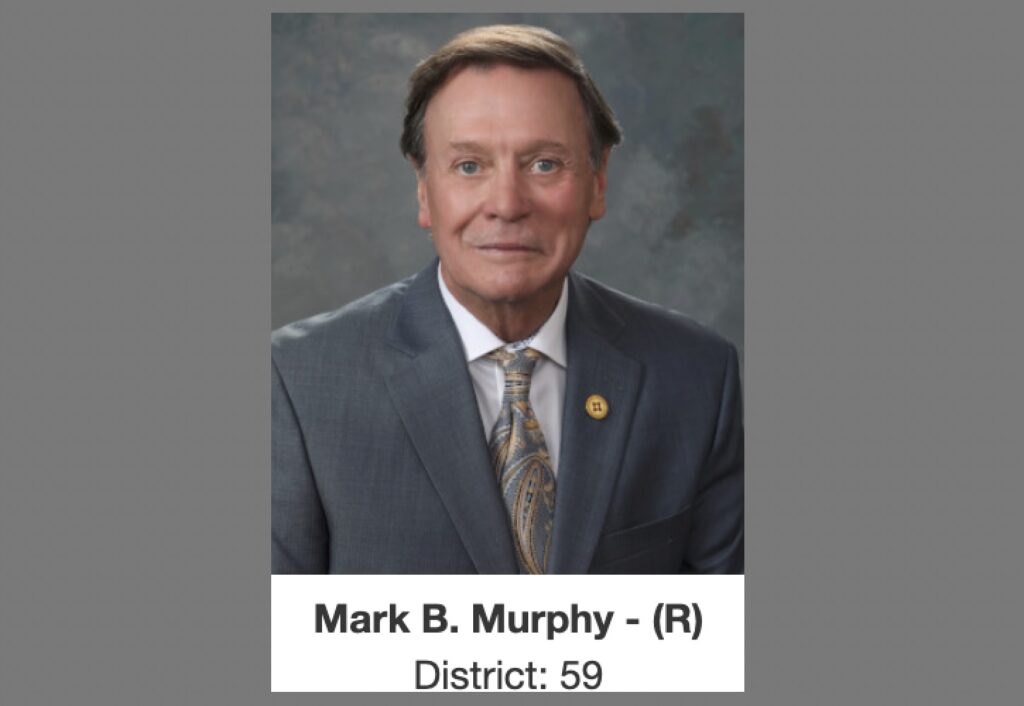
Santa Fe New Mexican (Nov. 2, 2025) – by Rep. Mark Murphy (D-59 Roswell)

Opinion Editorial – The state of New Mexico is sitting on tens of millions of dollars meant to clean up orphaned oil and gas wells. Instead of using those funds to fix the problem, state regulators are pointing fingers at the very industry already doing nearly all the work — and paying the bill.

Here’s the reality: When an oil or gas well reaches the end of its life, it’s the producer’s responsibility to plug it and restore the surrounding land. In New Mexico, companies do exactly that for roughly 99% of all wells. Only a small fraction becs ome “orphaned” — and that’s where the state steps in, using money from the Conservation Tax.

A portion of that tax goes into the Oil and Gas Reclamation Fund, created specifically to plug and reclaim orphaned wells. The Oil Conservation Division is responsible for using those funds efficiently and getting the work done. But that’s not happening.

As of November 2024, the Reclamation Fund had swelled to over $66 million from the Conservation Tax and federal grants. That’s more than enough to address the state’s small backlog of orphaned wells. Yet instead of using the money, OCD has allowed it to sit idle — trapped in red tape and mismanagement.

Procurement rules have limited the number of companies that can bid on reclamation projects, leaving only a few to handle the work. Other qualified contractors have been shut out for years. The result? Hundreds of orphaned wells sit untouched while the fund meant to fix the problem gathers dust.

Now, OCD wants to “solve” this self-inflicted problem by raising financial assurance requirements — the bond companies must post to guarantee they can plug their wells. Every producer already maintains financial assurance and pays the Conservation Tax. Increasing those requirements would hit small producers the hardest, making it harder — and in some cases impossible — for them to stay in business. And when small producers go out of business, what happens? More orphaned wells.

We’ve seen this before. In Colorado, when regulators hiked bonding requirements, more than 2,000 wells were added to the abandoned well list because small companies couldn’t afford the new rules. The result was less production, lost state revenue and more cleanup costs for taxpayers. That’s exactly the wrong direction for New Mexico.

During the past two legislative sessions, lawmakers had a chance to fix this. House Bill 403 — a commonsense, pro-environment measure — would have redirected a larger share of the Conservation Tax to the Reclamation Fund, ensuring the industry’s own tax dollars were fully dedicated to the cleanup work they were meant for. Yet the Legislature rejected it — twice.

Make no mistake. This isn’t a funding problem. The oil and gas industry is already footing the bill through the Conservation Tax and is successfully plugging nearly every well in the state. The problem is the state refuses to use the money it already has.

Instead of piling more financial burdens on small producers, New Mexico’s regulators should do what they’ve been funded to do — clean up the few remaining wells and stop pretending the industry isn’t doing its part.

When government hoards money instead of solving problems, everyone loses. Especially the small producers who keep New Mexico’s economy — and its energy future — alive.

Rep. Mark Murphy, a Republican, represents District 59. He is an oil and gas producer from Roswell.

By George Sharpe
Oct 26, 2025

In 2000, Merrion Oil & Gas acquired 20 low producing wells from ConocoPhillips. Today, those wells have generated 25 years of jobs, royalties and tax revenue. However, under a new bonding rule being considered in the state, those wells would have been plugged and lost forever.

New Mexico is considering implementing a new rule dramatically increasing the bonding requirements for oil and gas wells. In particular, marginal wells will each require a separate $150,000 bond. Further, if more than 15% of a company’s well-count is considered marginal, then 100% of the wells operated by that company will require individual $150,000 bonds. Finally, the rule will make it all but impossible for a larger company to sell lower-producing wells to small, independent operators, who can squeeze many years of additional profits from those wells.

This rule is unnecessary and will cost the state in jobs, royalties and taxes. Most operators are reputable, plugging their uneconomic wells on an ongoing basis. Existing rules already address the bad actors who let their wells languish. If Merrion Oil & Gas had to comply with this proposed rule, then virtually all of our wells would require the $150,000 bonding at an annual cost of $15,000 per well. However, because many of our wells may not make more than $15,000 per year in profit, they would be uneconomic and would need to be plugged immediately. Even though those wells don’t make much profit, they still support a lot of jobs, from pumpers to compression companies to water haulers and on and on. Further, they still pay royalties and production taxes that will now go away.

With the rule, there will be no more sales of wells from majors to small independents, similar to Merrion’s purchase of those wells from Conoco so many years ago. Conoco would just have had to plug the wells out. But because Merrion can operate at a lower cost point than Conoco, those wells have produced for over twenty five years, supported many, many jobs and paid hundreds of thousands of dollars in royalties and taxes to local landowners and the state. And unless we are forced to plug them now, they will continue to do so for another twenty years.

The biggest issue with the rule is that when you force small operators who are barely getting by to post $150,000 bonds for all of their wells, many won’t be able to afford an immediate cash outlay of that magnitude, leaving them no choice but to walk away and leave their wells to the state to deal with. They certainly won’t be able to sell the wells to someone else. So rather than protecting the state from the potential cost of orphaned wells, this new rule is going to immediately dump hundreds if not thousands of orphaned wells in the state’s lap to plug.

In closing, the proposed rule is unnecessary, will cost the state millions in lost royalties and taxes, will result in the loss of hundreds if not thousands of jobs and will backfire by significantly, increasing the number of orphaned wells for which the state is responsible. But the nongovernmental operators pushing the rule aren’t really concerned about protecting the state’s interest. Their real objective is to continue to make it harder to produce oil and gas in the state of New Mexico. The new rule will certainly accomplish that. Opponents of this misguided approach have until Nov. 7 to speak out.

Born and raised in Farmington, George Sharpe is the investment manager for Merrion Oil & Gas. He coordinates several education initiatives in the local school district and is an advocate for all types of energy.

ABQJournal (Oct. 21, 2025) — Gov. Michelle Lujan Grisham’s trade mission to Japan this year is showing signs of paying off.

The governor on Monday announced an agreement between Fujitsu, a Japanese advanced technology corporation, and New Mexico State University to launch an innovation hub at NMSU next year.

She also touted Japan as a possible market for natural gas produced in New Mexico’s San Juan Basin, though no specific agreements or timelines have been set for that effort.

The new and potential partnerships took center stage during an all-day trade summit attended by Shigeo Yamada, Japan’s ambassador to the United States, and Wyoming Gov. Mark Gordon, among other government officials and business leaders.

Lujan Grisham and Gordon were both part of the same trade mission to Asia in April. They said their two states share a friendly rivalry when it comes to energy and economic issues, but are also willing to work together on regional initiatives.

“I hate to say bipartisan; this is just good business,” Gordon said at one point during a Monday news conference at the state Capitol in Santa Fe.

For her part, Lujan Grisham called New Mexico and Wyoming “energy powerhouses” that could help countries like Japan with their energy needs while reducing its carbon emissions.

“This is a huge opportunity for the western states and the United States in general,” the New Mexico governor said.

The Monday trade summit coincided with the release of a regional report focused on expanding the exportation of natural gas from the Rocky Mountain region.

That report, released by the Western States and Tribal Nations Energy Initiative, was funded in part by New Mexico and identifies two pathways for transporting natural gas to the West Coast, where it can be shipped to Asian markets. One of those routes, the Southwest Pathway, would cross Mexico to the Pacific Ocean, while the other, the Pacific Northwest Pathway, would cut through the state of Washington.

New Mexico was the nation’s third-highest natural gas producing state in 2024, providing about 8% of the nation’s total natural gas withdrawals, according to U.S. Energy Information Administration data.

The state is also the nation’s third-largest energy producing state overall — trailing only Texas and Pennsylvania — and produces about 11 times more total energy than it consumes.

But New Mexico at times has dealt with a glut of natural gas in past years, and Lujan Grisham said it’s possible the state would have to increase its pipeline infrastructure if an export agreement with Japan is ultimately signed.

“As demand grows, we would need to do more infrastructure investment,” the governor told reporters, while adding the state has the current capacity to at least begin such an agreement.

Meanwhile, Yamada, the Japanese ambassador, said Japan’s government has committed to $7 billion in annual purchases of American energy, but acknowledged the Rocky Mountain coalition is one of several options being considered.

“This is a very good detailed introduction of the potential Rocky Mountain gas and we will seriously look into it,” he said, referring to the effort involving New Mexico, Wyoming, Utah, several Colorado counties and two Native American tribes.

As for the innovation hub at NMSU, a memorandum of understanding signed by university President Valerio Ferme and a senior Fujitsu official lays out a four-year timeline for creating a national “testbed” for research and innovation.

Under the agreement, NMSU will establish a facility with reliable power and cooling, work with the state’s two national laboratories and procure servers, while Fujitsu will provide the technical hardware and other services.

The agreement does not contain any state financial incentives, though Lujan Grisham said such investments could be considered in the future depending on how the partnership evolves.