A New Day at IPANM


information & issues

Welcome to IPANM’s Information & Issues webpage!

IPANM is not afraid to take strong stances on many current issues threatening our industry. We have to! Seemingly minor changes to regulations or rules can have a major impact on the financial solvency of our small oil & gas producers. While we will never compromise on our duties to protect human health, fresh water and the environment in our daily activities, we will fight unnecessary government overreach when new regulatory proposals are not based on sound science and do little to protect the environment.

Below, we’ve identified serious issues facing our producers. Please click on the corresponding button to learn more about each issue and IPANM’s stance on the issue. (Note: Some of this content may be restricted for members only. To access this exclusive content, please join our association!)

RECENT NEWS: All Issues

IPANM (October 20, 2025) - IPANM would like to thank Sen. Larry Scott and all of the many state legislators
Industry Plugs Its Wells; Enviros Simply Want To Kill Off Independent Producers Beginning October 20th, the New Mexico Oil Conservation
San Juan Basin Energy Conference (Oct. 16, 2025) - IPANM is proud to be a sponsor at the 2025 San
IPANM & SLO (October 3, 2025) - Prior to the 2025 Legislative Session, the State Land Commissioner threatened to raise
IPANM (Sept. 19, 2025) - Today, IPANM filed all of its witness rebuttal testimony to the Oil Conservation Commission regarding
IPANM (Sept. 15, 2025) IPANM and NMOGA have filed a motion to dismiss the entire WELC Rulemaking Hearing regarding new
IPANM (August 8, 2025) - IPANM filed all of its witness testimony to the Oil Conservation Commission regarding Western Environmental
IPANM (June 25, 2025) – On Tuesday, June 25, 2025, the non-partisan New Mexico Legislative Finance Committee (LFC) released this
By Missi Currier | CEO, New Mexico Oil & Gas Association When it comes to environmental responsibility, New Mexico’s oil
New York Post (June 12, 2025) WASHINGTON — The Environmental Protection Agency (EPA) is proposing the removal of Biden administration greenhouse gas regulations

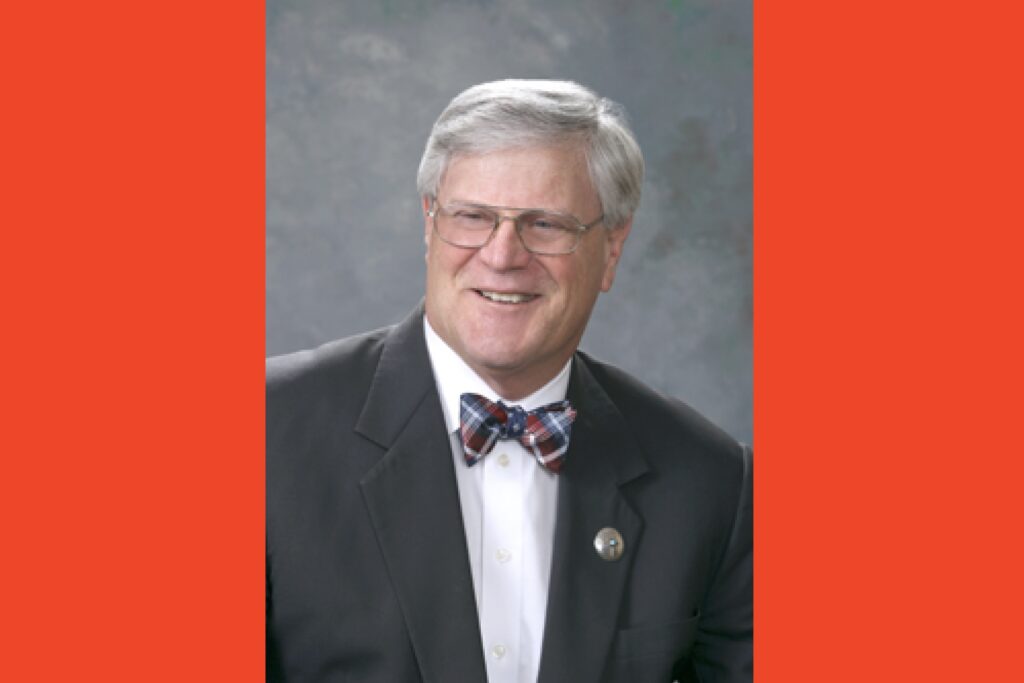
IPANM (October 20, 2025) – IPANM would like to thank Sen. Larry Scott and all of the many state legislators who have submitted oral and written comments AGAINST the WELC Rulemaking for new Financial Assurance Bonding Levels and new OCD Authority to reject private well acquisitions.  The following is Sen. Scott’s public comment in front of the New Mexico Oil Conservation Commission.

Public Comments of State Senator Larry Scott
4:11 P.M. MT
WELC Rulemaking Public Comments Session 1
October 20, 2025

State Senator Larry Scott: Thank you, Madam Examiner, for the opportunity to speak. I am State Senator Larry Scott from District 42. [Name spelling:]L-A-R-R-Y-S-C-O-T-T.

Hearing Officer:  Do you swear and affirm to tell the truth?

State Senator Larry Scott: Yes, Ma’am. I have some fairly significant personal experience with this subject matter. I spent the better part of 40 years as one of the very smallest independent oil and gas producers almost exclusively in southeast New Mexico, in Lee and Eddy counties.

At one point, our little company was managing, I think, close to 60 wells, counting producers and injectors. And I can assure you that all of these calculations that I’m listening to do not take into account having to a set-aside, if you will, $150,000 per marginal well, as effectively unproductive capital. That process would have driven me to bankruptcy in fairly short order.

Now, in full disclosure, I’m no longer an operator. I still maintain interest as a non-owner in a number of properties, but all of my obligations to the state of New Mexico have been fulfilled and plugging obligations and those bonds have been released.

I have serious concerns. I’ve been in the legislature long enough to have participated in the legislation that increased in blanket bonding requirements from $50,000 to 5x of that at $250,000 [in 2018].

I’m not aware that that’s had any significant impact, either plus or minus, on the obligations of the state or any plus or minus impact on small operators in the state.

Now, let’s talk about the reclamation fund. Our oil and gas producers over the years have paid millions of dollars into that reclamation fund that have been misappropriated for use, in many cases, swept when New Mexico was short of funds and not utilized for the intended purpose of overcoming the very few operators that have failed to fulfill their plug-in abandonment operations.

I think the increase in bonding requirements that was affected in 2018 was affected after robust debate and votes by both the House and the Senate. This proposal needs to be vetted through that process rather than as an administrative rulemaking.

Thank you, Madam Examiner, for the opportunity to comment and I’ll look forward to the rest of the testimony.

Industry Plugs Its Wells; Enviros Simply Want To Kill Off Independent Producers

Beginning October 20th, the New Mexico Oil Conservation Commission will stage a rulemaking to consider proposals by radical environmental groups to impose significant new costs on industry. These new rules illegally bypass required legislative approval, and have been written with the explicit intention of shutting down small, local, multi-generational New Mexico independent producers.

The new language would immediately raise financial assurance bonding by orders of magnitude on later-in-life, marginal wells. With an immediate bond increase assessment per well, there will not be enough of the still-available, but yet-to-be extracted, oil & gas remaining in the underground to financially breakeven. As a result, most independent producers will have no choice but to shut-in and plug their lower producing wells, and prematurely cut off oil & gas production before the subsurface reservoir is drained. Such wells can often be reworked or repurposed to enhance production or to dispose of produced water. But, with these options effectively eliminated by the new rules, well revenues (including significant state revenues) will be lost for no justifiable reason.

The new bonding provisions are only part of the rewritten rule. If adopted, state regulators will be granted new authority to deny well operators from selling their existing marginal wells. The state, without due process and without justification, could simply kill the sale of production wells if they deem the buyer to not be financially solvent through their own estimations. This is autocracy over an entire industry on the regulatory level, and will certainly block most operators from selling or acquiring new wells altogether.

The rewritten rules and upcoming hearing has already had a chilling effect not only on the oil & gas industry, but the larger New Mexico business community. The message is clear: Environmentalists and regulators in New Mexico can write and implement their own regulations without the need for legislative consent or substantial consideration of industry feedback. In fact, the concerns of independent producers were not even solicited before this rule was filed. State-based oil & gas companies will testify that because no input from independents was considered, they may have no choice but to shut down and leave the state because of the excessive bonding costs and uncertainty over the ability to buy and sell producing wells.

There’s an ugly reality exposed by this rulemaking hearing. On one hand, the state touts industry’s increased production and feasts on enormous oil & gas state revenues.  On the other hand, the state and the enviros continue to kill off smaller independent producers. Since 2017, the number of state oil & gas reporting entities has decreased by 20%. That’s over 100 mostly independent producers who are now either out-of-business, or have left New Mexico due to new regulations antagonistic towards smaller oil & gas companies. These are responsible, state-based, and multi-generational producers that live in the communities where they produce oil & gas, and contribute directly to their rural economies. Environmentalists even acknowledge and applaud the future shutdowns this new rule will cause in their already submitted written testimony, which reveals their true intentions.

To counter this inherent hostility, industry intends to present the real facts during the upcoming rulemaking hearing. Industry testimony will demonstrate that operators already plug over 95% of their own non-producing wells, which accounts for hundreds of wells each year. The state’s inflated projection of unfunded liability on wells does not account for that fact. Industry will also demonstrate that state regulators do not even draw upon the existing financial assurance bond money that exists to plug abandoned wells meaning that industry is being asked to bear significant new costs that will have virtually no benefit.  Also troubling, the state does not adequately administer the already-existing industry-financed reclamation fund, which currently has a balance of over $50 million that remains unspent. Furthermore, the state only contracts with hand-picked oil & gas service companies to plug wells, where as other options are available and more efficient. These are the kinds of facts never show up in biased, environmentally-funded, state-endorsed studies on New Mexico’s unplugged well inventory.

The Independent Petroleum Association of New Mexico (IPANM) will fight for the responsible, New Mexico-based independent producers at this hearing. These companies already plug their own wells, pay into the state’s reclamation fund to plug other wells, and protect the ground where they work upon. Sadly, they will face unnecessary shut-ins and complete shutdowns if this rule is passed.  We urge the 3-member Oil Conservation Commission to listen to the testimony of the independent producers, recognize the intended and unintended consequences of these bad rules, and reject the environmentalists’ petition that will kill an important segment of the oil & gas industry. Finally, we urge everyday citizens whose lives are better because of oil & gas to stand up during the hearing public comments and defend the industry that provides for all New Mexicans.

IPANM & SLO (October 3, 2025) – Prior to the 2025 Legislative Session, the State Land Commissioner threatened to raise state lease bonds if her Royalty Rate Increase bill bill wasn’t passed.

Well, the Royalty Rate Increase Bill did pass, and apparently the State Land Commissioner is proceeding with bonding increases anyway. This is not necessarily surprising. Earlier this summer, the Commissioner hinted that this rule was to be forthcoming.

This afternoon, the State Land Office released the following State Lease Bonding Increase Draft Rule, which calls for dramatic, across the board lease bond increases that will continue to disproportionately hurt independent producers:

FULL DRAFT LANGUAGE of SLO’s new, proposed Lease Bonding Rule

The SLO also has provided this summary draft for your review:

SLO Summary of new, proposed Lease Bonding Rule

Consistent with their track record, the State Land Office did not consult with industry regarding their proposal, and therefore, have not allowed industry to provide input on the impacts of this new rule on our operations up to this point.

However, in their message to IPANM today, the State Land Office writes, “While we are still finishing up our timeline for the rulemaking, please expect industry working group meetings to be held in Hobbs, Farmington and Santa Fe in mid-November.  We will have more information to share in the next couple of weeks regarding meeting locations and our overall timeline.”

Therefore, it would appear that opportunities will be forthcoming to provide feedback on what is currently drafted. It is uncertain whether any future industry input will be seriously considered for changes, as such after-the-fact input sessions have often been more “show” than substance. Nevertheless, IPANM will engage with the SLO with hopes to improve a very, very bad rule.

IPANM (Sept. 19, 2025) – Today, IPANM filed all of its witness rebuttal testimony to the Oil Conservation Commission regarding Western Environmental Law Center (WELC)’s Rulemaking Petition to raise financial assurance levels on state lands. These IPANM filings represent our strongest pushback against WELC’s Direct Testimony and OCD’s Direct Testimony calling for dramatic increases to financial assurance bonding.

Rebuttal Testimony of Clay Padgett
Rebuttal Testimony of John Nabors
Rebuttal Testimony of Mike Cantrell
Rebuttal Testimony of Mike Hannagan
Rebuttal Testimony of Robert Arscott PhD
Rebuttal Testimony of T. Calder Ezzell
Rebuttal Testimony of Trevor Gilstrap
Rebuttal Testimony of Jim Winchester

All other parties to this rulemaking hearing, including WELC, OCD, NMOGA, and Occidental Petroleum, also filed rebuttal testimony today.

IPANM is treating this rulemaking with the highest priority, and our direct testimony filed August 8th and today’s rebuttal testimony reflects our most vigorous opposition to this proposed rule. The proposed rule is being pushed administratively after the enviros and the OCD failed to get legislation passed in previous sessions.

IPANM’s Legal Team on the WELC Rulemaking has been led by Drew Cloutier and Ann Tripp of Hinkle Shanor LLP in Roswell.

IPANM (Sept. 15, 2025) IPANM and NMOGA have filed a motion to dismiss the entire WELC Rulemaking Hearing regarding new proposed Financial Assurance Bonding levels and new authority to cancel well acquisitions. The Motion to Dismiss  is based on many factors, including the lack of authority of the Oil Conservation Commission (OCC) to arbitrarily set financial assurance bonding rates without statutory authority. Lawyers for industry believe there are legitimate grounds to question whether the OCC is overstepping its authority on setting these new bonding levels and additional rules.  Industry cites precedent, where by in 2018’s Financial Assurance Rulemaking, the Commission had legislative authority to create new bonding levels through the passage of SB189 (2018).

The OCC will need to decide on the motion either before or at the beginning of next month’s October 20th to November 7th rulemaking hearing.

IPANM & NMOGA Motion To Dismiss WELC Rulemaking Hearing

IPANM (August 8, 2025) IPANM filed all of its witness testimony to the Oil Conservation Commission regarding Western Environmental Law Center (WELC)’s Rulemaking Petition to raise financial assurance levels on state lands. These IPANM filings represent a year’s worth of policy discussion, data collection, and witness testimony in opposition of WELC’s overly prescriptive and overly costly rule.

Make no mistake, this rulemaking is being driven by environmental groups that want to end the secondary lifecycles of marginal wells. The New Mexico Oil Conservation Division has done no favors for us either through their near blanket-support of these proposals, as their testimony reflects.

IPANM is treating this rulemaking with the highest priority, and our testimony reflects our most vigorous opposition to this proposed rule.  (For context, the proposed rule is being pushed administratively after the enviros and the OCD failed to get legislation passed in previous sessions.)

All testimony is now public record, and below are links to IPANM’s witness testimony. IPANM would like to thank these members who are standing up to represent the collective interests of independents.

Witness Topic:  Effects on Operators
Testimony of David Mitchell
Testimony of George Sharpe
Testimony of Jerome McHugh, Jr.
Testimony of Vern Andrews
Witness Topic:  Effects on Deals & Acquisitions
Testimony of Jeff Harvard
Testimony of Kyle Armstrong
Witness Topic: Conservation Tax
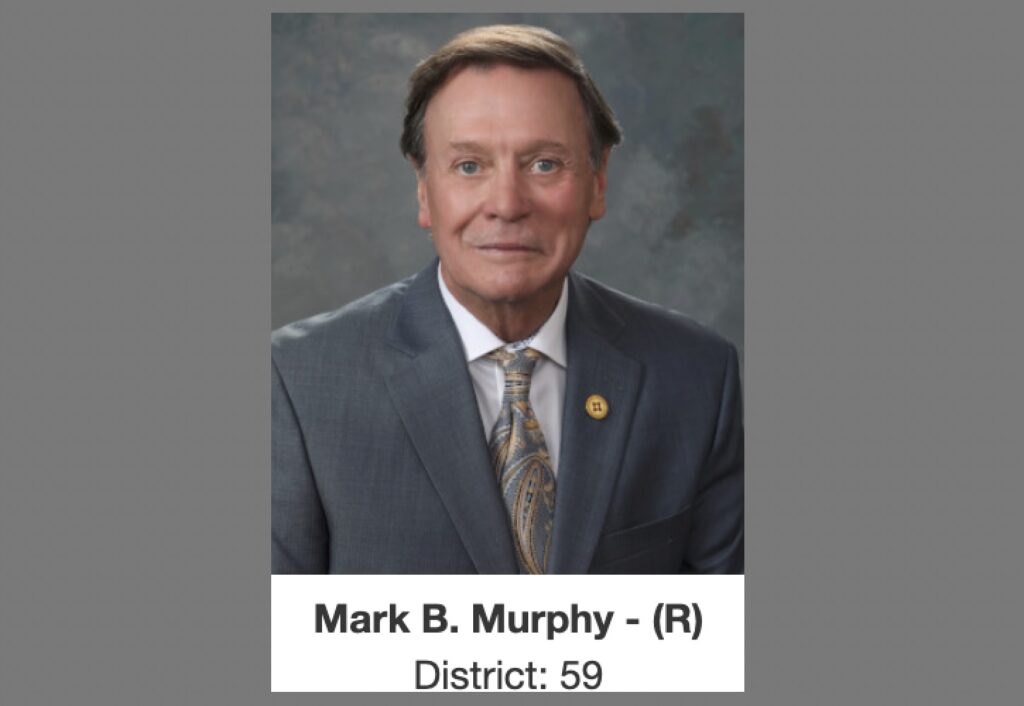
Testimony of Mark Murphy
Witness Topic: Legalities of Rule
Testimony of T. Calder Ezzell
Witness Topic: Bonding Markets
Testimony of Trevor Gilstrap
Witness Topic: Study Findings
Testimony of Robert Arscott
Witness Topic: Rule Impacts in Colorado
Testimony of Sam Bradley
Witness Topic: General Context/Member Issues
Testimony of Jim Winchester

IPANM’s Legal Team on the WELC Rulemaking has been led by Drew Cloutier and Ann Tripp of Hinkle Shanor LLP in Roswell. On behalf of the membership, I’d like to thank our legal team for months of fulltime work to prepare our filings, Hinkle Shanor LLP.

IPANM’s Complete Financial Assurance Testimony Filed

NMOGA’s Full Filings

NMOCD’s Full Filings

WELC’s Full Filings

Oxy’s Full Filings

State Land Office’s Full Filings


IPANM (June 25, 2025) – On Tuesday, June 25, 2025, the non-partisan New Mexico Legislative Finance Committee (LFC) released this 47-page report intended to present a non-biased view of the abandoned well program in New Mexico.

In anticipation of the release of the report, IPANM (and a representative from the New Mexico Oil & Gas Association – NMOGA) traveled to Taos to get hands-on the first paper copies of the report, released around Noon Tuesday. Because an LFC presentation of the report was set for hearing immediately upon release of the report, IPANM and NMOGA both requested the opportunity to offer immediate public reaction to the report and presentation.

IPANM’s public comments during the hearing can be found by clicking and scrolling to TIME CODE 4:57:20  of the LFC Committee Hearing Stream – June 24, 2025. NMOGA’s public comments are immediately after in the video stream.

To watch the entirety of the LFC Abandoned Wells Report presentation followed by comments from the New Mexico Oil Conservation Division (OCD), start at TIMECODE 2:40:45. Questions from legislators begin at TIMECODE 3:15:15 immediately following the LFC and OCD presentations.

As noted during public comments, IPANM was not consulted by LFC or any LFC analysts -at any time- during the information gathering phase of this report. Without consideration and analysis of data from small producers, the LFC report is “highly problematic”.

Following Tuesday’s public comments, IPANM Executive Director Jim Winchester issued the following statement:

“While we appreciate the hard work of the Legislative Finance Committee with the goal to present a non-biased analysis, IPANM strongly believes the study has some conclusions and erroneous estimations due to a lack of sufficient data and an underreporting of the detrimental consequences of haphazardly raising financial assurance bonding on small producers. Some of the recommended actions would make the problem worse by leading to an immediate spike in abandoned wells and driving many highly reputable small oil & gas companies out of business.

IPANM members and the industry plugs their own wells after they cease production at a rate of 98%, but that is not good enough. That is why the Reclamation Fund is set up and entirely funded by industry to account for abandoned wells. Sadly, it is the Legislature that has taken 15 out of every 17 dollars of industry’s money in the fund earmarked for clean-up, and unjustifiably allocated those industry dollars elsewhere for the past 15+ years. This problem can be fixed by the Legislature simply reallocating industry’s money back to their intended purpose, as proposed by industry in SB249 in 2024 and HB403 in 2025 during the New Mexico Legislative Sessions. This bill fix must be passed by the very Legislators who continue to annually rob the fund to pay for low-priority pet projects.”

IPANM contends that raising financial assurance will not solve the problem of abandoned wells, as the industry-financed reclamation fund has long been the mechanism to provide insurance to the state to plug abandoned wells. In addition to the Legislature robbing the state of those earmarked clean-up funds, it’s inexcusable that the New Mexico Oil Conservation Division has a balance of tens of millions of dollars of unspent money still sitting in that fund today. The state needs to take be more efficient and held responsible to spend those existing industry funds, which continue to accrue even with the Legislature raiding 15 of every 17 dollars already funded by industry for clean-up.

The LFC report comes at a time when the environmental groups and the the New Mexico Oil Conservation Division are pushing for higher financial assurance levels for operators, rather than fixing the systematic breakdown of spending industry clean-up dollars. IPANM has intervened in the October 20, 2025 rulemaking hearing in front of the Oil Conservation Commission. With IPANM’s efforts to correctly fix the state’s own issues, IPANM holds true to its mission to protect, defend, and promote the work of independent producers and all of industry in New Mexico.


By Missi Currier | CEO, New Mexico Oil & Gas Association

When it comes to environmental responsibility, New Mexico’s oil and gas industry is not just stepping up — we’re leading the way.

In recent years, oil and gas operators plugged over 90% of the wells decommissioned in the state. That’s 451 wells plugged by industry, compared to just 49 plugged by the Oil Conservation Division. For every well plugged using public funds, the oil and gas industry independently plugs 10 more — without fanfare, and without burdening New Mexico taxpayers.

Let’s be clear: Only tax dollars paid by the oil and gas industry are used to plug orphaned wells in New Mexico. Not a single cent comes from the pockets of New Mexico families. The millions spent by OCD to plug wells came directly from the Reclamation Fund — funded entirely by industry-paid taxes.

Of the 68,516 active wells in New Mexico, approximately 34,000 are state and fee wells. Among those, just 349 are classified as orphaned — a remarkably low orphan rate of about 1%. This is a testament to the industry’s commitment to responsible operations and long-term stewardship. However, we know that 1% is still too many, and the industry is committed to continuing our work with OCD to ensure the reduction of that number.

Yet, despite this strong track record, we face a critical challenge: ensuring that the funds dedicated to well-plugging are used for that purpose. In 2022, the Reclamation Fund held $21 million. By November 2024, that balance had grown to approximately $66 million, thanks to increased federal support and continued contributions from the Conservation Tax directly from industry.

But these funds are only effective if they’re deployed efficiently. Delays in procurement and administrative bottlenecks risk not only slowing progress but also jeopardizing future funding. New Mexico’s leadership must prioritize using these dollars as intended — on well plugging and site remediation — not diverting them to unrelated initiatives.

The oil and gas industry supports modernizing the Reclamation Fund to ensure it remains a sustainable, efficient tool for environmental protection. That means streamlining procurement, reducing administrative burdens, and preserving the fund’s integrity for its intended purpose. The oil and gas industry is proud to carry the responsibility of plugging and remediating wells. During a well’s lifetime, it provides energy for the world and contributes to our state’s economy. At the end of its cycle, the land is returned to its native state. It’s a responsibility we take seriously — and one we’re already fulfilling. Let’s work together to ensure that the systems in place support this important work, now and for generations to come.

New York Post (June 12, 2025) WASHINGTON — The Environmental Protection Agency (EPA) is proposing the removal of Biden administration greenhouse gas regulations — which saddled the energy industry with an extra $1.3 billion per year in costs — in order to provide cheaper electricity produced by coal and natural gas, The Post can reveal.

EPA Administrator Lee Zeldin will announce later Wednesday the repeal of two emissions standards that targeted coal and gas power plants generating electricity and had been projected to raise energy costs by nearly $20 billion over the next two decades, officials said.

“The sole purpose of these Biden-Harris administration regulations was to destroy industries that didn’t align with their narrow-minded climate change zealotry,” Zeldin said in a statement Wednesday. “Together, these rules were designed to regulate coal, oil and gas out of existence.”

EPA to save more than $1B per year after scrapping Biden-era gas, coal power plant emissions standards