IPANM is not afraid to take strong stances on many current issues threatening our industry. We have to! Seemingly minor changes to regulations or rules can have a major impact on the financial solvency of our small oil & gas producers. While we will never compromise on our duties to protect human health, fresh water and the environment in our daily activities, we will fight unnecessary government overreach when new regulatory proposals are not based on sound science and do little to protect the environment.
Below, we’ve identified serious issues facing our producers. Please click on the corresponding button to learn more about each issue and IPANM’s stance on the issue. (Note: Some of this content may be restricted for members only. To access this exclusive content, please join our association!)
Power The Future (May 30, 2025) Washington, D.C. – American oil production set a new record of 13.488 million barrels per day in March 2025 according to information released today from the Energy Information Administration. This milestone underscores the strength of American energy worker’s commitment to energy dominance.
“This historic achievement is a testament to the unwavering dedication of American energy workers and the decisive leadership of President Trump,” said Daniel Turner, Founder and Executive Director for Power The Future. “This is further proof that when we have common sense prevail in Washington, our energy workers are able to lead the world in critical energy production. The results will be lower prices and a stronger economy which spells victory for American workers and American consumers.”
How far will green energy proponents go to push their agenda? Well, apparently so far they will go against science and hide information from the American people—even information that shows benefits to the very environment they claim to protect.
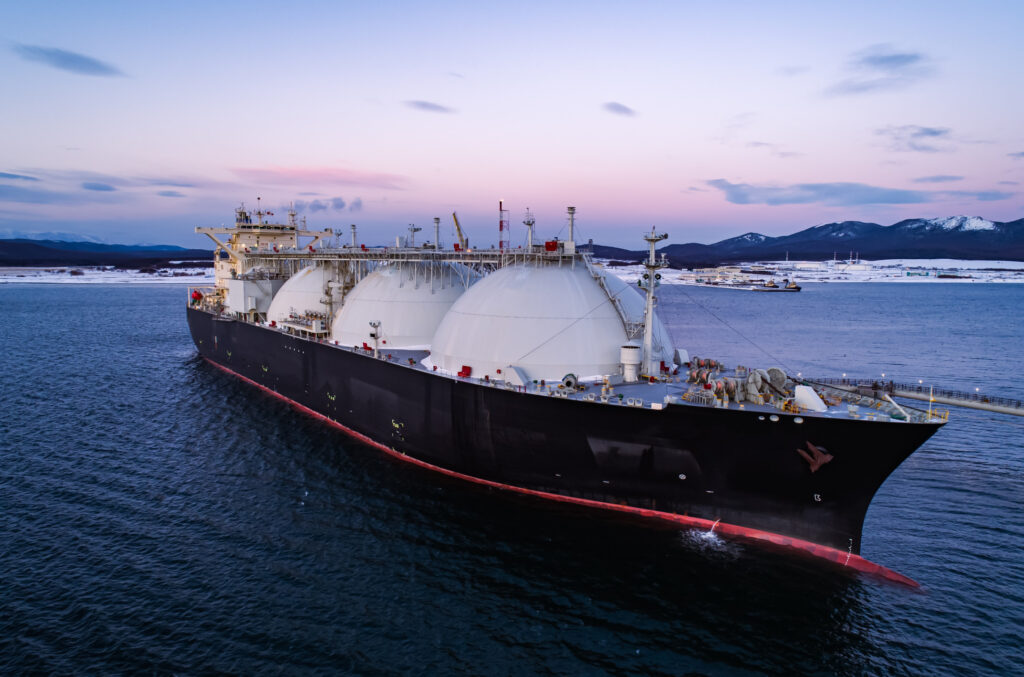
Last month, it was revealed that former President Biden’s Department of Energy buried a September 2023 study on liquefied natural gas (LNG) that revealed that increased LNG exports had little effect on domestic natural gas prices and would actually lower global greenhouse gas (GHG) emissions.
That determination is reinforced by data from the Center for LNG. Switching to natural gas to generate electricity is the top reason the U.S. has been so successful at lowering emissions since 2005. That same principle can be applied abroad. U.S. LNG nearly halves the emissions from the use of coal in Europe and Asia. In a head-to-head comparison, natural gas exported from the U.S. even has significantly lower emissions than natural gas from Russia.
So, why would they hide their own report that had seemingly positive findings? The answer seems to be that it didn’t reinforce their decision to halt (or “pause,” if you want to use the Biden-speak) approvals of U.S. LNG export licenses. Or, more broadly, it contradicted the scorched earth scenario the green-at-any-cost crowd likes to paint of our energy future—where they claim that any use of traditional energy sources like oil and natural gas will doom us forever.
Fast forward to December 2024, as the former administration was practically out the door, and a new DOE report was released under the exact same title. However, a key part of the 2023 report had been erased. An analysis of what’s called “the consideration of market effects.” That analysis determined the U.S. LNG exports would bring down global emissions by displacing more polluting sources of energy used abroad.
When the December 2024 report was release, then-Energy Secretary Jennifer Granholm even said that the reported showed “in every scenario, increases in LNG exports would lead to increases in global net emissions.” Well, every scenario except the one that they cut out.
Thankfully, there’s a new sheriff in town.
Thankfully, the new administration is not making its energy decisions based on a green agenda or any agenda for that matter. Policies are being made based on science and economic principles. As they should be. On his first day back in office, President Trump removed the Biden “pause” on LNG export approvals. And, new energy secretary, Chris Wright, made five LNG-related approvals between taking the job in February and mid-March.
As Secretary Wright put it at CERAWeek 2025: “I’m honored to play a role in reversing what I believe has been very poor direction in energy policy. The previous administration’s policy was focused myopically on climate change with people as simply collateral damage. My predecessor was on this stage one year ago, saying that LNG exports would soon be in the rearview mirror. Think about that for a moment. Natural gas today supplies 25% of global primary energy and has been the fastest growing source of energy over the last 15 years.”
Those are the facts. Natural gas is the most affordable, reliable and clean energy source in our energy mix. Its advantages are countless and the energy it contributes globally can hardly be replaced—or erased no matter how many DOE studies they fudge. And, that is all a very good thing. An abundant energy sources with all those advantages makes the world a better place. The U.S. is a “natural gas superpower.”
And, when America is the key producer of that energy source for our own needs and globally, that makes us and the world safer and cleaner. Former Energy Secretary Granholm couldn’t have got it more wrong. U.S. LNG is the literal light on the world’s horizon—not in its rearview mirror. Our ability to supply the world with natural gas is only growing.
According to the U.S. Energy Information Administration, U.S. LNG export capacity will likely increase from 11.5 billion cubic feet per day in 2023 to 24.4. in 2028—more than doubling in the next five years. As energy author Robert Bryce puts it: “If that happens, US LNG export capacity will equal or exceed, the gas production of both Iran and China. (In 2023, Iran produced 24.3 Bcf/d, and China produced 22.7 Bcf/d). That, ladies and gentlemen, is evidence that the US is a natural gas superpower.”
Our ability to supply the world with natural gas has become possible because the U.S. leads the world in natural gas production. U.S. natural gas production plateaued sometime in the 1970s. But, in 2005, it started to grow again significantly. That achievement was been driven by groundbreaking technological advances like hydraulic fracturing that have allowed us to tap America’s extensive natural resources. Since then, U.S. natural gas production has more than doubled. According to Bryce’s analysis of data, the U.S. is now producing more natural gas than Canada, China, Iran, Norway, and Qatar combined.
But that achievement was also possible because of leaders making policies that nurtured growth, technology, and economic investment. We welcome a return to that kind of leadership, which we are now seeing from President Trump and his Energy Dream Team appointees. But we must be vigilant. If we allow ourselves to be dragged backward by short-sighted leaders with a politicized green agenda, we will sacrifice our standing as a world energy superpower to the countries that follow on that list, like Russia, Iran, and China. That isn’t good for the world, and it certainly isn’t good for America.
The Empowerment Alliance (TEA) is a 501(c)(4) organization founded in 2019 that advocates for U.S. energy independence, according to EmpoweringAmerica.org. TEA supports using American innovation and free-market principles to ensure affordable, reliable, and clean energy.
Energy In Depth (April 19, 2025) – Methane emissions in the United States have continued their downward trend from 2005 levels according to the Environmental Protection Agency’s 2021 Greenhouse Gas Inventory (GHGI). In fact, total U.S. greenhouse gas emissions continue to decline despite increased production and consumption of oil and natural gas. As the EPA explains:
“This decrease was driven largely by a decrease in emissions from fossil fuel combustion resulting from a decrease in total energy use in 2019 compared to 2018 and a continued shift from coal to natural gas and renewables in the electric power sector.”
Key Takeaways
Total CO2 equivalent (Mmt CO2Eq) of U.S. greenhouse gas emissions dropped 11.6 percent from 2005 and methane emissions are down 16.6 percent since 1990 despite record production of oil and natural gas.
The 17 percent drop in oil and gas methane emissions can be contributed to the industry’s investments in reducing leaks and improving pipeline infrastructure. Methane emissions fell by 69 percent in natural gas distribution systems, and decreased 35 percent in natural gas transmission and storage.
These astonishing decreases occurred while the industry added more than 370,000 miles of new gas pipeline since 1990 to support a 62 percent increase in national demand.
Energy In Depth (April 7, 2025) – An academic with a long history of publishing questionable and heavily criticized research targeting the oil and natural gas industry, is out once again with more deeply flawed research. In the latest iteration, Dr. Lisa McKenzie, a professor at CU’s School of Public Health, attempts to connect residential proximity to oil and natural gas production with instances of childhood leukemia.
Spoiler Alert: By its own admission,the report fails to establish any causal connection between childhood leukemia and oil and gas production – a fact Dr. McKenzie acknowledged in comments to Colorado Public Radio:
“The study did not identify the cause of the increase in leukemia risk, or how exposure to certain chemicals contributes to cancer development. McKenzie said those topics deserve further research. There might also be other ‘confounding’ factors that the study did not fully account for, which could complicate the relationship between oil and gas drilling and cancer risk.
‘We don’t have the data to actually say for example, how much benzene each one of these children were exposed to,’ McKenzie said. ‘We’re just looking at the overall density of oil and gas development, so we don’t know specifically what it is that might be causing childhood leukemia.’” [emphasis added]
Commenting on similar childhood leukemia research that Dr. McKenzie published in 2017, Colorado’s former Chief Medical Officer, Dr. Larry Wolk, made this exact point, noting that finding a “possible association” “does not prove or establish” a connection to oil and gas operations.
Executives from oil and gas firms have revealed where they expect the West Texas Intermediate (WTI) crude oil price to be at various points in the future as part of the first quarter Dallas Fed Energy Survey, which was released last week.
The survey asked participants where they expect WTI prices to be in six months, one year, two years, and five years. Executives from 124 oil and gas firms answered this question and gave a mean response of $68 per barrel for the six month mark, $70 per barrel for the year mark, $74 per barrel for the two year mark, and $82 per barrel for the five year mark, the survey showed.
Executives from 124 oil and gas firms also answered this question in the fourth quarter Dallas Fed Energy Survey and gave a mean response of $69 per barrel for the six month mark, $71 per barrel for the year mark, $74 per barrel for the two year mark, and $80 per barrel for the five year mark, that survey showed.
The average response executives from 129 oil and gas firms gave when they were asked in the latest survey what they expect the WTI crude oil price to be at the end of 2025 was $68.32 per barrel, this survey outlined. The low forecast came in at $50 per barrel, the high forecast was $100 per barrel, and the spot price during the survey was $67.60 per barrel, the survey pointed out.
The average response executives from 131 oil and gas firms gave when asked in the previous Dallas Fed Energy Survey what they expect the WTI crude oil price to be at the end of 2025 was $71.13 per barrel, that survey showed. The low forecast came in at $53 per barrel, the high forecast was $100 per barrel, and the spot price during the survey was $70.66 per barrel, that survey highlighted.
Federal Reserve Bank of Dallas (March 24, 2025) by Garrett Golding, Diego Morales-Burnett and Kunal Patel
New Mexico has become a U.S. leader in energy production over the past five years, drawing on Permian Basin reserves in the southeastern corner of the state. Oil and gas proceeds fund an increasing share of state government, most notably involving education programs.
New Mexico has quietly become an energy powerhouse. State oil production surpassed 2 million barrels per day (mb/d) in 2024, more than doubling 2019 output.
The nation’s leading oil and gas resource, the Permian Basin, extends westward from Texas—No. 1 in oil production—to New Mexico, which is ranked No. 2. Production growth in New Mexico—on both percentage and volume bases—has greatly exceeded its bigger neighbor. Exploration largely in Eddy and Lea counties on federal lands in the southeast corner of New Mexico has propelled the expansion, bolstering state coffers in the process.
The activity contrasts with many other states, including North Dakota, Oklahoma and California, where production has been generally stagnant or declined since 2019. Overall, U.S. oil production has increased, making the nation the top producer globally since 2019. Following the pandemic-prompted energy collapse in 2020, production reached a new peak in August 2023 and trended still higher through December 2024, the latest date for which data are available.
Production in the entire Permian Basin continued to grow in 2024, exceeding 6 mb/d and rising (Chart 1). Industry participants say the region has a larger number of drilling locations relative to other basins and a multi-stacked play, which allows the simultaneous targeting of several oil-bearing zones. It also benefits from a generally favorable regulatory environment, proximity to the refining and chemical complex on the Gulf Coast and access to pipelines for transport.
New Mexico accounts for growing share of well completions
Three sub-basins make up the Permian—the Midland Basin, the Delaware Basin and the Central Basin Platform. The better-performing wells are generally in the Midland and Delaware basins. While operators have been drilling in the Permian since the 1920s, the combination of horizontal drilling and hydraulic fracturing (known as “fracking”) achieved during the “shale revolution” has driven growth since 2010.
Wells in the Midland Basin, which is less remote, are shallower than those in the Delaware Basin. They also have lower pressure and avoid risk of buildups of dangerous hydrogen sulfide gas (also known as sewer gas, notable for its pungent rotten egg smell). Initial development during the shale era occurred in the Midland Basin, where existing pipeline and power infrastructure was more readily available.
Oil production in Texas has increased from 5.1 mb/d in 2019 to 5.7 mb/d in 2024, while in New Mexico, it rose from 0.9 mb/d in 2019 to 2.0 mb/d in 2024. More wells are being completed in New Mexico; roughly 20 percent of the new wells brought online in the Permian Basin in 2019 were in New Mexico, increasing to 28 percent in 2023. Overall, 2023 was a record year for wells placed online in the Permian, fueling New Mexico’s production gains.
The industry is also becoming more efficient. Labor productivity (output per hour of labor) in the extraction portion of the upstream oil and gas industry increased 174 percent from 2010 through 2023, compared with an 18 percent improvement in the nonfarm business sector, according to the Bureau of Labor Statistics.
One measure of this efficiency is the number of days it takes to drill and complete a well in New Mexico—down 33 percent from 2019 to 2024, according to data provider Kayrros. While the number of frac crews declined 25 percent in the Permian during the period, operators completed more wells. This occurred despite newer wells’ longer lateral length—a byproduct of improved completion efficiency and technology.
Also, continuing consolidation among exploration and production firms has improved productivity because larger companies—with their stable crews and better acreage positions allowing drilling of the easiest locations first—complete wells in comparatively less time.
Most New Mexico production comes from federal lands
New Mexico oil production comes from lands where private, state, federal or Native American tribes control the mineral rights. Most production in the Permian portion of New Mexico was on private and state lands in the 2000s. However, production on federal tracts started to grow with shale production and exceeded private and state lands in 2015. Roughly two-thirds of crude oil production in the Permian portion of New Mexico is on federal lands (Chart 2). Overall, federal lands account for about one-third of the state’s land mass.
Two factors account for expansion of production on federal lands: greater well productivity and an increasing number of completions.
Moreover, the decline curve for wells on federal acreage in the Permian is flatter than for wells on state and private lands (Chart 3). Output from new shale wells generally tends to rapidly decline. Higher ultimate recovery provides more revenue for operators and also allows overall oil production to grow faster since less new output is required to offset declines from older wells.
Also, the share of new wells placed online on federal lands has increased in recent years. In 2019, 51 percent of wells placed online on the New Mexico side of the Permian were on federal lands; that increased to nearly 69 percent in 2023. Much of the shift has occurred gradually with an accompanying increase in the gross number of wells.
From an economics standpoint, wells on federal lands also have lower royalty rates (payments owed to the owner of the mineral rights) than arrangements elsewhere, which may improve well economics. The royalty rate has historically been 12.5 percent on federal lands (though it rose to 16.67–18.75 percent for new leases in 2022). For state lands, royalties are 12.5–20 percent and are also generally higher on private lands.
Potential imposition of setbacks, proposed in a pair of New Mexico House bills, could stymie production growth opportunities. A setback is the minimum distance an oil well must be from certain structures or property lines. Adding setbacks would reduce the number of potential drilling sites and could create regulatory uncertainty, delaying investment. While there are currently no laws requiring setbacks in New Mexico, some counties have required setbacks, although they are smaller than those proposed in the legislation.
Colorado increased setbacks on state and private land in 2018. Oil production there peaked in 2019 and has since declined modestly. Though the exact impact of setbacks is unclear, it is a contributing factor limiting development, according to industry contacts.
Oil and gas revenue bolsters state budget
Eddy and Lea counties—a combined population of 130,000 out of a statewide population of about 2 million—accounted for oil production of about 2.1 mb/d at year-end 2024. Through a combination of production taxes and royalties and bonuses from production on state and federal lands, the two counties’ output plays an outsized role in terms of tax revenue for New Mexico, which provides benefits for residents statewide.
Aggregate tax receipts from oil and gas totaled about $11.3 billion for the 12 months ended June 30, 2024, according to the New Mexico Legislative Finance Committee. Of that amount, the state collected $10.5 billion, and local governments garnered $0.8 billion.
The New Mexico General Fund, the Land Grant Permanent Fund, the Severance Tax Permanent Fund and the Early Childhood Trust Fund are the primary recipients. Oil and gas revenue provided roughly one-third of general fund recurring revenue in fiscal 2024. The remaining three funds took in $6.6 billion in fiscal 2024.
The general fund defrays public education costs, including for K-12 education and the community college and higher education systems. It also supports health and human services, primarily for medical assistance for low-income individuals, but also for early childhood education and care, which was added in 2020.
The value of the three other funds notably increased by $25 billion from June 30, 2019, to June 30, 2024, including investment returns. The Early Childhood Trust Fund was established in February 2020 to tap energy revenue as a stable funding source, with the hope of eventually guaranteeing free, high-quality and universal early childhood care and education.
State Sen. John Arthur Smith, co-sponsor of the legislation establishing the program, said at the bill’s signing that “the riches [they’re] seeing from the oil boom in the Permian have provided … a remarkable opportunity.” The trust fund supplements federal funds for projects managed by the Early Childhood Education and Care Department. They include child care subsidies for about half the state’s children whose families earn up to 400 percent of the poverty level, as well as free meals in low-income areas when most schools are closed.
The current annual budget for the Early Childhood Education and Care Department anticipates several new initiatives to enhance early child care, such as promoting professional development and mentoring of teachers, expanding early pre-K programs and pre-K access to 1,300 additional children and renovating early childhood facilities on Native American lands.
Although the true impact of these initiatives won’t be known immediately, previous research evaluating early childhood investment programs suggest they cost effectively lead to positive outcomes in the future quality of life as well as improved personal behaviors, such as lower drug use and criminal activity.
Lawmakers created the Higher Education Trust Fund in 2024, seeding it with almost $1 billion for tuition-free college for New Mexico residents. The fund tapped monies from oil and gas tax proceeds.
Providing longer-term financial support
New Mexico has the third-largest state permanent fund, behind Alaska and Texas. Permanent funds can serve as a reserve in case state economic conditions change or if oil and gas revenue declines due to lower production or prices.
The funds may be invested in projects to provide longer-term returns for the state. While there is concern that New Mexico oil and gas production could decline, state officials at the New Mexico Consensus Revenue Estimating Group forecast production will increase at least through the end of this decade. While predicting commodity prices is difficult, oil and natural gas constitute about 55 percent of global energy consumption; transitioning from them will likely take many years, if not decades.
New Mexico has capitalized on its booming oil and gas industry to undertake investment policies in education, child care, health care, infrastructure and public improvements. Given that New Mexico has some of the top-performing wells in the Permian Basin, the overall outlook is promising.
New Mexico Politics with Joe Monahan (March 17, 2025) – Progressive Democrats spent major league dollars and countless campaign hours to defeat the conservative coalition in the state House in the June 2024 primary only to be ambushed by the resurrection of a coalition in the state senate Saturday.
The surprise attack spelled the end of their cherished paid family and medical leave plan as it was firmly rejected by the Senate Finance Committee, led by unapologetic Chairman George Muñoz.
The stunning turn of events over (HB 11), which was defeated when the House was peppered with those now defeated conservative Democrats but approved by the Senate, finally sailed through the House this year. Then Saturday in Senate Finance sudden death struck on an 8 to 3 vote, leaving Roundhouse progressives grieving their loss, like this one:
Joe, we cut off the head of the snake in the House only to see it grow back in the Senate. The shock is like an earthquake in the middle of the night.
Reviewing Saturday’s House Floor Oil Production Tax Debate
IPANM (March 15, 2025) – The much discussed HB 548 Oil & Gas Equalization Tax Act tax increase has now morphed into a $150-million industry-only tax to pay for the $75-million HB14 (Amended Version) on the House side and a “spending-initiative-to-be-named-later” on the Senate side.
On Saturday afternoon, a spirited 3-hour debate (the House tax bill begins at 1:53:50) pitted Republican, basin-based legislators (Reps. Mark Murphy, Mark Duncan, Rod Montoya, & Jon Henry) opposing the latest version of the money grab vs. “tax-oil & gas-only” Democrat committee leaders (House Appropriations Chair Nathan Small & House Tax Chair Derrick Lente) who claim that not only is the additional tax money a good thing for industry, but that it is “owed” to the state because of industry’s success. Democrats creatively called the nomenclature of their actions as “Tax Justice” for the people of New Mexico against the oil & gas industry and “their billion dollar profits.”
At no time during the three-hour debate did Democrat defenders of the tax bill mention the potential damage the increase tax-hike will have independent operators. Republicans vehemently argued this point and others regarding the negative impacts. During the debate, Rep. Mark Murphy introduced HB403 Oil & Gas Fund Distribution & Uses as an amendment to fix the funding mechanisms of reclamation fund. Currently, only 2/17ths of the money already paid directly by industry is going into the Oil Reclamation Fund. The amendment would have corrected that oversight, but was voted down by Democrats during the debate.
The final bill HB14 tax increase was approved after a three-hour debate on the House side on a vote of 40-27 with the majority party Democrats pushing through the tax hike over all opposing House Republicans, joined by moderate House Democrat Joseph Sanchez.
The Unintended Consequences of Over-Zealous Regulations By Grant Swartzwelder (Editor’s Note: Mr. Swartzwelder is a proud member of IPANM)
Artesia Daily News (March 3, 2025) – Let’s face it, there aren’t many jobs in Cut Bank, Montana. And of those that do exist, the top-paying ones are in the energy industry, like oil and gas operators and energy service companies. Some of those oilfield jobs involve companies such as Montalban Oil & Gas Company (MOGO) owned by Patrick Montalban. A company focused on marginal wells—those producing less than 15 barrels per day, or only a few cubic feet of gas per day.
While the energy industry drives MOGO and many similar companies, the direct and indirect impact of the energy industry supports so many more. Laborers, small business owners, restaurant workers – all are beneficiaries of the energy industry. But if increasingly onerous and costly government regulations make the marginal wells – the foundation of so many communities’ economy – uneconomic, the financial ruin will not be limited to operators alone. Without the root economic driver there is no need for the supporting companies and the people they employ.
Montalban not only owns MOGO Inc., operating over 500 oil and gas wells with 21 employees, he’s president of the National Stripper Well Association (NSWA). Like many oil patch independents, he sees the community benefit of his industry, along with the pain inflicted on them by unreasonable regulations.
“We really fill a niche, not only with jobs in the oil and gas industry, but for these rural communities and how important it is to rural America and Main Street, the hospitals, the schools. People just don’t think about it, but it’s so important,” he said.
Why are Montalban and others worried?
It’s because new regulations and EPA actions most dramatically affect small and mid-sized producers and will likely make their marginal wells uneconomical to operate. The result? Wells being shut-in, companies filing bankruptcy. But the pain doesn’t stop there as support companies will be hit and communities will generate less tax revenue. It is not just operating companies that will be hurt, it will be the entire eco-system surrounding these companies and the companies they support.
Possibly the most dangerous of the new Environmental Protection Agency (EPA) rules taking effect in 2025 is the Waste Emission Charge (WEC). Utilizing arbitrary calculation methods, operators could pay “taxes” starting at $900 per ton, then $1,200 per ton and, by 2026, $1,500 per ton.
One might ask, “So what? Just don’t generate excessive emissions.”
It’s not that simple. Avoiding WEC taxes (i.e. fees) incurs a significant cost for equipping a site to detect and capture methane. And it will be a disproportionate burden to small operators with marginal wells, believes Gani Sagingaliyev, co-founder of ESG Dynamics.
“According to our estimates, the average operator subject to the WEC in Reporting Year 2024 will face liabilities ranging from $1.5 million to $2 million,” and it’s going to get worse in 2025, he said. Increasingly stringent emissions thresholds and additional categories will take effect then, forcing small operators “to allocate additional resources” toward compliance.
Sagingaliyev asked, “Can these smaller operators afford full compliance with the new regulations or pay WEC fees?”
Additions to Quad O further regulates venting and flaring, requiring frequent site inspections. “The associated capital expenditures and operational costs could render production uneconomical for many operators,” he said. “For marginal producers, inspection costs alone could add up to $10 per barrel of oil equivalent, (BOE), a steep expense for wells with thin profit margins.”
While marginal wells account for less than five percent of U. S. production, they loom large in rural America where they are the community’s lifeblood.
What happens to these newly uneconomical wells?
Abandoning an uneconomical well costs money. For example, in 2022, the Texas Railroad Commission spent ~$30 million to plug 1,068 wells, just over $28,000 each. A small independent producer lacks that budget, especially across their dozens of wells.
With the EPA estimating there are over 3 million abandoned oil and gas wells that need plugging, advocates of sweeping regulations targeting the elimination of marginal wells should realize their regulations will generate abandoned wells needing to be plugged. However, as a consequence of poor energy policy, the cost will be borne by the government and the taxpayers as the operators will be long insolvent.
Non-Attainment Spreads the Economic Devastation Even Further
Texas Congressman August Pfluger, whose district includes the Permian Basin, fears a non-attainment designation of the Permian being decided by individuals with minimal data and minimal energy experience. This is significant because, while the Texas side of the Permian is being targeted for non-attainment designation, the monitoring data on which that was based is only on the New Mexico side. This is the same data that EPA used for El Paso’s designation. It is difficult to understand how the wind can blow in both directions.
Such a designation can devastate an economy, Pfluger states. In 2017 the Texas Commission on Environmental Quality (TCEQ) assembled some figures when San Antonio had been cited as non-compliant on ground-level ozone in 2015. Pfluger said, “The report roughly projected that the cost across the San Antonio metropolitan area would be between $3 billion (low estimate) and $36 billion (high estimate). These costs were largely incurred due to the inability of manufacturing to expand or relocate to the region. Additional costs included employment and income loss, permitting costs, project delays, and reductions in Gross Regional Product (GRP) due to inspection fees, road construction delays, and more (emphasis added).” Again, over-reaching regulation will be destructive to community growth and expansion.
The Big Picture
As much as we love cities like Cut Bank, Midland, and the many rural oil towns in America, the real issue is much bigger.
In their “2024 State of Energy Report”, the Texas Independent Producers and Royalty Owners Association (TIPRO) says that, across the U. S., more than two million people work in the oil and gas industry, with the total payroll reaching $162 billion annually. About 23% of those jobs are in Texas, but the rest are scattered across a surprising number of states including Michigan, Ohio, and even Florida.
The threat to those jobs and economies is huge, according to an NSWA paper. Job losses from these regulations could reach 84,000 per year, state revenues could drop by $200 million per year, payments to royalty owners could decrease by $640 million per year, and the industry’s contribution to the U. S.’s gross domestic product (GDP) would shrink by $8.7 billion per year.
Oil and gas income is plowed back into the economies of towns, counties, states, and the nation in purchases/sales tax, income tax, gasoline tax, and other spending that supports thousands of small communities directly and indirectly dependent on the energy industry.
The effects are potentially devastating. We’ve seen this before.
In the oil bust of 1984-on, communities suffered in the Permian Basin. Suddenly unprofitable, producers and service companies laid off thousands, filed bankruptcy, or both. Desperate workers waited in lengthening unemployment lines. First National Bank failed, the FDIC called loans causing another wave of bankruptcies and layoffs. Office buildings stood empty.
Home equity evaporated, foreclosures abounded, and vehicles were repossessed. Schools and hospitals emptied
Everyone wants a clean environment, including the oil and gas industry. But regulation must be balanced by the consequences of these regulations. Our industry continues to make significant strides in terms of its environmental performance, while it provides the economic foundation for thousands of communities and life-sustaining energy for comfort, technology, transportation, education and most of the conveniences and necessities of today’s life.
Unwieldy regulatory burdens do no favors to either the people or the environment. They simply cause unnecessary pain to the nation as a whole, in lost jobs, higher energy costs and, therefore, rising inflation. Let’s encourage the government to understand the unintended consequences of their actions BEFORE enacting regulations.
Grant Swartzwelder is the Founder of OTA Environmental Solutions, a full-service environmental firm providing equipment, field services and emissions consulting. Additionally, he is Co-Founder of ESG Dynamics which provides environmental data analytics for the oil industry which assists in A&D, Waster Emissions Charge reduction and Health Checks.