A New Day at IPANM


Anti-Industry Politics

Anti-Industry Politics

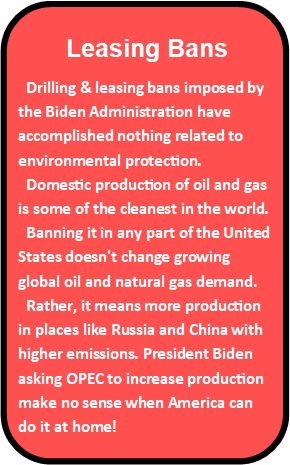
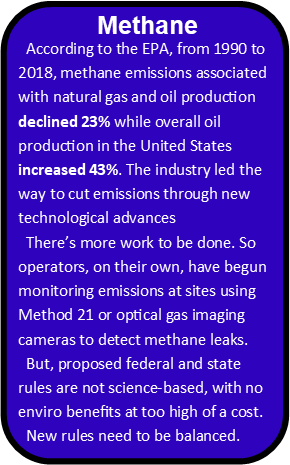
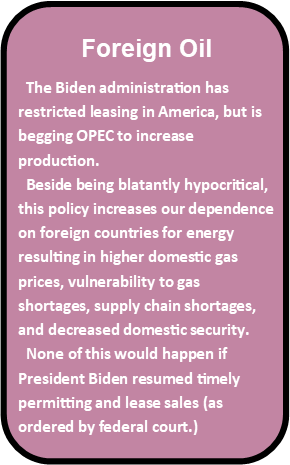
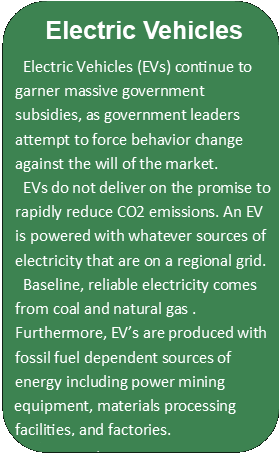
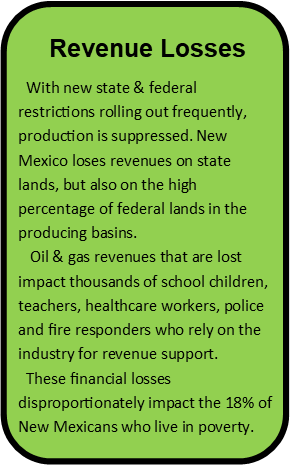
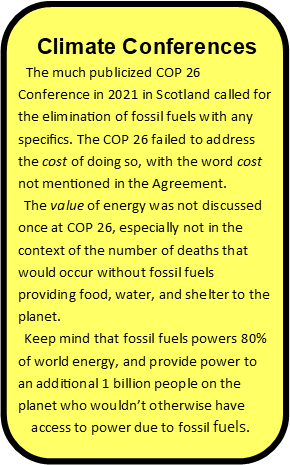
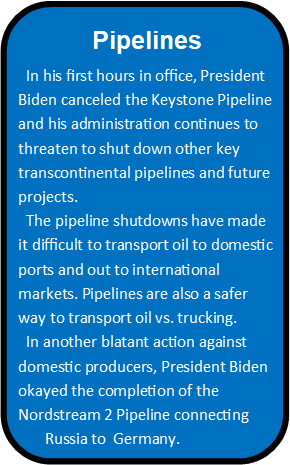
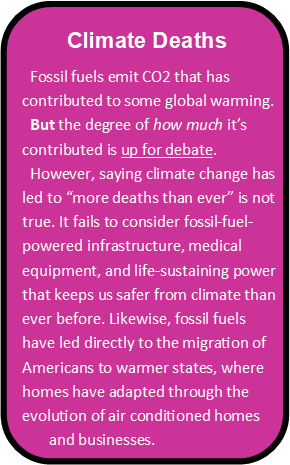
As the voice of Independent producers in New Mexico, IPANM’s mission is protect, defend, and promote the work of our members and all of industry. New Mexico’s future and America’s future needs to be shaped by a policy of energy freedom. This “all of the above” approach is fundamental to ensuring all sources of energy–including fossil fuels–can compete to produce safe, reliant, and affordable energy to better the human condition. However, dangerous forces are pushing against energy freedom. Local, state, and federal governments are under the thumb of disingenuous environmental groups who want to pick-and-choose energy winners, under the guise of climate change. With governments already mobilized to kill the oil and gas industry in favor of unreliable and expensive renewable sources, New Mexico & America stand to lose jobs and domestic security. Furthermore, reducing fossil fuel supplies disproportionately hurts those in poverty (18% of New Mexicans). The “Green New Deal” and other progressive policies must be exposed for what they are: a pathway to self-inflicted, socio-economic suffering. With a weakened domestic energy landscape, Americans will beholden to nefarious foreign governments (such as Russia and China). As already demonstrated, these foreign powers do not have the best interests of the people or the planet at heart.

Anti-Industry News

U.S. Department of the Interior / IPANM (Jun. 23, 2025) - The Department of the Interior announced two coordinated regulatory actions
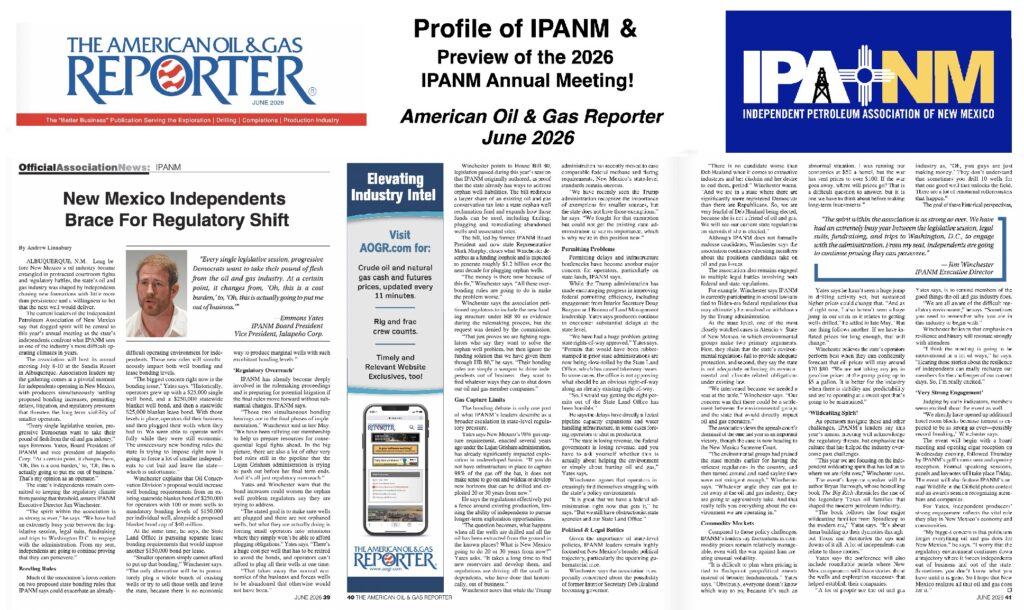
American Oil & Gas Reporter | ALBUQUERQUE, N.M. (June 21, 2026) —Long before New Mexico’s oil industry became entangled in
After significant developments this week that included the signage of HB80 and the filing of an enviro group lawsuit against
IPANM (March 11, 2026) - On the heels of the good news of the signage of HB80 on Monday, today
IPANM (Feb. 11, 2026) - The dangerous SB18 Clear Horizons Act died on the Senate Floor on Wednesday by a
Epstein (Feb. 6, 2026) - More than any other state, New Mexico depends on its oil industry, now #2 in
Las Cruces Sun (Jan. 27, 2026) - New Mexico deserves an honest conversation about the Clear Horizons Act. Not slogans.
OilPrice.com - (Jan. 26, 2026) -   Herbert Stein was an American economist who served in both the Nixon and Ford
Sen. Ant Thornton (R) District 19 (Jan. 23, 2026) -   Public debates often stall not because people reject evidence, but
IPANM (Dec. 19, 2025) - After the urging of IPANM and many other industry trade groups, the Trump administration has

U.S. Department of the Interior / IPANM (Jun. 23, 2025) – The Department of the Interior announced two coordinated regulatory actions on June 22, 2026, to modernize federal onshore oil and gas policy — rolling back the Biden-era statewide bonding requirement from $500,000 to $25,000 and revising the waste prevention rule to cut compliance costs by nearly $17 million annually.

In response to the announcement, IPANM Executive Director Jim Winchester offered the following statement:

“For oil and gas producers in New Mexico, these reforms remove the punishing upfront financial barriers and regulatory red tape. By replacing subjective bureaucratic standards with clear, objective rules and streamlined leasing procedures, the Interior is restoring a level playing field that lets New Mexico’s independent operators invest in production rather than paperwork.”

Further specifics:

  • The $17 million is the BLM’s regulatory impact analysis aggregate across all federal onshore operators — but the underlying cost-benefit model hasn’t been published in detail yet as this is a proposed rule, not a final one. The granular breakdown will appear in the formal regulatory impact analysis when the rule hits the Federal Register for public comment.
  • What the rule does identify as the cost-cutting mechanisms are:
    • Eliminating waste minimization plans — operators currently must prepare and submit these documents with every application for permit to drill. Gone.
    • Eliminating self-certification statements — a separate paperwork requirement bundled with drilling permits. Also eliminated.
    • Replacing subjective sundry-notice evaluations with defined royalty standards — operators currently navigate ambiguous BLM discretion on venting/flaring decisions; clear rules mean less legal exposure, fewer consultations, and less compliance staff time.
    • Firm definitions for avoidable/unavoidable losses, authorized venting and flaring, emergencies, and measurement standards — regulatory ambiguity is expensive. When the rules are vague, operators hire lawyers and consultants to interpret them. Clarity cuts that cost.
    • Easing LDAR (Leak Detection and Repair) program filing requirements — operators were required to maintain and submit statewide LDAR programs to BLM state offices; that administrative burden is being reduced.
  • Both proposed rules trigger a 60-day public comment period upon publication of their Federal Register notices. The clock starts when the notices formally publish in the Federal Register, which hasn’t been confirmed yet but is imminent.
    • Federal Register publication — likely within days to weeks of June 22
    • 60-day comment window closes — approximately late August to mid-September 2026
    • Agency review of comments + final rule drafting — typically 6–18 months for rules of this complexity
    • Final rule publication — realistically late 2026 at the earliest, more likely mid-2027
  • One important nuance: The bonding adjustment (from $500k back to $25k) has essentially been in effect administratively — BLM extended the phase-in enforcement deadline to June 22, 2027, buying operators breathing room while the formal rulemaking plays out. So New Mexico producers get practical relief now even before the rule is finalized.


Interior Announces Reforms For Federal Bonding Costs and Waste Rules


American Oil & Gas Reporter | ALBUQUERQUE, N.M. (June 21, 2026) —Long before New Mexico’s oil industry became entangled in protracted courtroom fights and regulatory battles, the state’s oil and gas industry was shaped by independents chasing new formations with little more than persistence and a willingness to bet that the next well would deliver.

The current leaders of the Independent Petroleum Association of New Mexico say that dogged spirit will be central to this year’s annual meeting as the state’s independents confront what IPANM sees as one of the industry’s most difficult operating climates in years.

The association will host its annual meeting July 8-10 at the Sandia Resort in Albuquerque. Association leaders say the gathering comes at a pivotal moment for independents operating in New Mexico, with producers simultaneously battling proposed bonding increases, permitting delays, litigation, and regulatory pressures that threaten the long-term viability of smaller operators.

Click Here to Read Full Story

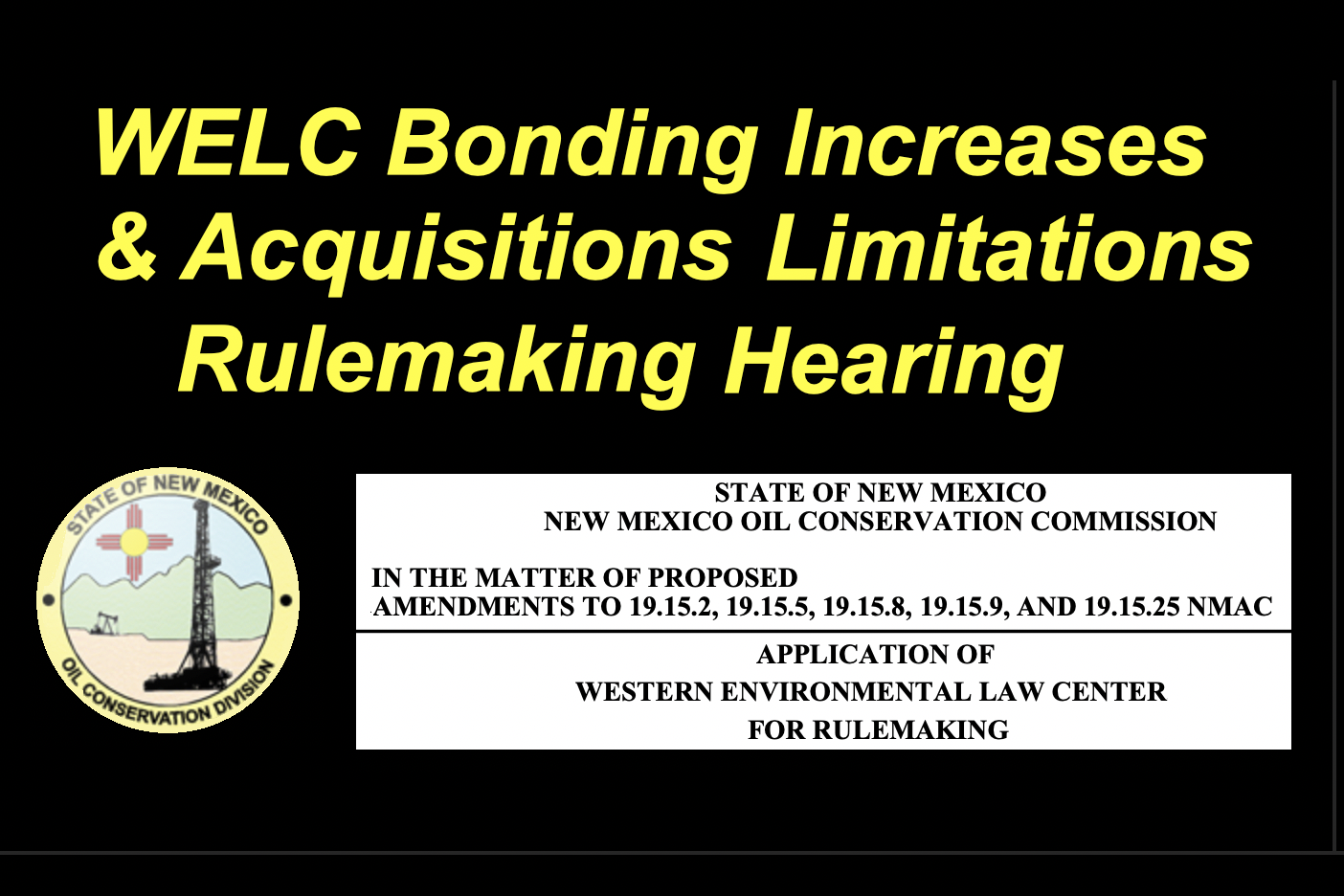
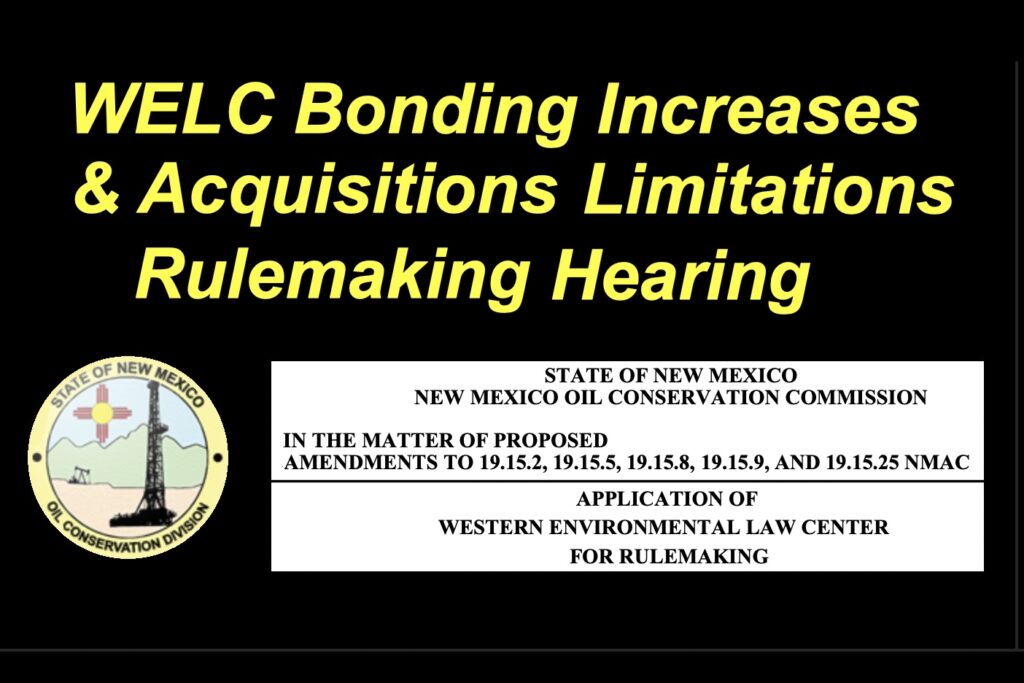
After significant developments this week that included the signage of HB80 and the filing of an enviro group lawsuit against the Oil Conservation Division, IPANM has joined with the New Mexico Oil & Gas Assocciation to file a joint Expedited Motion To ReOpen the Western Environmental Law Center’s (WELC) Bonding Rulemaking Hearing.

The motion, filed Friday, reads that IPANM and NMOGA “respectfully move the Commission to reopen the evidentiary record in Case No. 24683 for the limited purpose of supplementing the record to consider the implications of House Bill 80 (“HB 80”), and a new lawsuit filed by a Co-Applicant to this rulemaking against the State, both of which were enacted and filed this week on March 9, 2026, and to allow limited supplemental briefing by the parties on their impact on the Proposed Rules.”

Click Here: IPANM & NMOGA’s Expedited Motion To ReOpen WELC

Industry’s legal arguments for reopening make it clear that the circumstances have changed due to the signing of HB80. In essence, the core argument by WELC and the OCD for increased bonding was due to limited funding to address orphan well liability. However, with the Reclamation Fund set to receive a potential $1.2 billion dollar infusion over the next 10 years, the funding shortage no longer exists. Industry is also citing Monday’s lawsuit filed by the San Juan Citizen’s Alliance (a party to the WELC Bonding Rulemaking) against the state (regarding orphan well remediation), as evidence that the proposed rules are unsound.

IPANM and NMOGA have indicated to all parties that the Expedited Motion to ReOpen is NOT a tactic to obstruct the rulemaking. IPANM and NMOGA have indicated that industry does not intend to reopen every issue presented at the Oct-Nov 2025 hearing, nor does industry wish to backtrack on post-Hearing All-Party discussions, including a Joint Stipulation agreement that was finalized last week. However, IPANM and NMOGA do intend submit limited evidence on the impact of HB80 and related developments that impact a new bonding rule.

In a late development on Friday afternoon, the San Juan Citizen’s Alliance (SJCA) withdrew from the WELC environmental groups’ consortium.

IPANM (March 11, 2026) – On the heels of the good news of the signage of HB80 on Monday, today Governor Michelle Lujan Grisham signed SB151 Omnibus Tax Package despite continued opposition from IPANM and the business community.

In fact, industry (including IPANM) lobbied not once, but twice in the past week alone (in addition to repeated stated opposition during the 2026 session) to urge the Governor to NOT sign SB151.

The bill signing is a loss for the the state and the business community, further making it less attractive to do business in New Mexico.

SB151 Omnibus Tax Package is a complex bill. The bill “decouples” the state from Trump’s Big Beautiful Bill corporate tax cut rates. A brief summary is available, but member companies will have varying impacts, and it will be up to those individual companies to further determine how this signed bill will impact them.

Further analysis of the impacts can be found at the Tax Foundation Summary and the New Mexico Tax Research Institute’s most recent newsletter,  The Governor’s office puts her spin on the signing in this news release.

Governor Signs SB151; “DeCoupling” Tax Increase Forthcoming


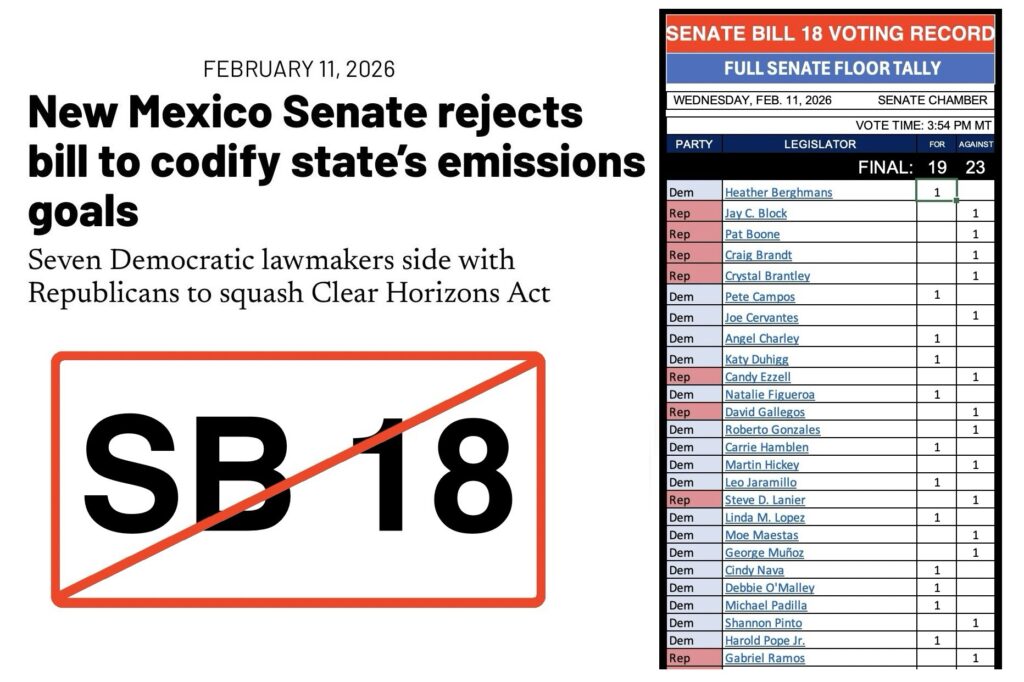
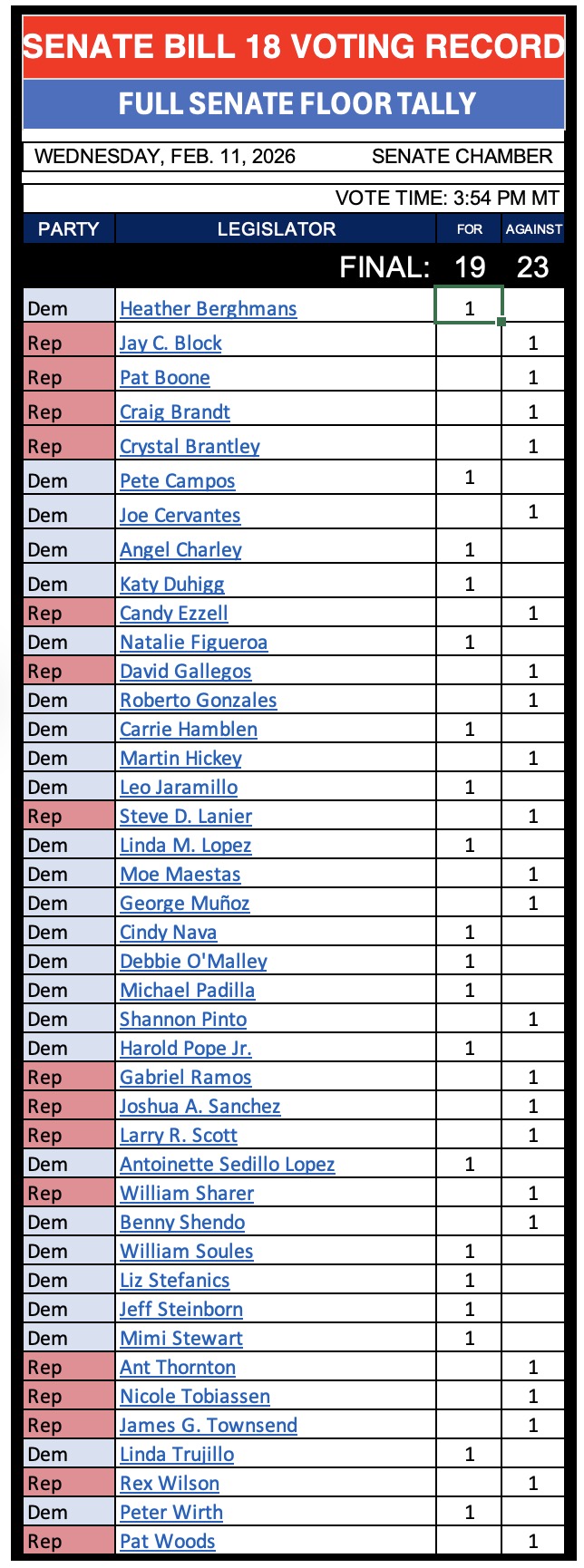
IPANM (Feb. 11, 2026) – The dangerous SB18 Clear Horizons Act died on the Senate Floor on Wednesday by a vote of 23-19 after 7 Democrats joined Republicans to vote against the bill.  The defeat represents a significant win for all of New Mexico, as the Green House Gas Reduction mandates were unattainable and would have had catastrophic impacts not just on the Oil & Gas industry in New Mexico, but hundreds of other industries and everyday New Mexicans.

  • This was a win led by Republican Minority Leader Senator Bill Sharer, his staff, and Senate Republicans, who have worked tirelessly to prioritize stalling and/or killing SB18.
  • It was a strategic “Call of the Senate” by Leader Sharer earlier in the week that forced Democrats to negotiate on SB18 and/or other bills, else *ALL* legislation for the entirety of the session would have been stalled indefinitely.
  • ALL SENATE REPUBLICANs deserve a tremendous amount of credit for killing this bill! Their unity was instrumental in forcing SB18 to a floor vote that led to its defeat. Leading Senate Republicans who worked behind the scenes included Sen. Candy Ezzell, Sen. Larry Scott, Sen. Ant Thornton, and Sen. Jim Townsend. But, frankly, it was ALL of the Republican State Senators who played a role in killing this bill.
  • Without a doubt, the pressure by IPANM, NMOGA, & PBPA substantially contributed to the bill’s defeat!
  • Special thank you goes out to IPANM’s hardworking lobbyist Matt Thompson for countless hours of convincing key legislators to vote AGAINST SB18!
  • In addition to the oil & gas trades, a coalition of 130+ business groups, trade associations, and tribal partners made a huge difference in the defeat of SB18!
  • Senate Democrats who vote against SB18 were Sens. Cervantes, Gonzales, Hickey, Maestas, Munoz, Pinto & Shendo.
  • To see final vote tally:  CLICK HERE

In addition to the oil & gas trade associations, over 130+ groups signed onto an impactful letter that voiced strong opposition to the bill for a number of reasons.  Likewise, a key letter from Navajo Nation President Buu Nygren was sent to the Governor and all state legislators that matched concerns already expressed from a significant number of other tribal groups.


Epstein (Feb. 6, 2026) –
More than any other state, New Mexico depends on its oil industry, now #2 in the country, which provides 1/3 of NM’s budget. And the entire US depends on NM for low fuel prices.
Yet NM lawmakers are considering a “net-zero by 2050” mandate that would shut down the industry.
The “Clear Horizons Act” would demolish New Mexico’s oil industry
  • The “Clear Horizons Act” requires New Mexico to dramatically reduce its GHG emissions: to 45% below 2005 levels by 2030, 75% below 2005 levels by 2040, and “net zero” by 20501.

    If this is passed it will require large parts of the New Mexico oil industry to shut down.

  • NM has already cut GHG emissions by >21% from 2005 levels2—at significant cost.

    E.g., NM recently shut down a 847 MW coal plant that supplied 12-15% of NM electricity3. Now prices are expected to rise because the utility is trying to replace it with wind/solar + expensive storage4.

  • “Clear Horizons” would require NM oil operators to eliminate emissions from their production via electrification. This accomplishes virtually nothing emissions-wise since most of oil’s emissions are from burning it.

    But it has the enormous cost of shutting down oil production.

  • Electrifying NM oil production would involve a >3X increase in the region’s electricity demand5 and require far more fossil fuel electricity.

    This is totally unrealistic given that NM has mandated “net zero” electricity and made it very hard to build and connect new power plants.

  • Myth: NM oil operators can meet “Clear Horizons” emissions standards by capturing their CO2.

    Truth: No they can’t, because carbon capture is extremely expensive as well as scarce.6

  • Myth: NM oil operators can meet “Clear Horizons” emissions standards by purchasing GHG offsets.

    Truth: No they can’t, because these GHG offsets are required to be from NM sources7, and there aren’t enough to go around near-term.

  • Why should we care if the New Mexico industry can’t comply with the “Clear Horizons Act” and has to shut down production?

    Because this harms not only the entire state of New Mexico but also the entire US through its outsized effect on US oil production.

Sabotaging NM oil is destructive for US oil production
  • At 15% of US production, New Mexico is the #2 oil producing state behind Texas—but its production is growing far more quickly than Texas’s.

    New Mexico’s oil production rose by 119% from 2019 to 2024, while Texas’s rose by only 11%.8

New Mexico’s “Clear Horizons Act” Would Destroy its Oil Industry and Standard of Living
  • Incredibly, New Mexico now produces more oil than Mexico and over 2X more oil than Venezuela. If New Mexico were a country, it would be the 11th biggest global oil producer.9
  • New Mexico has driven much of the US oil production growth in recent years. Two counties in NM accounted for 52% of the increase in US oil production between 2020 and 2024.10
  • American oil is an enormously important industry that keeps us secure and keeps gasoline prices low. And the New Mexico oil industry is a critical part of it.

    The “Clear Horizons Act’s” attack on NM oil is an attack on American energy dominance and American energy security.

Sabotaging NM oil is destructive for the state of New Mexico
  • While the sabotage of New Mexico oil by the “Clear Horizons Act” harms all of America, it is particularly destructive for the state of New Mexico, whose economy and therefore whose people would be in infinitely worse shape without its prolific oil industry.
  • Oil and gas tax revenue pays for >1/3 of New Mexico’s budget11. This means many NM government services—such as education, childcare, health services, roads, etc—are heavily dependent on oil and gas.
  • New Mexico’s oil and gas jobs are highly productive as well as high-paying. NM oil and gas extraction jobs pay >2x the average NM wage, and oilfield services jobs pay ~1.5x the average NM wage.12
  • In addition to sabotaging the NM oil industry the “Clear Horizons Act” threatens any large project that uses a significant amount of fossil fuels or requires a significant amount of reliable, fossil fuel electricity. E.g., data centers.
  • Consider Project Jupiter, the new data center campus in Doña Ana County that is set to bring 100s of billions in investment and 1000s of high-paying jobs to NM13.

    There’s little chance this project would survive under “Clear Horizons” given its need for reliable natural gas power

  • Consider New Era’s new huge 7GW data center project in Lea County, New Mexico. This project will be effectively banned under the “Clear Horizons Act,” given that it will require at least 2GW of reliable natural gas power to operate.14
  • By requiring costly emissions reductions across the NM economy, the “Clear Horizons Act” is guaranteed to raise the cost of living in NM.

    The people of New Mexico (which has a median household income of $64,140, the fourth lowest in the country) cannot afford that.15

  • Myth: The “Clear Horizons Act” makes New Mexicans more resilient to climate danger.

    Truth: New Mexico cannot affect climate conditions no matter how much it reduces its GHG emissions. “Clear Horizons” only makes New Mexicans poorer and therefore less resilient to climate danger.

  • Myth: New Mexico’s recent “climate” policies have shown that NM can “achieve economic growth and reduce pollution at the same time.”

    Truth: NM’s economic growth has been in spite of not because of these policies, which ban some economic activity and make the rest more expensive!

The New Mexican government needs to unleash New Mexican oil, starting by rejecting the “Clear Horizons Act”
  • NM oil is already being sabotaged by some of the strictest anti-oil policies in the country—e.g., requiring operators to capture much of their methane emissions, requiring “net-zero” electricity by 2045.

    But the “Clear Horizons Act” would be the most destructive policy to date.

  • New Mexico should recognize that oil is essential to New Mexico’s prosperity, and unleash it by repealing the existing anti-oil policies (e.g., “Methane Waste Rule,” “Energy Transition Act”).

    But first New Mexico must reject the “Clear Horizons Act.”

  • Citizens and lawmakers of New Mexico, please don’t sabotage your energy future—or we will all pay the price.

    Tell New Mexico Senators and Representatives to unleash New Mexican oil, starting by voting NO on the “Clear Horizons Act.”

The Clear Horizons Act is designed to fundamentally reshape New Mexico’s economy by targeting and dismantling traditional energy production, particularly oil and gas, through aggressive emissions mandates, expanded regulatory authority, and long term restrictions intended to force a rapid transition away from fossil fuels. Its stated goal is emissions reduction. Its real world impact, however, is far broader and far more damaging.

This legislation centralizes power, expands bureaucracy, and places New Mexico’s rural economies, state trust lands, and public school funding at serious risk. It is important to be clear about what this bill is attempting to do.

The Clear Horizons Act seeks to impose statewide emissions caps across multiple sectors, expand regulatory authority over energy production, transportation, and industry, accelerate the phase down of oil and gas development regardless of economic or revenue impacts, and shift New Mexico toward a compliance driven climate model borrowed from states with vastly different economies and land ownership structures.

What it does not do is provide a realistic plan to replace the revenue that currently funds public schools, universities, and essential services across New Mexico.

The numbers tell the story, and they cannot be ignored. In the most recent fiscal year, oil and gas generated approximately $2.6 billion for the State of New Mexico through royalties, severance taxes, production taxes, and lease payments. That revenue supports public education, health care, infrastructure, and state and local government services statewide. On state trust land alone, oil and gas production pays 20 to 25% in royalties, directly benefiting schools and other trust beneficiaries.

By contrast, clean energy projects generated roughly $8 million in state revenue during the same period. While wind and solar projects bring investment and construction jobs, their ongoing contribution to state revenue is comparatively minimal. Most clean energy projects on state trust land pay just 3 to 6% in royalties.

That is not a matter of opinion. It is a difference of $2.6 billion versus $8 million. Equally important is what happens after the energy is produced. Oil and gas operators are required to contribute to a reclamation fund and post bonds to ensure sites are properly cleaned up when production ends. That reclamation fund is not a tax on the people of New Mexico. It is paid for entirely by the oil and gas industry itself through fees assessed on production. When wells reach the end of their life, those funds exist to protect landowners, taxpayers, and the state trust from cleanup costs.

Clean energy does not operate under the same standard. There is no equivalent statewide reclamation fund for wind turbines or large scale solar facilities. There is no guaranteed funding mechanism to restore land when projects reach the end of their lifespan or when companies sell assets, dissolve, or walk away.

So the question New Mexicans deserve answered is straightforward. Who pays when wind turbines rust, solar arrays are abandoned, or a clean energy company goes belly up? If the answer is the taxpayer or the trust, then New Mexico has failed in its responsibility as a steward of public land.

I oppose the Clear Horizons Act because it punishes an industry that pays its fair share and funds the state, while giving a pass to alternatives that do not. It treats oil and gas, an industry that brings in $2.6 billion, pays higher royalties, and funds reclamation, as something to be dismantled, while replacing it with revenue streams totaling $8 million and carrying unresolved long term liabilities.

That is not environmental leadership. It is selective accountability. New Mexico is a rural, land based state. We manage millions of acres of working lands held in trust for specific beneficiaries. Any climate policy that weakens the revenue streams funding education, land stewardship, and rural communities without a proven replacement is fundamentally flawed.

I am not opposed to renewable energy. I am opposed to unequal rules, unequal responsibility, and unrealistic math.

If clean energy is going to be part of New Mexico’s future, then it must pay royalty rates comparable to other energy producers, contribute to a dedicated reclamation fund paid by the industry rather than taxpayers, and be held to the same long term accountability standards as oil and gas. Anything less is not a transition. It is a gamble with New Mexico’s land, schools, and future.

Clear horizons require clear thinking. This bill falls short on both.

By Michael Perry is a candidate for NM Commissioner of Public Lands.

OPINION: Let’s Talk About The Clear Horizons Act


This content is for members only.

Please login here! If you have any questions about your membership, please email megan@ipanm.org.

This content is for members only.

Please login here! If you have any questions about your membership, please email megan@ipanm.org.

IPANM (Dec. 19, 2025) – After the urging of IPANM and many other industry trade groups, the Trump administration has issued a final rule extending new federal oil & gas bonding increases for an additional year. The move fulfills a promise personally made by acting-BLM secretary Bill Groffy to IPANM Executive Director Jim Winchester earlier this month following IPANM’s plea for quick action to reverse the Biden-era Bonding Rule that went into effect in 2024.

“IPANM members face an unfair and disproportionate impact from bonding increases, and we appreciate that President Trump, Department of the Interior Secretary Doug Burgum, and acting-BLM Secretary Bill Groffy recognized this,” said Jim Winchester, IPANM Executive Director. “As this is step one in fixing this specific rule, we look forward to future action from the BLM to permanently rescind the flawed Biden-era Bonding Rule.”

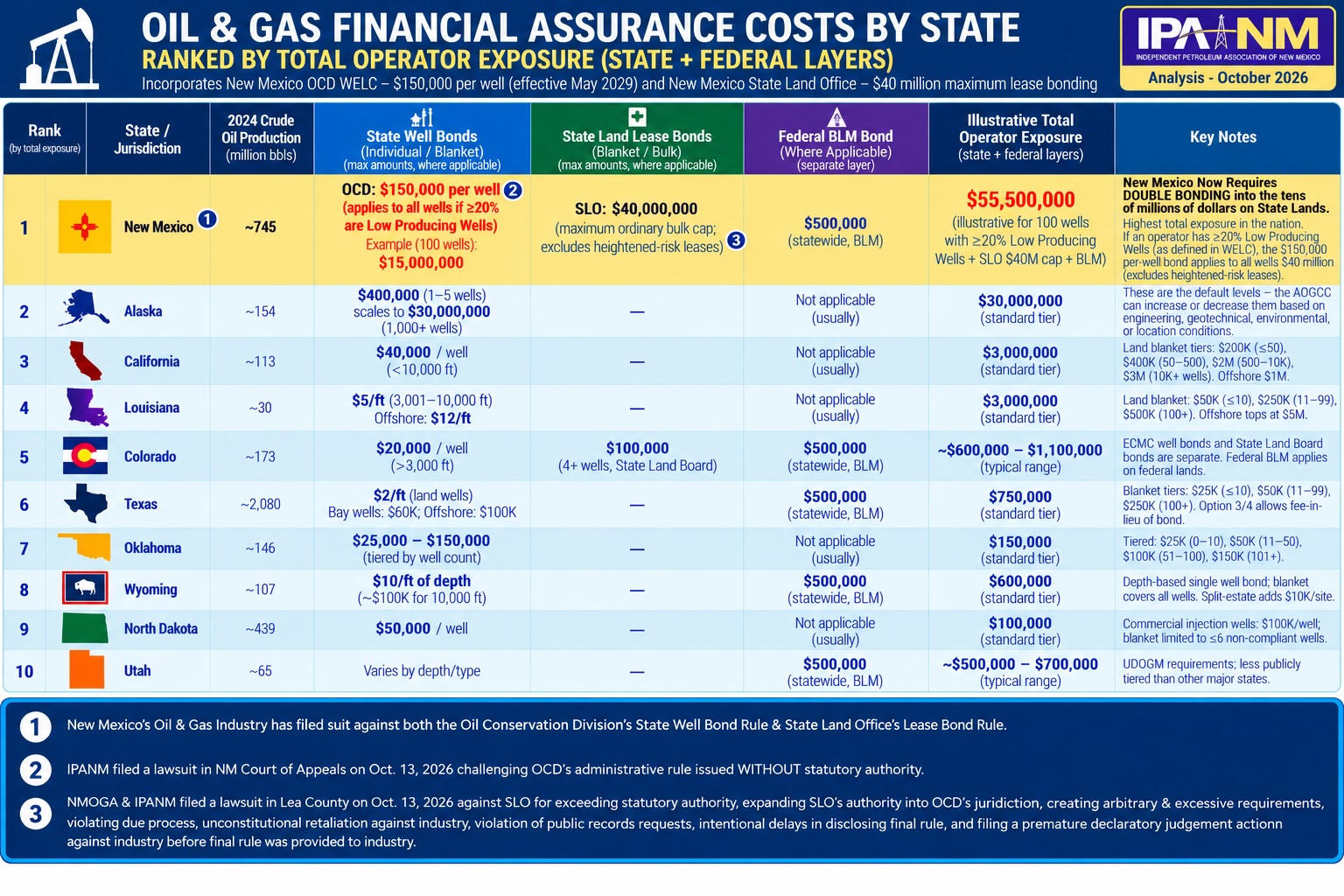
The extension also formally negates this notice that hundreds of New Mexico-based operators received earlier this fall that indicated payment of a new $500,000 blanket bond was due by June 22, 2026. At the time, IPANM advised members to NOT submit the new bond increase due to future action from the Trump administration.

As cited by IPANM partner trades the Domestic Energy Producers Alliance (DEPA) and the National Stripper Well Association (NSWA), had the new bonding increases moved forward:

  • Nearly 21,000 small oil and gas operators nationwide would face a twenty-fold increase in bonding requirements.
  • Thousands of small producers could be forced to shut down, resulting in the loss of many thousands of jobs.
  • Rural communities would experience reduced tax revenues and strain on essential public services.
  • The U.S. could lose up to:
    • 164,000 barrels of oil per day
    • 1.4 billion cubic feet of natural gas per day
    • 172,000 stripper oil and gas wells
  • Premature well closures could increase public financial exposure if wells are abandoned due to operator insolvency.

IPANM also is involved with a lawsuit filed by a group of industry trades against the provisions of the Biden-era Bonding Rule. That lawsuit is on hold as the Trump administration moves forward to formally rescind the existing rule. The Trump BLM has indicated that the formal rescinding of the Biden-era Bonding Rule will occur in 2026.

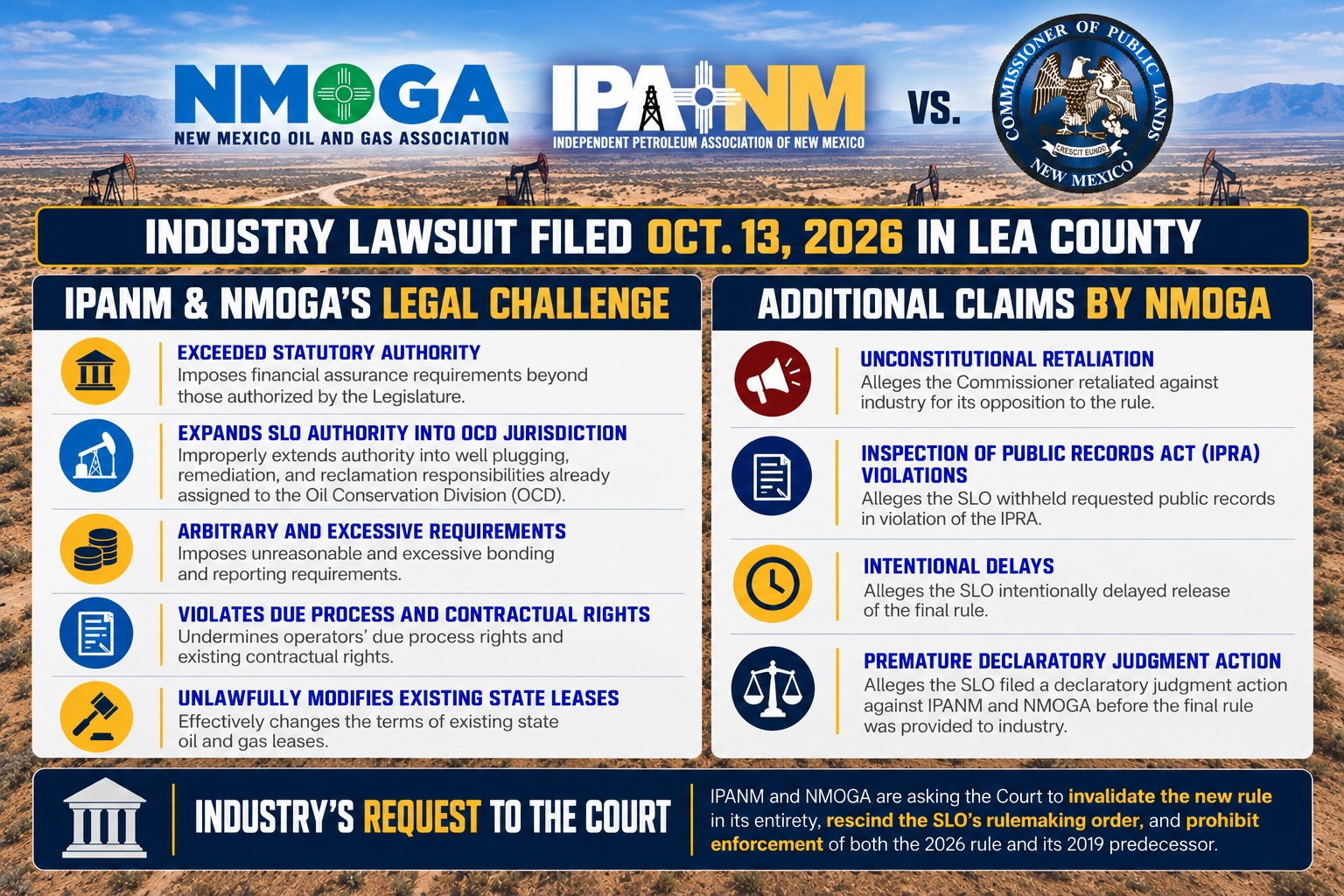
IPANM also remains heavily engaged post-hearing rulemaking regarding a new proposed New Mexico Oil Conservation Division bonding rule covering wells, and a new proposed New Mexico State Land Office bonding increase per lease. Those proposals threaten to disproportionately increase bonding levels on New Mexico state lands