A New Day at IPANM


Industry Benefits

Industry Benefits

Oil & Natural Gas are the lifeblood of the world. Don’t anyone ever tell you differently. To quote Alex Epstein, author of The Moral Case for Fossil Fuels, “Fossil fuels are making the world a better and better place by providing uniquely low-cost, reliable energy to billions of people–and are needed by billions more.” In New Mexico, the Oil & Gas industry is the top sector for state, contributing over $5.3 billion dollars to state and local economies. The New Mexico state budget, alone, received $2.96 billion dollars in direct revenue from the oil and gas industry in our state. That makes up 35% of the entire state budget, which is money that directly goes to funding teachers, first responders, and infrastructure that delivers everything from food, fresh water, and home heating in New Mexico.  Thus, Oil & Gas is the primary supplier and distributor of the three essentials of life: food, water, & shelter.

New Mexico Benefits

Facts

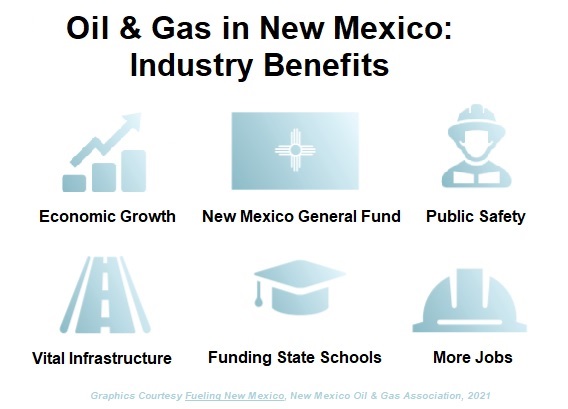
  • Oil & Gas is a $27 billion industry in New Mexico. The extractive industries in New Mexico are the largest contributors to growth of the GDP in New Mexico.
  • Oil & Gas industry supports over one-third (35%), or nearly $3 billion of the state’s annual $8.9 billion budget.
  • More than 134,000 New Mexicans are employed as a result of oil and natural gas production, which is over 15% of the total state population.
  • Oil and gas funds the construction of new roads and highways in New Mexico through direct excise taxes, on top of the general fund budgets appropriated to state and local communities.
  • The Oil & Gas industry funds public safety, which helps New Mexico put more police, firefighters, and first-responders on the streets, keeping our communities safe.
  • New Mexico’s schools receive more than $1.4 billion each year to support students. That funding, alone, pays the salaries of one-third of our teachers.
Global Benefits

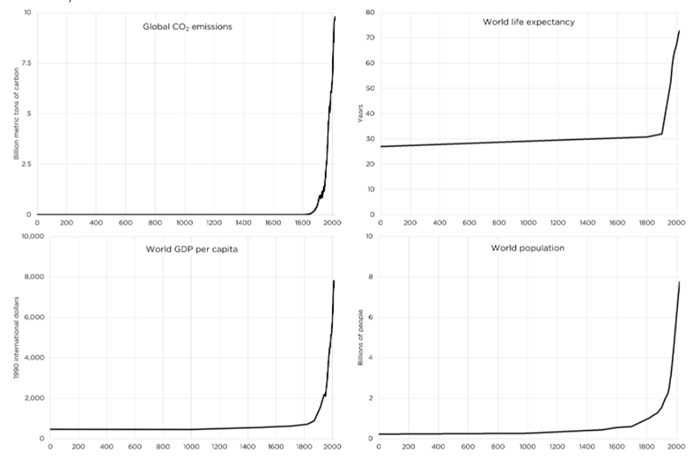
The Link Between Fossil Fuels & The Human Condition
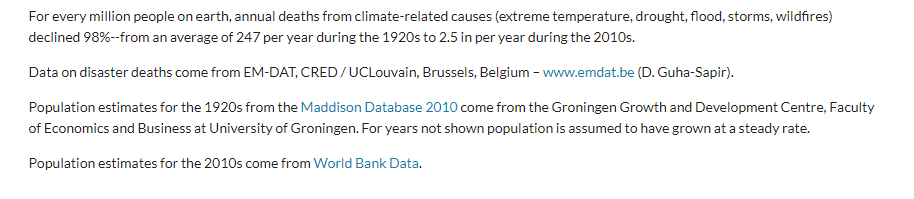
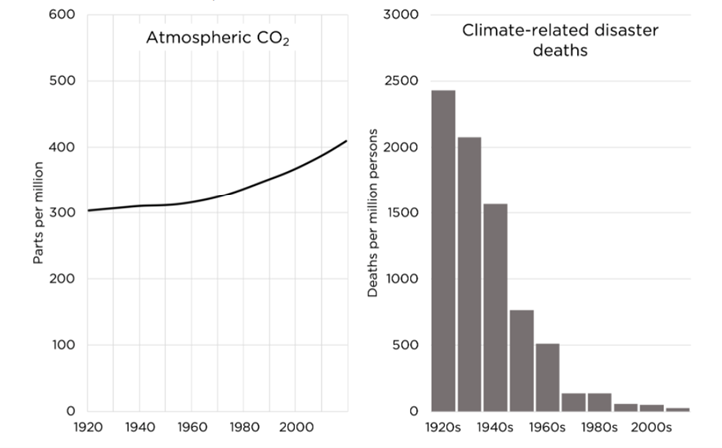
Climate Deaths Decrease & Fossil Fuel Development
All graphics, information & references courtesy Alex Epstein:  https://energytalkingpoints.com/thanksgiving-2021/

Quick Links

Direct New Mexico

Benefits of Oil & Gas

Industry Benefits

In the News

Reference

Links
Industry Benefits In the News

E&E News via Politico (February 5, 2024, Posted to IPANM Website November 13, 2024) - A former Trump Interior Department
Washington Post via City Desk ABQ (Nov. 6, 2024) - President-elect Donald Trump’s return to the White House could reverse
API: New poll shows swing state voters back policies boosting U.S. oil, gas production World Oil (August 15, 2024)  —
POLITICO (August 7, 2024) - Preliminary data from the U.S. Energy Information Administration showed oil companies pumped an average of
Daily Energy Insider (August 1, 2024) - The U.S. Senate Energy and Natural Resources Committee on Wednesday passed a bipartisan

E&E News via Politico (February 5, 2024, Posted to IPANM Website November 13, 2024) – A former Trump Interior Department official has one overarching recommendation for his old boss, should former President Donald Trump win a second bid at the White House: undo what President Joe Biden did.

That directive from William Perry Pendley — who served as the de facto head of Trump’s Bureau of Land Management from 2019 to 2021 — is part of a policy road map advanced by the Heritage Foundation along with dozens of conservative groups, called Project 2025, that would help Trump swiftly reestablish his policy prerogatives should he prevail in the November election.

The road map’s Interior section, written by Pendley, would reinstate some of the department orders from Trump’s first stint in the Oval Office that Biden reversed. Pendley’s plans include reopening most of the National Petroleum Reserve-Alaska to oil and gas developers, cutting new protections for migratory birds, and relocating the BLM national headquarters back to

Pendley called for a reinstatement of Trump-era secretarial orders, revoked by Interior Secretary Deb Haaland for being “inconsistent with protecting public health and the environment,” to limit National Environmental Policy Act reviews and expedite permitting for oil and gas developers.

For full story:  Trump Blueprint Would Revive Interior ‘Energy Dominance’ Push

Washington Post via City Desk ABQ (Nov. 6, 2024) – President-elect Donald Trump’s return to the White House could reverse the gains the United States has made in fighting global warming, experts said, by cementing his plans to unleash domestic fossil fuel production, dismantle key environmental rules and scale back federal support for renewable energy and electric vehicles.

It has also raised fears amongU.S. allies and even some major energy executives who warn a U.S. exit from global climate efforts will hurt American industry as the rest of the world shiftsaway from fossil fuels.

Trump’s election creates “a very long pathway for fossil fuels,” Ben Cahill, an energy scholar at the University of Texas at Austin, said in a phone interview Wednesday. “Investors will feel the outlook is brighter. The industry will be under less pressure.”

While energy was not a focal point of a presidential campaign consumed by immigration, abortion and the future of democracy, it is a policy area where presidents have the authority to make sweeping changes.

Trump – who has dismissed climate change as a “hoax” and courted oil company executives throughout the campaign – has outlined plans that have the potential to boost oil and gas profits as well as greenhouse gas emissions that threaten the world’s climate goals.

Trump is expected to immediately take aim at the Paris climate accord. His plan to withdraw the United States from the pact – as he did during his first term – comes at a critical moment for the compact aimed at limiting warming to 1.5 degrees Celsius (2.7 degrees Fahrenheit)above preindustrial levels. Climate scientists are already warning the planet is on track to blow pastthat target: on Wednesday the European climate agency Copernicus announced that 2024 is assured to be the first calendar year where the global temperature rise has averaged 1.5 degrees Celsius.

Trump has planned a flurry of other actions to bolster U.S. oil and gas companies. He is expected to ease a suite of restrictions on the oil industry’s emissions of methane, a potent greenhouse gas. And he will probably cancel the Biden administration’s pause on permits for new liquefied natural gas export projects, clearing the way for the industry to build billions of dollars worth of infrastructure that could increase U.S. emissions and keep gas flowing to other nations for decades to come.

Oil companies welcome the radical policy shift. “Energy was on the ballot, and voters sent a clear signal that they want choices, not mandates, and an all-of-the-above approach that harnesses our nation’s resources and builds on the successes of his first term,” Mike Sommers, president of the American Petroleum Institute,said in a statement.

What Trump’s victory could mean for oil companies and climate change policy

API: New poll shows swing state voters back policies boosting U.S. oil, gas production

World Oil (August 15, 2024)  — The American Petroleum Institute (API) has released new battleground state polling conducted by Morning Consult demonstrating widespread support for policies that encourage domestic oil and natural gas production and limit reliance on foreign sources.

The poll shows inflation remains a top concern for voters in Arizona, Georgia, Michigan, Nevada, North Carolina, Pennsylvania and Wisconsin, and an overwhelming majority oppose vehicle mandates. As Congress continues to debate bipartisan permitting reform legislation, voters in battleground states expressed strong support for reforms to streamline the approval process for energy infrastructure projects.

With less than 100 days until Election Day, API is urging policymakers on both sides of the aisle to support commonsense energy policies, including those outlined in API’s Five Point Policy Roadmap to unleash America’s energy security and help reduce inflation.

“The U.S. continues to be a global leader in energy production, but the American people recognize that our leaders in Washington must advance an agenda to grow our nation’s energy advantage for decades to come,” Mike Sommers, API president and CEO, said. “With geopolitical tensions rising and inflation remaining a top concern, we need policies that reinforce the role of American energy on the world stage and support access to the affordable, reliable energy consumers need.”

The poll conducted by Morning Consult found:

  • Over 90% of voters are concerned about inflation. (AZ: 94% GA: 93% MI 94% NV: 94% NC: 92% PA: 91% WI: 91%)
  • 80% of voters agree that producing more oil and natural gas in the U.S. could help lower energy and utility costs for American consumers. (AZ: 83% GA: 88% MI: 84% NV: 86% NC: 85% PA: 83% WI: 80%)
  • A majority of voters oppose government mandates that restrict consumer choice, including banning new gasoline, diesel and hybrid vehicles. (AZ: 69% GA: 76% MI: 80% NV: 75% NC: 75% PA: 77% WI: 78%)
  • About 80% of voters support fixing our broken permitting system to streamline the process of approving energy infrastructure projects. (AZ: 79% GA: 81% MI: 82% NV: 81% NC: 80% PA: 84% WI: 80%)
  • Over 80% of voters agree producing oil and natural gas here in America helps make our country more secure against foreign adversaries. (AZ: 89% GA: 91% MI: 87% NV: 85% NC: 88% PA: 86% WI: 87%)
  • More than 80% support leveraging America’s domestic resources rather than relying on other regions of the world. (AZ: 85% GA: 89% MI: 86% NV: 82% NC: 82% PA: 86% WI: 84%)

API: Swing State Voters Back Oil & Gas Production


POLITICO (August 7, 2024) – Preliminary data from the U.S. Energy Information Administration showed oil companies pumped an average of 13.4 million barrels a day from U.S. oil fields during the week ended Aug. 2, surpassing the previous record of 13.3 million the industry has hit several times this year. U.S. oil production began a long climb upward starting in 2008, setting an annual record peak in 2023 that is likely to be broken this year.

Analysts warned that the EIA could revise the number when it releases its monthly data, which generally lags its weekly bulletins by several months. But for now, the number indicates that oil companies have gotten more efficient at pumping oil even as the number of drilling rigs in operation has fallen compared with last year, according to data from oilfield services company Baker Hughes.

“Seems to be an all-time weekly record and indicative of improving the efficiency of using drilling rigs in the oil patch,” Andrew Lipow, head of Houston-based consulting firm Lipow Oil Associates, said of the latest EIA production number.

The United States and other countries are essentially filling in for the oil supply that OPEC+, the production cartel and its larger grouping that includes Russia, have cut in recent years, said Tamas Varga, analyst at PVM Oil Associates.

“The U.S. output surprises to the upside,” Varga said in an email. “Four years ago the consensus was that it will go nowhere near the 13 million barrel mark. What we have been seeing is that the US, amongst other non-OPEC+ producers, has happily filled in the gap left on the supply side of the equation by OPEC+.”

U.S. Oil Output Set To Break 2023’s Record

Daily Energy Insider (August 1, 2024) – The U.S. Senate Energy and Natural Resources Committee on Wednesday passed a bipartisan permitting reform package that bill sponsors say would bolster American energy security.

The committee voted 15-4 to advance the Energy Permitting Reform Act of 2024, S. 4753, introduced on July 23 by U.S. Sens. Joe Manchin (I-WV) and John Barrasso (R-WY) to accelerate the permitting process for all types of critical energy and mineral projects in the United States. The bill advanced to the full Senate for action.

Manchin, chairman of the Senate Energy and Natural Resources Committee, reiterated the importance of the legislation with regards to accelerating the permitting process for American energy security and emission reductions.

“This is everything that’s needed in this country to make sure that we’re able to deliver dependable, reliable and affordable energy in the cleanest fashion possible, realizing that we have to have dispatchable power now, but also realize that we’re investing and we have to bring forward the transmission to basically move those electrons in the cleanest fashion with renewables. So we’re doing everything we can to have a balanced approach,” Manchin said.

The bill is a targeted set of consequential reforms within the committee’s jurisdiction that will not only boost U.S. energy and mineral production, but also help lower costs for Americans, Barrasso said prior to the bill’s markup.

“It will strengthen our economic and national security and the security of our allies around the world,” the senator said. “Our bill will guarantee future access to oil and natural gas resources on federal lands and waters. It will permanently end President Biden’s reckless ban on new liquefied natural gas exports. It will fix the disastrous Rosemont decision by the U.S. Court of Appeals for the Ninth Circuit.

“And it will ensure that new transmission lines meaningfully improve electric reliability and actually benefit customers,” Barrasso added. “Our bill includes a series of reforms for onshore oil and gas leasing and permitting.”


Permitting reform package passes Senate committee, heads to full chamber