A New Day at IPANM


Industry Benefits

Industry Benefits

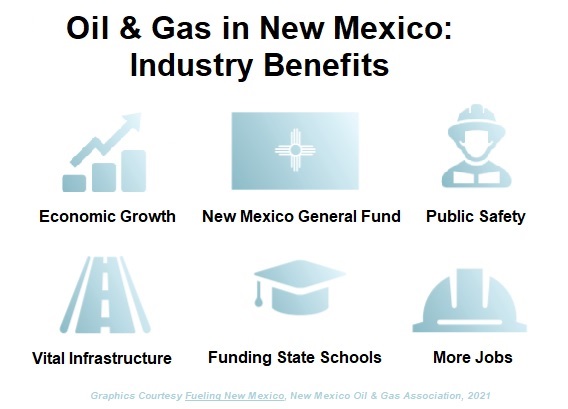
Oil & Natural Gas are the lifeblood of the world. Don’t anyone ever tell you differently. To quote Alex Epstein, author of The Moral Case for Fossil Fuels, “Fossil fuels are making the world a better and better place by providing uniquely low-cost, reliable energy to billions of people–and are needed by billions more.” In New Mexico, the Oil & Gas industry is the top sector for state, contributing over $5.3 billion dollars to state and local economies. The New Mexico state budget, alone, received $2.96 billion dollars in direct revenue from the oil and gas industry in our state. That makes up 35% of the entire state budget, which is money that directly goes to funding teachers, first responders, and infrastructure that delivers everything from food, fresh water, and home heating in New Mexico.  Thus, Oil & Gas is the primary supplier and distributor of the three essentials of life: food, water, & shelter.

New Mexico Benefits

Facts

  • Oil & Gas is a $27 billion industry in New Mexico. The extractive industries in New Mexico are the largest contributors to growth of the GDP in New Mexico.
  • Oil & Gas industry supports over one-third (35%), or nearly $3 billion of the state’s annual $8.9 billion budget.
  • More than 134,000 New Mexicans are employed as a result of oil and natural gas production, which is over 15% of the total state population.
  • Oil and gas funds the construction of new roads and highways in New Mexico through direct excise taxes, on top of the general fund budgets appropriated to state and local communities.
  • The Oil & Gas industry funds public safety, which helps New Mexico put more police, firefighters, and first-responders on the streets, keeping our communities safe.
  • New Mexico’s schools receive more than $1.4 billion each year to support students. That funding, alone, pays the salaries of one-third of our teachers.
Global Benefits

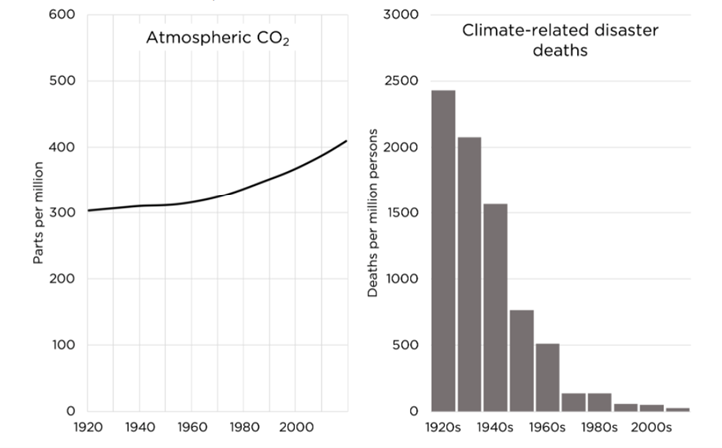
The Link Between Fossil Fuels & The Human Condition
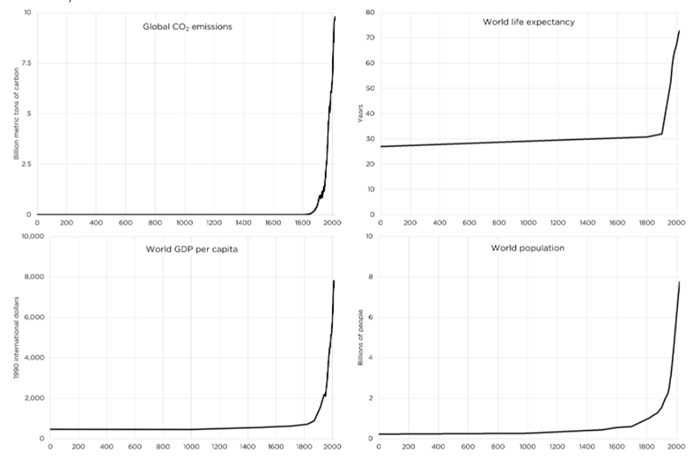
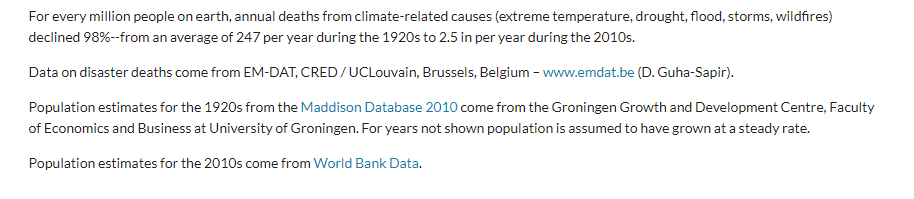
Climate Deaths Decrease & Fossil Fuel Development
All graphics, information & references courtesy Alex Epstein:  https://energytalkingpoints.com/thanksgiving-2021/

Quick Links

Direct New Mexico

Benefits of Oil & Gas

Industry Benefits

In the News

Reference

Links
Industry Benefits In the News

The state's increased spending has come as revenue collections have exploded to record-high levels.Revised estimates released this week predicted legislators
IPAA (Dec. 8, 2024) - IPAA’s priorities include equitable tax policies for energy businesses, sensible environmental regulations, reform of the
EIA (Dec. 4, 2024) - As of 2024, the United States is still the single largest crude oil producer in
EnergyNow Media (Nov. 30, 2024) - President-elect Donald Trump’s transition team is crafting an executive order to lift a moratorium
E&E News via Politico/Greenwire (April 24, 2024, Posted to IPANM Website on November 14, 2024) - A Trump administration Interior

The state’s increased spending has come as revenue collections have exploded to record-high levels.Revised estimates released this week predicted legislators will have $892.3 million in “new” money available next year — a figure that represents the difference between projected revenue and current total spending levels. The budget surplus is part of a multi-year revenue bonanza, fueled primarily by record-high oil and natural gas productions in southeast New Mexico’s Permian Basin.

ABQ Journal (SANTA FE | Dec. 12, 2024) – Big spending infusions for New Mexico road construction, homelessness, child care and the state’s water long-term supply would be authorized under a $10.9 billion spending plan Gov. Michelle Lujan Grisham’s office rolled out Thursday. The budget proposal would boost overall state spending by about $720 million — or 7% — over current levels and would also provide pay raises for state employees and public school workers.

Top Lujan Grisham administration officials described the budget plan as prudent, even though recurring state spending has increased by 45% since the governor took office in 2019.

“I do think it’s sustainable,” Finance and Administration Secretary Wayne Propst said Thursday.

While the governor’s budget plan typically is not unveiled until January, just before the start of the legislative session, he said the decision was made to release it earlier this year.

“We feel that in the interest of transparency and to give time for public input … there’s no reason to wait until a week before the session,” Propst said.

The budget plan released Thursday does not call specifically for tax cuts or rebates, though top Governor’s Office aides said those proposals could be considered during the upcoming 60-day legislative session. The state has issued several rounds of tax rebates in recent years amid an ongoing revenue boom, including $500 per taxpayer rebates that were sent out in the summer of 2023.

But Sen. George Muñoz, D-Gallup, the chairman of the Legislative Finance Committee, said during budget hearings this week the past rebates were “pretty much a waste of money.” He said the state could have better put the money to use by funneling into trust funds to be invested for future use.

The state’s increased spending has come as revenue collections have exploded to record-high levels.Revised estimates released this week predicted legislators will have $892.3 million in “new” money available next year — a figure that represents the difference between projected revenue and current total spending levels. The budget surplus is part of a multi-year revenue bonanza, fueled primarily by record-high oil and natural gas productions in southeast New Mexico’s Permian Basin. The state is the second-largest oil producer in the nation — behind only Texas — and oil and gas revenue make up about 35% of the state’s total revenue collections, according to legislative data.

While state spending has increased, lawmakers have also set aside millions of dollars from the revenue windfall in trust funds. The money in those funds is then invested for future use. An early childhood trust fund established with a $300 million appropriation in 2020, for instance, has ballooned to a projected $9.6 billion balance in the current fiscal year.

The governor’s spending plan would allocate more money to several existing funds, including $50 million for a rural hospital fund and $110 million for a matching fund that provides money for state agencies, cities, counties and tribal governments to leverage against federal dollars. It also calls for $100 million to be spent on expanded behavior health care programs, which could include new mental health and substance abuse facilities. That money could be set aside in a new trust fund, or spent directly.

Governor’s Budget Reaches $10.9 Billion; 7% Increase


IPAA (Dec. 8, 2024) – IPAA’s priorities include equitable tax policies for energy businesses, sensible environmental regulations, reform of the National Environmental Policy Act (NEPA)/permitting reform, access to federal lands and waters, reforms to the Endangered Species Act, and lifting the pause on issuing permits for liquefied natural gas (LNG) export facilities. We also want to shift the policies of the federal government from meeting international climate goals to focus on energy security for Americans and increasing U.S. business competitiveness internationally.

The choices our nation makes regarding energy policy will have an enormous impact on America’s economy and our position in the world. We urge the administration to take positive actions to support America’s small oil and natural gas producers and develop a robust energy policy that will unleash American entrepreneurs, expand our economy, and make the United States an energy superpower once again. This will not only benefit the United States, but nations around the globe.

Linked below is a booklet of several issues the IPAA believes are key to helping the United States remain at the forefront of energy development in the coming years. In addition, attached is a more detailed issues document outlining specific actions IPAA believes are necessary for the United States to remain the global energy leader in the years ahead. America’s independent oil and natural gas producers play a critical role in our country’s domestic energy development, and we look forward to collaborating with you and your administration to find innovative solutions to address America’s energy challenges.

IPAA’s Transition Issue Priorities


EIA (Dec. 4, 2024) – As of 2024, the United States is still the single largest crude oil producer in the world, a position it has held since 2018.

However, the U.S. is not a monolithic entity, and the amount of oil that a given area can produce is limited by how much crude is actually underneath it. As such, crude oil production varies from state to state. And though some states continue to pump out crude oil in enormous volumes, many have been experiencing a dwindling output over the years.

Here’s what to know about the top six oil-producing states, according to the U.S. Energy Information Administration, and their respective petroleum industries.

1. Texas

  • ·       Total barrels annually (2023): 2.01 billion
  • ·       Share of U.S. production (2023): 42.61%
  • ·       Barrels per month (August 2024): 180.36 million

2. New Mexico

  • ·       Total barrels annually (2023): 665.55 million
  • ·       Share of U.S. production (2023): 14.1%
  • ·       Barrels per month (August 2024): 64.85 million

3. North Dakota

  • ·         Total barrels annually (2023): 431.72 million
  • ·         Share of U.S. production (2023): 9.14%
  • ·         Barrels per month (August 2024): 36.24 million

4. Colorado

  • ·         Total barrels annually (2023): 166.79 million
  • ·         Share of U.S. production (2023): 3.53%
  • ·         Barrels per month (August 2024): 14.09 million

5. Oklahoma

  • ·         Total barrels annually (2023): 156.78 million
  • ·         Share of U.S. production (2023): 3.32%
  • ·         Barrels per month (August 2024): 11.92 million

6. Alaska

  • ·            Total barrels annually (2023): 155.47 million
  • ·            Share of U.S. production (2023): 3.29%
  • ·            Barrels per month (August 2024): 12.28 million

New Mexico Remains No. 2 Oil Producing State

EnergyNow Media (Nov. 30, 2024) – President-elect Donald Trump’s transition team is crafting an executive order to lift a moratorium on natural gas export permits that was put in place by the Biden administration, people familiar with the matter said.

The move is part of broader package of actions on US energy planned for Trump’s early days in office, said the people who asked not to be named because the information is private. The LNG executive order could mandate that the Energy Department approve pending export permits, or it could direct the agency to resume its review of applications as part of directives on energy policy, though a final approach has not yet been determined, the people said.

The measures are also expected to include plans to make good on Trump’s campaign promises to increase drilling on federal lands and waters and repeal new environmental regulations for coal- and natural-gas-fired power plants, according to Reuters, which reported on the plans Monday.

A Trump transition team representative did not respond to a request for comment.

On the campaign trail, Trump vowed to rescind unspent funds from Biden’s signature climate law, get producers pumping more oil and gas and bring down energy costs as well as declare a national emergency to achieve a massive increase in domestic energy supply.

New permits to export LNG to key Asian nations and other countries that aren’t free-trade partners with the US have been on hold since January while the Biden administration examines the climate, economic and national security implications of increasing US exports of the fuel. The Biden administration could issue a study with the results of their findings as soon as this week. The

Biden’s moratorium on export approvals has threatened to disrupt plans for multibillion-dollar export projects by Venture Global LNG Inc., Energy Transfer LP and Commonwealth LNG, among other projects with permits pending before the Energy Department.

Trump has promised to end Biden’s permitting pause his “very first day back.”


Trump Team Preparing Early Action to End Biden’s LNG Pause

E&E News via Politico/Greenwire (April 24, 2024, Posted to IPANM Website on November 14, 2024) – A Trump administration Interior Department 2.0 — if it happens — could well turn out to be a reboot of the original.

Particularly at the department’s upper levels, Interior veterans of the first Trump administration are being cited by their former colleagues and others with skin in the game as strong potential candidates to serve again, if former President Donald Trump wins against President Joe Biden in November.

“I think there are going to be a lot of familiar faces that will want to go back,” said Cole Rojewski, Interior’s congressional liaison between 2019 and 2021. “I think a lot of people enjoyed their experience in the Trump administration.”

Many remain hesitant to publicly ‘fess up to specific Interior ambitions right now. But in interviews with former Trump administration officials, Capitol Hill veterans, GOP-connected lobbyists and others, a number of names keep popping up.

Those among the frequently mentioned range from former Interior Secretary David Bernhardt down to other political appointees now leading agencies in Republican-led states.

“I think there are some great people,” Rep. Ryan Zinke (R-Mont.), Trump’s first Interior secretary, told E&E News, adding that “there are a lot of areas where the president is going to need some help [and] there are some folks that served before and understand the issues.”

Zinke stepped down after two years in the top job in the face of ethics inquiries that he called partisan and unfounded. He was subsequently elected to a House seat that he had held previously. Zinke said both that he has “not been asked” about a possible second appointment and that a “president is hard to say no to.”

The former Navy SEAL officer further stressed that “there are a lot of variables” affecting the decisionmaking both of an incoming president and a potential appointee. Down-ballot election results, partisan balances in the House and Senate and the idiosyncrasies of Trump’s approach to team-building all play a role.

“There are a lot of people who [were] involved in his first term and played a significant role and made a great contribution. I’m sure they’d be keen on going back and completing the work that we began,” said former Trump-era Bureau of Land Management official William Perry Pendley.

For Full Article: Interior Alumni Eye Return For A Second Trump Term