A New Day at IPANM


Industry Benefits

Industry Benefits

Oil & Natural Gas are the lifeblood of the world. Don’t anyone ever tell you differently. To quote Alex Epstein, author of The Moral Case for Fossil Fuels, “Fossil fuels are making the world a better and better place by providing uniquely low-cost, reliable energy to billions of people–and are needed by billions more.” In New Mexico, the Oil & Gas industry is the top sector for state, contributing over $5.3 billion dollars to state and local economies. The New Mexico state budget, alone, received $2.96 billion dollars in direct revenue from the oil and gas industry in our state. That makes up 35% of the entire state budget, which is money that directly goes to funding teachers, first responders, and infrastructure that delivers everything from food, fresh water, and home heating in New Mexico.  Thus, Oil & Gas is the primary supplier and distributor of the three essentials of life: food, water, & shelter.

New Mexico Benefits

Facts

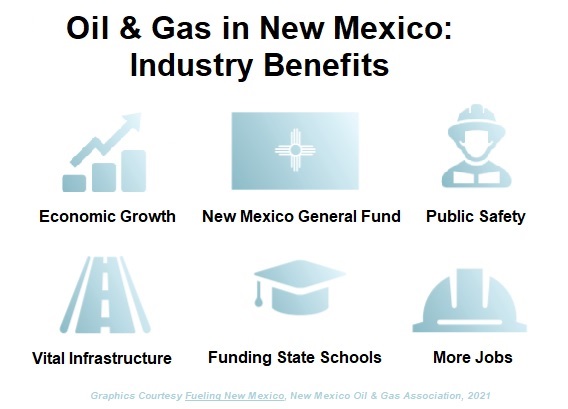
  • Oil & Gas is a $27 billion industry in New Mexico. The extractive industries in New Mexico are the largest contributors to growth of the GDP in New Mexico.
  • Oil & Gas industry supports over one-third (35%), or nearly $3 billion of the state’s annual $8.9 billion budget.
  • More than 134,000 New Mexicans are employed as a result of oil and natural gas production, which is over 15% of the total state population.
  • Oil and gas funds the construction of new roads and highways in New Mexico through direct excise taxes, on top of the general fund budgets appropriated to state and local communities.
  • The Oil & Gas industry funds public safety, which helps New Mexico put more police, firefighters, and first-responders on the streets, keeping our communities safe.
  • New Mexico’s schools receive more than $1.4 billion each year to support students. That funding, alone, pays the salaries of one-third of our teachers.
Global Benefits

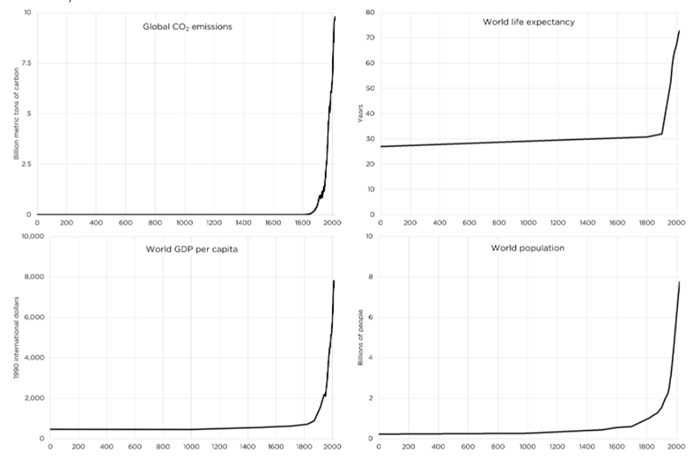
The Link Between Fossil Fuels & The Human Condition
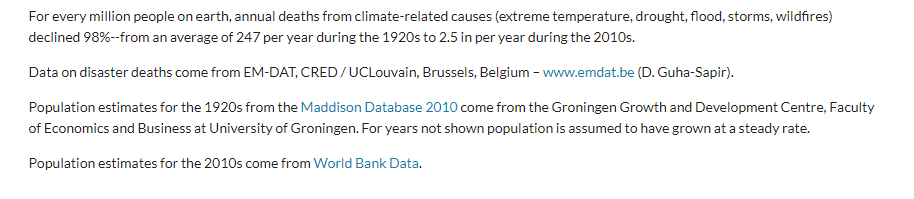
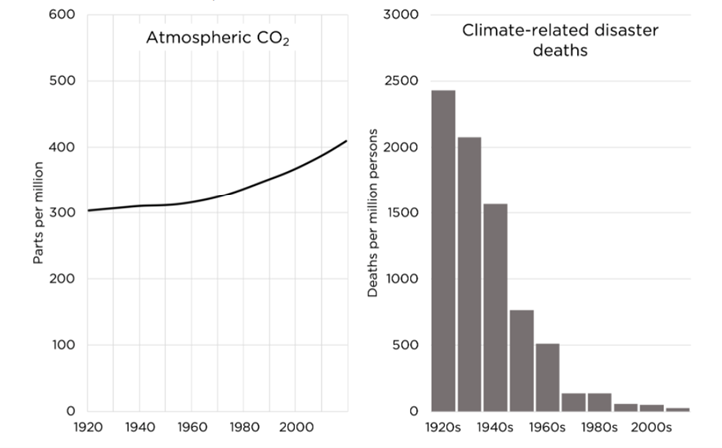
Climate Deaths Decrease & Fossil Fuel Development
All graphics, information & references courtesy Alex Epstein:  https://energytalkingpoints.com/thanksgiving-2021/

Quick Links

Direct New Mexico

Benefits of Oil & Gas

Industry Benefits

In the News

Reference

Links
Industry Benefits In the News

IPANM (Sept. 1, 2026) - IPANM joined New Mexico Governor Michelle Lujan Grisham this week on a landmark trade mission
American Oil & Gas Reporter | ALBUQUERQUE, N.M. (June 21, 2026) —Long before New Mexico’s oil industry became entangled in
IPAA-Backed Bill Expanding Energy Production in New Mexico Moves Out of Committee IPAA (June 11, 2026) - On Wednesday, the
ENERGYWIRE (June 5, 2026)  Three months after the war in Iran sent crude prices soaring, oil producers in the biggest
Last week, something big happened in the U.S. oil and gas industry. In southeastern New Mexico, the federal government held

IPANM (Sept. 1, 2026) – IPANM joined New Mexico Governor Michelle Lujan Grisham this week on a landmark trade mission to Ireland centered on one of the most consequential energy conversations of our time: can New Mexico natural gas — liquefied and shipped across the Atlantic — become a long-term pillar of Ireland’s energy security?

The answer, based on the meetings held, is that Ireland is ready to have that conversation seriously. IPANM Executive Director Jim Winchester, NMOGA’s Legislative Affairs Director Ashley Wagner, and IPANM Past-President and State Representative Mark Murphy represented the industry on the ground, engaging directly with Irish government ministers and energy executives on what a durable, long-term LNG supply relationship could look like. Ireland’s situation is straightforward and urgent: the country depends on outside sources for the vast majority of its natural gas, and its last remaining domestic field is running dry. What’s shifted is the candor — Irish leaders are now openly acknowledging that the energy transition will take longer than planned, and that reliable baseload supply isn’t optional while that transition unfolds. New Mexico, producing at scale with enormous untapped capacity, is positioned to be exactly the kind of long-term partner Ireland needs.

The conversations weren’t abstract. The delegation met with Gas Networks Ireland CEO David Kelly — the infrastructure operator who would move LNG once it arrives — as well as Minister for Climate, Environment and Energy Darragh O’Brien and Minister of State Neale Richmond. Those are the decision-makers who control the policy environment for expanded LNG import capacity. The message New Mexico brought was simple and backed by production reality: we have the gas, we have the ability to ramp, and we’re ready to be a reliable ally. Also traveling with the Governor were Chief of Staff Dan Schlegel, Deputy COO Caroline Buerkle, Economic Development Cabinet Secretary Rob Black, and Representative Tara Lujan, alongside the Glanbia CEO meeting that reflects the broader economic relationship between the two regions.

This is precisely the kind of mission the industry should be engaged in. The world doesn’t need less natural gas — it needs more of it, from reliable partners who can deliver. New Mexico is that partner.

American Oil & Gas Reporter | ALBUQUERQUE, N.M. (June 21, 2026) —Long before New Mexico’s oil industry became entangled in protracted courtroom fights and regulatory battles, the state’s oil and gas industry was shaped by independents chasing new formations with little more than persistence and a willingness to bet that the next well would deliver.

The current leaders of the Independent Petroleum Association of New Mexico say that dogged spirit will be central to this year’s annual meeting as the state’s independents confront what IPANM sees as one of the industry’s most difficult operating climates in years.

The association will host its annual meeting July 8-10 at the Sandia Resort in Albuquerque. Association leaders say the gathering comes at a pivotal moment for independents operating in New Mexico, with producers simultaneously battling proposed bonding increases, permitting delays, litigation, and regulatory pressures that threaten the long-term viability of smaller operators.

Click Here to Read Full Story

This content is for members only.

Please login here! If you have any questions about your membership, please email megan@ipanm.org.

ENERGYWIRE (June 5, 2026)  Three months after the war in Iran sent crude prices soaring, oil producers in the biggest U.S. oil field are starting to ramp up their production.

The catch: The new push may only boost production by about 250,000 barrels a day, too little to lower the price of oil or provide relief for drivers.

Independent drillers have begun adding rigs in the Permian Basin, albeit slowly, according to the data analysis firm Enverus. And the same companies are working through a backlog of wells that can be brought online quickly.

The trends show that producers expect high oil prices to last into 2027 because it will take that long for the new wells to come online. And the volume of oil expected from the new activity isn’t likely to bring them down.

“It does not move the needle in the greater scheme of things,” Alex Ljubojevic, a lead supply analyst at Enverus, said in an interview.

As recently as January, benchmark U.S. oil was trading below $60 a barrel and companies were shutting down rigs and slowing production. Permian Basin rigs dropped from a high of 257 last June to 221 on Jan. 1, according to Enverus data.

When the U.S. began bombing Iran in February, sending crude prices above $90 a barrel, producers were cautious about drilling new wells because they were concerned that the price increase wouldn’t last. Independent producers, particularly shale drillers in the Permian Basin, are typically willing to take on more risk than major oil companies.

The price of oil has traded above $90 a barrel this week as sporadic violence continued in Iran and other Persian Gulf nations.

Some small operators in the Permian Basin have opted to finish off what the industry calls drilled but uncompleted wells (DUCs) that haven’t been hydraulically fractured, because it brings on production faster than new drilling, said Kirk Edwards, president of Latigo Petroleum in Odessa, Texas, and a former chair of the Permian Basin Petroleum Association.

“It’s a definite interim strategy,” Edwards said in an interview. “They’re trying to accelerate their return on investment with these $90–$100 oil prices, so they’re trying to get as much oil, everybody is trying to get as much oil in the market as they can right now, to take advantage of these prices.”

Diamondback Energy, a shale producer based in Midland, Texas, has 73 unfracked wells as of April 2026, the most among independent producers, according to data analytic firm Rystad Energy. Diamondback announced in May that it will deploy five fracking crews to complete some of them.

“This level of incremental activity maintains our current level of capital efficiency and puts Diamondback in a differentiated position,” CEO Kaes Van’t Hof said in a letter to stockholders.

The number of drilling rigs in the Permian Basin has been climbing, too, hitting 245 in May, according to Enverus. The number dropped to 240 this week.

Some operators in the Permian are also looking for new places to drill. A group of independent shale producers obtained 761 new drill permits in the first quarter of 2026, up from 514 in the last quarter of 2025, according to Rystad.

Among gas-focused producers, some independent companies are not expanding operations due to low gas prices, said Michael Banschbach, an oil and natural gas marketing consultant. Gas prices at the benchmark Henry Hubhave stayed below $3.50 per million British thermal units most of this year, despite the war in the Middle East.

“These producers don’t have a lot of oil, so with this gas it’s an easy decision for them to shut down,” he said.

One of the reasons the rig count — and by extension, oil production — isn’t growing faster is the way the Permian Basin has changed in the last decade.

Major oil producers like Exxon Mobil and Chevron have bought many of the independent companies that helped develop shale drilling, and they’re more cautious about ramping up production when prices rise.

The majors control about 70 percent of the best drilling locations in the basin, Enverus estimated in April. And although they expect their production to rise, large companies can take a long-term view about price trends.

“It’s very early to, I think, have a high degree of confidence in terms of how this all plays out,” Chevron CEO Mike Wirth said on a May 2 call with analysts.

Last week, something big happened in the U.S. oil and gas industry. In southeastern New Mexico, the federal government held the largest onshore oil and natural gas lease sale in American history. It generated more than $4 billion — more than four times the previous record.

Last week’s lease sale in southeastern New Mexico shattered records. It raised about $4 billion. That’s more than four times the amount of the previous record for an onshore sale.

The sale also broke the record for the highest bid for a single lease — $405.8 million for just one lease in Lea County.

First, what is a lease sale?

A lease sale is how the federal government rents out the right to explore and drill for oil and natural gas beneath public land.

In a lease sale, the government auctions off leases for parcels of land to energy companies. The winning bidder pays an upfront amount for the lease, and then — if they successfully find and produce oil or gas — they pay the government an ongoing percentage of the value (royalty) of everything they produce. Land is temporarily leased, not sold, during a lease sale. The government retains ownership of the land.

What changed that made this lease sale so big?

A key federal policy change included in last year’s One Big Beautiful Bill (OBBB) Act was the difference-maker. This policy change improved the quality of the land offered for leasing.

The acreage in this sale sits in southeastern New Mexico, over both the Delaware Basin and the Permian Basin (big shale formations that are known to produce oil and gas). The government had designated the land eligible for oil and gas leasing years ago, but it hadn’t been included in previous lease sales. There was a disconnect between where industry geologists believed oil and gas would be best produced, and which parcels the government chose to offer.

But the OBBB Act changed how the government selects parcels of land for leasing. It stipulated that at least 50% of the parcels of land offered in lease sales must be lands that were actually nominated by interested companies.

So why did bidding climb so high? Drilling on neighboring land had already shown that the area was highly likely to produce oil and gas. Producers nominated these parcels for the lease sale because they had high confidence in their potential to produce. And because of the policy change in the OBBB Act, those high-confidence parcels of land were certain to be included in the auction.

The policy change meant that this was some of the lowest-risk acreage the industry had seen in years.

What does this historic lease sale say about the future of energy demand?

For any investment, demand matters. And when it comes to energy, demand is projected to grow.

Global energy markets remain tight following disruption in the Strait of Hormuz. At the same time, new technologies like artificial intelligence, data centers, advanced manufacturing and rising global living standards will require more energy, not less, and oil and natural gas will play a critical role in supplying it.

Why should Americans care about lease sales?

The money raised by lease sales flows back to taxpayers. In 2025, energy production on federal and tribal onshore lands, and federal offshore areas generated a whopping $14.6 billion in revenue.

For onshore leases, revenue is split between the federal government and the state where the land sits. In the case of last week’s sale, New Mexico. The rest goes to the U.S. Treasury and a federal fund for Western water projects.

In New Mexico, the money raised by federal and state leases is a big piece of the state’s budget — it pays for things like public schools, healthcare and infrastructure without raising taxes. Oil and gas revenue underwrites the state’s Early Childhood Education and Care Fund, which makes childcare free for New Mexico families.

The key takeaway

The broader lesson is that policy matters. In this case, a seemingly small policy change created big benefits for the country in the form of revenue, jobs and energy security.

Amid the current global energy disruption and looking at long-term rising energy demand, federal and state policy has an outsized impact in determining whether the United States will be able to deliver the energy we need to build our future. And as last week’s lease sale demonstrated, even relatively small changes can create big benefits.


https://ipanm.org/wp-content/uploads/2026/06/MEDIA-ARTICLE-An-Antomy-of-a-Lease-Sale.pdf