A New Day at IPANM


Industry Benefits

Industry Benefits

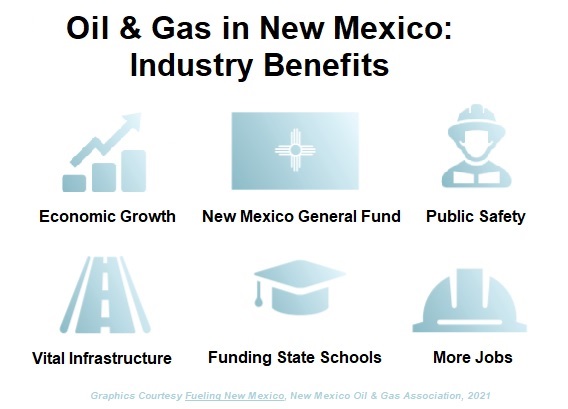
Oil & Natural Gas are the lifeblood of the world. Don’t anyone ever tell you differently. To quote Alex Epstein, author of The Moral Case for Fossil Fuels, “Fossil fuels are making the world a better and better place by providing uniquely low-cost, reliable energy to billions of people–and are needed by billions more.” In New Mexico, the Oil & Gas industry is the top sector for state, contributing over $5.3 billion dollars to state and local economies. The New Mexico state budget, alone, received $2.96 billion dollars in direct revenue from the oil and gas industry in our state. That makes up 35% of the entire state budget, which is money that directly goes to funding teachers, first responders, and infrastructure that delivers everything from food, fresh water, and home heating in New Mexico.  Thus, Oil & Gas is the primary supplier and distributor of the three essentials of life: food, water, & shelter.

New Mexico Benefits

Facts

  • Oil & Gas is a $27 billion industry in New Mexico. The extractive industries in New Mexico are the largest contributors to growth of the GDP in New Mexico.
  • Oil & Gas industry supports over one-third (35%), or nearly $3 billion of the state’s annual $8.9 billion budget.
  • More than 134,000 New Mexicans are employed as a result of oil and natural gas production, which is over 15% of the total state population.
  • Oil and gas funds the construction of new roads and highways in New Mexico through direct excise taxes, on top of the general fund budgets appropriated to state and local communities.
  • The Oil & Gas industry funds public safety, which helps New Mexico put more police, firefighters, and first-responders on the streets, keeping our communities safe.
  • New Mexico’s schools receive more than $1.4 billion each year to support students. That funding, alone, pays the salaries of one-third of our teachers.
Global Benefits

The Link Between Fossil Fuels & The Human Condition
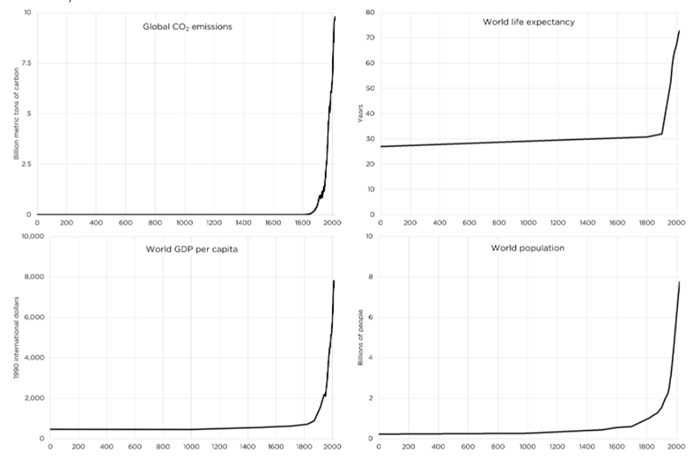
Climate Deaths Decrease & Fossil Fuel Development
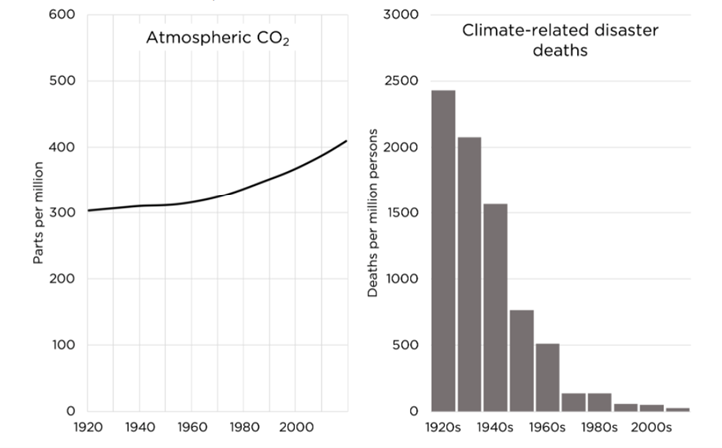
All graphics, information & references courtesy Alex Epstein:  https://energytalkingpoints.com/thanksgiving-2021/

Quick Links

Direct New Mexico

Benefits of Oil & Gas

Industry Benefits

In the News

Reference

Links
Industry Benefits In the News

The Henderson News (Feb. 29, 2024) - Twenty years ago the United States imported more than half of the oil we
IPAA (February 16, 2024) - America’s oil and natural gas producers are innovating to produce more oil and gas than
Oilprice.com (Jan. 4, 2024) - The United States has become the world's largest exporter of liquefied natural gas, surpassing Qatar
IPANM (Oct. 18, 2023) - IPANM announces an exclusive opportunity for our members, as the New Mexico Society of CPAs
World Oil (August 31, 2023) — The Permian basin's economic impact continues to gain momentum, bringing promising news for Texas,

The Henderson News (Feb. 29, 2024) – Twenty years ago the United States imported more than half of the oil we consumed each day. Today, primarily through innovative technology developed by the American oil and natural gas industry, the U.S. exports more oil than it imports. In 2004, the U.S. imported 13.7 million barrels of oil per day (b/d) while producing 5.2 million b/d, resulting in a negative 8.5 million b/d. Currently, the U.S. imports just 6 million b/d while producing 13.3 million b/d, resulting in the U.S. becoming a net exporter of oil. Natural gas also has become a net exporter with liquefied natural gas (LNG) traveling to Japan to the west and Europe to the east and many other countries.

The industry began experimenting with new technology in the 1990s that involved drilling vertically into shale formations and then drilling horizontally and then hydraulic fracturing the shale to free the oil and gas to flow to the surface. Around 2008 the rush to drill using this new technology took off. However, some of the politicians in Washington, D.C. are using the regulatory weapon against the oil and gas industry. President Joe Biden has used his power in an attempt to make it more difficult and expensive for the oil industry. The Biden administration recently implemented a complicated new methane tax, proposed new emission standards for vehicles, limited exploration on public lands, and proposed limiting LNG exports.

The American Petroleum Institute (API) this week released a new national poll demonstrating widespread concern over Washington’s approach on energy policy. The poll, conducted Feb. 9-13 of 1,132 registered voters, found 86% believe producing oil and natural gas here in America helps make our country more secure against action by countries such as China and Russia. Also, the survey found 84% believe producing more oil and natural gas in the U.S. could help lower energy costs for American consumers and small businesses. Two out of three American voters say the country is on the wrong track on energy policy, and following the administration’s recent pause on LNG export permits, the poll found nine in 10 Americans believe the U.S. should continue to supply natural gas to our allies overseas, API said. With recent reports that the administration plans to impose a de-facto ban on new gas-powered vehicles, the poll found that the majority of Americans (75%) would oppose such regulations restricting consumer choice.

“While the U.S. continues to lead the world in energy production, it’s clear the American people see that misguided policy choices today can sow the seeds of tomorrow’s energy crisis,” API President and CEO Mike Sommers said.

“Whether it’s partisan decisions to restrict American natural gas as a source of strength around the world and good-paying jobs here at home, or regulatory plans to dictate the type of cars consumers can drive—voters on both sides of the aisle know we are on the wrong path on energy policy. With much at stake for our economy and national security, it’s time for Washington to change course and forge a bipartisan path that embraces all reliable and affordable American energy,” Sommers said.

IPAA (February 16, 2024) – America’s oil and natural gas producers are innovating to produce more oil and gas than ever while generating less emissions and bringing reliable, affordable energy to Americans and our global allies. In its latest short-term energy outlook, the Energy Information Administration estimated that U.S. crude oil production reached “an all-time high in December of more than 13.3 million barrels per day.”

That production helps stabilize prices for consumers. Oil and natural gas are sold on global markets, and prices can be affected by events or decisions — frequently by bad actors — on the other side of the world. However, having strong U.S. output helps reduce the shock of those actions for Americans.

Our record level of energy production does face threats — specifically by the U.S. government, whose leaders have sought to shut down oil and gas producers with an all-of-government approach, but the industry pushes forward.

Last year, the oil and natural gas sectors continued to innovate and reach record-breaking levels of production. After becoming a net energy exporter in 2019, the United States has emerged as a behemoth in the global energy market, hitting prolific levels of oil and natural gas production and exports in the past year. U.S. liquefied natural gas had a tremendous 2023, with the United States becoming the top LNG exporter in the world.

These record-breaking levels of production have not come at the expense of Americans, as some claim. On the contrary, record energy production levels have successfully met domestic and international demand, providing crucial energy security at home and abroad, all while keeping prices stable.

The American oil and natural gas industry continues to prioritize environmental progress. The workers producing the energy we use daily live in homes surrounded by the oilfield, breathing the air and drinking the water from aquifers above the oil reservoirs where they produce; thus, they are highly motivated to preserve and protect the environment for today and for future generations.

Data from the Environmental Protection Agency showed stunning drops in methane emissions across the board in oil- and natural gas-producing basins. The … Permian (Texas and New Mexico) had 32% less emissions. All show that even with record production, U.S. operators continue to produce oil and gas responsibly and with an eye toward methane reduction.

Voluntary initiatives like the Environmental Partnership, representing nearly 70% of U.S. onshore oil and gas operations, showcase the industry’s commitment to responsible operations through innovation and collaboration.

Considering the uncertain regulatory environment, these accomplishments and innovations are even more impressive. Nowhere has this been more apparent than in the Biden administration’s illegal actions regarding onshore and offshore leasing.

In the Gulf of Mexico, offshore production provides the lowest carbon barrels of oil, generates millions of dollars in funding for parks and recreation programs, and supports hundreds of thousands of jobs across every state. Yet the administration released an offshore plan 450 days late that only offered three lease sales over the next five years — the fewest in history.

Onshore, it’s a similar story. There are widespread administrative efforts to limit access for development despite disagreement from local groups, including tribes. The president and leaders who control the Senate want to limit capital access for producers, add new taxes and increase federal regulations. …

The bottom line is a thriving American oil and gas industry means increased energy and economic security at home and abroad and progress toward global emission reduction goals. While administration regulatory hurdles add challenges, U.S. oil and natural gas producers continue to produce record-setting, responsible oil and natural gas.

Point: Record Production Means Energy and Economic Security

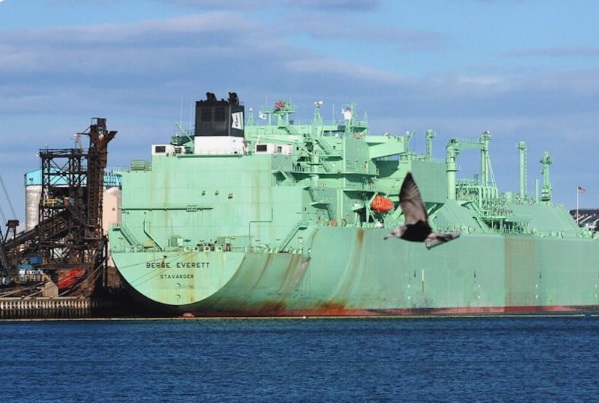
Oilprice.com (Jan. 4, 2024) – The United States has become the world’s largest exporter of liquefied natural gas, surpassing Qatar and Australia for the first time. This development is at odds with the Biden administration’s goal of becoming the world’s climate leader.

Bloomberg data compiled through Dec. 31 shows the US exported 91.2 million metric tons of LNG in 2023. This is a record for the Western country and was made possible by the restart of the Freeport LNG export terminal in Texas, which was closed for months after an explosion rocked the facility in June 2022.

The US surpassed Qatar, previously crowded ‘king of LNG exporters’ in 2022 after export volumes dropped for the first time since 2016 by 1.9%. Australia ranked second.

  • The U.S. exported a record 91.2 million metric tons of LNG in 2023.
  • Key factors contributing to this rise include the reopening of the Freeport LNG terminal and increased output from Venture Global LNG’s Calcasieu Pass facility.
  • The majority of U.S. LNG exports in 2023 were shipped from Gulf Coast terminals to European destinations like the Netherlands, the UK, and France.

Most US LNG exports depart from terminals across the Gulf Coast with top destinations in the Netherlands, the UK, and France for the first half of 2023.

The US only joined the LNG export scene in 2016 amid an abundance of shale gas and growing demand for gas globally.

More than a year later, the US stands as the largest beneficiary of the destruction of Russia’s Nord Stream pipeline system under the Baltic Sea to Europe.

U.S. Overtakes Qatar to Become World’s Top LNG Exporter


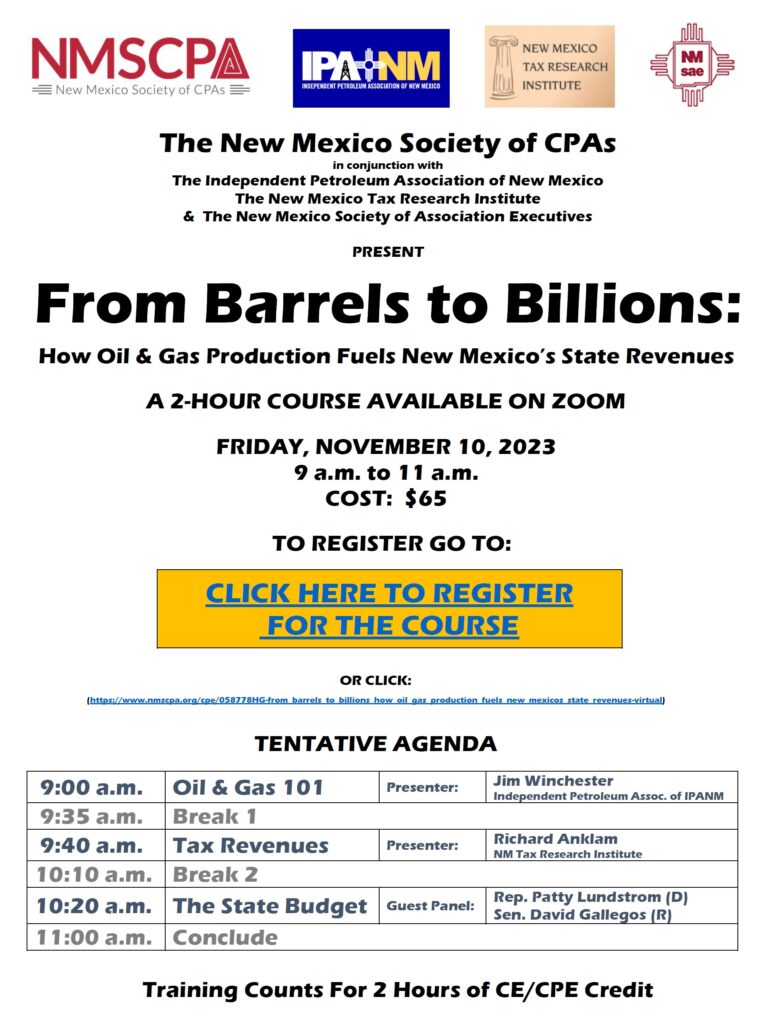
IPANM (Oct. 18, 2023) – IPANM announces an exclusive opportunity for our members, as the New Mexico Society of CPAs present “From Barrels to Billions: How Oil & Gas Production Fuels New Mexico’s State Revenues. All information is below:


World Oil (August 31, 2023) — The Permian basin’s economic impact continues to gain momentum, bringing promising news for Texas, New Mexico and the entire nation. According to the latest report by the Permian Strategic Partnership (PSP), the Permian basin had a record year for tax revenue collected from the oil and gas industry. These funds support tax relief, road improvements, public schools and teachers, police and fire departments, community hospitals, universities, and other essential services. The Perryman Group projected the Permian basin to generate $325 billion in gross product and provide more than 1,200,000 jobs for the nation’s economy by 2050.

According to the Economic Impact report, the Permian is also responsible for $24.5 billion in taxes collected across Texas and New Mexico. The area also doubled the amount of oil and gas severance and production taxes across both states compared to the previous year

The Permian basin also contributed $2.1 billion to Texas’ Permanent University Fund, and $2.1 billion to Texas’ Permanent School Fund, more than double the previous year.

The region also accounts for 35% of New Mexico’s state budget ($5.8 billion) and more than 1/3 of the total funding for New Mexico’s schools, as well as roughly 3% of U.S. wind capacity and approximately 8% of U.S. total solar plant capacity. Investments in both wind and solar are growing rapidly in the Permian basin

The Permian basin is a global energy-producing region with abundant natural and renewable resources. With 105 MMbbl of recoverable oil and 229 Tcf of recoverable natural gas, the Permian basin helps fuel economies worldwide.

By 2025, the Permian basin will be responsible for generating 50% of U.S. oil production.  Despite being home to only 1.6% of Texas’s population, the Permian basin accounts for 8.2% of the state’s private sector GDP. The same goes for New Mexico; only 9.3% of the state’s population lives in Lea, Eddy and Chaves counties, but the Permian basin accounts for 26.5% of the state’s GDP.