A New Day at IPANM


Industry Benefits

Industry Benefits

Oil & Natural Gas are the lifeblood of the world. Don’t anyone ever tell you differently. To quote Alex Epstein, author of The Moral Case for Fossil Fuels, “Fossil fuels are making the world a better and better place by providing uniquely low-cost, reliable energy to billions of people–and are needed by billions more.” In New Mexico, the Oil & Gas industry is the top sector for state, contributing over $5.3 billion dollars to state and local economies. The New Mexico state budget, alone, received $2.96 billion dollars in direct revenue from the oil and gas industry in our state. That makes up 35% of the entire state budget, which is money that directly goes to funding teachers, first responders, and infrastructure that delivers everything from food, fresh water, and home heating in New Mexico.  Thus, Oil & Gas is the primary supplier and distributor of the three essentials of life: food, water, & shelter.

New Mexico Benefits

Facts

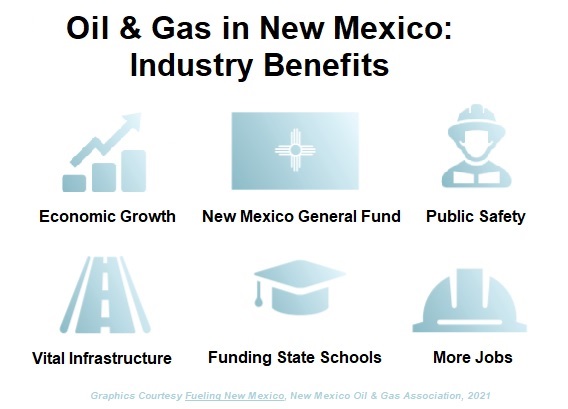
  • Oil & Gas is a $27 billion industry in New Mexico. The extractive industries in New Mexico are the largest contributors to growth of the GDP in New Mexico.
  • Oil & Gas industry supports over one-third (35%), or nearly $3 billion of the state’s annual $8.9 billion budget.
  • More than 134,000 New Mexicans are employed as a result of oil and natural gas production, which is over 15% of the total state population.
  • Oil and gas funds the construction of new roads and highways in New Mexico through direct excise taxes, on top of the general fund budgets appropriated to state and local communities.
  • The Oil & Gas industry funds public safety, which helps New Mexico put more police, firefighters, and first-responders on the streets, keeping our communities safe.
  • New Mexico’s schools receive more than $1.4 billion each year to support students. That funding, alone, pays the salaries of one-third of our teachers.
Global Benefits

The Link Between Fossil Fuels & The Human Condition
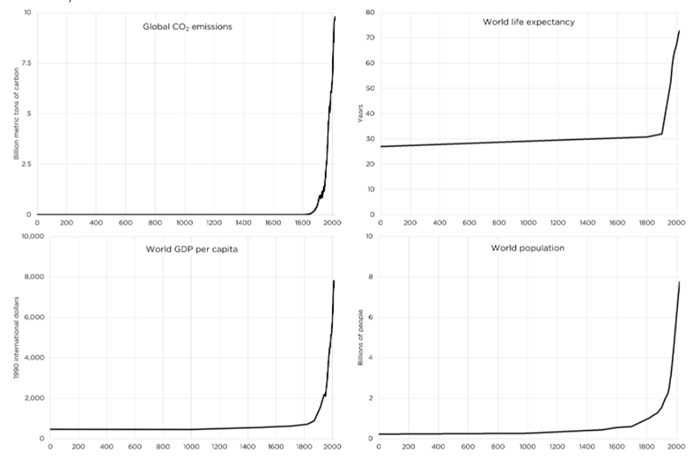
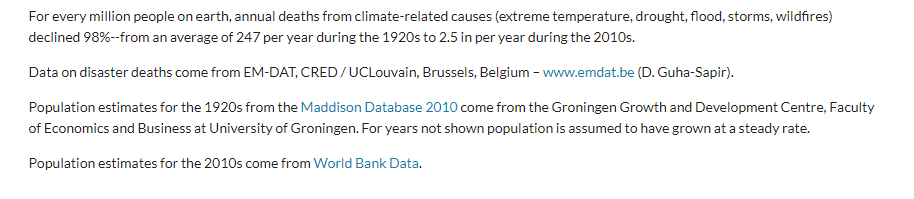
Climate Deaths Decrease & Fossil Fuel Development
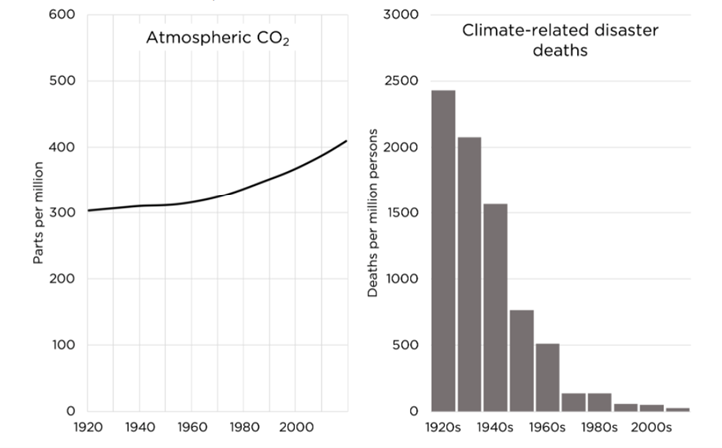
All graphics, information & references courtesy Alex Epstein:  https://energytalkingpoints.com/thanksgiving-2021/

Quick Links

Direct New Mexico

Benefits of Oil & Gas

Industry Benefits

In the News

Reference

Links
Industry Benefits In the News

By Missi Currier | CEO, New Mexico Oil & Gas Association When it comes to environmental responsibility, New Mexico’s oil
Power The Future (May 30, 2025) Washington, D.C. - American oil production set a new record of 13.488 million barrels
Central Texas News (April 22, 2025) - By The Empowerment Alliance How far will green energy proponents go to push
Energy In Depth (April 19, 2025) - Methane emissions in the United States have continued their downward trend from 2005
Rigzone (March 31, 2025) - Executives from oil and gas firms have revealed where they expect the West Texas Intermediate

By Missi Currier | CEO, New Mexico Oil & Gas Association

When it comes to environmental responsibility, New Mexico’s oil and gas industry is not just stepping up — we’re leading the way.

In recent years, oil and gas operators plugged over 90% of the wells decommissioned in the state. That’s 451 wells plugged by industry, compared to just 49 plugged by the Oil Conservation Division. For every well plugged using public funds, the oil and gas industry independently plugs 10 more — without fanfare, and without burdening New Mexico taxpayers.

Let’s be clear: Only tax dollars paid by the oil and gas industry are used to plug orphaned wells in New Mexico. Not a single cent comes from the pockets of New Mexico families. The millions spent by OCD to plug wells came directly from the Reclamation Fund — funded entirely by industry-paid taxes.

Of the 68,516 active wells in New Mexico, approximately 34,000 are state and fee wells. Among those, just 349 are classified as orphaned — a remarkably low orphan rate of about 1%. This is a testament to the industry’s commitment to responsible operations and long-term stewardship. However, we know that 1% is still too many, and the industry is committed to continuing our work with OCD to ensure the reduction of that number.

Yet, despite this strong track record, we face a critical challenge: ensuring that the funds dedicated to well-plugging are used for that purpose. In 2022, the Reclamation Fund held $21 million. By November 2024, that balance had grown to approximately $66 million, thanks to increased federal support and continued contributions from the Conservation Tax directly from industry.

But these funds are only effective if they’re deployed efficiently. Delays in procurement and administrative bottlenecks risk not only slowing progress but also jeopardizing future funding. New Mexico’s leadership must prioritize using these dollars as intended — on well plugging and site remediation — not diverting them to unrelated initiatives.

The oil and gas industry supports modernizing the Reclamation Fund to ensure it remains a sustainable, efficient tool for environmental protection. That means streamlining procurement, reducing administrative burdens, and preserving the fund’s integrity for its intended purpose. The oil and gas industry is proud to carry the responsibility of plugging and remediating wells. During a well’s lifetime, it provides energy for the world and contributes to our state’s economy. At the end of its cycle, the land is returned to its native state. It’s a responsibility we take seriously — and one we’re already fulfilling. Let’s work together to ensure that the systems in place support this important work, now and for generations to come.

Power The Future (May 30, 2025) Washington, D.C. – American oil production set a new record of 13.488 million barrels per day in March 2025 according to information released today from the Energy Information Administration. This milestone underscores the strength of American energy worker’s commitment to energy dominance.

“This historic achievement is a testament to the unwavering dedication of American energy workers and the decisive leadership of President Trump,” said Daniel Turner, Founder and Executive Director for Power The Future. “This is further proof that when we have common sense prevail in Washington, our energy workers are able to lead the world in critical energy production. The results will be lower prices and a stronger economy which spells victory for American workers and American consumers.”

U.S. Oil Production Sets New Record as American Energy Dominance Begins


Central Texas News (April 22, 2025) –
By The Empowerment Alliance

How far will green energy proponents go to push their agenda? Well, apparently so far they will go against science and hide information from the American people—even information that shows benefits to the very environment they claim to protect.

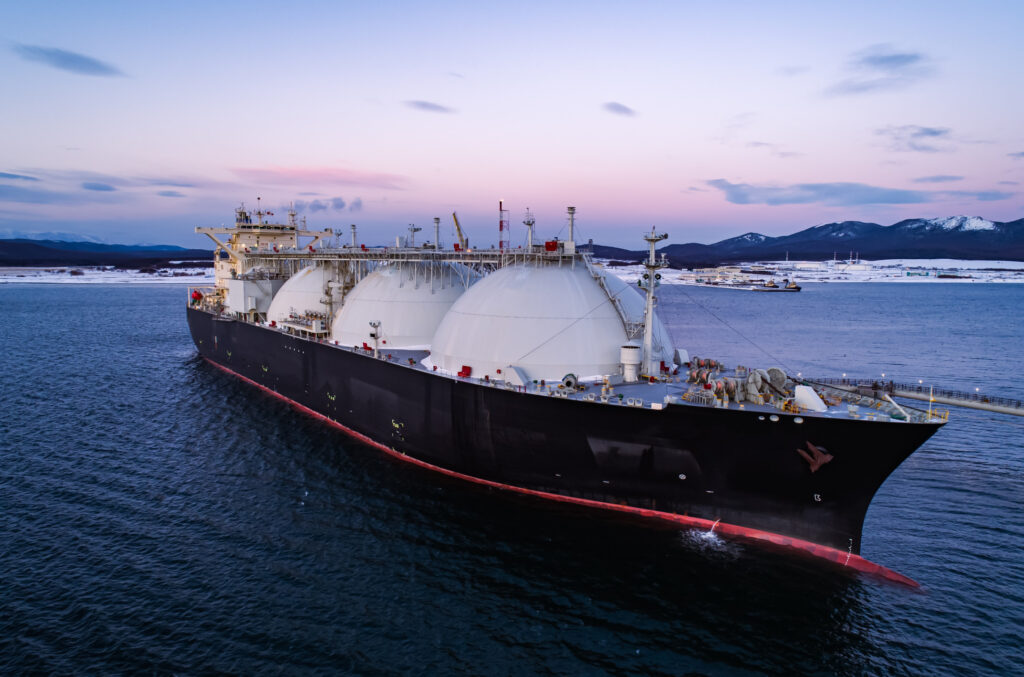
Last month, it was revealed that former President Biden’s Department of Energy buried a September 2023 study on liquefied natural gas (LNG) that revealed that increased LNG exports had little effect on domestic natural gas prices and would actually lower global greenhouse gas (GHG) emissions.

That determination is reinforced by data from the Center for LNG. Switching to natural gas to generate electricity is the top reason the U.S. has been so successful at lowering emissions since 2005. That same principle can be applied abroad. U.S. LNG nearly halves the emissions from the use of coal in Europe and Asia. In a head-to-head comparison, natural gas exported from the U.S. even has significantly lower emissions than natural gas from Russia.

So, why would they hide their own report that had seemingly positive findings? The answer seems to be that it didn’t reinforce their decision to halt (or “pause,” if you want to use the Biden-speak) approvals of U.S. LNG export licenses. Or, more broadly, it contradicted the scorched earth scenario the green-at-any-cost crowd likes to paint of our energy future—where they claim that any use of traditional energy sources like oil and natural gas will doom us forever.

Fast forward to December 2024, as the former administration was practically out the door, and a new DOE report was released under the exact same title. However, a key part of the 2023 report had been erased. An analysis of what’s called “the consideration of market effects.” That analysis determined the U.S. LNG exports would bring down global emissions by displacing more polluting sources of energy used abroad.

When the December 2024 report was release, then-Energy Secretary Jennifer Granholm even said that the reported showed “in every scenario, increases in LNG exports would lead to increases in global net emissions.” Well, every scenario except the one that they cut out.

Thankfully, there’s a new sheriff in town.

Thankfully, the new administration is not making its energy decisions based on a green agenda or any agenda for that matter. Policies are being made based on science and economic principles. As they should be. On his first day back in office, President Trump removed the Biden “pause” on LNG export approvals. And, new energy secretary, Chris Wright, made five LNG-related approvals between taking the job in February and mid-March.

As Secretary Wright put it at CERAWeek 2025: “I’m honored to play a role in reversing what I believe has been very poor direction in energy policy. The previous administration’s policy was focused myopically on climate change with people as simply collateral damage. My predecessor was on this stage one year ago, saying that LNG exports would soon be in the rearview mirror. Think about that for a moment. Natural gas today supplies 25% of global primary energy and has been the fastest growing source of energy over the last 15 years.”

Those are the facts. Natural gas is the most affordable, reliable and clean energy source in our energy mix. Its advantages are countless and the energy it contributes globally can hardly be replaced—or erased no matter how many DOE studies they fudge. And, that is all a very good thing. An abundant energy sources with all those advantages makes the world a better place. The U.S. is a “natural gas superpower.”

And, when America is the key producer of that energy source for our own needs and globally, that makes us and the world safer and cleaner. Former Energy Secretary Granholm couldn’t have got it more wrong. U.S. LNG is the literal light on the world’s horizon—not in its rearview mirror. Our ability to supply the world with natural gas is only growing.

According to the U.S. Energy Information Administration, U.S. LNG export capacity will likely increase from 11.5 billion cubic feet per day in 2023 to 24.4. in 2028—more than doubling in the next five years. As energy author Robert Bryce puts it: “If that happens, US LNG export capacity will equal or exceed, the gas production of both Iran and China. (In 2023, Iran produced 24.3 Bcf/d, and China produced 22.7 Bcf/d). That, ladies and gentlemen, is evidence that the US is a natural gas superpower.”

Our ability to supply the world with natural gas has become possible because the U.S. leads the world in natural gas production. U.S. natural gas production plateaued sometime in the 1970s. But, in 2005, it started to grow again significantly. That achievement was been driven by groundbreaking technological advances like hydraulic fracturing that have allowed us to tap America’s extensive natural resources. Since then, U.S. natural gas production has more than doubled. According to Bryce’s analysis of data, the U.S. is now producing more natural gas than Canada, China, Iran, Norway, and Qatar combined.

But that achievement was also possible because of leaders making policies that nurtured growth, technology, and economic investment. We welcome a return to that kind of leadership, which we are now seeing from President Trump and his Energy Dream Team appointees. But we must be vigilant. If we allow ourselves to be dragged backward by short-sighted leaders with a politicized green agenda, we will sacrifice our standing as a world energy superpower to the countries that follow on that list, like Russia, Iran, and China. That isn’t good for the world, and it certainly isn’t good for America.

The Empowerment Alliance (TEA) is a 501(c)(4) organization founded in 2019 that advocates for U.S. energy independence, according to EmpoweringAmerica.org. TEA supports using American innovation and free-market principles to ensure affordable, reliable, and clean energy.

Biden Hid Facts To Force Unnecessary LNG Export Pause


Energy In Depth (April 19, 2025) – Methane emissions in the United States have continued their downward trend from 2005 levels according to the Environmental Protection Agency’s 2021 Greenhouse Gas Inventory (GHGI). In fact, total U.S. greenhouse gas emissions continue to decline despite increased production and consumption of oil and natural gas. As the EPA explains:

“This decrease was driven largely by a decrease in emissions from fossil fuel combustion resulting from a decrease in total energy use in 2019 compared to 2018 and a continued shift from coal to natural gas and renewables in the electric power sector.”

Key Takeaways

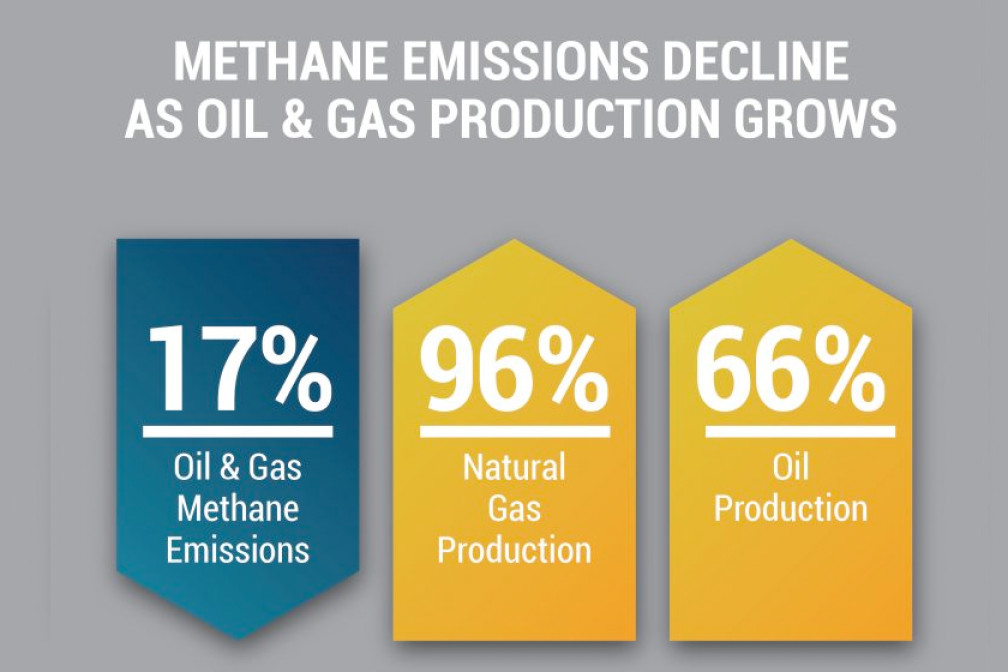
Total CO2 equivalent (Mmt CO2Eq) of U.S. greenhouse gas emissions dropped 11.6 percent from 2005 and methane emissions are down 16.6 percent since 1990 despite record production of oil and natural gas.

The 17 percent drop in oil and gas methane emissions can be contributed to the industry’s investments in reducing leaks and improving pipeline infrastructure. Methane emissions fell by 69 percent in natural gas distribution systems, and decreased 35 percent in natural gas transmission and storage.

These astonishing decreases occurred while the industry added more than 370,000 miles of new gas pipeline since 1990 to support a 62 percent increase in national demand.

EPA: Oil and Natural Gas Methane Emissions Fall As Production Surges

Rigzone (March 31, 2025) –

Executives from oil and gas firms have revealed where they expect the West Texas Intermediate (WTI) crude oil price to be at various points in the future as part of the first quarter Dallas Fed Energy Survey, which was released last week.

The survey asked participants where they expect WTI prices to be in six months, one year, two years, and five years. Executives from 124 oil and gas firms answered this question and gave a mean response of $68 per barrel for the six month mark, $70 per barrel for the year mark, $74 per barrel for the two year mark, and $82 per barrel for the five year mark, the survey showed.

Executives from 124 oil and gas firms also answered this question in the fourth quarter Dallas Fed Energy Survey and gave a mean response of $69 per barrel for the six month mark, $71 per barrel for the year mark, $74 per barrel for the two year mark, and $80 per barrel for the five year mark, that survey showed.

The average response executives from 129 oil and gas firms gave when they were asked in the latest survey what they expect the WTI crude oil price to be at the end of 2025 was $68.32 per barrel, this survey outlined. The low forecast came in at $50 per barrel, the high forecast was $100 per barrel, and the spot price during the survey was $67.60 per barrel, the survey pointed out.

The average response executives from 131 oil and gas firms gave when asked in the previous Dallas Fed Energy Survey what they expect the WTI crude oil price to be at the end of 2025 was $71.13 per barrel, that survey showed. The low forecast came in at $53 per barrel, the high forecast was $100 per barrel, and the spot price during the survey was $70.66 per barrel, that survey highlighted.

Oil Execs Forecast $68 Oil As New Baseline