A New Day at IPANM


Industry Benefits

Industry Benefits

Oil & Natural Gas are the lifeblood of the world. Don’t anyone ever tell you differently. To quote Alex Epstein, author of The Moral Case for Fossil Fuels, “Fossil fuels are making the world a better and better place by providing uniquely low-cost, reliable energy to billions of people–and are needed by billions more.” In New Mexico, the Oil & Gas industry is the top sector for state, contributing over $5.3 billion dollars to state and local economies. The New Mexico state budget, alone, received $2.96 billion dollars in direct revenue from the oil and gas industry in our state. That makes up 35% of the entire state budget, which is money that directly goes to funding teachers, first responders, and infrastructure that delivers everything from food, fresh water, and home heating in New Mexico.  Thus, Oil & Gas is the primary supplier and distributor of the three essentials of life: food, water, & shelter.

New Mexico Benefits

Facts

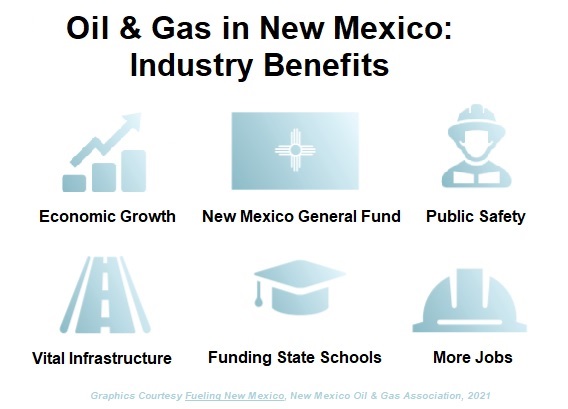
  • Oil & Gas is a $27 billion industry in New Mexico. The extractive industries in New Mexico are the largest contributors to growth of the GDP in New Mexico.
  • Oil & Gas industry supports over one-third (35%), or nearly $3 billion of the state’s annual $8.9 billion budget.
  • More than 134,000 New Mexicans are employed as a result of oil and natural gas production, which is over 15% of the total state population.
  • Oil and gas funds the construction of new roads and highways in New Mexico through direct excise taxes, on top of the general fund budgets appropriated to state and local communities.
  • The Oil & Gas industry funds public safety, which helps New Mexico put more police, firefighters, and first-responders on the streets, keeping our communities safe.
  • New Mexico’s schools receive more than $1.4 billion each year to support students. That funding, alone, pays the salaries of one-third of our teachers.
Global Benefits

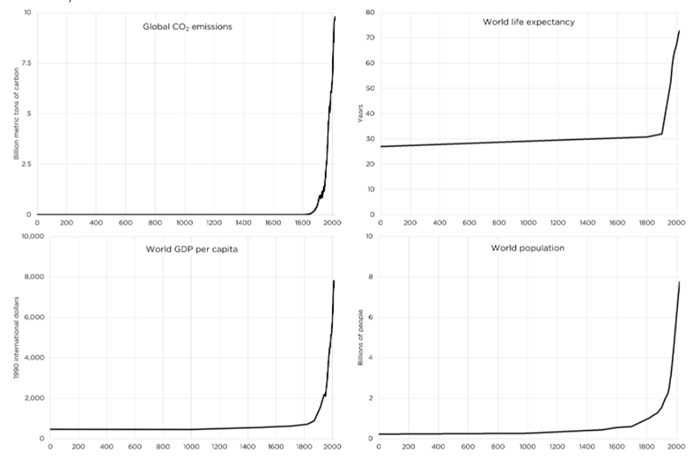
The Link Between Fossil Fuels & The Human Condition
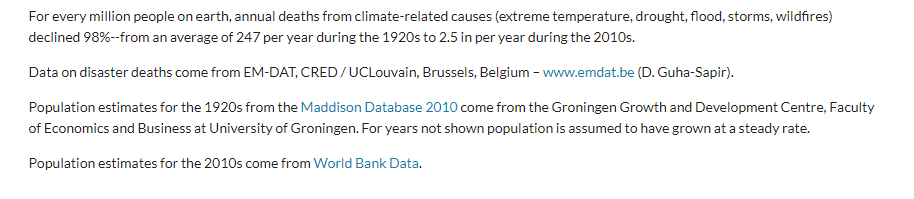
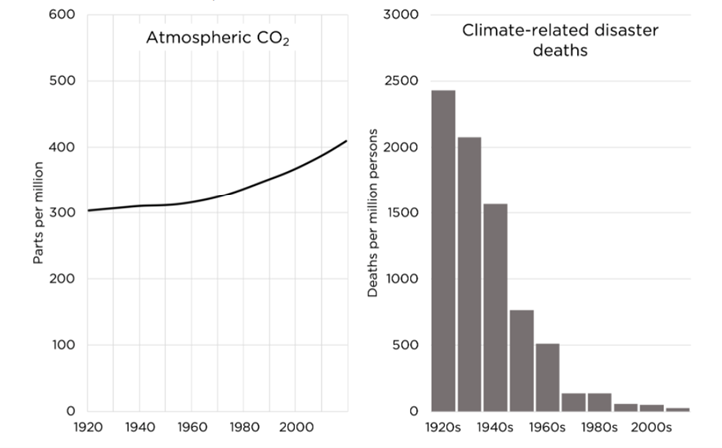
Climate Deaths Decrease & Fossil Fuel Development
All graphics, information & references courtesy Alex Epstein:  https://energytalkingpoints.com/thanksgiving-2021/

Quick Links

Direct New Mexico

Benefits of Oil & Gas

Industry Benefits

In the News

Reference

Links
Industry Benefits In the News

Federal Reserve (May 12, 2026) - The conflict in Iran that erupted in late February represents one of the largest
IPANM   Carlsbad, NM (May 4, 2026 since updated May 11, 2026) - The Independent Petroleum Association of New Mexico (IPANM)
IPANM (March 11, 2026) - HB80 Oil & Gas Conservation Tax Act Changes, a bill that was first authored by IPANM
Questa Del Rio News (Feb. 2, 2026) - As oil and gas production continues to generate vast amounts of wastewater
BLM (Jan. 29, 2026) - The Bureau of Land Management announced the proposed rule to update decades-old oil and gas regulations that

Federal Reserve (May 12, 2026) – The conflict in Iran that erupted in late February represents one of the largest global energy shocks in decades. The Strait of Hormuz—a key shipping channel for energy trade—remains closed as of April 2026, disrupting roughly 20 percent of global oil trade flows and leading domestic oil prices to jump by roughly 60 percent since late February. Although global energy inventories and excess oil supply leading into the conflict have kept prices from moving even higher, these buffers have limitations. Moreover, while oil futures prices currently remain subdued, both futures and spot oil prices could move higher if the disruption to energy transportation and production persists.

Although this energy shock poses challenges for consumers and businesses nationwide, it will likely generate greater severance tax revenue for Rocky Mountain states, which are relatively large energy producers. In this edition of the Rocky Mountain Economist, we summarize the characteristics of the recent Middle Eastern energy shock, outline how current circumstances differ from the recent past, and highlight the implications for severance tax revenues in Rocky Mountain states.

Iran Conflict and Energy Shock

In late February, joint U.S.-Israeli strikes on Iran and the subsequent retaliation disrupted major energy trade routes, curtailing available energy to global markets. Chart 1 shows that vessel traffic through the Strait of Hormuz—a thoroughfare for more than 20 percent of global oil and petroleum products—dropped by more than 90 percent between February and April 2026 (EIA 2025).

More


This content is for members only.

Please login here! If you have any questions about your membership, please email megan@ipanm.org.

Questa Del Rio News (Feb. 2, 2026) – As oil and gas production continues to generate vast amounts of wastewater in southeastern New Mexico, researchers say treated “produced water” could become a valuable resource for agriculture, industrial use and river restoration — if state laws, public perception and regulatory frameworks can catch up.

Produced water is the byproduct that surfaces during oil and gas extraction. In New Mexico’s Permian and San Juan basins, oil and gas wells often bring up far more water than fuel. According to researchers, operators can extract three times as many barrels of water for every barrel of oil, particularly from older wells.

“That water is not being used for any reason,” said Zach Stoll, assistant director of the New Mexico Produced Water Research Consortium. “It’s currently a waste product, and right now it’s mostly reinjected underground or is used for fracking operations.”

The water originates from ancient seawater trapped underground when much of what is now New Mexico and West Texas was covered by ocean between 100 million and 300 million years ago. Over time, pressure and heat formed oil and gas, while also leaving behind highly saline, mineral-rich water.

A current misconception, researchers say, is that oil and gas companies consume large amounts of fresh water during production. In reality, many oil and gas companies have veered away from this practice using variations of produced water.
Because oil and gas companies focus on energy production rather than water treatment, most produced water is reinjected deep underground. Researchers say the growing volume of injection has contributed to an increase in earthquakes across parts of southeastern New Mexico and Texas since about 2010, as pressure builds within underground rock formations.
At the same time, New Mexico faces persistent water shortages driven by drought, climate change and heavy agricultural demand.

Stoll said beneficial reuse of treated produced water could address multiple challenges at once by reducing underground injection, easing seismic risk and supplementing limited water supplies in arid regions.

The New Mexico Produced Water Research Consortium — a partnership among state agencies, universities and industry — is studying whether produced water can be treated to meet safety standards for non-potable uses such as agriculture, industrial cooling and river discharge. Greenhouse and rangeland tests using treated produced water have shown no negative impacts on crops such as alfalfa, Stoll said.

“It looks very promising,” he added.

One focus of the research is surface discharge, releasing treated produced water into waterways like the Pecos River rather than reinjecting it underground. The Pecos has experienced reduced flows in recent years, making it a potential candidate for reuse if water quality standards are met.

Stoll said treated produced water could also help New Mexico meet its legal obligations under the Pecos River Compact and the Rio Grande Compact, which require the New Mexico to deliver water to Texas through these natural waterways. In dry years, those obligations have forced the New Mexico Office of the State Engineer to cut water rights, including in small communities such as Questa and Mora.

“If we can use treated produced water instead of pumping fresh groundwater, that helps preserve our natural aquifers while also meeting compact deliveries,” Stoll said.

Stoll emphasized that produced water would never be used for drinking. Even though after treatment, the water is of much higher purity standards, the water would be suitable only for industrial uses, crop irrigation or environmental flows. The produced water contains high levels of salt and minerals, including lithium and copper, which researchers say could represent an additional economic opportunity for the state.

“There’s a lot of value in that water beyond disposal,” Stoll said.

Interest in produced water reuse extends beyond agriculture and river restoration. We reached out to Kit Carson Electric Cooperative about whether produced water could be used for the proposed green hydrogen project planned in Questa and other parts of northern New Mexico.

CEO Luis Reyes said the idea is a viable option — but current regulations do not allow it.

“Right now, the regulations aren’t in place that would allow us to use produced water for the facility,” Reyes said. “However, we are hopeful Senator Gonzales’ legislation moves forward, because it would enable regulation to consider this as a safe alternative to redistributing the water rights from the Questa mine.”

Sen. Bobby Gonzales has proposed a Senate memorial (SM 11) that calls on the Water Quality Control Commission to consider the science for a rule enabling produced water reuse in New Mexico. California and Texas already allow treated produced water for certain agricultural and industrial uses, and supporters say similar policies could help New Mexico address its water shortages.

In addition to Sen. Gonzales’ memorial, House Bill 207 has been messaged by the Governor for the adoption of regulation enabling produced water re-use.

Draft permits for reuse are currently in development, but Stoll said lawmakers must still decide how produced water should be regulated and when it becomes a usable water resource.

“We need to define at what point treated produced water becomes a regulated water resource,” he said. “That’s the next big step.”

Questa native Louis Herrera, CEO of FUGU Solutions, is also advocating for the legislation. Herrera has submitted a petition to the Legislature calling for regulations that would allow companies to explore produced water reuse and treatment.
In an open letter to the Questa del Rio News, Herrera wrote that New Mexico generates roughly 10 million barrels of produced water daily through oil and gas production — volumes that could help meet compact obligations and support emerging industries without placing additional strain on freshwater supplies.

“At present, substantial quantities of this produced water are transported out of state and utilized in Texas without being quantified, credited or accounted for under New Mexico’s interstate compact delivery obligations,” Herrera wrote. “This results in a systemic loss of potential compliance benefit and strategic water value to the state.”

As drought conditions persist and weather patterns grow more unpredictable, Stoll said expanding sustainable water sources will be critical for New Mexico’s future.

“Reuse is important,” Stoll said. “You can only reuse what you have — and produced water is one of the largest untapped water sources in the state.”

Produced Water Reuse Shows Promise in New Mexico

Produced Water Reuse Shows Promise in New Mexico

BLM (Jan. 29, 2026) – The Bureau of Land Management announced the proposed rule to update decades-old oil and gas regulations that limit the practice of commingling, a change aimed at improving efficiency, protecting taxpayers and tribes and strengthening domestic energy production.

The proposed rule would modernize guidelines that currently allow commingling only when mineral ownership and royalty conditions are identical. Those limits were written decades ago and no longer reflect current technology or the complex mineral ownership found across much of the western United States.

“Outdated rules should not stand in the way of responsible American energy development,” said Acting BLM Director Bill Groffy. “By modernizing these regulations, we can produce energy more efficiently, protect taxpayer and tribal royalties, and reduce surface disturbance, all while advancing the Trump administration’s priority to strengthen domestic energy and streamline government.”

Commingling allows production from multiple leases to be combined using a single well pad. Under the proposed rule, the BLM would allow a wider range of methods, including modern metering technologies, to ensure accurate measurement of production and fair royalty distribution.

The changes are intended to remove barriers that have constrained development in areas with complex mineral ownership and to encourage practices that minimize surface impacts by reducing the number of well pads needed.

The proposal also aligns with statutory changes enacted in internal BLM policy and with recent federal directives to streamline regulations and promote domestic energy production.

Written comments may be submitted to the Federal eRulemaking Portal: at www.regulations.gov, in the Search-box, enter “BLM-2025-0070” and click the “Search” button. Comments may also be delivered to: U.S. Department of the Interior, Director (630), Bureau of Land Management, 1849 C St. NW, Room 5646, Washington, DC 20240, Attention: 1004–AF38. The public comment period on the proposed rule will close March 31, 2026.

For additional information, please contact BLM Oil and Gas Program Lead Matthew Warren at mwarren@blm.gov.

BLM proposes updates to modernize oil and gas rules and support domestic energy