A New Day at IPANM


Industry Benefits

Industry Benefits

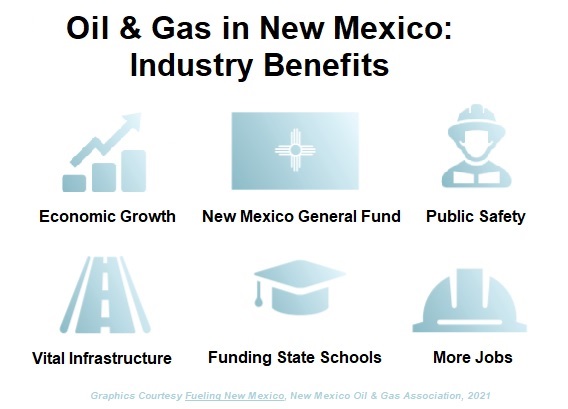
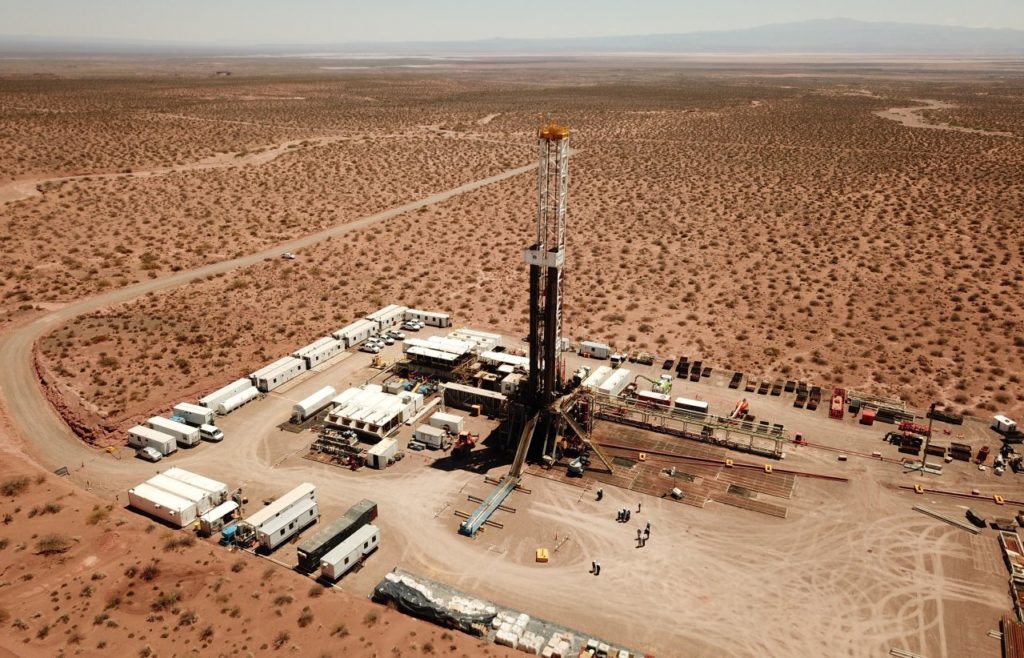
Oil & Natural Gas are the lifeblood of the world. Don’t anyone ever tell you differently. To quote Alex Epstein, author of The Moral Case for Fossil Fuels, “Fossil fuels are making the world a better and better place by providing uniquely low-cost, reliable energy to billions of people–and are needed by billions more.” In New Mexico, the Oil & Gas industry is the top sector for state, contributing over $5.3 billion dollars to state and local economies. The New Mexico state budget, alone, received $2.96 billion dollars in direct revenue from the oil and gas industry in our state. That makes up 35% of the entire state budget, which is money that directly goes to funding teachers, first responders, and infrastructure that delivers everything from food, fresh water, and home heating in New Mexico.  Thus, Oil & Gas is the primary supplier and distributor of the three essentials of life: food, water, & shelter.

New Mexico Benefits

Facts

  • Oil & Gas is a $27 billion industry in New Mexico. The extractive industries in New Mexico are the largest contributors to growth of the GDP in New Mexico.
  • Oil & Gas industry supports over one-third (35%), or nearly $3 billion of the state’s annual $8.9 billion budget.
  • More than 134,000 New Mexicans are employed as a result of oil and natural gas production, which is over 15% of the total state population.
  • Oil and gas funds the construction of new roads and highways in New Mexico through direct excise taxes, on top of the general fund budgets appropriated to state and local communities.
  • The Oil & Gas industry funds public safety, which helps New Mexico put more police, firefighters, and first-responders on the streets, keeping our communities safe.
  • New Mexico’s schools receive more than $1.4 billion each year to support students. That funding, alone, pays the salaries of one-third of our teachers.
Global Benefits

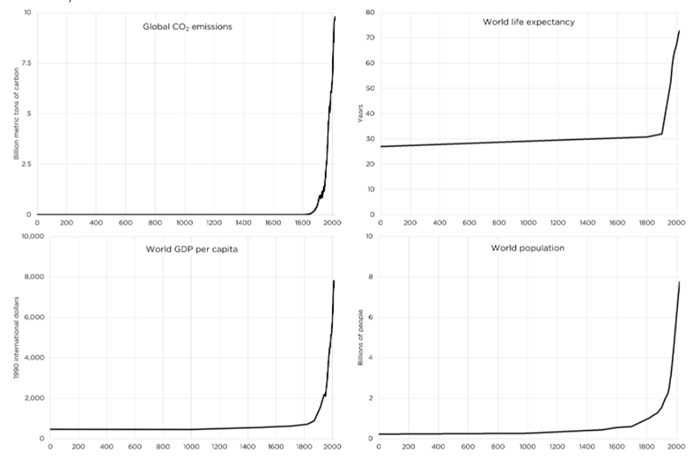
The Link Between Fossil Fuels & The Human Condition
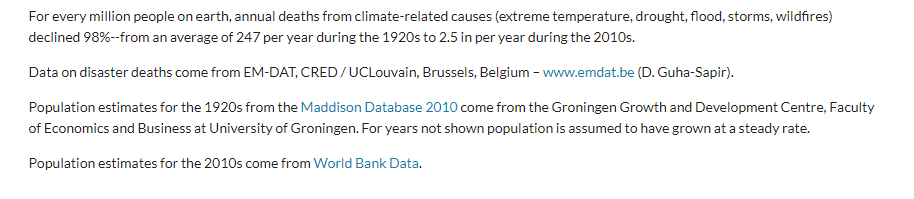
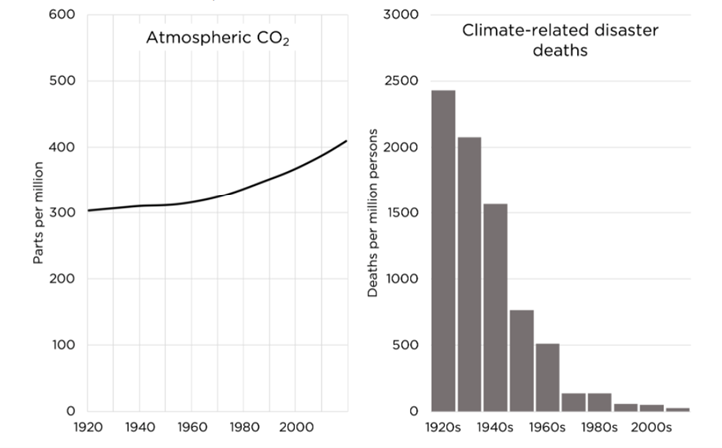
Climate Deaths Decrease & Fossil Fuel Development
All graphics, information & references courtesy Alex Epstein:  https://energytalkingpoints.com/thanksgiving-2021/

Quick Links

Direct New Mexico

Benefits of Oil & Gas

Industry Benefits

In the News

Reference

Links
Industry Benefits In the News

OilPrice.com - (Jan. 26, 2026) -   Herbert Stein was an American economist who served in both the Nixon and Ford
IPANM (Dec. 19, 2025) - After the urging of IPANM and many other industry trade groups, the Trump administration has
WEA, NMOGA, & IPANM in Santa Fe New Mexican (Nov. 21, 2025) - Are we facing an energy emergency? The
ABQJournal (Oct. 21, 2025) — Gov. Michelle Lujan Grisham’s trade mission to Japan this year is showing signs of paying
San Juan Basin Energy Conference (Oct. 16, 2025) - IPANM is proud to be a sponsor at the 2025 San

This content is for members only.

Please login here! If you have any questions about your membership, please email megan@ipanm.org.

IPANM (Dec. 19, 2025) – After the urging of IPANM and many other industry trade groups, the Trump administration has issued a final rule extending new federal oil & gas bonding increases for an additional year. The move fulfills a promise personally made by acting-BLM secretary Bill Groffy to IPANM Executive Director Jim Winchester earlier this month following IPANM’s plea for quick action to reverse the Biden-era Bonding Rule that went into effect in 2024.

“IPANM members face an unfair and disproportionate impact from bonding increases, and we appreciate that President Trump, Department of the Interior Secretary Doug Burgum, and acting-BLM Secretary Bill Groffy recognized this,” said Jim Winchester, IPANM Executive Director. “As this is step one in fixing this specific rule, we look forward to future action from the BLM to permanently rescind the flawed Biden-era Bonding Rule.”

The extension also formally negates this notice that hundreds of New Mexico-based operators received earlier this fall that indicated payment of a new $500,000 blanket bond was due by June 22, 2026. At the time, IPANM advised members to NOT submit the new bond increase due to future action from the Trump administration.

As cited by IPANM partner trades the Domestic Energy Producers Alliance (DEPA) and the National Stripper Well Association (NSWA), had the new bonding increases moved forward:

  • Nearly 21,000 small oil and gas operators nationwide would face a twenty-fold increase in bonding requirements.
  • Thousands of small producers could be forced to shut down, resulting in the loss of many thousands of jobs.
  • Rural communities would experience reduced tax revenues and strain on essential public services.
  • The U.S. could lose up to:
    • 164,000 barrels of oil per day
    • 1.4 billion cubic feet of natural gas per day
    • 172,000 stripper oil and gas wells
  • Premature well closures could increase public financial exposure if wells are abandoned due to operator insolvency.

IPANM also is involved with a lawsuit filed by a group of industry trades against the provisions of the Biden-era Bonding Rule. That lawsuit is on hold as the Trump administration moves forward to formally rescind the existing rule. The Trump BLM has indicated that the formal rescinding of the Biden-era Bonding Rule will occur in 2026.

IPANM also remains heavily engaged post-hearing rulemaking regarding a new proposed New Mexico Oil Conservation Division bonding rule covering wells, and a new proposed New Mexico State Land Office bonding increase per lease. Those proposals threaten to disproportionately increase bonding levels on New Mexico state lands

WEA, NMOGA, & IPANM in Santa Fe New Mexican (Nov. 21, 2025) – Are we facing an energy emergency? The answer may depend on your income, health risks, or even your age.

Think about family or neighbors who rely on medical equipment that must be plugged in — ventilators, dialysis machines and CPAP devices. The people who depend on them are at serious risk when the power goes out.

The threat is so real that the U.S. Department of Health and Human Services tracks Medicare patients who rely on home medical devices. Nearly 50,000 people in New Mexico — 10% of Medicare recipients — are vulnerable during electric blackouts. That’s the third highest rate in the nation.

Unfortunately, outages are common — caused by bad weather, aging infrastructure, or other strains on the electrical grid. They can happen throughout the day or night and sometimes last for extended periods.

Last April, residents in Northern New Mexico went two days without power. Utilities try to alert communities, but vulnerable people often don’t get the message in time. For them, the energy emergency is not theoretical — it’s personal.

So how did we get here, and what’s the fix?

A major barrier is the difficulty of getting permits approved for projects that would strengthen the grid that supplies power to our communities and neighborhoods. Layers of government and years of environmental review slow the process. Even after that, lawsuits filed by activist groups create more delays.

According to Lawrence Berkeley National Laboratory, only one in five transmission projects planned between 2000 and 2017 were operational by the end of 2022. Stanford University reports that nearly one in three major energy and infrastructure projects face litigation before construction even begins.

It took 17 years to build the SunZia transmission line across New Mexico, now delivering renewable wind power to customers in Arizona and California. The delays were caused by long environmental reviews and lawsuits.

The problem isn’t limited to electricity. The oil and natural gas industry faces similar roadblocks. Nationally, natural gas is used to generate 43% of electricity, 29% in New Mexico, and is currently the most reliable, affordable energy source fueling the grid. Yet, government red tape and legal delays get in the way of contributing more to meet our growing energy demands.

In 2022, a lawsuit challenged drilling permits in New Mexico and Wyoming, claiming potential harm to wildlife as far away as Hawaii and the Arctic. After three years, a federal appeals court in Washington, D.C., finally dismissed the case last summer. These kinds of delays show why reform is necessary and how they create real-life hardships for New Mexicans.

Here’s the good news: Congress has a chance to address these problems through permitting reform.

Lawmakers from both parties are working to streamline permitting for energy projects and place reasonable limits on litigation.

In the U.S. House, a bipartisan group of lawmakers introduced the SPEED Act (Standardizing Permitting and Expediting Economic Development), which updates the National Environmental Policy Act to help agencies to complete reviews more efficiently.

Another bipartisan group, the Problem Solvers Caucus, released a policy framework to support electricity and pipeline projects, with legislation expected soon.

In the Senate, discussions are underway to build on bipartisan proposals introduced last session.

New Mexico’s leaders can play an important role in the process. Sen. Martin Heinrich, the senior Democrat on the Senate Energy and Natural Resources Committee, will help shape any permitting reform bill. Members of New Mexico’s House delegation will also sit on committees central to this effort.

In this era of political division, bipartisan support is necessary for our country and state to continue to move forward. For thousands of New Mexicans vulnerable to energy emergencies, it’s a step toward greater security and peace of mind.

Melissa Simpson is president of Western Energy Alliance. Missi Currier is president and CEO of the New Mexico Oil and Gas Association. Jim Winchester is executive director of the Independent Petroleum Association of New Mexico.

ABQJournal (Oct. 21, 2025) — Gov. Michelle Lujan Grisham’s trade mission to Japan this year is showing signs of paying off.

The governor on Monday announced an agreement between Fujitsu, a Japanese advanced technology corporation, and New Mexico State University to launch an innovation hub at NMSU next year.

She also touted Japan as a possible market for natural gas produced in New Mexico’s San Juan Basin, though no specific agreements or timelines have been set for that effort.

The new and potential partnerships took center stage during an all-day trade summit attended by Shigeo Yamada, Japan’s ambassador to the United States, and Wyoming Gov. Mark Gordon, among other government officials and business leaders.

Lujan Grisham and Gordon were both part of the same trade mission to Asia in April. They said their two states share a friendly rivalry when it comes to energy and economic issues, but are also willing to work together on regional initiatives.

“I hate to say bipartisan; this is just good business,” Gordon said at one point during a Monday news conference at the state Capitol in Santa Fe.

For her part, Lujan Grisham called New Mexico and Wyoming “energy powerhouses” that could help countries like Japan with their energy needs while reducing its carbon emissions.

“This is a huge opportunity for the western states and the United States in general,” the New Mexico governor said.

The Monday trade summit coincided with the release of a regional report focused on expanding the exportation of natural gas from the Rocky Mountain region.

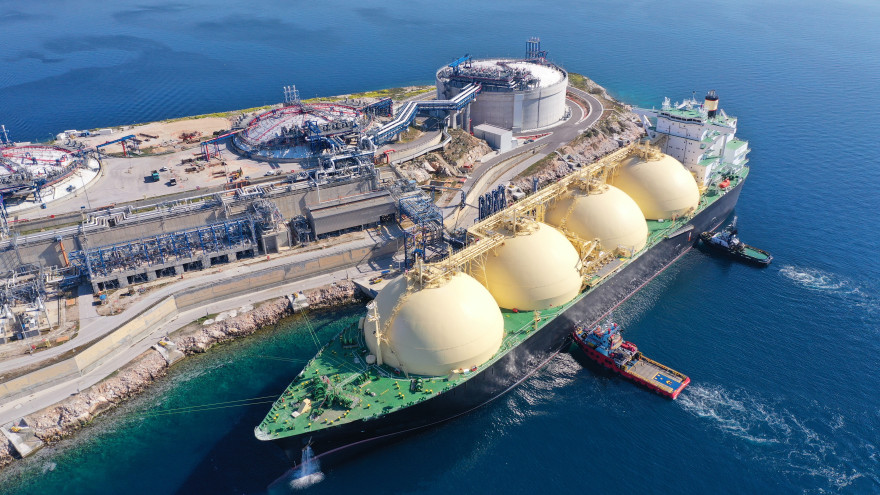
That report, released by the Western States and Tribal Nations Energy Initiative, was funded in part by New Mexico and identifies two pathways for transporting natural gas to the West Coast, where it can be shipped to Asian markets. One of those routes, the Southwest Pathway, would cross Mexico to the Pacific Ocean, while the other, the Pacific Northwest Pathway, would cut through the state of Washington.

New Mexico was the nation’s third-highest natural gas producing state in 2024, providing about 8% of the nation’s total natural gas withdrawals, according to U.S. Energy Information Administration data.

The state is also the nation’s third-largest energy producing state overall — trailing only Texas and Pennsylvania — and produces about 11 times more total energy than it consumes.

But New Mexico at times has dealt with a glut of natural gas in past years, and Lujan Grisham said it’s possible the state would have to increase its pipeline infrastructure if an export agreement with Japan is ultimately signed.

“As demand grows, we would need to do more infrastructure investment,” the governor told reporters, while adding the state has the current capacity to at least begin such an agreement.

Meanwhile, Yamada, the Japanese ambassador, said Japan’s government has committed to $7 billion in annual purchases of American energy, but acknowledged the Rocky Mountain coalition is one of several options being considered.

“This is a very good detailed introduction of the potential Rocky Mountain gas and we will seriously look into it,” he said, referring to the effort involving New Mexico, Wyoming, Utah, several Colorado counties and two Native American tribes.

As for the innovation hub at NMSU, a memorandum of understanding signed by university President Valerio Ferme and a senior Fujitsu official lays out a four-year timeline for creating a national “testbed” for research and innovation.

Under the agreement, NMSU will establish a facility with reliable power and cooling, work with the state’s two national laboratories and procure servers, while Fujitsu will provide the technical hardware and other services.

The agreement does not contain any state financial incentives, though Lujan Grisham said such investments could be considered in the future depending on how the partnership evolves.