A New Day at IPANM


Newsroom

Santa Fe New Mexican (Nov. 14, 2025) - A persistent effort to change New Mexico’s water regulations to allow for
IPANM (Nov. 6, 2025) - The nomination of former U.S. Representative Steve Pearce (NM CD-02) will benefit all New Mexicans,
Santa Fe New Mexican (Nov. 2, 2025) - by Rep. Mark Murphy (D-59 Roswell) Opinion Editorial - The state of New
By George Sharpe Oct 26, 2025 In 2000, Merrion Oil & Gas acquired 20 low producing wells from ConocoPhillips. Today,
ABQJournal (Oct. 21, 2025) — Gov. Michelle Lujan Grisham’s trade mission to Japan this year is showing signs of paying
IPANM (October 20, 2025) - IPANM would like to thank Sen. Larry Scott and all of the many state legislators
Industry Plugs Its Wells; Enviros Simply Want To Kill Off Independent Producers Beginning October 20th, the New Mexico Oil Conservation
San Juan Basin Energy Conference (Oct. 16, 2025) - IPANM is proud to be a sponsor at the 2025 San
IPANM & SLO (October 3, 2025) - Prior to the 2025 Legislative Session, the State Land Commissioner threatened to raise
IPANM (Oct. 3, 2025) - Depending on who you talk to, the Governor-called Special Session last week was either stop-gap

MEMBERS ONLY INFORMATION

You are currently in the IPANM Public Newsroom.
  MEMBERS: Please login below to access exclusive MEMBERS ONLY information, including

Regulatory updates
The IPANM Event Calendar
Information and Issues
IPANM Policy Positions
The IPANM Member Directory
Legislative Bill Tracking with BillTrack 50
Access to your IPANM Memberzone information page

Santa Fe New Mexican (Nov. 14, 2025) – A persistent effort to change New Mexico’s water regulations to allow for the reuse and discharge of treated fracking wastewater was dealt a blow Thursday.

Toward the end of an hourslong — and at times rowdy — meeting, the Water Quality Control Commission voted to vacate its July decision to advance a petition to allow some reuse and discharge of treated wastewater from the hydraulic fracturing process to extract oil and gas. The substance is often called produced water.

The reversal came after the independent commission considered allegations from environmental advocacy groups that the Governor’s Office had pressured commissioners to support the oil and gas-backed change. The allegations stemmed largely from The New Mexican’s reporting on emails between Governor’s Office staff and a handful of Cabinet secretaries with seats on the commission.

Security guard Joel Nava asks Robb Hirsch with the New Mexico Healthy Soil Working Group to leave the Capitol during a Water Quality Control Commission meeting Thursday.

Gov. Michelle Lujan Grisham and others — including those in the oil and gas industry — have cast the proposed produced water reuse rule as a necessary step in securing the state’s water future by freeing up other, dwindling, sources of freshwater, especially as companies plan more water-guzzling data centers to support increasing artificial intelligence workloads.

Thursday’s commission meeting at the state Capitol in Santa Fe kicked off with a chorus of boos from a crowd of dozens of people who overwhelmingly opposed the fracking wastewater reuse rule. Commission Chair Bruce Thomson proposed eliminating an opportunity for members of the public to give comments, saying there would be “plenty of opportunities” for public comment on the proposed rule down the road.

“What is this, Russia that we’re living in?” one man yelled, while a woman shouted, “the fix is in.”

Reversal of a reversal

The Water, Access, Treatment and Reuse Alliance — or WATR Alliance — which has ties to the oil and gas industry, put forward the petition seeking the rule change just weeks after the Water Quality Control Commission, which falls under the oversight of the New Mexico Environment Department, approved regulations prohibiting the discharge of fracking wastewater into the state’s waterways and groundwater outside an oil field.

Michael Sweringen speaks to the audience at the state Capitol during a Water Quality Control Commission meeting Thursday. Members of the public and representatives from environmental groups had lined up to voice complaints about transparency and conflicts of interest concerning a case on rules for produced water.

The commission’s vote in May came after a proceeding that lasted more than a year and included expert testimony and scientific research from multiple sides of the issue.

The commission voted to allow some pilot projects for reuse of produced water for industrial purposes, but it held that “insufficient evidence exists at this time to ensure that discharges of untreated or treated produced water are protective of human health or the environment.”

In July, however, the commission voted to set a hearing to consider the WATR Alliance’s petition.

The regulatory case has brought into relief the stark lines between various environmental advocates and Lujan Grisham, along with members of her Cabinet, such as Environment Secretary James Kenney.

Michael Coleman, a spokesman for the governor, wrote in an email Thursday it was “disappointing” the commission had reversed its decision to hold a hearing on the petition “prior to considering extensive water reuse research conducted in recent years.”

But, he added, the Lujan Grisham administration “will continue to work with stakeholders to implement the 50-Year Water Action Plan. The governor is focused on adopting comprehensive, science-based water reuse rules that are legally required under the Produced Water Act and crucial to protecting and preserving our freshwater resources for generations.”

‘Taint of collusion’

Thomson told members of the public they could give comments Thursday, but he prohibited comments directly related to the produced water reuse rule — a directive flouted by many who took their turn to speak.

Amid hours of public comments, Capitol security guards approached several speakers, asking them to leave after Thomson had interrupted them or cut off their microphone because they were commenting on details of the case.

Many of those who spoke against the rulemaking referred to a September report by The New Mexican concerning emails between Governor’s Office staff and Cabinet secretaries, in which Kenney instructed other department heads to fill their seats on the commission to hear the WATR Alliance’s petition.

The emails indicated Kenney and Governor’s Office staff had discussed the petition with other Cabinet heads in closed-door meetings, and one staffer encouraged them to help get the reuse rule “over the finished line,” according to an email.

Lisa Parlano of Albuquerque said Thursday, “This instruction strikes at the core of neutrality.”

She added, “When decision-makers are told in advance what outcome to deliver, they cease to be adjudicators and become instruments of influence that violate not only the [Water Quality Control Commission] rules, but the basic moral architecture of justice.”

Another woman from Albuquerque pointed to “the taint of collusion and corruption” between the Governor’s Office and members of the commission.

New Mexico Water Quality Control Commissioners Krista McWilliams, Randy Bayliss and William Brancard listen as members of the public and representatives from environmental groups voice complaints.

“The behavior of this board in meeting behind the scenes to thwart the will of the citizens and the voice and spirit of our air, land and water is beyond disappointing,” she said.

Lujan Grisham has disputed the allegations of undue influence on commissioners, with her spokesperson arguing the emails did not amount to violations of any rules or the Open Meetings Act.

The Governor’s Office did not address the allegations Thursday, but pointed to Lujan Grisham’s support of the reuse of treated fracking wastewater as a long-standing position.

At least one man Thursday broke with the room and urged commissioners to look beyond the state’s capital city for comments on the reuse rule.

Matthew Gonzales, the Southwest executive director of the energy advocacy group Consumer Energy Alliance, told the commission “this whole chorus in Santa Fe always saying ‘no’ is killing our opportunities.”

“I’m going to tell you that I travel around the state, and there are a lot of folks in a lot of communities, including mine in Colfax County, which is two and a half hours removed from here, and people want to have this discussion,” Gonzales said. “They want to look at the science. They want to understand what opportunities exist for New Mexico.”

‘Appearance of impropriety’

Commissioner William Brancard moved to vacate the commission’s July vote to advance the reuse rule petition, citing both the lack of involvement by Environment Department staff and experts in the proceeding as well as “the appearance of impropriety” in the case. The motion passed on a vote of 7-4, with one abstention.

With the reuse rulemaking petition no longer before the commission, environmental groups celebrated the vote Thursday as a way of “wiping the slate clean,” as a statement from the Western Environmental Law Center said.

“The commission made the right call by shutting down the oil industry’s push to dump toxic drilling waste into our rivers and onto our land,” said Colin Cox, an attorney for the Center for Biological Diversity. “Every New Mexican can be relieved knowing that commissioners stood their ground and didn’t cave to the heavy political pressure coming directly from the almighty fossil fuel industry and the Governor’s Office.”

Mariel Nanasi, executive director of the Santa Fe-based New Energy Economy, called the commission’s July vote “tainted,” saying in a statement it was “the product of bias, undue influence, and a predetermined outcome.”

She added, “New Mexicans made themselves heard — and today, the Water Quality Control Commission listened.”

This story has been amended to reflect the following correction. A previous version of this story misstated the status of the reuse rule petition, which is no longer before the Water Quality Control Commission.

State Commission Folds Under Pressure From Enviros
 

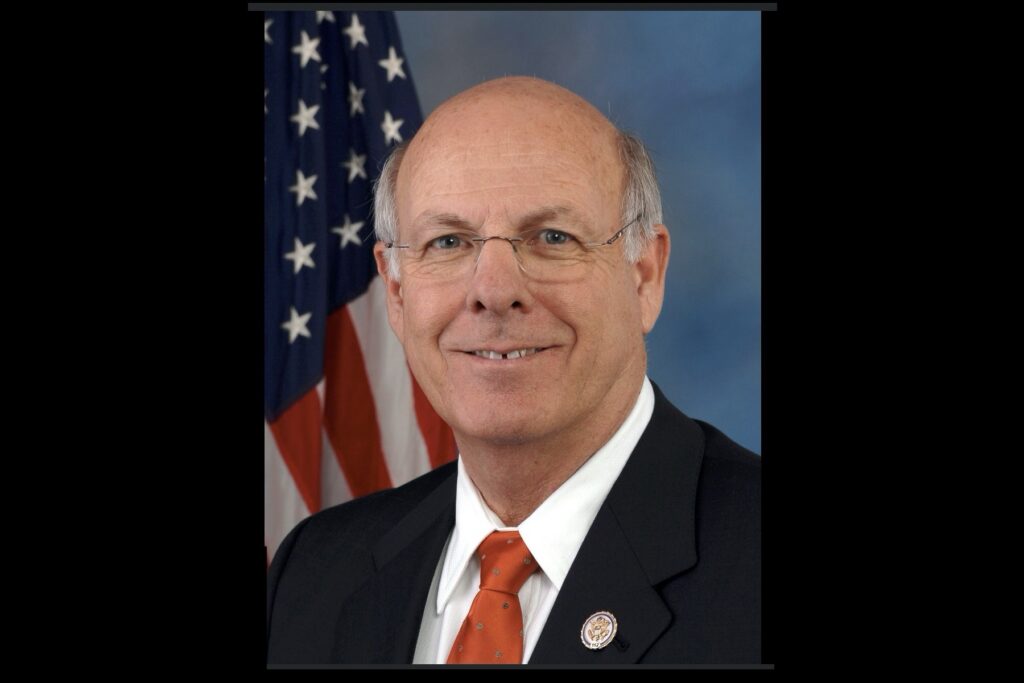
IPANM (Nov. 6, 2025) – The nomination of former U.S. Representative Steve Pearce (NM CD-02) will benefit all New Mexicans, as the Trump Administration continues to open up valuable federal lands for safe and responsible oil & gas development.  IPANM Executive Director Jim Winchester offers the following comment on Pearce’s nomination:

“At time when New Mexico state policymakers and regulators are pushing through a half-dozen new, anti-oil & gas administrative regulations to further stifle oil & gas development on state lands, IPANM members welcome Steve Pearce’s strong experience and leadership that will encourage growth for the industry on the state’s federal lands.

“Just this week, a half-dozen small oil & gas business owners testified in state rulemaking that they are purposefully leaving state lands in New Mexico to either work on federal lands or work in other states altogether citing an unfriendly and unworkable state business climate.

“In stark contrast, the Trump administration’s selection Steve Pearce will further bring pragmatism and meaningful reforms to federal regulations that highlight how safe and responsible oil & gas production leads to human flourishing in all walks of life in New Mexico and the world.”

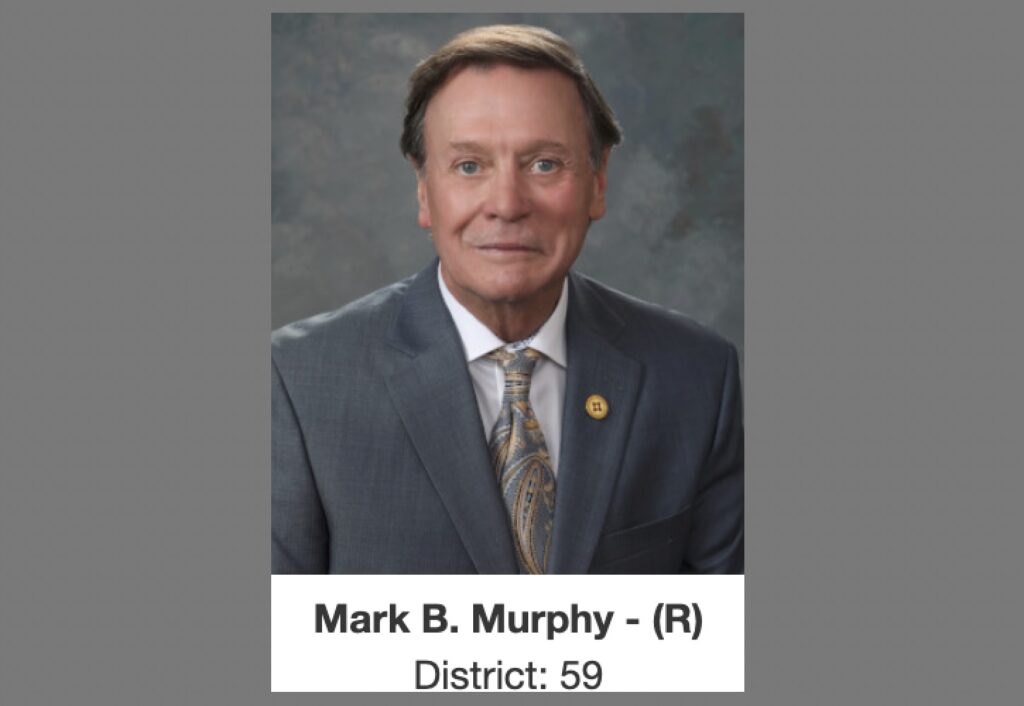
Santa Fe New Mexican (Nov. 2, 2025) – by Rep. Mark Murphy (D-59 Roswell)

Opinion Editorial – The state of New Mexico is sitting on tens of millions of dollars meant to clean up orphaned oil and gas wells. Instead of using those funds to fix the problem, state regulators are pointing fingers at the very industry already doing nearly all the work — and paying the bill.

Here’s the reality: When an oil or gas well reaches the end of its life, it’s the producer’s responsibility to plug it and restore the surrounding land. In New Mexico, companies do exactly that for roughly 99% of all wells. Only a small fraction becs ome “orphaned” — and that’s where the state steps in, using money from the Conservation Tax.

A portion of that tax goes into the Oil and Gas Reclamation Fund, created specifically to plug and reclaim orphaned wells. The Oil Conservation Division is responsible for using those funds efficiently and getting the work done. But that’s not happening.

As of November 2024, the Reclamation Fund had swelled to over $66 million from the Conservation Tax and federal grants. That’s more than enough to address the state’s small backlog of orphaned wells. Yet instead of using the money, OCD has allowed it to sit idle — trapped in red tape and mismanagement.

Procurement rules have limited the number of companies that can bid on reclamation projects, leaving only a few to handle the work. Other qualified contractors have been shut out for years. The result? Hundreds of orphaned wells sit untouched while the fund meant to fix the problem gathers dust.

Now, OCD wants to “solve” this self-inflicted problem by raising financial assurance requirements — the bond companies must post to guarantee they can plug their wells. Every producer already maintains financial assurance and pays the Conservation Tax. Increasing those requirements would hit small producers the hardest, making it harder — and in some cases impossible — for them to stay in business. And when small producers go out of business, what happens? More orphaned wells.

We’ve seen this before. In Colorado, when regulators hiked bonding requirements, more than 2,000 wells were added to the abandoned well list because small companies couldn’t afford the new rules. The result was less production, lost state revenue and more cleanup costs for taxpayers. That’s exactly the wrong direction for New Mexico.

During the past two legislative sessions, lawmakers had a chance to fix this. House Bill 403 — a commonsense, pro-environment measure — would have redirected a larger share of the Conservation Tax to the Reclamation Fund, ensuring the industry’s own tax dollars were fully dedicated to the cleanup work they were meant for. Yet the Legislature rejected it — twice.

Make no mistake. This isn’t a funding problem. The oil and gas industry is already footing the bill through the Conservation Tax and is successfully plugging nearly every well in the state. The problem is the state refuses to use the money it already has.

Instead of piling more financial burdens on small producers, New Mexico’s regulators should do what they’ve been funded to do — clean up the few remaining wells and stop pretending the industry isn’t doing its part.

When government hoards money instead of solving problems, everyone loses. Especially the small producers who keep New Mexico’s economy — and its energy future — alive.

Rep. Mark Murphy, a Republican, represents District 59. He is an oil and gas producer from Roswell.

By George Sharpe
Oct 26, 2025

In 2000, Merrion Oil & Gas acquired 20 low producing wells from ConocoPhillips. Today, those wells have generated 25 years of jobs, royalties and tax revenue. However, under a new bonding rule being considered in the state, those wells would have been plugged and lost forever.

New Mexico is considering implementing a new rule dramatically increasing the bonding requirements for oil and gas wells. In particular, marginal wells will each require a separate $150,000 bond. Further, if more than 15% of a company’s well-count is considered marginal, then 100% of the wells operated by that company will require individual $150,000 bonds. Finally, the rule will make it all but impossible for a larger company to sell lower-producing wells to small, independent operators, who can squeeze many years of additional profits from those wells.

This rule is unnecessary and will cost the state in jobs, royalties and taxes. Most operators are reputable, plugging their uneconomic wells on an ongoing basis. Existing rules already address the bad actors who let their wells languish. If Merrion Oil & Gas had to comply with this proposed rule, then virtually all of our wells would require the $150,000 bonding at an annual cost of $15,000 per well. However, because many of our wells may not make more than $15,000 per year in profit, they would be uneconomic and would need to be plugged immediately. Even though those wells don’t make much profit, they still support a lot of jobs, from pumpers to compression companies to water haulers and on and on. Further, they still pay royalties and production taxes that will now go away.

With the rule, there will be no more sales of wells from majors to small independents, similar to Merrion’s purchase of those wells from Conoco so many years ago. Conoco would just have had to plug the wells out. But because Merrion can operate at a lower cost point than Conoco, those wells have produced for over twenty five years, supported many, many jobs and paid hundreds of thousands of dollars in royalties and taxes to local landowners and the state. And unless we are forced to plug them now, they will continue to do so for another twenty years.

The biggest issue with the rule is that when you force small operators who are barely getting by to post $150,000 bonds for all of their wells, many won’t be able to afford an immediate cash outlay of that magnitude, leaving them no choice but to walk away and leave their wells to the state to deal with. They certainly won’t be able to sell the wells to someone else. So rather than protecting the state from the potential cost of orphaned wells, this new rule is going to immediately dump hundreds if not thousands of orphaned wells in the state’s lap to plug.

In closing, the proposed rule is unnecessary, will cost the state millions in lost royalties and taxes, will result in the loss of hundreds if not thousands of jobs and will backfire by significantly, increasing the number of orphaned wells for which the state is responsible. But the nongovernmental operators pushing the rule aren’t really concerned about protecting the state’s interest. Their real objective is to continue to make it harder to produce oil and gas in the state of New Mexico. The new rule will certainly accomplish that. Opponents of this misguided approach have until Nov. 7 to speak out.

Born and raised in Farmington, George Sharpe is the investment manager for Merrion Oil & Gas. He coordinates several education initiatives in the local school district and is an advocate for all types of energy.

ABQJournal (Oct. 21, 2025) — Gov. Michelle Lujan Grisham’s trade mission to Japan this year is showing signs of paying off.

The governor on Monday announced an agreement between Fujitsu, a Japanese advanced technology corporation, and New Mexico State University to launch an innovation hub at NMSU next year.

She also touted Japan as a possible market for natural gas produced in New Mexico’s San Juan Basin, though no specific agreements or timelines have been set for that effort.

The new and potential partnerships took center stage during an all-day trade summit attended by Shigeo Yamada, Japan’s ambassador to the United States, and Wyoming Gov. Mark Gordon, among other government officials and business leaders.

Lujan Grisham and Gordon were both part of the same trade mission to Asia in April. They said their two states share a friendly rivalry when it comes to energy and economic issues, but are also willing to work together on regional initiatives.

“I hate to say bipartisan; this is just good business,” Gordon said at one point during a Monday news conference at the state Capitol in Santa Fe.

For her part, Lujan Grisham called New Mexico and Wyoming “energy powerhouses” that could help countries like Japan with their energy needs while reducing its carbon emissions.

“This is a huge opportunity for the western states and the United States in general,” the New Mexico governor said.

The Monday trade summit coincided with the release of a regional report focused on expanding the exportation of natural gas from the Rocky Mountain region.

That report, released by the Western States and Tribal Nations Energy Initiative, was funded in part by New Mexico and identifies two pathways for transporting natural gas to the West Coast, where it can be shipped to Asian markets. One of those routes, the Southwest Pathway, would cross Mexico to the Pacific Ocean, while the other, the Pacific Northwest Pathway, would cut through the state of Washington.

New Mexico was the nation’s third-highest natural gas producing state in 2024, providing about 8% of the nation’s total natural gas withdrawals, according to U.S. Energy Information Administration data.

The state is also the nation’s third-largest energy producing state overall — trailing only Texas and Pennsylvania — and produces about 11 times more total energy than it consumes.

But New Mexico at times has dealt with a glut of natural gas in past years, and Lujan Grisham said it’s possible the state would have to increase its pipeline infrastructure if an export agreement with Japan is ultimately signed.

“As demand grows, we would need to do more infrastructure investment,” the governor told reporters, while adding the state has the current capacity to at least begin such an agreement.

Meanwhile, Yamada, the Japanese ambassador, said Japan’s government has committed to $7 billion in annual purchases of American energy, but acknowledged the Rocky Mountain coalition is one of several options being considered.

“This is a very good detailed introduction of the potential Rocky Mountain gas and we will seriously look into it,” he said, referring to the effort involving New Mexico, Wyoming, Utah, several Colorado counties and two Native American tribes.

As for the innovation hub at NMSU, a memorandum of understanding signed by university President Valerio Ferme and a senior Fujitsu official lays out a four-year timeline for creating a national “testbed” for research and innovation.

Under the agreement, NMSU will establish a facility with reliable power and cooling, work with the state’s two national laboratories and procure servers, while Fujitsu will provide the technical hardware and other services.

The agreement does not contain any state financial incentives, though Lujan Grisham said such investments could be considered in the future depending on how the partnership evolves.

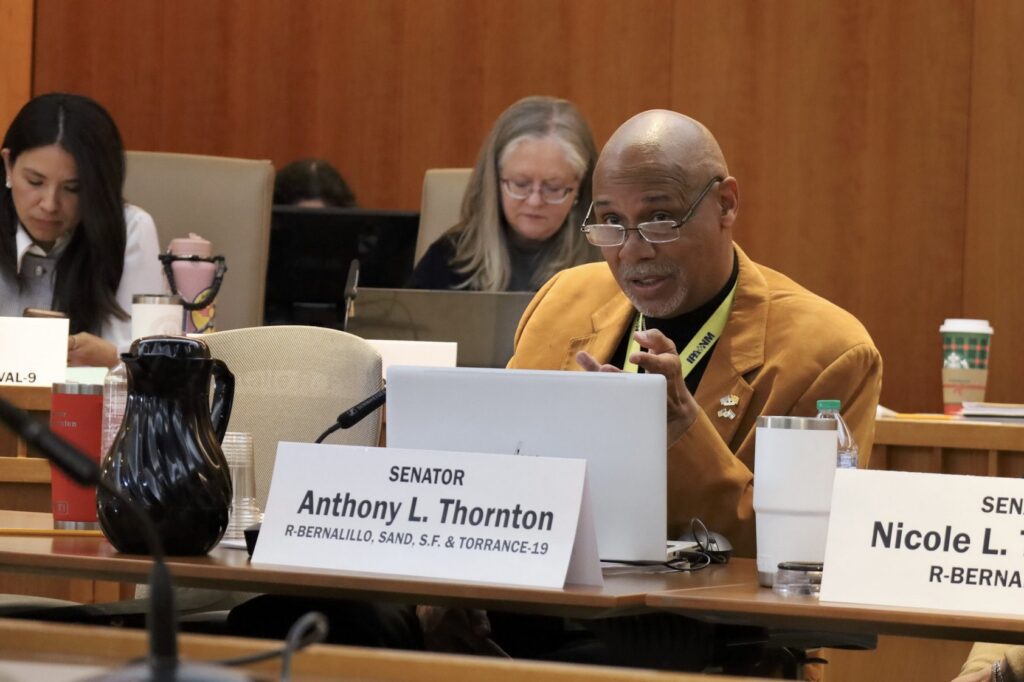
IPANM (October 20, 2025) – IPANM would like to thank Sen. Larry Scott and all of the many state legislators who have submitted oral and written comments AGAINST the WELC Rulemaking for new Financial Assurance Bonding Levels and new OCD Authority to reject private well acquisitions.  The following is Sen. Scott’s public comment in front of the New Mexico Oil Conservation Commission.

Public Comments of State Senator Larry Scott
4:11 P.M. MT
WELC Rulemaking Public Comments Session 1
October 20, 2025

State Senator Larry Scott: Thank you, Madam Examiner, for the opportunity to speak. I am State Senator Larry Scott from District 42. [Name spelling:]L-A-R-R-Y-S-C-O-T-T.

Hearing Officer:  Do you swear and affirm to tell the truth?

State Senator Larry Scott: Yes, Ma’am. I have some fairly significant personal experience with this subject matter. I spent the better part of 40 years as one of the very smallest independent oil and gas producers almost exclusively in southeast New Mexico, in Lee and Eddy counties.

At one point, our little company was managing, I think, close to 60 wells, counting producers and injectors. And I can assure you that all of these calculations that I’m listening to do not take into account having to a set-aside, if you will, $150,000 per marginal well, as effectively unproductive capital. That process would have driven me to bankruptcy in fairly short order.

Now, in full disclosure, I’m no longer an operator. I still maintain interest as a non-owner in a number of properties, but all of my obligations to the state of New Mexico have been fulfilled and plugging obligations and those bonds have been released.

I have serious concerns. I’ve been in the legislature long enough to have participated in the legislation that increased in blanket bonding requirements from $50,000 to 5x of that at $250,000 [in 2018].

I’m not aware that that’s had any significant impact, either plus or minus, on the obligations of the state or any plus or minus impact on small operators in the state.

Now, let’s talk about the reclamation fund. Our oil and gas producers over the years have paid millions of dollars into that reclamation fund that have been misappropriated for use, in many cases, swept when New Mexico was short of funds and not utilized for the intended purpose of overcoming the very few operators that have failed to fulfill their plug-in abandonment operations.

I think the increase in bonding requirements that was affected in 2018 was affected after robust debate and votes by both the House and the Senate. This proposal needs to be vetted through that process rather than as an administrative rulemaking.

Thank you, Madam Examiner, for the opportunity to comment and I’ll look forward to the rest of the testimony.

Industry Plugs Its Wells; Enviros Simply Want To Kill Off Independent Producers

Beginning October 20th, the New Mexico Oil Conservation Commission will stage a rulemaking to consider proposals by radical environmental groups to impose significant new costs on industry. These new rules illegally bypass required legislative approval, and have been written with the explicit intention of shutting down small, local, multi-generational New Mexico independent producers.

The new language would immediately raise financial assurance bonding by orders of magnitude on later-in-life, marginal wells. With an immediate bond increase assessment per well, there will not be enough of the still-available, but yet-to-be extracted, oil & gas remaining in the underground to financially breakeven. As a result, most independent producers will have no choice but to shut-in and plug their lower producing wells, and prematurely cut off oil & gas production before the subsurface reservoir is drained. Such wells can often be reworked or repurposed to enhance production or to dispose of produced water. But, with these options effectively eliminated by the new rules, well revenues (including significant state revenues) will be lost for no justifiable reason.

The new bonding provisions are only part of the rewritten rule. If adopted, state regulators will be granted new authority to deny well operators from selling their existing marginal wells. The state, without due process and without justification, could simply kill the sale of production wells if they deem the buyer to not be financially solvent through their own estimations. This is autocracy over an entire industry on the regulatory level, and will certainly block most operators from selling or acquiring new wells altogether.

The rewritten rules and upcoming hearing has already had a chilling effect not only on the oil & gas industry, but the larger New Mexico business community. The message is clear: Environmentalists and regulators in New Mexico can write and implement their own regulations without the need for legislative consent or substantial consideration of industry feedback. In fact, the concerns of independent producers were not even solicited before this rule was filed. State-based oil & gas companies will testify that because no input from independents was considered, they may have no choice but to shut down and leave the state because of the excessive bonding costs and uncertainty over the ability to buy and sell producing wells.

There’s an ugly reality exposed by this rulemaking hearing. On one hand, the state touts industry’s increased production and feasts on enormous oil & gas state revenues.  On the other hand, the state and the enviros continue to kill off smaller independent producers. Since 2017, the number of state oil & gas reporting entities has decreased by 20%. That’s over 100 mostly independent producers who are now either out-of-business, or have left New Mexico due to new regulations antagonistic towards smaller oil & gas companies. These are responsible, state-based, and multi-generational producers that live in the communities where they produce oil & gas, and contribute directly to their rural economies. Environmentalists even acknowledge and applaud the future shutdowns this new rule will cause in their already submitted written testimony, which reveals their true intentions.

To counter this inherent hostility, industry intends to present the real facts during the upcoming rulemaking hearing. Industry testimony will demonstrate that operators already plug over 95% of their own non-producing wells, which accounts for hundreds of wells each year. The state’s inflated projection of unfunded liability on wells does not account for that fact. Industry will also demonstrate that state regulators do not even draw upon the existing financial assurance bond money that exists to plug abandoned wells meaning that industry is being asked to bear significant new costs that will have virtually no benefit.  Also troubling, the state does not adequately administer the already-existing industry-financed reclamation fund, which currently has a balance of over $50 million that remains unspent. Furthermore, the state only contracts with hand-picked oil & gas service companies to plug wells, where as other options are available and more efficient. These are the kinds of facts never show up in biased, environmentally-funded, state-endorsed studies on New Mexico’s unplugged well inventory.

The Independent Petroleum Association of New Mexico (IPANM) will fight for the responsible, New Mexico-based independent producers at this hearing. These companies already plug their own wells, pay into the state’s reclamation fund to plug other wells, and protect the ground where they work upon. Sadly, they will face unnecessary shut-ins and complete shutdowns if this rule is passed.  We urge the 3-member Oil Conservation Commission to listen to the testimony of the independent producers, recognize the intended and unintended consequences of these bad rules, and reject the environmentalists’ petition that will kill an important segment of the oil & gas industry. Finally, we urge everyday citizens whose lives are better because of oil & gas to stand up during the hearing public comments and defend the industry that provides for all New Mexicans.

IPANM & SLO (October 3, 2025) – Prior to the 2025 Legislative Session, the State Land Commissioner threatened to raise state lease bonds if her Royalty Rate Increase bill bill wasn’t passed.

Well, the Royalty Rate Increase Bill did pass, and apparently the State Land Commissioner is proceeding with bonding increases anyway. This is not necessarily surprising. Earlier this summer, the Commissioner hinted that this rule was to be forthcoming.

This afternoon, the State Land Office released the following State Lease Bonding Increase Draft Rule, which calls for dramatic, across the board lease bond increases that will continue to disproportionately hurt independent producers:

FULL DRAFT LANGUAGE of SLO’s new, proposed Lease Bonding Rule

The SLO also has provided this summary draft for your review:

SLO Summary of new, proposed Lease Bonding Rule

Consistent with their track record, the State Land Office did not consult with industry regarding their proposal, and therefore, have not allowed industry to provide input on the impacts of this new rule on our operations up to this point.

However, in their message to IPANM today, the State Land Office writes, “While we are still finishing up our timeline for the rulemaking, please expect industry working group meetings to be held in Hobbs, Farmington and Santa Fe in mid-November.  We will have more information to share in the next couple of weeks regarding meeting locations and our overall timeline.”

Therefore, it would appear that opportunities will be forthcoming to provide feedback on what is currently drafted. It is uncertain whether any future industry input will be seriously considered for changes, as such after-the-fact input sessions have often been more “show” than substance. Nevertheless, IPANM will engage with the SLO with hopes to improve a very, very bad rule.

IPANM (Oct. 3, 2025) – Depending on who you talk to, the Governor-called Special Session last week was either stop-gap measure success or a collossol waste of time.  In all, five bills passed, four have already been signed, and any potential cuts have been plugged to state programs and services that *might* be impacted by the Big, Beautiful Bill. Democrats are heroes in their own world, and Republicans pointed out that nothing to address crime or illegal immigration was substantively addressed.

In summary, it was government being government, with $162 million appropriated (thanks to oil and gas!), no direct bills to hurt our industry (that damage was already done in the 2025 general session), and politics on display.

Here is a summary of the 2025 New Mexico Special Legislative Session, which concluded on October 3. The session was convened by Governor Michelle Lujan Grisham to address funding gaps caused by recent federal budget cuts. Lawmakers focused on protecting essential services such as healthcare, food assistance, and judicial operations.

Bills Passed and Signed by the Governor

Governor Lujan Grisham signed four of the five bills passed during the session:

  • House Bill 1 – Emergency Appropriations
    • Allocates $162 million in emergency funding.
    • Key provisions:
      • $66M to the Health Care Authority.
      • $16.6M to maintain SNAP benefits.
      • $8M for food banks and pantries.
      • $17M to reduce health insurance costs on the BeWell NM exchange.
      • $30M to the state’s emergency contingency fund.
      • $50M to the Rural Healthcare Fund.
  • House Bill 2 – Health Insurance Affordability
    • Expands eligibility for state subsidies through the Health Care Affordability Fund.
    • Targets residents above 400% of the federal poverty level, anticipating the expiration of federal premium tax credits.
  • Senate Bill 1 – Rural Health Care Stabilization
    • Transfers $50M to the Rural Health Care Delivery Fund.
    • Broadens eligibility to include providers in high-need areas and tribally operated facilities.
  • Senate Bill 2 – Criminal Competency Proceedings
    • Restores authority for metropolitan court judges to preside over criminal competency cases.
    • Passed with an emergency clause, taking effect immediately.

Pending: Senate Bill 3 – Immunization Guidelines

  • Would expand the NM Department of Health’s authority to purchase COVID-19 vaccines for children and revise how vaccination guidelines are set.
  • Did not receive the two-thirds majority needed for immediate implementation and has not yet been signed. The Governor is still reviewing it.

 Key Impacts of the Special Session

  • Healthcare Access: Expanded subsidies and emergency funding will help maintain coverage for thousands of New Mexicans, especially in rural and underserved areas.
  • Food Security: Additional funding for SNAP and food banks will help mitigate hunger risks amid federal cutbacks.
  • Judicial Efficiency: Restoring metropolitan court authority over competency cases is expected to reduce delays and improve case management.
  • Emergency Preparedness: The contingency fund boost strengthens the state’s ability to respond to future crises.
  • Rural Health Infrastructure: Increased investment in rural health delivery will support sustainability of clinics and hospitals in high-need regions.