A New Day at IPANM


Newsroom

The Methane Advisory Panel (MAP) has concluded and we anticipate final publications of our technical documents by mid-December. IPANM’s Methane
Global Energy Institute (Dec. 1, 2019) - A recent report from the U.S. Chamber of Commerce’s Global Energy Institute concluded
Western Energy Alliance & U.S. Council of Economic Advisors (Dec. 5, 2019) - Oil and natural gas is saving typical
On behalf of the IPANM Executive Board, we wish safe travels & well wishes to you, your employees, families and
BUSINESS WIRE (Nov. 19, 2019) -The State of New Mexico today became the newest member of Western States and Tribal Nations
George Sharpe, IPANM Member (Nov. 18, 2019) - IPANM Member, Columnist, Energy Instructor and Investment Manager at Merrion Oil & Gas
ABQ Journal (Nov. 17, 2019) - Oil and gas production grew New Mexico’s economic output by the fourth-highest rate in
Carlsbad Current Argus (Nov. 10, 2019) - More than $12 million in federal funds could help the New Mexico Department of
ABQ Journal (Nov. 7, 2019) - Oil production continues gushing in southeastern New Mexico and on pace for another blockbuster
Inside Sources (Nov. 7, 2019) - New Mexico would suffer severe economic harm with the loss of revenue due to

MEMBERS ONLY INFORMATION

You are currently in the IPANM Public Newsroom.
  MEMBERS: Please login below to access exclusive MEMBERS ONLY information, including

Regulatory updates
The IPANM Event Calendar
Information and Issues
IPANM Policy Positions
The IPANM Member Directory
Legislative Bill Tracking with BillTrack 50
Access to your IPANM Memberzone information page

The Methane Advisory Panel (MAP) has concluded and we anticipate final publications of our technical documents by mid-December.

IPANM’s Methane Workgroup Committee, made up of both IPANM’s MAP members and at-large members, will hold a conference call in December to take a look at some of the remaining issues that need to be addressed in formal comments to the administration. Please notify me if you’d like to join this important call. Likewise, IPANM MAP members will join NMOGA’s MAP members in mid-December to follow-up on some of our own discussion issues not addressed during our stakeholder meetings with the administration and draft comments to be submitted during the 60 day public comment period.

I’d like to highlight several aspects of the MAP meetings that you might not otherwise be aware of.

  • First, all meetings were closed and conducted under the direction of the Chatham House Rule. Unfortunately, some representatives were not respectful of this process, as illustrated by several news articles that were published in November. Both industry MAP members and our IPANM Executive Board protested these leaks.
  • Second, this process was conducted to provide technical background to the process of the administration’s desire to seek input from all parties involved in the Methane Rule process. From the outset, IPANM and other industry participants were disappointed that some entities chose to fill their representative spots with attorneys vs. technical experts. This ran contrary to the administration’s stated purpose to have a technical discussion related to methane reductions in the state. The administration heard our objections and did not prohibit participation of attorneys but allowed all members to have an alternate and a plus one (legal representation). The alternate could participate in the MAP process in place of the original representative. The plus one could be present at the MAP meetings and be consulted with as needed.
  • Third, the drafting of the technical documents were done in a process that allowed all-inclusive considerations, regardless of technical or economic feasibility. Through the additive process technical context was provided to respond to impractical suggestions, and those responses should be captured in the documents. The hot topics from the MAP process were centered around venting and flaring. I would expect to see the NMOCD and NMED revamp the reporting requirements for oil and gas operations in the state. Throughout the process we highlighted the need for consideration of marginal well impacts and specifically with tanks, liquids unloading and LDAR (Leak Detection and Repair). If you want any specific information on the topics covered please feel to reach out to me or check the NMED website for each topic white paper.
  • Finally, IPANM members should understand that the administration will take the information from these stakeholder meetings and move forward with drafting rules they want to enact. There is no guarantee that any of the technical recommendations suggested by industry will actually be considered. For this reason, IPANM plans to have it’s own legal representation at the upcoming rulemaking hearings in 2020. If a new Methane Rule comes out that fails to account for our unique operating circumstances, IPANM will stand ready to take whatever steps are necessary to fight for our members.

To conclude my update, please join me in thanking our IPANM MAP members. I can personally attest to the countless hours, weekends and trips to Santa Fe that our IPANM MAP team dedicated to this effort. I truly appreciate the time and effort of our IPANM MAP members in this process. Thank you for the opportunity to serve you all as the northwest vice president for IPANM. As we close out 2019, I would like to wish everyone a Merry Christmas and a Happy New Year.

Global Energy Institute (Dec. 1, 2019) – A recent report from the U.S. Chamber of Commerce’s Global Energy Institute concluded that a ban could cost New Mexico 142,000 jobs and eliminate $86 billion in cumulative gross domestic product through 2025.The state would also lose $8 billion in state and local tax revenues during that time.

The report states, “At a time when national candidates and elected officials are proposing to ban hydraulic fracturing, it is important to highlight both the benefits of the shale energy revolution and the real-world impacts that a ban would have.”

Fracking Ban in NM would kill 142,000 jobs, $86B in GDP & $8B in Tax Revenue


Western Energy Alliance & U.S. Council of Economic Advisors (Dec. 5, 2019) – Oil and natural gas is saving typical U.S. households of four up to $2,500 annually on electricity bills, according to a recent report from the U.S. Council of Economic Advisors. The federal agency that advises the president on economic policies also found that oil and natural gas lowers “energy-related GHG emissions by 527 million metric tons per year, or 9 percent of GHG emissions in 2005.”

These economic benefits help lower-income families the most, a point that gets lost by several presidential candidates and the media in the political debate on climate change and environmental justice.

The report discusses the benefits of removing regulatory burdens on oil and natural gas development. It draws a sharp contrast between states such as New York that have actively banned fracking and those like New Mexico that are well aware of how important domestic energy is to funding priorities such as education and lowering electricity costs.

On behalf of the IPANM Executive Board, we wish safe travels & well wishes to you, your employees, families and friends this Thanksgiving!

Thank you for your loyalty to IPANM in 2019!

Happy Thanksgiving!


BUSINESS WIRE (Nov. 19, 2019) -The State of New Mexico today became the newest member of Western States and Tribal Nations (WSTN) natural gas initiative, adding a strong advocate for the power of responsible, environmentally sound energy production to boost rural economies.

New Mexico’s joining creates the potential for other export avenues for the San Juan and Permian basins, especially after the State of Baja California, Mexico, became part of WSTN in August. Already, WSTN is pursuing export options for the Piceance and Uinta basins in Colorado and Utah, and Wyoming’s Green River basin.

New Mexico Joins Western States and Tribal Nations Natural Gas Initiative


George Sharpe, IPANM Member (Nov. 18, 2019) – IPANM Member, Columnist, Energy Instructor and Investment Manager at Merrion Oil & Gas in Farmington recently released his latest educational video entitled Don’t Fear The Frack.

Please take a few minutes to watch this informative video, and then share the link (https://www.youtube.com/watch?v=K-lCr2IWCwo) with your friends and co-workers!


ABQ Journal (Nov. 17, 2019) – Oil and gas production grew New Mexico’s economic output by the fourth-highest rate in the country this year, as the extraction industry boomed in the Permian Basin in the southeast corner of the state.

A  report from the Bureau of Economic Analysis, an arm of the U.S. Department of Commerce, showed New Mexico’s gross domestic product grew by 4.1% in the second quarter of 2019, tied with Alaska and behind Texas at 4.7% and Wyoming at 4.2%.

Nationwide, GDP grew by 2%, records show, and New Mexico also grew by 4.1% during the first quarter of 2019.

Major GDP Uptick in New Mexico Linked to Oil & Gas


Carlsbad Current Argus (Nov. 10, 2019) – More than $12 million in federal funds could help the New Mexico Department of Transportation (NMDOT) with improvements and safety enhancements on a busy southeastern New Mexico highway.

The U.S. Department of Transportation awarded the grant to NMDOT for work on a section of U.S. Highway 285 from Loving to the Texas border, read a news release from New Mexico’s congressional delegation.

The $12.5 million Better Utilizing Investments to Leverage Development (BUILD) grant will pay for repairs, turning and acceleration/deceleration lanes, shoulders, bridge work and stronger pavement on about the first 25 miles of 285 in New Mexico, per the release.

U.S. Sen. Tom Udall (D-NM) said the money is critical for public safety and the economy of Southeast New Mexico.

“Given the rapidly growing use of this roadway by heavy trucks and equipment, these federal funds will help NMDOT make U.S. 285 a safer, more reliable highway thoroughfare to the Texas border,” he said in the release.

U.S. 285 is a major transportation artery in southeastern New Mexico and increased traffic from the oil and gas boom has worsened road conditions along the route, the release read.

NMDOT should receive official word on the federal money Nov. 12, according to Spokesperson Manon Arnett.

“Although NMDOT has not been officially notified we are very pleased with the announcement and look forward to receiving official notice and putting the money to good use for our southeastern New Mexico partners,” she said.

Arnett said “it would be a few months” before NMDOT takes possession of the federal funds.

NMDOT gets $12.5M from feds to improve U.S. 285 near Loving

 

ABQ Journal (Nov. 7, 2019) – Oil production continues gushing in southeastern New Mexico and on pace for another blockbuster year, with estimates as high as 300-million-plus barrels of production for the year 2019.

Preliminary monthly production tallies by the state Oil Conservation Division show a huge increase in output during the first eight months of this year, up 36% compared with the same period in 2018 – itself a record year.

As of August, the latest month for which OCD estimates are available, production reached 209 million barrels of oil. That’s up from 153.5 million barrels during January-August last year, and it’s nearly twice the 108 million barrels reported for that same period in 2017.

At that pace, the state could well surge past 300 million barrels by year-end. That compares with 249 million barrels last year and 173 million in 2017.

And that, in turn, has flooded state coffers with an unprecedented wave of oil and gas revenue, generating $1 billion-plus budget surpluses in the last two years.

New Mexico on track for 300-million barrels of production in 2019


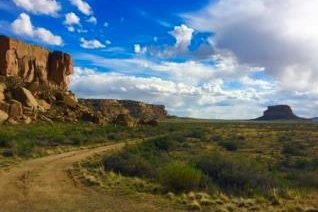
Inside Sources (Nov. 7, 2019) – New Mexico would suffer severe economic harm with the loss of revenue due to a drilling ban buffer zone around
Chaco Canyon. Specifically, Navajo allottees, who hold mineral rights in portions of the land, would lose a vital source of income in an economically depressed region.  With a ban, the Navajo allotees would be blocked from safely developing acreage that would be miles from Chaco Canyon Historic Park.

Oil and Gas Industry: Bill to Permanently Protect New Mexico’s Chaco Canyon Region Premature