A New Day at IPANM


information & issues

Welcome to IPANM’s Information & Issues webpage!

IPANM is not afraid to take strong stances on many current issues threatening our industry. We have to! Seemingly minor changes to regulations or rules can have a major impact on the financial solvency of our small oil & gas producers. While we will never compromise on our duties to protect human health, fresh water and the environment in our daily activities, we will fight unnecessary government overreach when new regulatory proposals are not based on sound science and do little to protect the environment.

Below, we’ve identified serious issues facing our producers. Please click on the corresponding button to learn more about each issue and IPANM’s stance on the issue. (Note: Some of this content may be restricted for members only. To access this exclusive content, please join our association!)

RECENT NEWS: All Issues

IPANM (Mar. 6, 2024) | PDF - The following statement has been released by Jim Winchester, Executive Director of the Independent Petroleum Association
Jim Winchester, Executive Director of the New Mexico Independent Petroleum Association (IPANM) |  March 2, 2024 | PDF Format Recent
The Henderson News (Feb. 29, 2024) - Twenty years ago the United States imported more than half of the oil we
IPAA (February 16, 2024) - America’s oil and natural gas producers are innovating to produce more oil and gas than
Call it a tale of two energy bills. A bill that would have made the most significant changes in decades to
IPANM (February 9, 2024) - Today, IPANM joined 26 state and federal oil & gas trade associations in expressing major
Santa Fe New Mexican (February 5, 2024) - A bipartisan New Mexico Senate bill intended to unlock more state funding
Santa Fe New Mexican (January 29, 2024) - New Mexico’s fossil fuel industry is enjoying a record boom in the
EnergyNow.com (January 26, 2024) - The Biden administration on Friday halted the approval of new licenses to export US liquefied
Rio Grande Sun (January 25, 2024) - Editorial Submitted By Jim Winchester, IPANM Executive Director New Mexico Governor Michelle Lujan Grisham

IPANM (Mar. 6, 2024) | PDF – The following statement has been released by Jim Winchester, Executive Director of the Independent Petroleum Association of New Mexico regarding Governor Michelle Lujan Grisham’s line-item veto of the bipartisan Stripper Well Tax Exemption from HB252 Tax Package.

“Governor Michelle Lujan Grisham continues her assault on small-business independent producers with her veto of the Stripper Well Tax Provision, which had bipartisan backing. This carefully crafted tax treatment would have provided measurable benefits to the environment by substantially reducing emissions from small producers’ low-production wells. The provision had the added benefit of increasing state revenues and protecting jobs provided by locally owned companies.”

–Jim Winchester, IPANM Executive Director

IPANM would like to thank Senator Ron Griggs of Alamogordo for his efforts in sponsoring the bill.

Please refer to IPANM’s March 2, 2024 Opinion Editorial for more detailed information on the benefits of the Stripper Well Tax Exemption.

Carlsbad Current Argus: Governor Lujan Grisham Vetoes Oil & Gas Well Tax Exemption

This content is for members only.

Please login here! If you have any questions about your membership, please email megan@ipanm.org.

The Henderson News (Feb. 29, 2024) – Twenty years ago the United States imported more than half of the oil we consumed each day. Today, primarily through innovative technology developed by the American oil and natural gas industry, the U.S. exports more oil than it imports. In 2004, the U.S. imported 13.7 million barrels of oil per day (b/d) while producing 5.2 million b/d, resulting in a negative 8.5 million b/d. Currently, the U.S. imports just 6 million b/d while producing 13.3 million b/d, resulting in the U.S. becoming a net exporter of oil. Natural gas also has become a net exporter with liquefied natural gas (LNG) traveling to Japan to the west and Europe to the east and many other countries.

The industry began experimenting with new technology in the 1990s that involved drilling vertically into shale formations and then drilling horizontally and then hydraulic fracturing the shale to free the oil and gas to flow to the surface. Around 2008 the rush to drill using this new technology took off. However, some of the politicians in Washington, D.C. are using the regulatory weapon against the oil and gas industry. President Joe Biden has used his power in an attempt to make it more difficult and expensive for the oil industry. The Biden administration recently implemented a complicated new methane tax, proposed new emission standards for vehicles, limited exploration on public lands, and proposed limiting LNG exports.

The American Petroleum Institute (API) this week released a new national poll demonstrating widespread concern over Washington’s approach on energy policy. The poll, conducted Feb. 9-13 of 1,132 registered voters, found 86% believe producing oil and natural gas here in America helps make our country more secure against action by countries such as China and Russia. Also, the survey found 84% believe producing more oil and natural gas in the U.S. could help lower energy costs for American consumers and small businesses. Two out of three American voters say the country is on the wrong track on energy policy, and following the administration’s recent pause on LNG export permits, the poll found nine in 10 Americans believe the U.S. should continue to supply natural gas to our allies overseas, API said. With recent reports that the administration plans to impose a de-facto ban on new gas-powered vehicles, the poll found that the majority of Americans (75%) would oppose such regulations restricting consumer choice.

“While the U.S. continues to lead the world in energy production, it’s clear the American people see that misguided policy choices today can sow the seeds of tomorrow’s energy crisis,” API President and CEO Mike Sommers said.

“Whether it’s partisan decisions to restrict American natural gas as a source of strength around the world and good-paying jobs here at home, or regulatory plans to dictate the type of cars consumers can drive—voters on both sides of the aisle know we are on the wrong path on energy policy. With much at stake for our economy and national security, it’s time for Washington to change course and forge a bipartisan path that embraces all reliable and affordable American energy,” Sommers said.

IPAA (February 16, 2024) – America’s oil and natural gas producers are innovating to produce more oil and gas than ever while generating less emissions and bringing reliable, affordable energy to Americans and our global allies. In its latest short-term energy outlook, the Energy Information Administration estimated that U.S. crude oil production reached “an all-time high in December of more than 13.3 million barrels per day.”

That production helps stabilize prices for consumers. Oil and natural gas are sold on global markets, and prices can be affected by events or decisions — frequently by bad actors — on the other side of the world. However, having strong U.S. output helps reduce the shock of those actions for Americans.

Our record level of energy production does face threats — specifically by the U.S. government, whose leaders have sought to shut down oil and gas producers with an all-of-government approach, but the industry pushes forward.

Last year, the oil and natural gas sectors continued to innovate and reach record-breaking levels of production. After becoming a net energy exporter in 2019, the United States has emerged as a behemoth in the global energy market, hitting prolific levels of oil and natural gas production and exports in the past year. U.S. liquefied natural gas had a tremendous 2023, with the United States becoming the top LNG exporter in the world.

These record-breaking levels of production have not come at the expense of Americans, as some claim. On the contrary, record energy production levels have successfully met domestic and international demand, providing crucial energy security at home and abroad, all while keeping prices stable.

The American oil and natural gas industry continues to prioritize environmental progress. The workers producing the energy we use daily live in homes surrounded by the oilfield, breathing the air and drinking the water from aquifers above the oil reservoirs where they produce; thus, they are highly motivated to preserve and protect the environment for today and for future generations.

Data from the Environmental Protection Agency showed stunning drops in methane emissions across the board in oil- and natural gas-producing basins. The … Permian (Texas and New Mexico) had 32% less emissions. All show that even with record production, U.S. operators continue to produce oil and gas responsibly and with an eye toward methane reduction.

Voluntary initiatives like the Environmental Partnership, representing nearly 70% of U.S. onshore oil and gas operations, showcase the industry’s commitment to responsible operations through innovation and collaboration.

Considering the uncertain regulatory environment, these accomplishments and innovations are even more impressive. Nowhere has this been more apparent than in the Biden administration’s illegal actions regarding onshore and offshore leasing.

In the Gulf of Mexico, offshore production provides the lowest carbon barrels of oil, generates millions of dollars in funding for parks and recreation programs, and supports hundreds of thousands of jobs across every state. Yet the administration released an offshore plan 450 days late that only offered three lease sales over the next five years — the fewest in history.

Onshore, it’s a similar story. There are widespread administrative efforts to limit access for development despite disagreement from local groups, including tribes. The president and leaders who control the Senate want to limit capital access for producers, add new taxes and increase federal regulations. …

The bottom line is a thriving American oil and gas industry means increased energy and economic security at home and abroad and progress toward global emission reduction goals. While administration regulatory hurdles add challenges, U.S. oil and natural gas producers continue to produce record-setting, responsible oil and natural gas.

Point: Record Production Means Energy and Economic Security

Call it a tale of two energy bills.

A bill that would have made the most significant changes in decades to the New Mexico Oil and Gas Act died on the House floor without a vote, even though Gov. Michelle Lujan Grisham backed it.

But a bill that will create a clean transportation fuel standard made it through the Legislature, mostly along party lines and not without a fight. Lujan Grisham has expressed support for the bill and is expected to sign it.

The fossil fuel industry didn’t support either bill. It simply attacked the proposed Oil and Gas Act changes more fervently. That measure would have hit drillers’ pocketbooks more directly by raising bonding insurance rates on wells and removing the cap on penalties they would pay for breaking rules.

Operators and industry representatives decried how the bill would have eliminated the cap on penalties and increased the maximum bonding amounts drillers pay upfront as insurance to $10 million from the current $250,000.

Opponents said the bill would disproportionately hurt smaller operators. Several business owners said they would either go under or would have to move to a neighboring state.

The legislation to change the Oil and Gas Act “had too many complex issues bundled into one massive bill that would have decimated small producers and dramatically stalled overall future oil and gas production in New Mexico,” Jim Winchester, executive director of the Independent Petroleum Association of New Mexico, wrote in an email. “[Association] members are grateful that the Legislature recognized the overreach of the numerous regulatory proposals packed into this monstrous, activist-driven bill.”

A Tale of Two Energy Bills


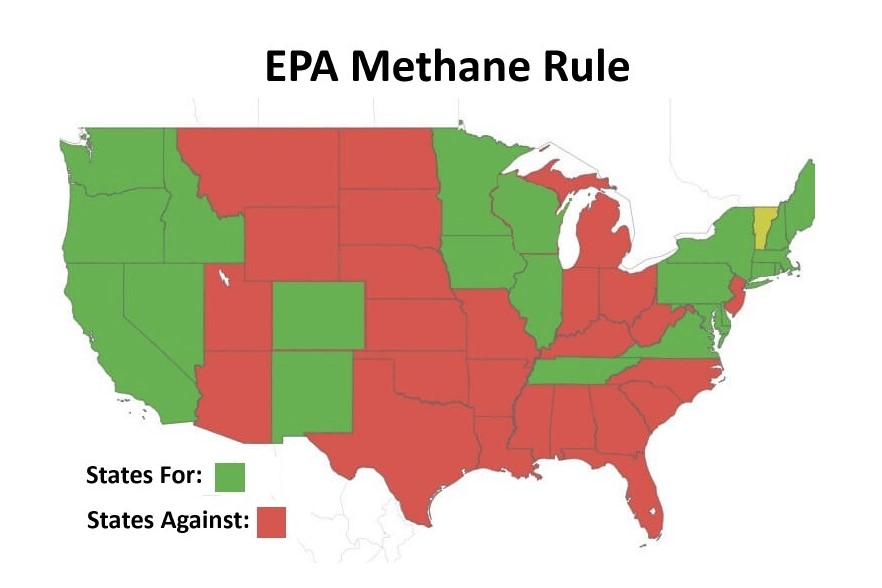
IPANM (February 9, 2024) – Today, IPANM joined 26 state and federal oil & gas trade associations in expressing major concerns regarding the impacts of the Environmental Protection Agency’s (EPA) new methane emissions regulations (Subparts OOOOb and OOOOc) and the Methane Tax.  In a letter dated February 9, 2024, the joint trade letter reads, “Both actions threaten marginal wells continued operations by creating unfair, unworkable, and uneconomic regulations. These small business energy producers need assistance to find a regulatory or legislative solution to mitigate these threats.”

The letter cites the inadequacies of the proposed rules’ failure to understand existing facts about marginal well emissions (and lack there of), as well as improper formulas established to calculate a “Methane Tax.”  In both proposed rules, the outcome would lead to a disproportionate regulatory structure for marginal well owners and/or the over calculation of the actual emissions.

After citing the evidence supporting the current problems with both rules, the associations’ letter reads, “Collectively, the Subpart OOOOc regulations and the Methane Tax pose serious and direct threats to hundreds of thousands of marginal wells. These threats have not been remotely addressed in the current regulatory actions completed or pending at EPA. Congress needs to step up and step in to prevent irresponsible agency actions that would savage the nation’s marginal oil and natural gas wells.”

To see a full copy of the Associations’ Letter to Congress, please click below.

Associations’ Letter to Congress Regarding Problems with Federal Methane Rules


Santa Fe New Mexican (February 5, 2024) – A bipartisan New Mexico Senate bill intended to unlock more state funding for the clean up of abandoned oil and gas wells was endorsed by industry leaders during the 2024 Legislative Session.

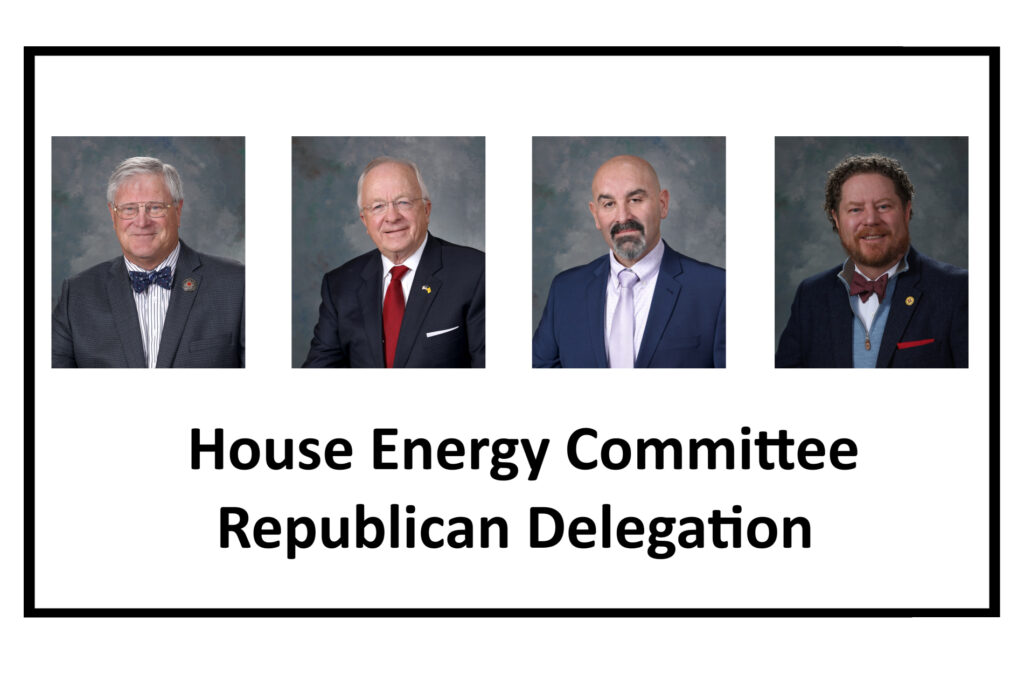
Senate Bill 249, sponsored by Democrat Sens. Joseph Cervantes and George Munoz, along with Republicans Greg Nibert and Steven McCutcheon would require an oil well reclamation fund maintain a balance of $60 million annually, using tax dollars generated through the Oil and Gas Conservation Tax.

These funds would be used to remediate abandoned wells, known as “orphaned,” to prevent environmental impacts and reclaim the land.

Wells are considered orphaned when oil and gas operators leave them unused when the facilities are deemed nonprofitable.

They are unmonitored and believed to spew air and water pollution as they sit abandoned.

The New Mexico Oil Conservation Division estimated there are about 1,700 of such wells in the state and plugs them using a combination of state and federal dollars when private bonding payments are inadequate.

A movement among New Mexico lawmakers and oil and gas regulators sought to increase the bonding payments companies make for well plugging and remediation should they be abandoned. That’s contained in House Bill 133, which passed two committees and next faces a hearing on the House Floor.

But SB 249, which is awaiting its first hearing in the Senate Conservation Committee, would increase public dollars used for the work.

It would first require that federal funds, about $44 million provided by the 2021 Infrastructure Investment and Jobs Act, be used and exhausted before state dollars are provided.

That would happen via a $5 million monthly distribution of revenue, totaling $60 million a year, from Oil and Gas Conservation Tax Act to the Oil and Gas Reclamation Fund, should the bill pass.

All that money would be sent directly to the Oil Conservation Division for plugging and cleaning up the wells.

The bill was supported by the New Mexico Oil and Gas Association (NMOGA), Independent Petroleum Association of New Mexico (IPANM) and Permian Basin Petroleum Association.

The Oil and Gas Conservation Tax was first instituted in the 1950s, with the Reclamation Fund established later to fund such efforts.

But Nibert said SB 249 would ensure the money is used specifically for well cleanup.

As the law stands, two-nineteenths of the receipts from the tax were sent to the Reclamation Fund, and Nibert argued the required dollar amount would increase the funding.

 “The Conservation Tax ensures that oil and gas operators are paying toward the continued reclamation of lands used in oil and gas operations,” he said. “The state must ensure the funds are allocated toward their intended purpose for quickly and sufficiently returning New Mexico’s land to its native state.

NMOGA reported the oil and gas industry plugged 451 wells in New Mexico in 2022, while the State plugged 49 wells using $3.4 million from the Reclamation Fund.

“This bill does not reduce or increase taxes paid by the oil and gas industry for well reclamation,” said NMOGA President Missi Currier. “It ensures the Reclamation Fund is properly funded and used for addressing the clean-up of wells.”

Yet, a growing number of lawmakers argued the industry should pay more to cleanup wells and cut down on pollution.

HB 133 would raise a cap on “blanket bonding” requirements operators pay on all of their wells in the state from $250,000 to $10 million.

An amended version of bill added a tiered structure to this requirement, maintaining the $250,000 rate for operators with less than 50 wells, growing to $350,000 for an operator with more than 50, but less than 100 wells and $500,000 for companies with less than 150 wells but more than 100 wells.

A rate of $750,000 would be imposed on operators with between 150 and 300 wells, and $5 million would be paid for those with between 300 and 500 wells.

The $10 million cap would go into effect only for companies that have more than 500 wells, should the new version of the bill pass.

During Wednesday’s House Judiciary meeting, where HB 133 was passed, Chair Rep. Christine Chandler (D-43) of Los Alamos, who voted in favor, said more of the financial burden to the state for abandoned wells should be shifted to the industry she said was responsible for the pollution.

Concerns were raised by environmentalists, who charged the amended version removed various environmental requirements, opting to focus on financial changes like bonding and fee raises.

Independent oil companies also spoke in opposition, arguing the bill unfairly impacted small producers. NMOGA, which represents larger companies, did not oppose the bill’s latest version, although IPANM did.

Santa Fe New Mexican (January 29, 2024) – New Mexico’s fossil fuel industry is enjoying a record boom in the Permian Basin, and state officials want the education system to benefit even more than it has from the oil-rich region by making companies pay more to drill on state lands there.

The House Commerce and Economic Development Committee voted 6-5 Monday, mostly along party lines, in favor of House Bill 48, which would raise the maximum royalty rate on state lands to 25% from the current 20% — the first such increase since the 1970s.

An industry advocate said large companies can absorb the higher royalty rate, but it would slam smaller operators who work on thinner profit margins.

“This raise does disproportionately hurt them,” said Jim Winchester, executive director of the Independent Petroleum Association of New Mexico. “While in Texas, operators do pay a royalty rate of 25%, it is not an apples to apples comparison when you put in all the expenses here in New Mexico.”

Those include severance and ad valorem taxes, Winchester added.

Bill to raise state’s fossil fuel royalty rates moves ahead


EnergyNow.com (January 26, 2024) – The Biden administration on Friday halted the approval of new licenses to export US liquefied natural gas while it scrutinizes how the shipments affect climate change, the economy and national security — a moratorium likely to disrupt plans for billions of dollars in projects.

The Energy Department study will build on an existing analysis that underpins the agency’s review of proposals to send more natural gas to European, Asian and other countries that are not US free-trade partners. New exports are now vetted on a case-by-case basis to see whether they are in the public interest.

“We will take a hard look at the impacts of LNG exports on energy costs, America’s energy security and our environment,” President Joe Biden said in a statement. “This pause on new LNG approvals sees the climate crisis for what it is: the existential threat of our time.”

The review, which won’t affect previously granted authorizations or immediately shake the US status as the world’s top LNG exporter, will be conducted by the Energy Department’s national labs.

It could stretch for months before a report is made available for public comment. Senior administration officials who briefed reporters on the plan would not put a firm timeline on the process, saying only that it would be done expeditiously and take some months.

The pause could have implications for more than a dozen proposals now awaiting review at the Energy Department, including ventures planned in Louisiana by Commonwealth LNG and Energy Transfer LP.

The issue is politically fraught for Biden — forcing him to balance an array of competing priorities. A months-long review would effectively foreclose decisions on additional LNG exports until after the Nov. 5 presidential election.

At the same time, Republicans — including former President Donald Trump — have accused Biden of making a priority of his climate agenda at the expense of domestic jobs and other economic concerns.

On Wednesday, Senate Republican leader Mitch McConnell asserted that limiting LNG exports would hinder the US goal of combating Russia’s influence as a global gas supplier.


Politics and Energy: Biden Freezes Approvals to Export Gas, Imperiling Major Projects Worth Billions of Dollars

Rio Grande Sun (January 25, 2024) – Editorial Submitted By Jim Winchester, IPANM Executive Director

New Mexico Governor Michelle Lujan Grisham and her political appointees in the New Mexico Energy, Minerals, and Natural Resources Department announced last summer their intention to overhaul the New Mexico Oil & Gas Act. To overhaul or modernize some of the provisions certainly is an admirable idea, and the members of the Independent Petroleum Association of New Mexico (IPANM) are grateful to the administration for engaging in stakeholder discussions this past year. Regretfully, the proposals that came out of that discussion go too far and did not account for potentially devasting impacts on small producers and, by association, the Oil and Gas industry in New Mexico.

In this current session, HB133 Oil and Gas Act Reforms has been introduced to push through statutory changes through the New Mexico Legislature that formalize the administration’s new regulatory proposals. In short, HB133 takes a bulldozer to existing regulations in favor of extreme, overzealous environmental measures. The attacks against industry are multi-faceted. The administration wants to raise financial assurance bonds 40 times, increase civil penalties with unlimited monetary discretion, block the ability for smaller producers to acquire mid-to-end-of-life production wells, increase paperwork filing fees 5 times, adopt more restrictive gas capture rules than the already existing “strictest” state methane rules in the country, establish one half-mile setback zones around all wells, and restrict freshwater use to potentially unworkable levels.

Any one of these provisions, if accepted, has the potential to unleash the state’s activist regulators on select producers to the point of forcing them out of business. Those multi-generational, state-based companies who can survive may need to make the hard decision that oil and gas production in New Mexico is simply too burdensome, and head to other states.

For an administration that proclaims to be small business friendly, the extreme regulatory proposals in HB133 run counter to that claim. HB133 needs more analysis to determine the true impact on small New Mexico producers, overall Oil and Gas industry in New Mexico, and the 50 percent of New Mexico’s state budget that depends on Oil and Gas revenue. Urge your local legislators to kill the very destructive bill HB133.

Jim Winchester is the Executive Director of the Independent Petroleum Association of New Mexico

IPANM: HB133 Will Inflict Serious Damage To Small Producers