A New Day at IPANM


information & issues

Welcome to IPANM’s Information & Issues webpage!

IPANM is not afraid to take strong stances on many current issues threatening our industry. We have to! Seemingly minor changes to regulations or rules can have a major impact on the financial solvency of our small oil & gas producers. While we will never compromise on our duties to protect human health, fresh water and the environment in our daily activities, we will fight unnecessary government overreach when new regulatory proposals are not based on sound science and do little to protect the environment.

Below, we’ve identified serious issues facing our producers. Please click on the corresponding button to learn more about each issue and IPANM’s stance on the issue. (Note: Some of this content may be restricted for members only. To access this exclusive content, please join our association!)

RECENT NEWS: All Issues

Jason Hayes, Mackinac Center for Public Policy, as published in the NYPost (March 20, 2024) - The Environmental Protection Agency released what
ABQ Journal (March 20, 2024) - Land lease sale results released Tuesday show the New Mexico State Land Office is
ABQ Journal Editorial Board (March 19, 2024) - It’s one of the most petty acts we’ve seen from a statewide
24 States Sue Over EPA Methane Rule IPANM Editor’s Note:  Not only is New Mexico not joining this suit to
ABQ Journal Op-Ed - Rep. Jared Hembree (March 18, 2024) - New Mexico is fortunate to have millions of acres
ABQ Journal (March 16, 2024) - We have to give the governor credit for consistency. In six State of the
SANTA FE, NM (March 12, 2024) — Four Republican members of the New Mexico House of Representatives who sit on
Domestic Producers Energy Alliance (March 11, 2024): Today, the Domestic Energy Producers’ Alliance (DEPA) and Texas Alliance of Energy Producers
Ron Stein (March 9, 2024) - The more than 6,000 products in today’s societies are based on crude oil, which
IPANM (Mar. 7, 2024) - The New Mexico State Land Office has abruptly notified the oil & gas industry that

Jason Hayes, Mackinac Center for Public Policyas published in the NYPost (March 20, 2024) –

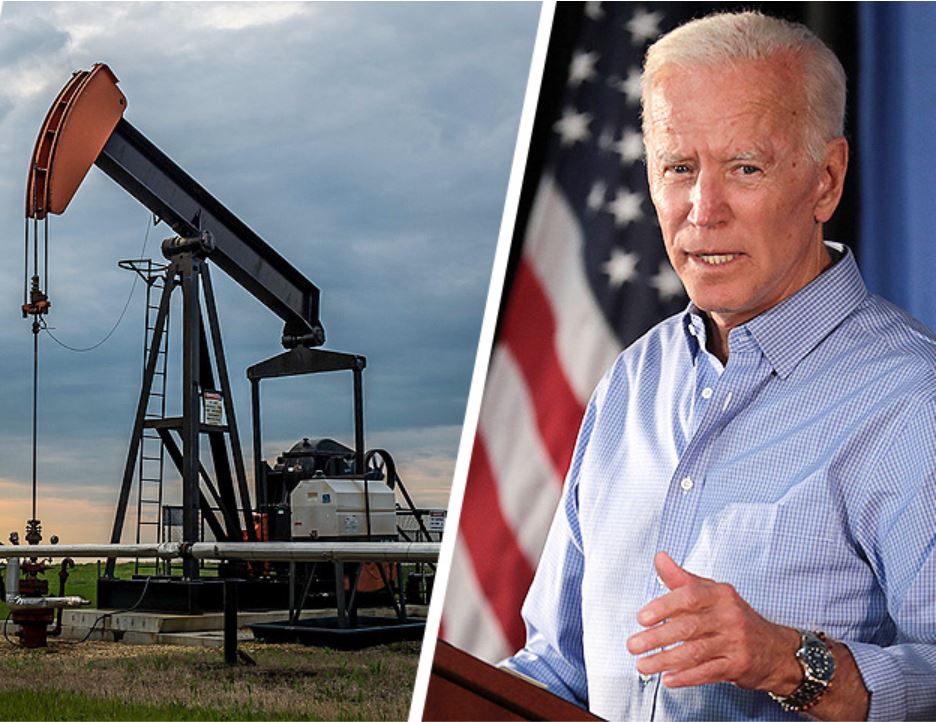
The Environmental Protection Agency released what it calls the “strongest-ever pollution standards for cars,” which it claims will “expand consumer choice in clean vehicles.”
That’s a stretch: These new regulations, which are clearly beyond EPA’s defined powers, will limit overall vehicle choice and force Americans into expensive and unreliable electric vehicles.
The EPA expects plug-in electric vehicles to make up between 62% and 70% of the automotive market. But this unrealistic target ignores two key facts:
First, consumers are not lining up to purchase electric vehicles, which made up only 7.6% of 2023 vehicle sales despite heavy subsidies. American drivers simply aren’t embracing EVs because they know these vehicles have shorter driving ranges and longer refueling times. Not to mention that they’re significantly more expensive. The five-year cost to own an average electric vehicle is more than $92,000, according to the North American Auto Dealers Association. Compare that to a typical gas-powered vehicle, which over the same period costs $76,500.
Second, readily available charging infrastructure remains elusive for many EV users. Many of the available chargers are level 2, which the magazine U.S. News notes “is fine if you have time to kill.” Repair issues compound even the limited levels of charging, as only 73% of chargers in some major centers are in working order, according to Autoweek.
In the face of rapid decreases in the growth of electric vehicle sales, automakers are already scaling back EV production plans. In December, Ford announced it was cutting planned production of its F-150 Lightning pickup in half due to “changing market demand.”
The Mackinac Center for Public Policy has warned automobile manufacturers for years that leaving consumers out of their long-term business plans was a recipe for failure. Taxpayers not only pay with more expensive cars, they have to subsidize new production facilities.
In Michigan, lawmakers have already promised $200 million dollars of taxpayer money — and that’s just for one Ford battery plant in Marshall. Biden has been covering up the economic damage this rule will cause by telling the media his administration will slow its implementation.
However, the administration has not given up the goal of making electric vehicles total 70% of new sales by 2032.
Achieving this goal in eight short years is an unobtainable and ultimately destructive pipe dream.
This regulatory overreach is just one prong of the administration’s multi-agency assault on consumer freedom.
At the same time as it abandons the hard-won independence granted by domestically produced oil and gas and forces drivers into unwanted electric vehicles, it is also transitioning the American economy to a reliance on critical minerals produced or refined in China.
Electric vehicles use six times more metals and minerals
 than traditional vehicles, but Biden refuses to issue permits for the mines needed to produce these minerals in the U.S.
In another federal agency, Biden administration appointees are forcing a drastic increase in the average fuel economy standards for light-duty vehicles.
The National Highway Traffic Safety Administration is hiking those standards from 49 mpg to 58 mpg. This is another method of pushing American consumers out of reliable cars and into electric vehicles.
The EPA rule undermines consumer choice and transportation affordability for most Americans. Americans must retain the right to choose vehicles that are tailored to their needs and budgets — not to diktats from Washington bureaucrats.

Jason Hayes is the director of energy and environmental policy at the Mackinac Center for Public Policy, a free-market research and educational institute in Midland, Mich.

Biden’s War On Gas Cars Will Cost Americans A Fortune

POWER THE FUTURE:  PTF Slams EPA Tailpipe Emissions Rule

ABQ Journal (March 20, 2024) – Land lease sale results released Tuesday show the New Mexico State Land Office is likely losing out on millions of dollars — at least for now — while it sits on the most fruitful oil and gas land tracts, refusing to lease the land until the agency is allowed to charge higher oil and gas royalty rates.

Public Lands Commissioner Stephanie Garcia Richard told the Journal it’s worth it to temporarily forgo the dollars, in order to make billions more in the future by leasing out land for as much as it’s worth on the market.

Bidding on the office’s March land sale took place over the past week. It was the first lease sale to happen since Garcia Richard told the Journal earlier this month her agency won’t lease New Mexico’s best land tracts until the state bumps up oil and gas royalty rates to match market rates.

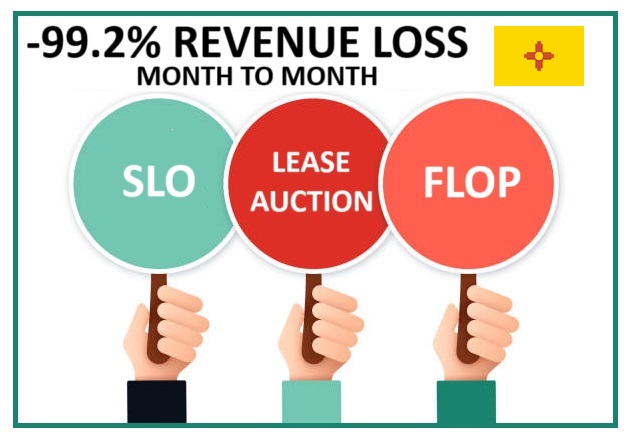
The March revenue numbers released on Tuesday by the State Land Office show the agency drew in $95,000 for the five land tracts the state in March listed for lease.

By comparison, the State Land Office got $13.3 million in February, when it had 19 tracts up for lease.

The agency received $4.8 million this time last year, when it had 12 tracts up for lease.

The agency intentionally took off five or six additional tracts of land that could have been leased in March, State Land Office spokesperson Joey Keefe told the Journal earlier this month, assessing that producers could be willing to pay more than the office is currently allowed to charge them.

New Mexico can charge oil and gas producers up to 20% in royalty rates. Royalty rates are a percentage of the total revenue from the sale of oil and gas.

In contrast, the market rate is 25%, as assessed by the State Land Office. Texas, the nation’s leading oil producer and the only other state sitting on extremely valuable Permian Basin land, has a 25% oil and gas royalty rate cap.

But New Mexico isn’t allowed to charge 25% royalty rates to oil and gas producers.

Garcia Richard argues rates of 20% compared to 25% over time will result in billions fewer dollars for New Mexico and its public education system. Nearly all of the money raised from New Mexico’s land lease sales goes to public education.

“Supporting public schools is much more important than subsidizing companies that are making billions of dollars each year,” she said via email. “Here at the State Land Office, we prioritize children over the private corporations making record profits off our public resources.”

She supported a bill in the 2024 Legislature that would have bumped up maximum oil and gas royalty rates to 25%. The bill died, like it did last year.

Garcia Richard said the Legislature’s artificial cap falls below market rate, “and it just doesn’t make sense to be selling our best and finite public resources at a discount.”

The state isn’t losing the money, since the oil and gas resources on the withheld land tracts will remain untapped. Garcia Richard’s reasoning is that her agency can make significantly more money by waiting to lease until the land office can charge producers higher royalty rates.

The Legislative Finance Committee estimates boosting the royalty rates to a 25% cap would generate anywhere from $50 million to $75 million in additional revenue for the land grant permanent fund, New Mexico’s largest permanent fund and educational endowment.

The market value of the land grant permanent fund with 25% max royalty rates could grow by $1.5 billion to $2.5 billion by 2050, according to the State Investment Council, which manages the state’s permanent funds.

Garcia Richard said it makes sense to her to temporarily forgo a few million dollars in exchange for billions more down the road.

“As a former teacher, I know that billions of dollars in earnings are going to be more impactful in our classrooms than a couple of million today,” she said.

SLO Lease Freeze Results: $95K in March vs. $13.3 Mil in February

ABQ Journal Editorial Board (March 19, 2024) – It’s one of the most petty acts we’ve seen from a statewide elected official.

Upset, again, that her personal crusade to stick it to the oil and gas industry was rebuffed by state lawmakers, New Mexico Land Commissioner Stephanie Garcia Richard has decided to take her ball and go home, even it it punishes schools and hospitals.

The New Mexico State Land Office, which Garcia Richard oversees, has announced it will withhold the state’s five or six best tracts from the March bidding sale because Garcia Richard didn’t get her way with a royalty cap increase during the recent legislative session. Royalty rates determine the amount energy producers pay on the value of oil or gas harvested.

“At this time, we’ve determined that the market rate is 25%,” she said. “We’re not getting that market rate, and so we’re not going to lease them.”

Garcia Richard has for years yearned to hike New Mexico’s oil and gas royalty rate cap from 20% to 25%. Royalty rates on state trust lands, which range from 12.5% to 20% in New Mexico, are established by the Legislature, not by the land commissioner.

Only Texas has higher royalty caps than New Mexico. North Dakota, the third-largest oil producer behind Texas and New Mexico, sets royalty rates between 12.5% and 18.75%.

Since being elected land commissioner in 2018, Garcia Richard has pressured lawmakers to hike royalty caps on new wells, suggesting the state is not fully milking the oil and gas industry.

This year’s incarnation, House Bill 48, was passed by the New Mexico House of Representatives on a largely party-line 39-28 vote, but died in the Senate Finance Committee.

According to a fiscal impact report of the bill, increasing the rate cap to 25% would result in an additional $50 million to $75 million of revenue for the land grant permanent fund, the depository for royalties paid on mineral production on state trust land. That’s assuming there’s no market reaction to a cap hike. Currently, oil and natural gas make up more than 80% of all State Land Office revenue, primarily because of robust oil production in the Permian Basin in southeast New Mexico.

HB 48 rightfully died because Democrats and Republicans recognize oil and gas is the main driver of the state’s economy, and what makes all the social spending in Santa Fe possible. Raising royalties would be akin to shooting oneself in the foot for the sake of virtue signaling.

Lawmakers know the state’s O&G industry generated a record $13.9 billion in revenue for New Mexico in fiscal year 2023, an increase of $3.36 billion – or 32% – compared with the same period in 2022. They know total general fund revenue from oil and gas production reached $7.5 billion in 2023, or about 50% of all state general fund revenue. They know 92,000 New Mexicans are employed as energy workers. And they know about $6.4 billion from oil and gas production went to non-general funds.

Garcia Richard argues royalty rates should be increased to the 25% cap in Texas. But that flawed reasoning doesn’t take into account that much of Texas’ oil production occurs on private lands, especially in West Texas, lands that people have paid for, not trust lands inherited at no cost upon statehood, as is the case with New Mexico.

Garcia Richard speciously contends New Mexico is losing money, and therefore she’s withholding the six or so best tracts until they reach the royalty rate she feels is appropriate.

“I feel comfortable making this decision,” she said. “I feel comfortable not asking the beneficiaries any longer to subsidize a multibillion-dollar industry.”

Such a statement is utterly ridiculous. New Mexico is not subsidizing the oil and gas industry, as it actually is subsidizing the electric vehicle industry and renewable energy sector. The state reaps revenues when oil and gas production occurs on state trust lands.

Garcia Richard’s defective and short-sighted outlook is like renting your yard to parking, and then complaining you’re getting ripped off because your neighbor is charging slightly more.

In withholding the six best tracts from the March sale, Garcia Richard is shirking her fiduciary responsibility to the 21 beneficiaries of the 12.7 million subsurface acres and 9 million surface acres administered by the Land Office, including hospitals, public schools and higher education institutions. Her unilateral decision, derided by some House Republicans as “a dereliction” of her fiduciary responsibilities, could cost the state $10 million by fiscal year 2026, and more than $30 million by fiscal year 2028.

That’s a lot of lost revenues for the sake of virtue signaling.

Unfortunately, we’ve seen Garcia Richard play politics before.

In June 2020, as the presidential race was heating up, Garcia Richard refused to renew an agreement that required U.S. Customs and Border Protection to coordinate with tribes, state agencies, other federal agencies and nongovernmental groups in the project development process. It was a common-sense agreement left over from the Obama administration that required CBP to consider alternative methods, routes and locations offered by stakeholders here and in Arizona, California and Texas to avoid/minimize impact on historic properties.

Garcia Richard said then she was siding with those who urged her not to work with CBP because of perceived discrimination along the border. She stomped her foot then and walked away from the table, giving CBP carte blanche on our state lands.

On June 1, 2023, Garcia Richard played politics again, issuing an executive order banning new oil and gas leases on state trust land within a mile of schools, with no input from local residents. There was no explanation for the arbitrary 1-mile buffer, because there was no scientific basis for it.

The Land Office said there were up to 119 N.M. schools within a mile of oil and gas activity, but those figures included federal, tribal and private land leases, over which the Land Office has absolutely no authority. The Land Office itself didn’t know how many schools would be impacted by the politically motivated executive order.

If Garcia Richard wants to legislate, she should return to the Legislature, in which she served as a state representative from northern New Mexico from 2013 to 2018. That’s where laws are supposed to be made, in the Roundhouse, not in a back room of the Land Office.

If Garcia Richard can’t perform the duties of her office under the current royalty rates, she should resign in protest and let someone else represent the Land Office’s beneficiaries.

The good news is that Garcia Richard will be term-limited out of office at the end of 2026.

The Journal endorsed Garcia Richard in 2022, and we now acknowledge that mistake. Thankfully, voters can right the ship in 2026 by electing a new land commissioner more dedicated to the people than playing party politics.

This editorial first appeared in the Albuquerque Journal. It was written by members of the editorial board and is unsigned as it represents the opinion of the newspaper rather than the writers.
24 States Sue Over EPA Methane Rule

IPANM Editor’s Note:  Not only is New Mexico not joining this suit to defend the state Oil & Gas industry, in the subsequent article below, New Mexico is blatantly supporting this rule which creates conflicts with New Mexico’s Methane Rule. The disparity will lead to chaos whereby wells that criss-cross the checkerboard nature of BOTH state and federal lands with two different rules.

E&E News (March 18, 2024) – Twenty-four Republican attorneys general are challenging the Biden administration’s new rule to limit methane emissions from the oil and gas sector, arguing that EPA overstepped its authority.

Led by Oklahoma Attorney General Gentner Drummond, the states filed their lawsuit last week in the U.S. Court of Appeals for the District of Columbia Circuit seeking to block the regulation, which serves as a key part of the White House plan to tackle climate change.

The rule is a “blatant attack on America’s oil and gas industry,” Drummond said. He added that if the regulation goes into effect, it would “cost Oklahoma countless jobs, devastate the oil and gas industry, and force us to pay significantly higher energy prices.”

The Petition Filed Against EPA’s Methane Rule

——————————————————-

Twenty Democratic attorneys general file motion in support of Biden methane rule

The Hill (March 19, 2024) – Twenty Democratic state attorneys general on Monday filed a motion in defense of the Environmental Protection Agency’s (EPA) oil and gas methane rule, following a lawsuit against the rule by Republican AGs.

Twenty-four GOP states, led by Oklahoma’s Gentner Drummond, sued over the rule last week in the U.S. Court of Appeals for the District of Columbia, while Texas Attorney General Ken Paxton filed a separate challenge March 8 in response to a request from the state Railroad Commission.

In the counter-motion, the 20 Democratic AGs, led by California’s Rob Bonta, expressed support for the final EPA rule, the first to regulate emissions from existing fossil fuel facilities in addition to new and modified facilities. Bonta was joined by the attorneys general of Connecticut, Colorado, Delaware, Illinois, Massachusetts, Maryland, Maine, Minnesota, North Carolina, New Jersey, New Mexico, New York, Oregon, Pennsylvania, Rhode Island, Vermont, Washington, Wisconsin and Washington, D.C.

“Once again, we are seeing baseless attacks on efforts to combat climate change and tackle methane emissions,” Bonta said in a statement. “For years, this super pollutant has been overlooked while the oil and gas industry carelessly – and at times, knowingly – allowed enormous quantities of greenhouse gas to leak into our environment. The Biden Administration’s rule is a critical step forward, and I, alongside attorneys general across this country, won’t stand idly by as necessary solutions to address the dire reality of the climate crisis fueled by methane emissions are being blatantly attacked.”

States Take Sides In EPA Methane Rule; NM Against Industry Again

ABQ Journal Op-Ed – Rep. Jared Hembree (March 18, 2024) – New Mexico is fortunate to have millions of acres of state trust lands that generate billions of dollars to benefit our schools, universities, hospitals, and other public institutions.

The State Land Office currently manages 9 million acres of surface real estate and 13 million mineral acres of trust land which generated $2 billion in fiscal year 2022. The most significant revenue source has been through leases for oil and natural gas development.

The State Land Commissioner, who directs the State Land Office, has a fiduciary responsibility to manage the trust lands in a manner that maximizes the financial return for the many beneficiaries that are guaranteed to receive a specific portion of the revenues.

While the state trust land leasing system has historically been administered with minimal controversy, current Commissioner Stephanie Garcia Richard has recently decided to play political games with this important function.

Read in Full:  State Land Commissioner Playing Daredevil Politics


ABQ Journal (March 16, 2024) – We have to give the governor credit for consistency.

In six State of the State speeches and counting, Gov. Michelle Lujan Grisham has never acknowledged the economic importance of the state’s oil and gas industry, or how property, royalty, sales, income and severance taxes from the industry are making many of her “cradle-to-career” social programs possible.

Lujan Grisham kept her hitless streak alive Tuesday when she gave a post-session legislative update to the Greater Albuquerque Chamber of Commerce at the Sandia Golf Club.

Attendees were promised an overview of the governor’s initiatives to combat crime, improve education and grow the state’s economy and workforce. However, once again, the governor didn’t mention the main driver of the state’s economy, oil and gas, nor our 92,000 energy workers.

ABQ Journal: Governor Refuses To Acknowledge Oil & Gas


SANTA FE, NM (March 12, 2024) Four Republican members of the New Mexico House of Representatives who sit on the House Energy, Environment and Natural Resources Committee today sent a letter to State Land Commissioner Stephanie Garcia Richard expressing their strong opposition to a recent announcement that the State Land Office was placing an indefinite hold on new lease sales of the state’s “best tracts” of trust land for oil and natural gas development.  This moratorium on new lease sales, according to Commissioner Garcia Richards, is due to the failure of the Legislature to enact HB 48 during the recent session that would have increased the state’s oil and natural gas royalty rate from 20 percent to 25 percent.   State Representatives Jim Townsend (R- Artesia), Larry Scott (R-Hobbs),  Rod Montoya (R-Farmington), and Jared Hembree (R-Roswell) called this lease sale moratorium unacceptable as the commissioner is placing her personal political agenda ahead of the needs of schools, hospitals, universities and other public institutions who receive a portion of the revenues generated by these lease sales.  

“It is a dereliction of Commissioner Garcia Richard’s fiduciary responsibility to withhold these lease sales and cause worthy and essential public institutions to lose millions of dollars in operating funds simply because she did not get what she wanted from the Legislature,” said Rep. Townsend.   Rep. Scott added, “Commissioner Garcia Richard seems to think that it’s now her job to overrule a decision made by the Legislature not to increase the royalty rate, plus she has inserted unnecessarily politics into the trust land leasing process that should always be conducted in a nonpartisan manner.”

“Not only are millions of dollars of lease revenues going to be lost due to the commissioner’s action, but she has opened the door to potential unintended consequences that could reduce future lease bids for these “best tracts” which could have a negative effect on workers and local communities who depend upon oil and natural gas exploration for their economic well-being,” stated Rep. Montoya.   Rep. Hembree continued by saying, “Commissioner Garcia Richard must realize it is essential for the State Land Office to manage these trust lands in the best interest of all New Mexicans, and this lease moratorium is no way to get the Legislature to change its reluctance to increase this royalty rate.”

The letter calls on Commissioner Garcia Richard to reverse this ill-advised decision to ensure that no area of New Mexico or any public institution is punished because of her failure to convince the Legislature that a royalty increase is necessary.  The commissioner has advanced this royalty increase proposal numerous times since 2019, and each time legislators have rejected it.

A copy of the news release can be accessed here, and the copy of the actual letter to the State Land Office is also available.

# # #


Domestic Producers Energy Alliance (March 11, 2024): Today, the Domestic Energy Producers’ Alliance (DEPA) and Texas Alliance of Energy Producers filed suit to block the Securities and Exchange Commission’s new rule requiring publicly traded companies to make onerous disclosures about greenhouse gas emissions and other climate-related issues.

“The SEC’s mandate is to ensure that companies disclose important information so that investors can evaluate the health of companies. That’s not a license to publicly shame companies for business practices they don’t like,” said Luke Wake, an attorney at Pacific Legal Foundation. “Congress did not authorize the SEC to demand that companies report environmental or any other controversial issues completely unrelated to finance.”

Jerry Simmons President/CEO of DEPA said “We are thrilled to have the Pacific Legal Foundation representing us in this fight to push back at these government agencies and the dramatic regulatory overreach from their Congressionally mandated purpose. Congress authorized the SEC to protect investors from fraud, facilitate capital formation, and require only material disclosures related to investing. Simmons said “The new rule (almost 900 pages long) does nothing to help investors get a greater return or make any difference in the climate. This is simply to force a political and ideological position onto US companies.”

DOMESTIC ENERGY PRODUCERS’ ALLIANCE SUES SECURITIES EXCHANGE COMMISSION ON CLIMATE RULE


Ron Stein (March 9, 2024) – The more than 6,000 products in today’s societies are based on crude oil, which now supports:

  • Electricity that is being generated by hydro, nuclear, coal, and natural gas.
  • Airports that accommodate the 20,000 commercial aircraft, and more than  50,000 military aircraft.
  • Shipping terminals that accommodate 50,000 merchant ships.
  • Hospitals.
  • Communications.
  • Electronics.

All the above did not exist a few short centuries ago, before the 1800’s. We’ve become a very materialistic society over the last 200 years, and the world has populated from 1 to 8 billion because of all the products and different fuels for planes, ships, trucks, cars, militaries, and space programs that did not exist before the 1800s.

As technologies advance for more reduced carbon electricity generation and use, there will be more requirements for critical minerals such as copper, lithium, nickel, cobalt, and rare earth elements that are essential components in many of today’s rapidly growing electricity technologies – from wind turbines and electricity networks to electric vehicles. Demand for these minerals is growing quickly as electricity transitions gather pace. All those exotic minerals and metals only produce electricity, as they CANNOT make any PRODUCTS used in today’s economy.

Most government officials and policymakers are unaware that ALL electricity came AFTER the discovery of oil, starting with the light bulb made from oil. All electrical generation from hydro, coal, natural gas, nuclear, wind, and solar are ALL based on the products, components, and equipment made with PRODUCTS made from oil derivatives manufactured from crude oil.

It seems that we’re living in a time where intelligent CONVERSATIONS are silenced so that stupid people won’t be offended.

Read more of this excellent article:  A SIMPLE FACT: Electricity Came AFTER the Discovery of Oil

IPANM (Mar. 7, 2024) – The New Mexico State Land Office has abruptly notified the oil & gas industry that all future state premium tract lease offerings will be suspended indefinitely until a 25% royalty increase is approved by the state legislature. The maneuver comes as a result of the State Land Office not being able to pass their own legislation to raise royalty rates up to 25% on state leases. State legislators whom IPANM have spoken with since Thursday’s announcement were not aware of the State Land’s Offices demands on the Legislature to take action.

As a result of the notification, IPANM Executive Director has issued the following statement:

“The State Land Office has unilaterally decided to cut off future revenues to state beneficiaries and the general fund by suspending new leasing of premium tracts. IPANM strongly opposes this action especially considering the decision was abruptly announced without any consideration of the economic impact to all New Mexicans.”

IPANM has strongly opposed any increase to state royalties due to the fact that New Mexico is already the highest taxed state on oil & gas operations. An increase to 25% from the existing 20% would continue to put New Mexico small producers at an economic disadvantage in overall operating costs. While the state land office likes to point out that Texas’ royalty rates are at 25%, it is not an “apples to apples” state comparison given the higher overall operating costs for New Mexican operators.

IPANM is currently evaluating the legality of the Land Commissioner’s actions and will keep members informed of developments.

Announcement of Premium Leasing Suspension