A New Day at IPANM


Anti-Industry Politics

Anti-Industry Politics

As the voice of Independent producers in New Mexico, IPANM’s mission is protect, defend, and promote the work of our members and all of industry. New Mexico’s future and America’s future needs to be shaped by a policy of energy freedom. This “all of the above” approach is fundamental to ensuring all sources of energy–including fossil fuels–can compete to produce safe, reliant, and affordable energy to better the human condition. However, dangerous forces are pushing against energy freedom. Local, state, and federal governments are under the thumb of disingenuous environmental groups who want to pick-and-choose energy winners, under the guise of climate change. With governments already mobilized to kill the oil and gas industry in favor of unreliable and expensive renewable sources, New Mexico & America stand to lose jobs and domestic security. Furthermore, reducing fossil fuel supplies disproportionately hurts those in poverty (18% of New Mexicans). The “Green New Deal” and other progressive policies must be exposed for what they are: a pathway to self-inflicted, socio-economic suffering. With a weakened domestic energy landscape, Americans will beholden to nefarious foreign governments (such as Russia and China). As already demonstrated, these foreign powers do not have the best interests of the people or the planet at heart.

Anti-Industry News

ABQ Journal (March 16, 2024) - We have to give the governor credit for consistency. In six State of the
SANTA FE, NM (March 12, 2024) — Four Republican members of the New Mexico House of Representatives who sit on
Domestic Producers Energy Alliance (March 11, 2024): Today, the Domestic Energy Producers’ Alliance (DEPA) and Texas Alliance of Energy Producers
IPANM (Mar. 7, 2024) - The New Mexico State Land Office has abruptly notified the oil & gas industry that
IPANM (Mar. 6, 2024) | PDF - The following statement has been released by Jim Winchester, Executive Director of the Independent Petroleum Association
The Henderson News (Feb. 29, 2024) - Twenty years ago the United States imported more than half of the oil we
Call it a tale of two energy bills. A bill that would have made the most significant changes in decades to
IPANM (February 9, 2024) - Today, IPANM joined 26 state and federal oil & gas trade associations in expressing major
EnergyNow.com (January 26, 2024) - The Biden administration on Friday halted the approval of new licenses to export US liquefied
Rio Grande Sun (January 25, 2024) - Editorial Submitted By Jim Winchester, IPANM Executive Director New Mexico Governor Michelle Lujan Grisham

ABQ Journal (March 16, 2024) – We have to give the governor credit for consistency.

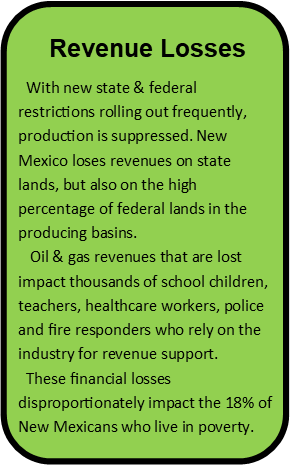
In six State of the State speeches and counting, Gov. Michelle Lujan Grisham has never acknowledged the economic importance of the state’s oil and gas industry, or how property, royalty, sales, income and severance taxes from the industry are making many of her “cradle-to-career” social programs possible.

Lujan Grisham kept her hitless streak alive Tuesday when she gave a post-session legislative update to the Greater Albuquerque Chamber of Commerce at the Sandia Golf Club.

Attendees were promised an overview of the governor’s initiatives to combat crime, improve education and grow the state’s economy and workforce. However, once again, the governor didn’t mention the main driver of the state’s economy, oil and gas, nor our 92,000 energy workers.

ABQ Journal: Governor Refuses To Acknowledge Oil & Gas


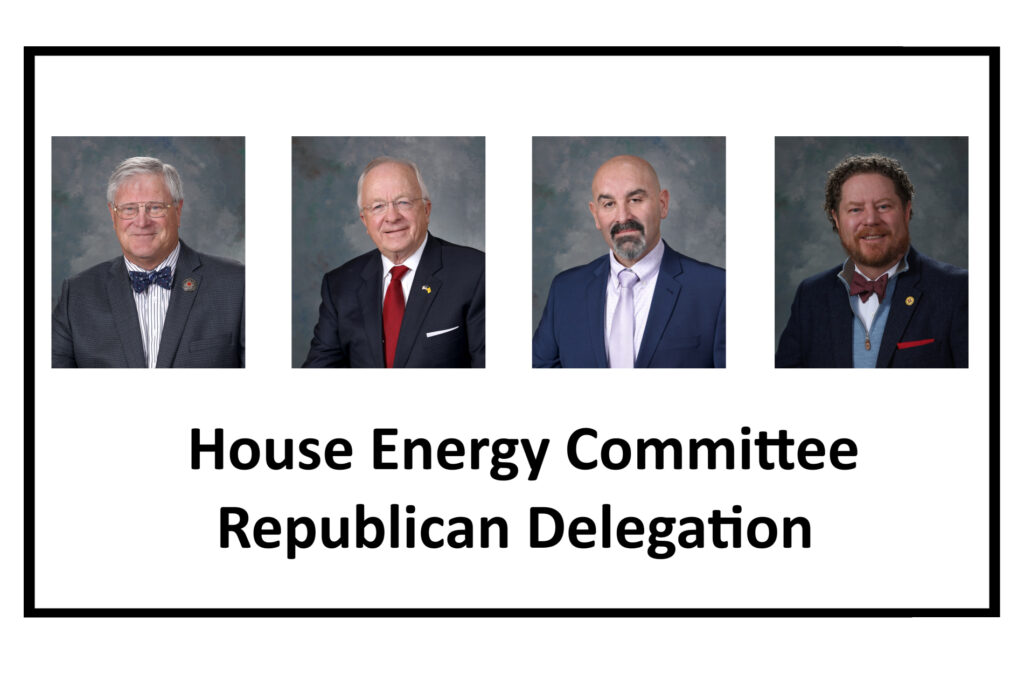
SANTA FE, NM (March 12, 2024) Four Republican members of the New Mexico House of Representatives who sit on the House Energy, Environment and Natural Resources Committee today sent a letter to State Land Commissioner Stephanie Garcia Richard expressing their strong opposition to a recent announcement that the State Land Office was placing an indefinite hold on new lease sales of the state’s “best tracts” of trust land for oil and natural gas development.  This moratorium on new lease sales, according to Commissioner Garcia Richards, is due to the failure of the Legislature to enact HB 48 during the recent session that would have increased the state’s oil and natural gas royalty rate from 20 percent to 25 percent.   State Representatives Jim Townsend (R- Artesia), Larry Scott (R-Hobbs),  Rod Montoya (R-Farmington), and Jared Hembree (R-Roswell) called this lease sale moratorium unacceptable as the commissioner is placing her personal political agenda ahead of the needs of schools, hospitals, universities and other public institutions who receive a portion of the revenues generated by these lease sales.  

“It is a dereliction of Commissioner Garcia Richard’s fiduciary responsibility to withhold these lease sales and cause worthy and essential public institutions to lose millions of dollars in operating funds simply because she did not get what she wanted from the Legislature,” said Rep. Townsend.   Rep. Scott added, “Commissioner Garcia Richard seems to think that it’s now her job to overrule a decision made by the Legislature not to increase the royalty rate, plus she has inserted unnecessarily politics into the trust land leasing process that should always be conducted in a nonpartisan manner.”

“Not only are millions of dollars of lease revenues going to be lost due to the commissioner’s action, but she has opened the door to potential unintended consequences that could reduce future lease bids for these “best tracts” which could have a negative effect on workers and local communities who depend upon oil and natural gas exploration for their economic well-being,” stated Rep. Montoya.   Rep. Hembree continued by saying, “Commissioner Garcia Richard must realize it is essential for the State Land Office to manage these trust lands in the best interest of all New Mexicans, and this lease moratorium is no way to get the Legislature to change its reluctance to increase this royalty rate.”

The letter calls on Commissioner Garcia Richard to reverse this ill-advised decision to ensure that no area of New Mexico or any public institution is punished because of her failure to convince the Legislature that a royalty increase is necessary.  The commissioner has advanced this royalty increase proposal numerous times since 2019, and each time legislators have rejected it.

A copy of the news release can be accessed here, and the copy of the actual letter to the State Land Office is also available.

# # #


Domestic Producers Energy Alliance (March 11, 2024): Today, the Domestic Energy Producers’ Alliance (DEPA) and Texas Alliance of Energy Producers filed suit to block the Securities and Exchange Commission’s new rule requiring publicly traded companies to make onerous disclosures about greenhouse gas emissions and other climate-related issues.

“The SEC’s mandate is to ensure that companies disclose important information so that investors can evaluate the health of companies. That’s not a license to publicly shame companies for business practices they don’t like,” said Luke Wake, an attorney at Pacific Legal Foundation. “Congress did not authorize the SEC to demand that companies report environmental or any other controversial issues completely unrelated to finance.”

Jerry Simmons President/CEO of DEPA said “We are thrilled to have the Pacific Legal Foundation representing us in this fight to push back at these government agencies and the dramatic regulatory overreach from their Congressionally mandated purpose. Congress authorized the SEC to protect investors from fraud, facilitate capital formation, and require only material disclosures related to investing. Simmons said “The new rule (almost 900 pages long) does nothing to help investors get a greater return or make any difference in the climate. This is simply to force a political and ideological position onto US companies.”

DOMESTIC ENERGY PRODUCERS’ ALLIANCE SUES SECURITIES EXCHANGE COMMISSION ON CLIMATE RULE


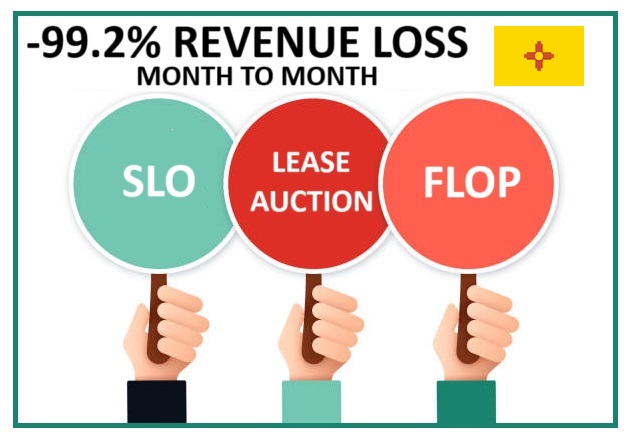
IPANM (Mar. 7, 2024) – The New Mexico State Land Office has abruptly notified the oil & gas industry that all future state premium tract lease offerings will be suspended indefinitely until a 25% royalty increase is approved by the state legislature. The maneuver comes as a result of the State Land Office not being able to pass their own legislation to raise royalty rates up to 25% on state leases. State legislators whom IPANM have spoken with since Thursday’s announcement were not aware of the State Land’s Offices demands on the Legislature to take action.

As a result of the notification, IPANM Executive Director has issued the following statement:

“The State Land Office has unilaterally decided to cut off future revenues to state beneficiaries and the general fund by suspending new leasing of premium tracts. IPANM strongly opposes this action especially considering the decision was abruptly announced without any consideration of the economic impact to all New Mexicans.”

IPANM has strongly opposed any increase to state royalties due to the fact that New Mexico is already the highest taxed state on oil & gas operations. An increase to 25% from the existing 20% would continue to put New Mexico small producers at an economic disadvantage in overall operating costs. While the state land office likes to point out that Texas’ royalty rates are at 25%, it is not an “apples to apples” state comparison given the higher overall operating costs for New Mexican operators.

IPANM is currently evaluating the legality of the Land Commissioner’s actions and will keep members informed of developments.

Announcement of Premium Leasing Suspension 


IPANM (Mar. 6, 2024) | PDF – The following statement has been released by Jim Winchester, Executive Director of the Independent Petroleum Association of New Mexico regarding Governor Michelle Lujan Grisham’s line-item veto of the bipartisan Stripper Well Tax Exemption from HB252 Tax Package.

“Governor Michelle Lujan Grisham continues her assault on small-business independent producers with her veto of the Stripper Well Tax Provision, which had bipartisan backing. This carefully crafted tax treatment would have provided measurable benefits to the environment by substantially reducing emissions from small producers’ low-production wells. The provision had the added benefit of increasing state revenues and protecting jobs provided by locally owned companies.”

–Jim Winchester, IPANM Executive Director

IPANM would like to thank Senator Ron Griggs of Alamogordo for his efforts in sponsoring the bill.

Please refer to IPANM’s March 2, 2024 Opinion Editorial for more detailed information on the benefits of the Stripper Well Tax Exemption.

Carlsbad Current Argus: Governor Lujan Grisham Vetoes Oil & Gas Well Tax Exemption

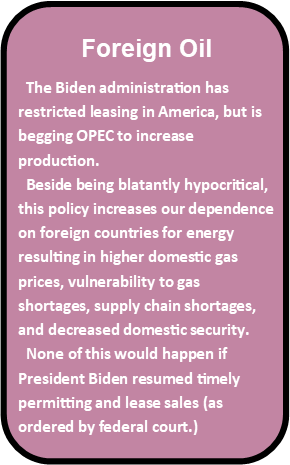
The Henderson News (Feb. 29, 2024) – Twenty years ago the United States imported more than half of the oil we consumed each day. Today, primarily through innovative technology developed by the American oil and natural gas industry, the U.S. exports more oil than it imports. In 2004, the U.S. imported 13.7 million barrels of oil per day (b/d) while producing 5.2 million b/d, resulting in a negative 8.5 million b/d. Currently, the U.S. imports just 6 million b/d while producing 13.3 million b/d, resulting in the U.S. becoming a net exporter of oil. Natural gas also has become a net exporter with liquefied natural gas (LNG) traveling to Japan to the west and Europe to the east and many other countries.

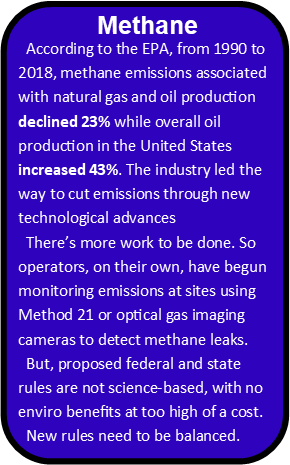
The industry began experimenting with new technology in the 1990s that involved drilling vertically into shale formations and then drilling horizontally and then hydraulic fracturing the shale to free the oil and gas to flow to the surface. Around 2008 the rush to drill using this new technology took off. However, some of the politicians in Washington, D.C. are using the regulatory weapon against the oil and gas industry. President Joe Biden has used his power in an attempt to make it more difficult and expensive for the oil industry. The Biden administration recently implemented a complicated new methane tax, proposed new emission standards for vehicles, limited exploration on public lands, and proposed limiting LNG exports.

The American Petroleum Institute (API) this week released a new national poll demonstrating widespread concern over Washington’s approach on energy policy. The poll, conducted Feb. 9-13 of 1,132 registered voters, found 86% believe producing oil and natural gas here in America helps make our country more secure against action by countries such as China and Russia. Also, the survey found 84% believe producing more oil and natural gas in the U.S. could help lower energy costs for American consumers and small businesses. Two out of three American voters say the country is on the wrong track on energy policy, and following the administration’s recent pause on LNG export permits, the poll found nine in 10 Americans believe the U.S. should continue to supply natural gas to our allies overseas, API said. With recent reports that the administration plans to impose a de-facto ban on new gas-powered vehicles, the poll found that the majority of Americans (75%) would oppose such regulations restricting consumer choice.

“While the U.S. continues to lead the world in energy production, it’s clear the American people see that misguided policy choices today can sow the seeds of tomorrow’s energy crisis,” API President and CEO Mike Sommers said.

“Whether it’s partisan decisions to restrict American natural gas as a source of strength around the world and good-paying jobs here at home, or regulatory plans to dictate the type of cars consumers can drive—voters on both sides of the aisle know we are on the wrong path on energy policy. With much at stake for our economy and national security, it’s time for Washington to change course and forge a bipartisan path that embraces all reliable and affordable American energy,” Sommers said.

Call it a tale of two energy bills.

A bill that would have made the most significant changes in decades to the New Mexico Oil and Gas Act died on the House floor without a vote, even though Gov. Michelle Lujan Grisham backed it.

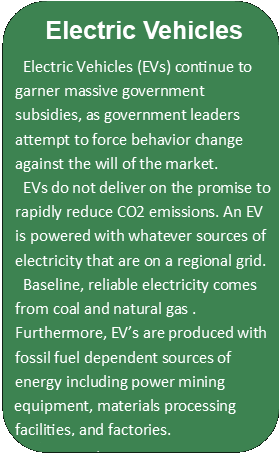
But a bill that will create a clean transportation fuel standard made it through the Legislature, mostly along party lines and not without a fight. Lujan Grisham has expressed support for the bill and is expected to sign it.

The fossil fuel industry didn’t support either bill. It simply attacked the proposed Oil and Gas Act changes more fervently. That measure would have hit drillers’ pocketbooks more directly by raising bonding insurance rates on wells and removing the cap on penalties they would pay for breaking rules.

Operators and industry representatives decried how the bill would have eliminated the cap on penalties and increased the maximum bonding amounts drillers pay upfront as insurance to $10 million from the current $250,000.

Opponents said the bill would disproportionately hurt smaller operators. Several business owners said they would either go under or would have to move to a neighboring state.

The legislation to change the Oil and Gas Act “had too many complex issues bundled into one massive bill that would have decimated small producers and dramatically stalled overall future oil and gas production in New Mexico,” Jim Winchester, executive director of the Independent Petroleum Association of New Mexico, wrote in an email. “[Association] members are grateful that the Legislature recognized the overreach of the numerous regulatory proposals packed into this monstrous, activist-driven bill.”

A Tale of Two Energy Bills


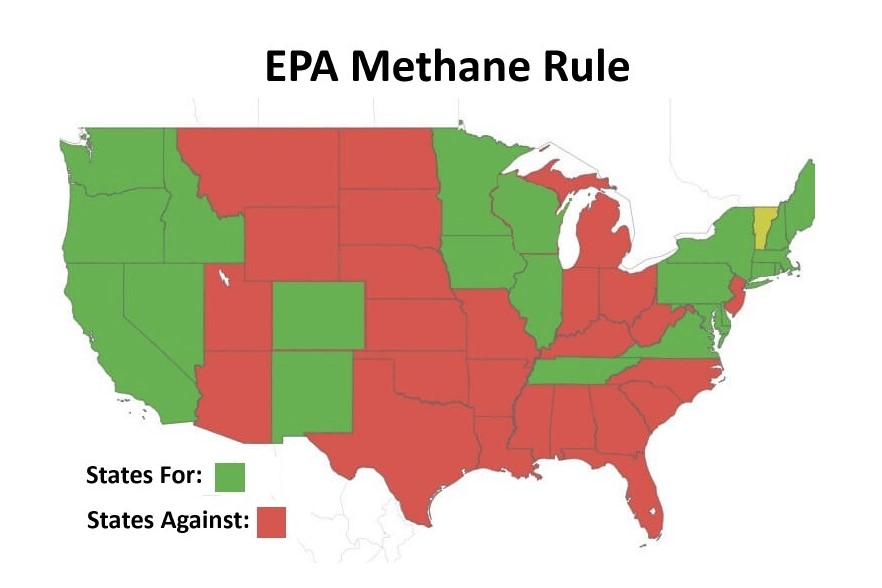
IPANM (February 9, 2024) – Today, IPANM joined 26 state and federal oil & gas trade associations in expressing major concerns regarding the impacts of the Environmental Protection Agency’s (EPA) new methane emissions regulations (Subparts OOOOb and OOOOc) and the Methane Tax.  In a letter dated February 9, 2024, the joint trade letter reads, “Both actions threaten marginal wells continued operations by creating unfair, unworkable, and uneconomic regulations. These small business energy producers need assistance to find a regulatory or legislative solution to mitigate these threats.”

The letter cites the inadequacies of the proposed rules’ failure to understand existing facts about marginal well emissions (and lack there of), as well as improper formulas established to calculate a “Methane Tax.”  In both proposed rules, the outcome would lead to a disproportionate regulatory structure for marginal well owners and/or the over calculation of the actual emissions.

After citing the evidence supporting the current problems with both rules, the associations’ letter reads, “Collectively, the Subpart OOOOc regulations and the Methane Tax pose serious and direct threats to hundreds of thousands of marginal wells. These threats have not been remotely addressed in the current regulatory actions completed or pending at EPA. Congress needs to step up and step in to prevent irresponsible agency actions that would savage the nation’s marginal oil and natural gas wells.”

To see a full copy of the Associations’ Letter to Congress, please click below.

Associations’ Letter to Congress Regarding Problems with Federal Methane Rules


EnergyNow.com (January 26, 2024) – The Biden administration on Friday halted the approval of new licenses to export US liquefied natural gas while it scrutinizes how the shipments affect climate change, the economy and national security — a moratorium likely to disrupt plans for billions of dollars in projects.

The Energy Department study will build on an existing analysis that underpins the agency’s review of proposals to send more natural gas to European, Asian and other countries that are not US free-trade partners. New exports are now vetted on a case-by-case basis to see whether they are in the public interest.

“We will take a hard look at the impacts of LNG exports on energy costs, America’s energy security and our environment,” President Joe Biden said in a statement. “This pause on new LNG approvals sees the climate crisis for what it is: the existential threat of our time.”

The review, which won’t affect previously granted authorizations or immediately shake the US status as the world’s top LNG exporter, will be conducted by the Energy Department’s national labs.

It could stretch for months before a report is made available for public comment. Senior administration officials who briefed reporters on the plan would not put a firm timeline on the process, saying only that it would be done expeditiously and take some months.

The pause could have implications for more than a dozen proposals now awaiting review at the Energy Department, including ventures planned in Louisiana by Commonwealth LNG and Energy Transfer LP.

The issue is politically fraught for Biden — forcing him to balance an array of competing priorities. A months-long review would effectively foreclose decisions on additional LNG exports until after the Nov. 5 presidential election.

At the same time, Republicans — including former President Donald Trump — have accused Biden of making a priority of his climate agenda at the expense of domestic jobs and other economic concerns.

On Wednesday, Senate Republican leader Mitch McConnell asserted that limiting LNG exports would hinder the US goal of combating Russia’s influence as a global gas supplier.


Politics and Energy: Biden Freezes Approvals to Export Gas, Imperiling Major Projects Worth Billions of Dollars

Rio Grande Sun (January 25, 2024) – Editorial Submitted By Jim Winchester, IPANM Executive Director

New Mexico Governor Michelle Lujan Grisham and her political appointees in the New Mexico Energy, Minerals, and Natural Resources Department announced last summer their intention to overhaul the New Mexico Oil & Gas Act. To overhaul or modernize some of the provisions certainly is an admirable idea, and the members of the Independent Petroleum Association of New Mexico (IPANM) are grateful to the administration for engaging in stakeholder discussions this past year. Regretfully, the proposals that came out of that discussion go too far and did not account for potentially devasting impacts on small producers and, by association, the Oil and Gas industry in New Mexico.

In this current session, HB133 Oil and Gas Act Reforms has been introduced to push through statutory changes through the New Mexico Legislature that formalize the administration’s new regulatory proposals. In short, HB133 takes a bulldozer to existing regulations in favor of extreme, overzealous environmental measures. The attacks against industry are multi-faceted. The administration wants to raise financial assurance bonds 40 times, increase civil penalties with unlimited monetary discretion, block the ability for smaller producers to acquire mid-to-end-of-life production wells, increase paperwork filing fees 5 times, adopt more restrictive gas capture rules than the already existing “strictest” state methane rules in the country, establish one half-mile setback zones around all wells, and restrict freshwater use to potentially unworkable levels.

Any one of these provisions, if accepted, has the potential to unleash the state’s activist regulators on select producers to the point of forcing them out of business. Those multi-generational, state-based companies who can survive may need to make the hard decision that oil and gas production in New Mexico is simply too burdensome, and head to other states.

For an administration that proclaims to be small business friendly, the extreme regulatory proposals in HB133 run counter to that claim. HB133 needs more analysis to determine the true impact on small New Mexico producers, overall Oil and Gas industry in New Mexico, and the 50 percent of New Mexico’s state budget that depends on Oil and Gas revenue. Urge your local legislators to kill the very destructive bill HB133.

Jim Winchester is the Executive Director of the Independent Petroleum Association of New Mexico

IPANM: HB133 Will Inflict Serious Damage To Small Producers