A New Day at IPANM


Anti-Industry Politics

Anti-Industry Politics

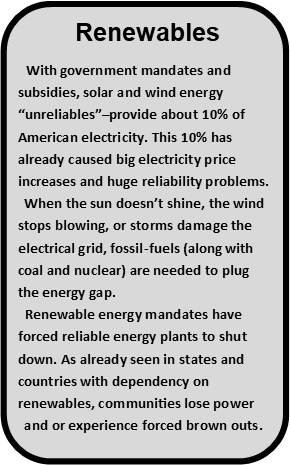
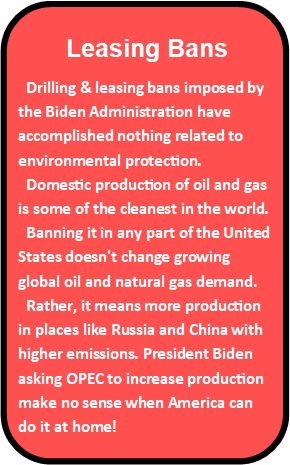
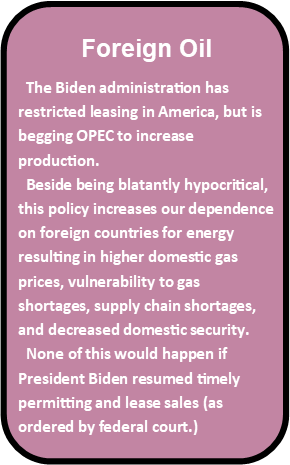
As the voice of Independent producers in New Mexico, IPANM’s mission is protect, defend, and promote the work of our members and all of industry. New Mexico’s future and America’s future needs to be shaped by a policy of energy freedom. This “all of the above” approach is fundamental to ensuring all sources of energy–including fossil fuels–can compete to produce safe, reliant, and affordable energy to better the human condition. However, dangerous forces are pushing against energy freedom. Local, state, and federal governments are under the thumb of disingenuous environmental groups who want to pick-and-choose energy winners, under the guise of climate change. With governments already mobilized to kill the oil and gas industry in favor of unreliable and expensive renewable sources, New Mexico & America stand to lose jobs and domestic security. Furthermore, reducing fossil fuel supplies disproportionately hurts those in poverty (18% of New Mexicans). The “Green New Deal” and other progressive policies must be exposed for what they are: a pathway to self-inflicted, socio-economic suffering. With a weakened domestic energy landscape, Americans will beholden to nefarious foreign governments (such as Russia and China). As already demonstrated, these foreign powers do not have the best interests of the people or the planet at heart.

Anti-Industry News

WEA, NMOGA, & IPANM in Santa Fe New Mexican (Nov. 21, 2025) - Are we facing an energy emergency? The
Santa Fe New Mexican (Nov. 2, 2025) - by Rep. Mark Murphy (D-59 Roswell) Opinion Editorial - The state of New
By George Sharpe Oct 26, 2025 In 2000, Merrion Oil & Gas acquired 20 low producing wells from ConocoPhillips. Today,
IPANM (October 20, 2025) - IPANM would like to thank Sen. Larry Scott and all of the many state legislators
Industry Plugs Its Wells; Enviros Simply Want To Kill Off Independent Producers Beginning October 20th, the New Mexico Oil Conservation
IPANM & SLO (October 3, 2025) - Prior to the 2025 Legislative Session, the State Land Commissioner threatened to raise
IPANM (Sept. 19, 2025) - Today, IPANM filed all of its witness rebuttal testimony to the Oil Conservation Commission regarding
IPANM (Sept. 15, 2025) IPANM and NMOGA have filed a motion to dismiss the entire WELC Rulemaking Hearing regarding new
IPANM (August 8, 2025) - IPANM filed all of its witness testimony to the Oil Conservation Commission regarding Western Environmental
By Missi Currier | CEO, New Mexico Oil & Gas Association When it comes to environmental responsibility, New Mexico’s oil

WEA, NMOGA, & IPANM in Santa Fe New Mexican (Nov. 21, 2025) – Are we facing an energy emergency? The answer may depend on your income, health risks, or even your age.

Think about family or neighbors who rely on medical equipment that must be plugged in — ventilators, dialysis machines and CPAP devices. The people who depend on them are at serious risk when the power goes out.

The threat is so real that the U.S. Department of Health and Human Services tracks Medicare patients who rely on home medical devices. Nearly 50,000 people in New Mexico — 10% of Medicare recipients — are vulnerable during electric blackouts. That’s the third highest rate in the nation.

Unfortunately, outages are common — caused by bad weather, aging infrastructure, or other strains on the electrical grid. They can happen throughout the day or night and sometimes last for extended periods.

Last April, residents in Northern New Mexico went two days without power. Utilities try to alert communities, but vulnerable people often don’t get the message in time. For them, the energy emergency is not theoretical — it’s personal.

So how did we get here, and what’s the fix?

A major barrier is the difficulty of getting permits approved for projects that would strengthen the grid that supplies power to our communities and neighborhoods. Layers of government and years of environmental review slow the process. Even after that, lawsuits filed by activist groups create more delays.

According to Lawrence Berkeley National Laboratory, only one in five transmission projects planned between 2000 and 2017 were operational by the end of 2022. Stanford University reports that nearly one in three major energy and infrastructure projects face litigation before construction even begins.

It took 17 years to build the SunZia transmission line across New Mexico, now delivering renewable wind power to customers in Arizona and California. The delays were caused by long environmental reviews and lawsuits.

The problem isn’t limited to electricity. The oil and natural gas industry faces similar roadblocks. Nationally, natural gas is used to generate 43% of electricity, 29% in New Mexico, and is currently the most reliable, affordable energy source fueling the grid. Yet, government red tape and legal delays get in the way of contributing more to meet our growing energy demands.

In 2022, a lawsuit challenged drilling permits in New Mexico and Wyoming, claiming potential harm to wildlife as far away as Hawaii and the Arctic. After three years, a federal appeals court in Washington, D.C., finally dismissed the case last summer. These kinds of delays show why reform is necessary and how they create real-life hardships for New Mexicans.

Here’s the good news: Congress has a chance to address these problems through permitting reform.

Lawmakers from both parties are working to streamline permitting for energy projects and place reasonable limits on litigation.

In the U.S. House, a bipartisan group of lawmakers introduced the SPEED Act (Standardizing Permitting and Expediting Economic Development), which updates the National Environmental Policy Act to help agencies to complete reviews more efficiently.

Another bipartisan group, the Problem Solvers Caucus, released a policy framework to support electricity and pipeline projects, with legislation expected soon.

In the Senate, discussions are underway to build on bipartisan proposals introduced last session.

New Mexico’s leaders can play an important role in the process. Sen. Martin Heinrich, the senior Democrat on the Senate Energy and Natural Resources Committee, will help shape any permitting reform bill. Members of New Mexico’s House delegation will also sit on committees central to this effort.

In this era of political division, bipartisan support is necessary for our country and state to continue to move forward. For thousands of New Mexicans vulnerable to energy emergencies, it’s a step toward greater security and peace of mind.

Melissa Simpson is president of Western Energy Alliance. Missi Currier is president and CEO of the New Mexico Oil and Gas Association. Jim Winchester is executive director of the Independent Petroleum Association of New Mexico.
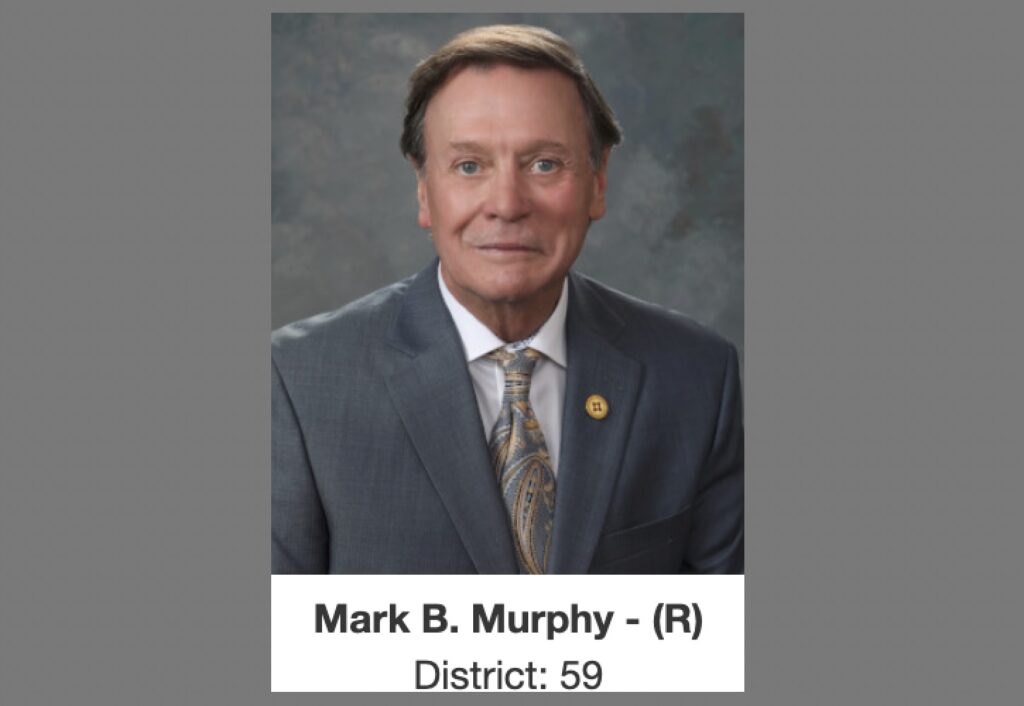
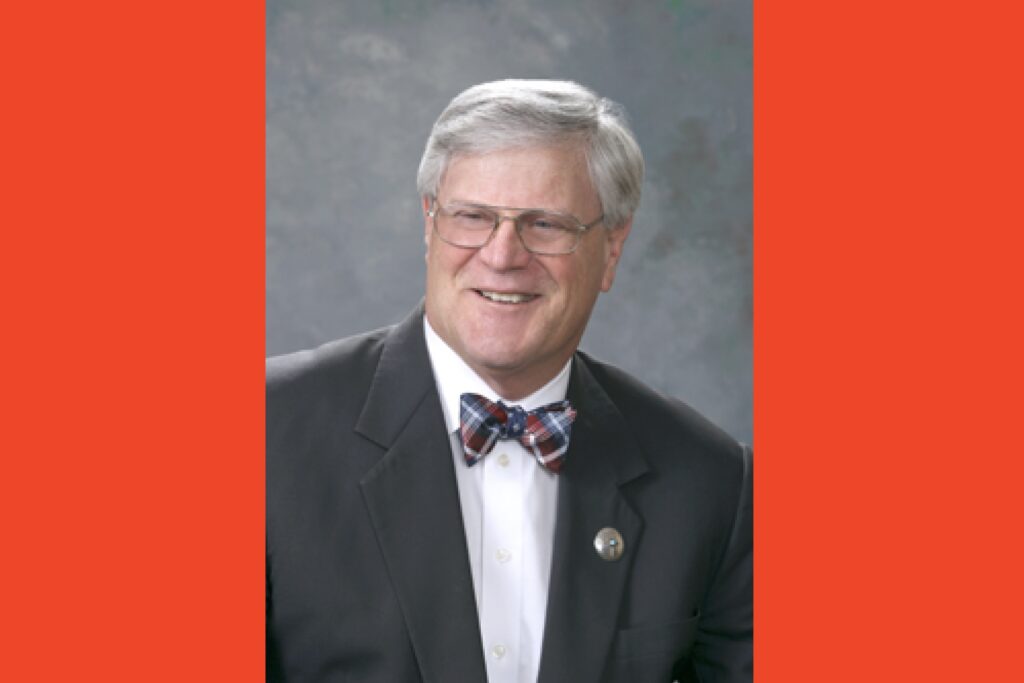
Santa Fe New Mexican (Nov. 2, 2025) – by Rep. Mark Murphy (D-59 Roswell)

Opinion Editorial – The state of New Mexico is sitting on tens of millions of dollars meant to clean up orphaned oil and gas wells. Instead of using those funds to fix the problem, state regulators are pointing fingers at the very industry already doing nearly all the work — and paying the bill.

Here’s the reality: When an oil or gas well reaches the end of its life, it’s the producer’s responsibility to plug it and restore the surrounding land. In New Mexico, companies do exactly that for roughly 99% of all wells. Only a small fraction becs ome “orphaned” — and that’s where the state steps in, using money from the Conservation Tax.

A portion of that tax goes into the Oil and Gas Reclamation Fund, created specifically to plug and reclaim orphaned wells. The Oil Conservation Division is responsible for using those funds efficiently and getting the work done. But that’s not happening.

As of November 2024, the Reclamation Fund had swelled to over $66 million from the Conservation Tax and federal grants. That’s more than enough to address the state’s small backlog of orphaned wells. Yet instead of using the money, OCD has allowed it to sit idle — trapped in red tape and mismanagement.

Procurement rules have limited the number of companies that can bid on reclamation projects, leaving only a few to handle the work. Other qualified contractors have been shut out for years. The result? Hundreds of orphaned wells sit untouched while the fund meant to fix the problem gathers dust.

Now, OCD wants to “solve” this self-inflicted problem by raising financial assurance requirements — the bond companies must post to guarantee they can plug their wells. Every producer already maintains financial assurance and pays the Conservation Tax. Increasing those requirements would hit small producers the hardest, making it harder — and in some cases impossible — for them to stay in business. And when small producers go out of business, what happens? More orphaned wells.

We’ve seen this before. In Colorado, when regulators hiked bonding requirements, more than 2,000 wells were added to the abandoned well list because small companies couldn’t afford the new rules. The result was less production, lost state revenue and more cleanup costs for taxpayers. That’s exactly the wrong direction for New Mexico.

During the past two legislative sessions, lawmakers had a chance to fix this. House Bill 403 — a commonsense, pro-environment measure — would have redirected a larger share of the Conservation Tax to the Reclamation Fund, ensuring the industry’s own tax dollars were fully dedicated to the cleanup work they were meant for. Yet the Legislature rejected it — twice.

Make no mistake. This isn’t a funding problem. The oil and gas industry is already footing the bill through the Conservation Tax and is successfully plugging nearly every well in the state. The problem is the state refuses to use the money it already has.

Instead of piling more financial burdens on small producers, New Mexico’s regulators should do what they’ve been funded to do — clean up the few remaining wells and stop pretending the industry isn’t doing its part.

When government hoards money instead of solving problems, everyone loses. Especially the small producers who keep New Mexico’s economy — and its energy future — alive.

Rep. Mark Murphy, a Republican, represents District 59. He is an oil and gas producer from Roswell.

By George Sharpe
Oct 26, 2025

In 2000, Merrion Oil & Gas acquired 20 low producing wells from ConocoPhillips. Today, those wells have generated 25 years of jobs, royalties and tax revenue. However, under a new bonding rule being considered in the state, those wells would have been plugged and lost forever.

New Mexico is considering implementing a new rule dramatically increasing the bonding requirements for oil and gas wells. In particular, marginal wells will each require a separate $150,000 bond. Further, if more than 15% of a company’s well-count is considered marginal, then 100% of the wells operated by that company will require individual $150,000 bonds. Finally, the rule will make it all but impossible for a larger company to sell lower-producing wells to small, independent operators, who can squeeze many years of additional profits from those wells.

This rule is unnecessary and will cost the state in jobs, royalties and taxes. Most operators are reputable, plugging their uneconomic wells on an ongoing basis. Existing rules already address the bad actors who let their wells languish. If Merrion Oil & Gas had to comply with this proposed rule, then virtually all of our wells would require the $150,000 bonding at an annual cost of $15,000 per well. However, because many of our wells may not make more than $15,000 per year in profit, they would be uneconomic and would need to be plugged immediately. Even though those wells don’t make much profit, they still support a lot of jobs, from pumpers to compression companies to water haulers and on and on. Further, they still pay royalties and production taxes that will now go away.

With the rule, there will be no more sales of wells from majors to small independents, similar to Merrion’s purchase of those wells from Conoco so many years ago. Conoco would just have had to plug the wells out. But because Merrion can operate at a lower cost point than Conoco, those wells have produced for over twenty five years, supported many, many jobs and paid hundreds of thousands of dollars in royalties and taxes to local landowners and the state. And unless we are forced to plug them now, they will continue to do so for another twenty years.

The biggest issue with the rule is that when you force small operators who are barely getting by to post $150,000 bonds for all of their wells, many won’t be able to afford an immediate cash outlay of that magnitude, leaving them no choice but to walk away and leave their wells to the state to deal with. They certainly won’t be able to sell the wells to someone else. So rather than protecting the state from the potential cost of orphaned wells, this new rule is going to immediately dump hundreds if not thousands of orphaned wells in the state’s lap to plug.

In closing, the proposed rule is unnecessary, will cost the state millions in lost royalties and taxes, will result in the loss of hundreds if not thousands of jobs and will backfire by significantly, increasing the number of orphaned wells for which the state is responsible. But the nongovernmental operators pushing the rule aren’t really concerned about protecting the state’s interest. Their real objective is to continue to make it harder to produce oil and gas in the state of New Mexico. The new rule will certainly accomplish that. Opponents of this misguided approach have until Nov. 7 to speak out.

Born and raised in Farmington, George Sharpe is the investment manager for Merrion Oil & Gas. He coordinates several education initiatives in the local school district and is an advocate for all types of energy.

IPANM (October 20, 2025) – IPANM would like to thank Sen. Larry Scott and all of the many state legislators who have submitted oral and written comments AGAINST the WELC Rulemaking for new Financial Assurance Bonding Levels and new OCD Authority to reject private well acquisitions.  The following is Sen. Scott’s public comment in front of the New Mexico Oil Conservation Commission.

Public Comments of State Senator Larry Scott
4:11 P.M. MT
WELC Rulemaking Public Comments Session 1
October 20, 2025

State Senator Larry Scott: Thank you, Madam Examiner, for the opportunity to speak. I am State Senator Larry Scott from District 42. [Name spelling:]L-A-R-R-Y-S-C-O-T-T.

Hearing Officer:  Do you swear and affirm to tell the truth?

State Senator Larry Scott: Yes, Ma’am. I have some fairly significant personal experience with this subject matter. I spent the better part of 40 years as one of the very smallest independent oil and gas producers almost exclusively in southeast New Mexico, in Lee and Eddy counties.

At one point, our little company was managing, I think, close to 60 wells, counting producers and injectors. And I can assure you that all of these calculations that I’m listening to do not take into account having to a set-aside, if you will, $150,000 per marginal well, as effectively unproductive capital. That process would have driven me to bankruptcy in fairly short order.

Now, in full disclosure, I’m no longer an operator. I still maintain interest as a non-owner in a number of properties, but all of my obligations to the state of New Mexico have been fulfilled and plugging obligations and those bonds have been released.

I have serious concerns. I’ve been in the legislature long enough to have participated in the legislation that increased in blanket bonding requirements from $50,000 to 5x of that at $250,000 [in 2018].

I’m not aware that that’s had any significant impact, either plus or minus, on the obligations of the state or any plus or minus impact on small operators in the state.

Now, let’s talk about the reclamation fund. Our oil and gas producers over the years have paid millions of dollars into that reclamation fund that have been misappropriated for use, in many cases, swept when New Mexico was short of funds and not utilized for the intended purpose of overcoming the very few operators that have failed to fulfill their plug-in abandonment operations.

I think the increase in bonding requirements that was affected in 2018 was affected after robust debate and votes by both the House and the Senate. This proposal needs to be vetted through that process rather than as an administrative rulemaking.

Thank you, Madam Examiner, for the opportunity to comment and I’ll look forward to the rest of the testimony.

Industry Plugs Its Wells; Enviros Simply Want To Kill Off Independent Producers

Beginning October 20th, the New Mexico Oil Conservation Commission will stage a rulemaking to consider proposals by radical environmental groups to impose significant new costs on industry. These new rules illegally bypass required legislative approval, and have been written with the explicit intention of shutting down small, local, multi-generational New Mexico independent producers.

The new language would immediately raise financial assurance bonding by orders of magnitude on later-in-life, marginal wells. With an immediate bond increase assessment per well, there will not be enough of the still-available, but yet-to-be extracted, oil & gas remaining in the underground to financially breakeven. As a result, most independent producers will have no choice but to shut-in and plug their lower producing wells, and prematurely cut off oil & gas production before the subsurface reservoir is drained. Such wells can often be reworked or repurposed to enhance production or to dispose of produced water. But, with these options effectively eliminated by the new rules, well revenues (including significant state revenues) will be lost for no justifiable reason.

The new bonding provisions are only part of the rewritten rule. If adopted, state regulators will be granted new authority to deny well operators from selling their existing marginal wells. The state, without due process and without justification, could simply kill the sale of production wells if they deem the buyer to not be financially solvent through their own estimations. This is autocracy over an entire industry on the regulatory level, and will certainly block most operators from selling or acquiring new wells altogether.

The rewritten rules and upcoming hearing has already had a chilling effect not only on the oil & gas industry, but the larger New Mexico business community. The message is clear: Environmentalists and regulators in New Mexico can write and implement their own regulations without the need for legislative consent or substantial consideration of industry feedback. In fact, the concerns of independent producers were not even solicited before this rule was filed. State-based oil & gas companies will testify that because no input from independents was considered, they may have no choice but to shut down and leave the state because of the excessive bonding costs and uncertainty over the ability to buy and sell producing wells.

There’s an ugly reality exposed by this rulemaking hearing. On one hand, the state touts industry’s increased production and feasts on enormous oil & gas state revenues.  On the other hand, the state and the enviros continue to kill off smaller independent producers. Since 2017, the number of state oil & gas reporting entities has decreased by 20%. That’s over 100 mostly independent producers who are now either out-of-business, or have left New Mexico due to new regulations antagonistic towards smaller oil & gas companies. These are responsible, state-based, and multi-generational producers that live in the communities where they produce oil & gas, and contribute directly to their rural economies. Environmentalists even acknowledge and applaud the future shutdowns this new rule will cause in their already submitted written testimony, which reveals their true intentions.

To counter this inherent hostility, industry intends to present the real facts during the upcoming rulemaking hearing. Industry testimony will demonstrate that operators already plug over 95% of their own non-producing wells, which accounts for hundreds of wells each year. The state’s inflated projection of unfunded liability on wells does not account for that fact. Industry will also demonstrate that state regulators do not even draw upon the existing financial assurance bond money that exists to plug abandoned wells meaning that industry is being asked to bear significant new costs that will have virtually no benefit.  Also troubling, the state does not adequately administer the already-existing industry-financed reclamation fund, which currently has a balance of over $50 million that remains unspent. Furthermore, the state only contracts with hand-picked oil & gas service companies to plug wells, where as other options are available and more efficient. These are the kinds of facts never show up in biased, environmentally-funded, state-endorsed studies on New Mexico’s unplugged well inventory.

The Independent Petroleum Association of New Mexico (IPANM) will fight for the responsible, New Mexico-based independent producers at this hearing. These companies already plug their own wells, pay into the state’s reclamation fund to plug other wells, and protect the ground where they work upon. Sadly, they will face unnecessary shut-ins and complete shutdowns if this rule is passed.  We urge the 3-member Oil Conservation Commission to listen to the testimony of the independent producers, recognize the intended and unintended consequences of these bad rules, and reject the environmentalists’ petition that will kill an important segment of the oil & gas industry. Finally, we urge everyday citizens whose lives are better because of oil & gas to stand up during the hearing public comments and defend the industry that provides for all New Mexicans.

IPANM & SLO (October 3, 2025) – Prior to the 2025 Legislative Session, the State Land Commissioner threatened to raise state lease bonds if her Royalty Rate Increase bill bill wasn’t passed.

Well, the Royalty Rate Increase Bill did pass, and apparently the State Land Commissioner is proceeding with bonding increases anyway. This is not necessarily surprising. Earlier this summer, the Commissioner hinted that this rule was to be forthcoming.

This afternoon, the State Land Office released the following State Lease Bonding Increase Draft Rule, which calls for dramatic, across the board lease bond increases that will continue to disproportionately hurt independent producers:

FULL DRAFT LANGUAGE of SLO’s new, proposed Lease Bonding Rule

The SLO also has provided this summary draft for your review:

SLO Summary of new, proposed Lease Bonding Rule

Consistent with their track record, the State Land Office did not consult with industry regarding their proposal, and therefore, have not allowed industry to provide input on the impacts of this new rule on our operations up to this point.

However, in their message to IPANM today, the State Land Office writes, “While we are still finishing up our timeline for the rulemaking, please expect industry working group meetings to be held in Hobbs, Farmington and Santa Fe in mid-November.  We will have more information to share in the next couple of weeks regarding meeting locations and our overall timeline.”

Therefore, it would appear that opportunities will be forthcoming to provide feedback on what is currently drafted. It is uncertain whether any future industry input will be seriously considered for changes, as such after-the-fact input sessions have often been more “show” than substance. Nevertheless, IPANM will engage with the SLO with hopes to improve a very, very bad rule.

IPANM (Sept. 19, 2025) – Today, IPANM filed all of its witness rebuttal testimony to the Oil Conservation Commission regarding Western Environmental Law Center (WELC)’s Rulemaking Petition to raise financial assurance levels on state lands. These IPANM filings represent our strongest pushback against WELC’s Direct Testimony and OCD’s Direct Testimony calling for dramatic increases to financial assurance bonding.

Rebuttal Testimony of Clay Padgett
Rebuttal Testimony of John Nabors
Rebuttal Testimony of Mike Cantrell
Rebuttal Testimony of Mike Hannagan
Rebuttal Testimony of Robert Arscott PhD
Rebuttal Testimony of T. Calder Ezzell
Rebuttal Testimony of Trevor Gilstrap
Rebuttal Testimony of Jim Winchester

All other parties to this rulemaking hearing, including WELC, OCD, NMOGA, and Occidental Petroleum, also filed rebuttal testimony today.

IPANM is treating this rulemaking with the highest priority, and our direct testimony filed August 8th and today’s rebuttal testimony reflects our most vigorous opposition to this proposed rule. The proposed rule is being pushed administratively after the enviros and the OCD failed to get legislation passed in previous sessions.

IPANM’s Legal Team on the WELC Rulemaking has been led by Drew Cloutier and Ann Tripp of Hinkle Shanor LLP in Roswell.

IPANM (Sept. 15, 2025) IPANM and NMOGA have filed a motion to dismiss the entire WELC Rulemaking Hearing regarding new proposed Financial Assurance Bonding levels and new authority to cancel well acquisitions. The Motion to Dismiss  is based on many factors, including the lack of authority of the Oil Conservation Commission (OCC) to arbitrarily set financial assurance bonding rates without statutory authority. Lawyers for industry believe there are legitimate grounds to question whether the OCC is overstepping its authority on setting these new bonding levels and additional rules.  Industry cites precedent, where by in 2018’s Financial Assurance Rulemaking, the Commission had legislative authority to create new bonding levels through the passage of SB189 (2018).

The OCC will need to decide on the motion either before or at the beginning of next month’s October 20th to November 7th rulemaking hearing.

IPANM & NMOGA Motion To Dismiss WELC Rulemaking Hearing

IPANM (August 8, 2025) IPANM filed all of its witness testimony to the Oil Conservation Commission regarding Western Environmental Law Center (WELC)’s Rulemaking Petition to raise financial assurance levels on state lands. These IPANM filings represent a year’s worth of policy discussion, data collection, and witness testimony in opposition of WELC’s overly prescriptive and overly costly rule.

Make no mistake, this rulemaking is being driven by environmental groups that want to end the secondary lifecycles of marginal wells. The New Mexico Oil Conservation Division has done no favors for us either through their near blanket-support of these proposals, as their testimony reflects.

IPANM is treating this rulemaking with the highest priority, and our testimony reflects our most vigorous opposition to this proposed rule.  (For context, the proposed rule is being pushed administratively after the enviros and the OCD failed to get legislation passed in previous sessions.)

All testimony is now public record, and below are links to IPANM’s witness testimony. IPANM would like to thank these members who are standing up to represent the collective interests of independents.

Witness Topic:  Effects on Operators
Testimony of David Mitchell
Testimony of George Sharpe
Testimony of Jerome McHugh, Jr.
Testimony of Vern Andrews
Witness Topic:  Effects on Deals & Acquisitions
Testimony of Jeff Harvard
Testimony of Kyle Armstrong
Witness Topic: Conservation Tax
Testimony of Mark Murphy
Witness Topic: Legalities of Rule
Testimony of T. Calder Ezzell
Witness Topic: Bonding Markets
Testimony of Trevor Gilstrap
Witness Topic: Study Findings
Testimony of Robert Arscott
Witness Topic: Rule Impacts in Colorado
Testimony of Sam Bradley
Witness Topic: General Context/Member Issues
Testimony of Jim Winchester

IPANM’s Legal Team on the WELC Rulemaking has been led by Drew Cloutier and Ann Tripp of Hinkle Shanor LLP in Roswell. On behalf of the membership, I’d like to thank our legal team for months of fulltime work to prepare our filings, Hinkle Shanor LLP.

IPANM’s Complete Financial Assurance Testimony Filed

NMOGA’s Full Filings

NMOCD’s Full Filings

WELC’s Full Filings

Oxy’s Full Filings

State Land Office’s Full Filings


By Missi Currier | CEO, New Mexico Oil & Gas Association

When it comes to environmental responsibility, New Mexico’s oil and gas industry is not just stepping up — we’re leading the way.

In recent years, oil and gas operators plugged over 90% of the wells decommissioned in the state. That’s 451 wells plugged by industry, compared to just 49 plugged by the Oil Conservation Division. For every well plugged using public funds, the oil and gas industry independently plugs 10 more — without fanfare, and without burdening New Mexico taxpayers.

Let’s be clear: Only tax dollars paid by the oil and gas industry are used to plug orphaned wells in New Mexico. Not a single cent comes from the pockets of New Mexico families. The millions spent by OCD to plug wells came directly from the Reclamation Fund — funded entirely by industry-paid taxes.

Of the 68,516 active wells in New Mexico, approximately 34,000 are state and fee wells. Among those, just 349 are classified as orphaned — a remarkably low orphan rate of about 1%. This is a testament to the industry’s commitment to responsible operations and long-term stewardship. However, we know that 1% is still too many, and the industry is committed to continuing our work with OCD to ensure the reduction of that number.

Yet, despite this strong track record, we face a critical challenge: ensuring that the funds dedicated to well-plugging are used for that purpose. In 2022, the Reclamation Fund held $21 million. By November 2024, that balance had grown to approximately $66 million, thanks to increased federal support and continued contributions from the Conservation Tax directly from industry.

But these funds are only effective if they’re deployed efficiently. Delays in procurement and administrative bottlenecks risk not only slowing progress but also jeopardizing future funding. New Mexico’s leadership must prioritize using these dollars as intended — on well plugging and site remediation — not diverting them to unrelated initiatives.

The oil and gas industry supports modernizing the Reclamation Fund to ensure it remains a sustainable, efficient tool for environmental protection. That means streamlining procurement, reducing administrative burdens, and preserving the fund’s integrity for its intended purpose. The oil and gas industry is proud to carry the responsibility of plugging and remediating wells. During a well’s lifetime, it provides energy for the world and contributes to our state’s economy. At the end of its cycle, the land is returned to its native state. It’s a responsibility we take seriously — and one we’re already fulfilling. Let’s work together to ensure that the systems in place support this important work, now and for generations to come.