A New Day at IPANM


information & issues

Welcome to IPANM’s Information & Issues webpage!

IPANM is not afraid to take strong stances on many current issues threatening our industry. We have to! Seemingly minor changes to regulations or rules can have a major impact on the financial solvency of our small oil & gas producers. While we will never compromise on our duties to protect human health, fresh water and the environment in our daily activities, we will fight unnecessary government overreach when new regulatory proposals are not based on sound science and do little to protect the environment.

Below, we’ve identified serious issues facing our producers. Please click on the corresponding button to learn more about each issue and IPANM’s stance on the issue. (Note: Some of this content may be restricted for members only. To access this exclusive content, please join our association!)

RECENT NEWS: All Issues

Western Energy Alliance (Setbacks) - A moratorium on public lands is part of an agenda to stop developing American energy. Since
Albuquerque Journal (Methane) - Since the fall, two Cessna aircraft have flown daily over New Mexico’s southeastern plains to snap
Thousands of acres of state land in northwest New Mexico will be insulated from oil and gas drilling, after New
Energy In Depth (Methane) - Data from the EPA and EIA present a true picture of what industry has done
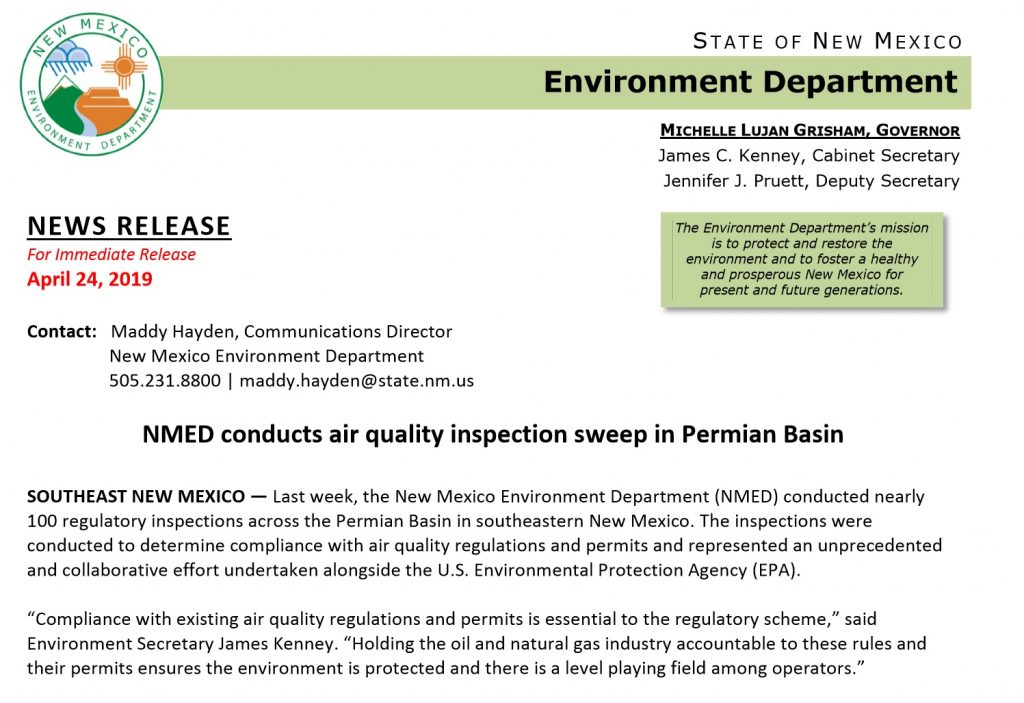
NMED (Methane) - The New Mexico Environment Department announced today that conducted 98 emissions inspections in the Permian Basin of
IPANM (Financial Assurance) - IPANM members are reminded to submit their new Financial Assurance Bond amounts to the Oil Conservation
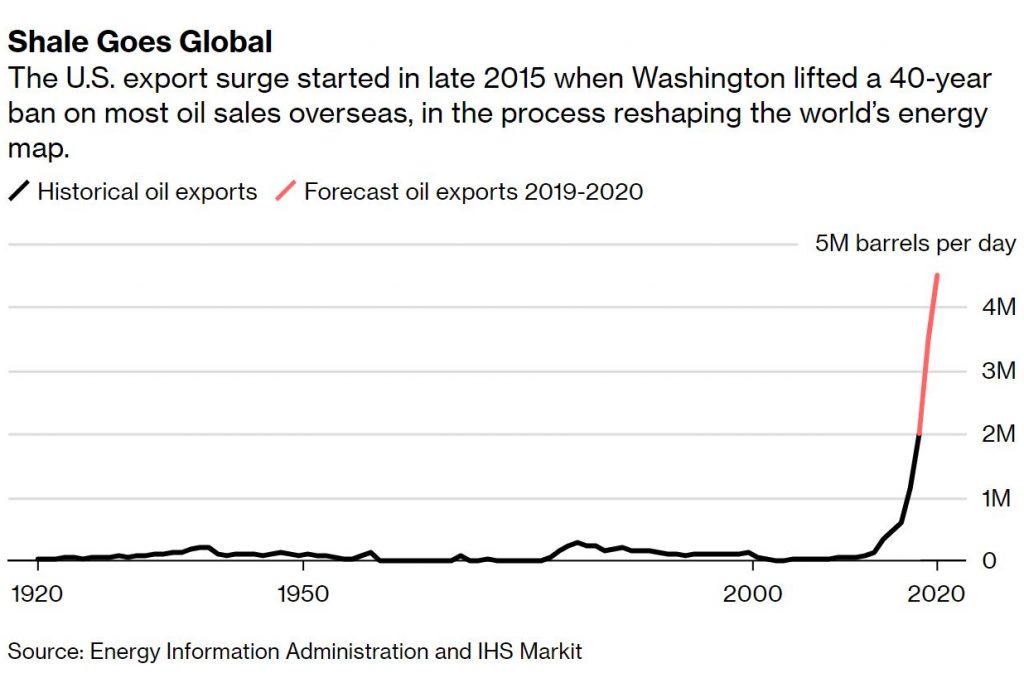
Bloomberg (INFRASTRUCTURE) - What started as an American phenomenon is now being felt around the world as U.S. oil exports surge
(Carlsbad Current-Argus) -- The New Mexico Department of Transportation is getting closer to providing the safety needed for industry to
(IPANM) – IPANM issued a statement today in response to the decision by the New Mexico Environment Department (NMED) to
ABQ Journal (Hydraulic Fracturing) - The ABQ Journal Editorial Board has taken a strong stand against HB206: An Environmental Review

This content is for members only.

Please login here! If you have any questions about your membership, please email megan@ipanm.org.

This content is for members only.

Please login here! If you have any questions about your membership, please email megan@ipanm.org.

This content is for members only.

Please login here! If you have any questions about your membership, please email megan@ipanm.org.

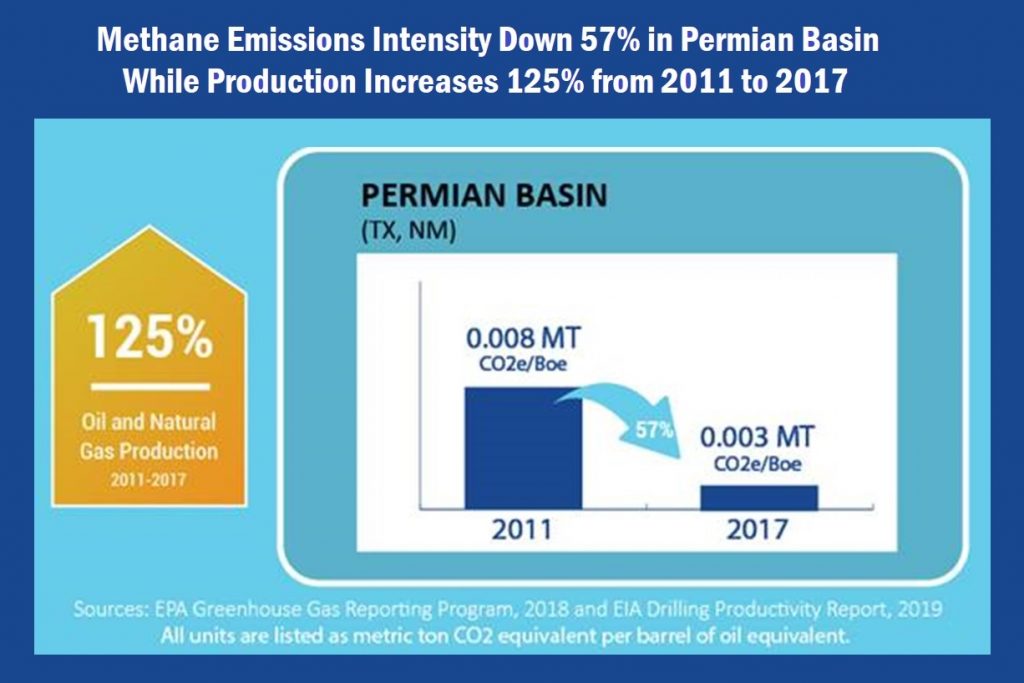
Energy In Depth (Methane) – Data from the EPA and EIA present a true picture of what industry has done — on its own — to help reduce methane emissions:

  • The result was a 57 percent reduction in methane emissions per unit of oil and gas produced.  Based on data from the EPA and Energy Information Administration, the analysis shows that methane emissions intensity (i.e. methane emissions per unit of oil and gas produced) declined by 57% since 2011 while oil and natural gas production has dramatically increased by 125% over that same period.
  • From 2011 to 2017, methane emissions intensity in the Permian Basin – which is producing more oil than any other basin on Earth – was cut in half.
  • Overall, methane emissions from onshore U.S. oil and natural gas production fell 24 percent, while oil and natural gas production rose 65 percent and 19 percent, respectively, from 2011 to 2017, according to data from the U.S. Environmental Protection Agency and the Energy Information Administration.
  • The United States is a global leader in reducing greenhouse gas emissions – a feat that is directly attributable to increased production and use of clean-burning natural gas.

For more information, click on the story below.

Analysis: Methane Emissions Intensity Declines in Top Shale Basins

This content is for members only.

Please login here! If you have any questions about your membership, please email megan@ipanm.org.

IPANM (Financial Assurance) – IPANM members are reminded to submit their new Financial Assurance Bond amounts to the Oil Conservation Division by April 15, 2019.  The OCD should have sent all operators a notice of the new bonding levels and new amounts owed, however, IPANM is uncertain if the department successfully notified all operators.  Regardless of notification, IPANM members are urged to take pro-active measures to ensure your bonding is up to the new, appropriate amounts to ensure compliance by April 15.  All information can be found below.

All historical information involving IPANM’s opposition to new Financial Assurance Levels can be found at the members-only issues and information section under Financial Assurance.

Notice to Operators: January 15, 2019 New Financial Assurance and Temporary Abandonment Rules in Effect, 19.15.2, 19.15.8 and 19.15.25 NMAC

The Oil Conservation Commission has amended the rules pertaining to the required financial assurance for state and private wells operated in the state of New Mexico.  As of January 15, 2019, the amendments to 19.15.8.9 NMAC apply to all applications for permits to drill, deepen or plug back and applications for approved temporary abandonment.  The new amounts will apply for all other wells on April 15, 2019.

Blanket Financial Assurance Amounts for Active wells (new wells or wells with reported production or injection within the last two years):

The Commission adopted a tiered bonding structure based on the operator’s number of state and private wells.  19.15.8.9(C)(2) NMAC requires an operator to provide a blanket plugging financial assurance in the following amounts covering all the wells of the operator:

(a) $50,000 for one to 10 wells;

(b) $75,000 for 11 to 50 wells;

(c) $125,000 for 51 to 100 wells;

(d) $250,000 for more than 100 wells.

Blanket Financial Assurance Amounts for Inactive Wells (wells without reported production or injection for two years or more):

Operators who have inactive or temporarily abandoned state or private wells are required to provide financial assurance in addition to the blanket bond for active wells:

(a) $150,000 for one to five wells;

(b) $300,000 for six to 10 wells;

(c) $500,000 for 11 to 25 wells;

(d) $1,000,000 for more than 25 wells.

Single Well Financial Assurance:  If an operator does not provide blanket plugging financial assurance for either an active, or inactive state or private well, a bond amount of $25,000 plus $2 per foot of depth is required for each well.

Maximum number of wells allowed to be placed in approved temporarily abandonment status:  The limits are now one well, if the operator operates between one and five wells; and one-third of all wells in New Mexico, rounded to the nearest whole number, if the operator operates more than five wells.  19.15.25.12 NMAC.

During the period between January 15 and April 15, 2019 the Division encourages all operators to review their bonding status for both active and inactive wells.  The increased amounts will not be required until April 15, 2019 for existing wells or for wells for which the operator applied to drill prior to January 15, 2019, planning ahead will ease strain on the Division and providers of financial assurances when the new provisions apply to all wells on April 15, 2019.
This content is for members only.

Please login here! If you have any questions about your membership, please email megan@ipanm.org.

(Carlsbad Current-Argus) — The New Mexico Department of Transportation is getting closer to providing the safety needed for industry to continue its growth.

A main highway for oilfield traffic between Eddy and Lea counties is being upgraded, and NMDOT expected ongoing improvements to be finished by winter.

The NMDOT invested about $58 million in federal and state funds into the project, which would upgrade 32 miles of U.S. Highway 82 between Artesia and Maljamar.

Improvements coming to oilfield roads in Southeast NM


This content is for members only.

Please login here! If you have any questions about your membership, please email megan@ipanm.org.

ABQ Journal (Hydraulic Fracturing) – The ABQ Journal Editorial Board has taken a strong stand against HB206: An Environmental Review Act and SB459 Moratorium on Hydraulic Fracturing.  IPANM applauds the Editorial Board for their common sense rationale.  IPANM is strongly opposed both bills, as they are best described as guidebooks on “How to kill New Mexico’s Economy”.

ABQ Journal Editoral: Project review, fracking ban mean NM closed to business