A New Day at IPANM


information & issues

Welcome to IPANM’s Information & Issues webpage!

IPANM is not afraid to take strong stances on many current issues threatening our industry. We have to! Seemingly minor changes to regulations or rules can have a major impact on the financial solvency of our small oil & gas producers. While we will never compromise on our duties to protect human health, fresh water and the environment in our daily activities, we will fight unnecessary government overreach when new regulatory proposals are not based on sound science and do little to protect the environment.

Below, we’ve identified serious issues facing our producers. Please click on the corresponding button to learn more about each issue and IPANM’s stance on the issue. (Note: Some of this content may be restricted for members only. To access this exclusive content, please join our association!)

RECENT NEWS: All Issues
(Western Wire) April 15, 2020 - U.S. carbon dioxide and other emissions have fallen over the past 14 years while
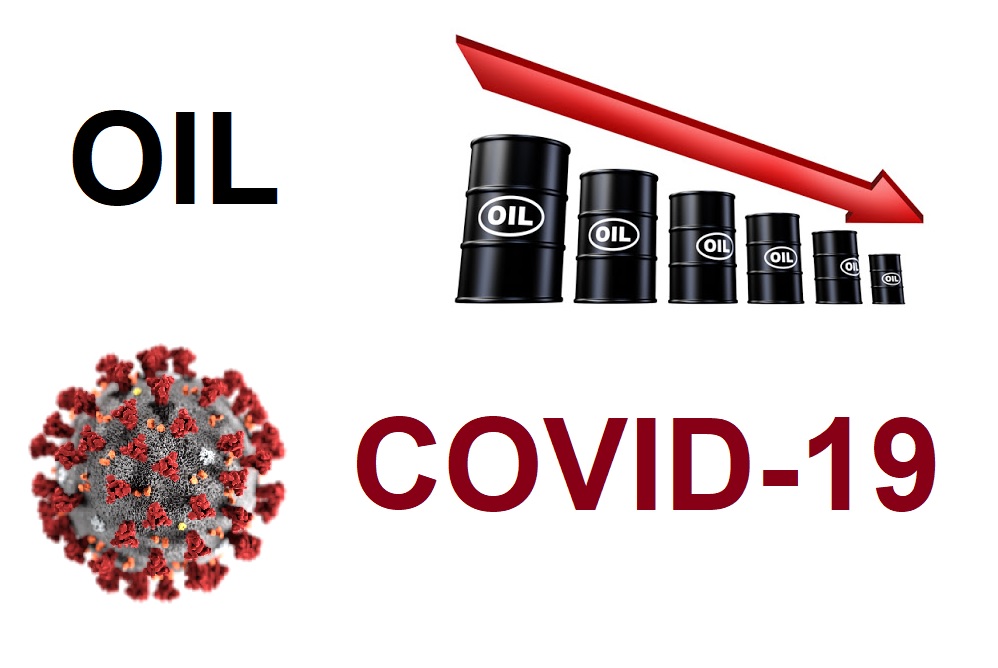
IPANM Archive for COVID-19 & The 2020 Oil Price Crash IPANM has set up this archive to list all of
IPANM has set up this webpage of important COVID-19 and Oil Price Crash resource links. This page is free to
Farmington Daily Times (March 2, 2020) - A plan for future development would open up lands within the current 10-mile
Carlsbad CurrentArgus (Infrastructure) Feb. 3, 2020 - Three of southeast New Mexico’s most notorious oilfield roads are in for major
Farmington Daily Times (Dec. 24, 2019) - The fiscal year 2020 federal spending package will prevent any oil and gas leasing
IPANM - Several discussions between IPANM and BLM New Mexico as well as BLM Headquarters in Washington D.C. have led
IPANM (Dec. 8, 2019) - IPANM is reminding operators that New Mexico's Oil Conservation Division (OCD) will have new authority
Dear Members, Best wishes to you, your employees, family and friends this holiday season. I hope you can join us
The Methane Advisory Panel (MAP) has concluded and we anticipate final publications of our technical documents by mid-December. IPANM’s Methane

(Western Wire) April 15, 2020 – U.S. carbon dioxide and other emissions have fallen over the past 14 years while the economy expanded and then recovered from the Great Recession, according to the latest data released by the Environmental Protection Agency this week.

Nationwide greenhouse gas (GHG) emissions in the power sector have fallen 27 percent since 2005 while the economy expanded by 25 percent, according to the newest edition of U.S. Environmental Protection Agency’s (EPA) annual emissions report.

EPA Emissions Report Show Long Term Declines Continue


This content is for members only.

Please login here! If you have any questions about your membership, please email megan@ipanm.org.

IPANM has set up this webpage of important COVID-19 and Oil Price Crash resource links. This page is free to all of industry as a service of IPANM. No membership required to access.


Updated Oil & Gas Operational Resources (COVID-19 & Price Crash)

Reopening Information

Updated SMALL BUSINESS assistance resources:

Partner Trade Association Resources:

Updated COVID-19 Health information resources:

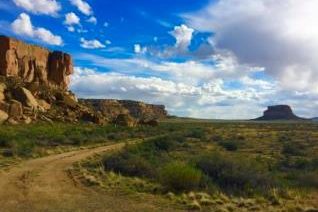
Farmington Daily Times (March 2, 2020) – A plan for future development would open up lands within the current 10-mile Chaco Culture National Historical Park buffer zone to oil and gas leasing.
The Bureau of Land Management and Bureau of Indian Affairs released the draft resource management plan amendment for the Farmington Field Office on Feb. 28 and it will be available for comment through May 28.

BLM preferred plan could open areas within 10-mile Chaco buffer to oil, gas development

Carlsbad CurrentArgus (Infrastructure) Feb. 3, 2020 – Three of southeast New Mexico’s most notorious oilfield roads are in for major rebuilds in the coming years as the New Mexico Department of Transportation aims to use surplus state funds from oil and gas revenue to ensure workers in the industry can travel safely through the region. In a Monday meeting with Carlsbad area business leaders in Santa Fe, New Mexico Cabinet Secretary of Transportation Michael Sandoval said a $130 million project to update U.S. Highway 285 from the Texas State Line 22 miles north to Loving was fully funded.

Permian Roads Receive Millions in State Funds, Projects Underway


Farmington Daily Times (Dec. 24, 2019) – The fiscal year 2020 federal spending package will prevent any oil and gas leasing activities on federal lands within 10 miles of Chaco Culture National Historical Park.  However, the 1-Year Moratorium on new leasing around Chaco Canyon is still scheduled to expire in September 2020.

The spending package, which includes a dozen bills, passed the U.S. Senate last week and was signed by President Donald Trump. The buffer zone is included in the Interior, Environment and Related Agencies appropriations bill.

IPANM continues to monitor this important issue and supports safe drilling of horizontal wells within the arbitrary “buffer zone”, as drilling and associated oil & gas activities have NO effect on the perseveration of Chaco Canyon National Historic Monument.

Farmington News: Federal Spending Plan Included Buffer Zone at Chaco

IPANM – Several discussions between IPANM and BLM New Mexico as well as BLM Headquarters in Washington D.C. have led to a recommendation that operators in New Mexico tentatively hold off on updating BLM Rights-of-Way Bonding updates, despite recent directives and information from the BLM Farmington Field Office and Carlsbad Field Office.

IPANM spoke with U.S. Department of Interior Deputy Director Casey Hammond on Dec. 3, 2019 over a conference call to further discuss issues operators were having attempting to renew ROW bonds out of the Farmington Field Office.

Please see IPANM’s follow-up letter to the BLM for further updates and guidance on the situation as it currently stands:  IPANM’s Dec. 4, 2019 Letter to Dept. of Interior  RE:  ROW Bonding

IPANM Meets with BLM about ROW Bonding Issues in NW (October 31, 2019 Update)

 Feds appoint Spisak as new BLM New Mexico State Director


IPANM (Dec. 8, 2019) – IPANM is reminding operators that New Mexico’s Oil Conservation Division (OCD) will have new authority to fine operators beginning on Jan. 1, 2020. For that reason, operators need to address lingering violations, or they could face fines in 2020.

UPDATE:  Per a recent meeting between IPANM Board President Kyle Armstrong and Executive Director Jim Winchester, OCD has outlines the main areas they will be looking to enforce compliance. These include, but are not limited to:

  • Spills & Open Spill Remediation Efforts that have not be closed or reported closed
  • Illegal Dumping
  • Venting & Flaring Violations and/or reporting inaccuracies and/or going beyond set venting/flaring deadlines
  • Paperwork Issue: OCD indicated numerous “C-” reports are out of date with operators
  • Unreported or outdated C-115 and C-104 Forms
  • Out of date Financial Assurance Reporting: OCD says operators are responsible for making sure all new bonding is up to date.
  • Don’t wait for notification or warning letters.  New wellsite bonding levels were due last summer.

What you also need to know to prepare for the new authority:

  • New penalty provisions go into effect and maybe enforced effective January 1, 2020. It is IPANM’s understanding that these new authorities will allow OCD to notify operators on January 1st of unresolved past violations and issue a letter instructing compliance within 30 days. If no action is taken to address the violations within 30 days, OCD will have the option to assess daily fines retroactive to the date of notification.
  • This new authority represents a major paradigm shift in regulatory enforcement in New Mexico. IPANM has learned that New Mexico District Offices are reviewing well files and earmarking violators and violations to begin issuing violations at the beginning of the year.
  • It is imperative that operators get their well sites into compliance before January 1, 2020.  Each member should check individual wellsite data using the OCD Online Wellsite search portal.
  • IPANM recommends members be pro-active at your wellsites, as opposed to taking an approach to wait and fight any violations that are are issued after Jan. 1, 2020.
  • IPANM will push for rule clarification of when and how penalties will be enforced. However, the current OCD draft language leaves a great deal of the penalty discretion in the hands of the OCD.

For more information, and to find out how IPANM is representing independents during the upcoming Administrative Penalties rulemaking hearing, please see our recent update to members.

Dear Members,

Best wishes to you, your employees, family and friends this holiday season. I hope you can join us in person at either our Southeast IPANM Christmas Party in Roswell on Dec. 18 or our IPANM New Year’s Happy Hour on Jan. 8, 2020. Feel free to invite prospective members, as these are great recruiting events. Of course, a special thanks to our sponsors for these fun events!

The upcoming year is shaping up to be extremely busy on the regulatory front for the two state agencies that have the most authority over Oil & Gas operations in New Mexico: the New Mexico Energy, Minerals and Natural Resources Department (EMRND) and New Mexico Environment Department (NMED). For that reason, I’ve worked closely with our Executive Board and Executive Director Jim Winchester to meet with both cabinet secretaries and key directors to outline the year ahead. Members need to be aware of many of the upcoming hearings and regulatory changes that are summarized in this newsletter.

I have also continued to serve as an industry representative on an advisory board to State Land Commissioner Stephanie Garcia-Richard. IPANM has been actively responding to a number of substantive actions directed at our industry on the part of the State Land Office. I continue to ask all members to reach out to me directly to report back on any issues you may be experiencing while conducting business with the State Land Office.

Finally, we are now just weeks away from the 2020 Legislative Session. We are preparing for another important session to protect, defend and promote our industry and independent producers. I encourage you to visit Jim or I while we work the hallways of the Roundhouse in Santa Fe from Jan. 21 to Feb. 20, 2020. Regardless of their party affiliation, we need to constantly remind elected leaders that this second consecutive billion-dollar state budget surplus is owed almost entirely to our industry.

As we wrap up 2019, I thank you for your support of IPANM and our many events and efforts. Please don’t forget to renew your membership and consider donating to our legal fund. I cannot underscore enough that we need your support to vigorously respond to multiple proposed new rules, each of which will disproportionately impact independent operators. Securing the necessary legal representation for these hearings is critical, and we need your support in 2020 to ensure your concerns are heard.


Regards,

Kyle
Kyle Armstrong, IPANM President

The Methane Advisory Panel (MAP) has concluded and we anticipate final publications of our technical documents by mid-December.

IPANM’s Methane Workgroup Committee, made up of both IPANM’s MAP members and at-large members, will hold a conference call in December to take a look at some of the remaining issues that need to be addressed in formal comments to the administration. Please notify me if you’d like to join this important call. Likewise, IPANM MAP members will join NMOGA’s MAP members in mid-December to follow-up on some of our own discussion issues not addressed during our stakeholder meetings with the administration and draft comments to be submitted during the 60 day public comment period.

I’d like to highlight several aspects of the MAP meetings that you might not otherwise be aware of.

  • First, all meetings were closed and conducted under the direction of the Chatham House Rule. Unfortunately, some representatives were not respectful of this process, as illustrated by several news articles that were published in November. Both industry MAP members and our IPANM Executive Board protested these leaks.
  • Second, this process was conducted to provide technical background to the process of the administration’s desire to seek input from all parties involved in the Methane Rule process. From the outset, IPANM and other industry participants were disappointed that some entities chose to fill their representative spots with attorneys vs. technical experts. This ran contrary to the administration’s stated purpose to have a technical discussion related to methane reductions in the state. The administration heard our objections and did not prohibit participation of attorneys but allowed all members to have an alternate and a plus one (legal representation). The alternate could participate in the MAP process in place of the original representative. The plus one could be present at the MAP meetings and be consulted with as needed.
  • Third, the drafting of the technical documents were done in a process that allowed all-inclusive considerations, regardless of technical or economic feasibility. Through the additive process technical context was provided to respond to impractical suggestions, and those responses should be captured in the documents. The hot topics from the MAP process were centered around venting and flaring. I would expect to see the NMOCD and NMED revamp the reporting requirements for oil and gas operations in the state. Throughout the process we highlighted the need for consideration of marginal well impacts and specifically with tanks, liquids unloading and LDAR (Leak Detection and Repair). If you want any specific information on the topics covered please feel to reach out to me or check the NMED website for each topic white paper.
  • Finally, IPANM members should understand that the administration will take the information from these stakeholder meetings and move forward with drafting rules they want to enact. There is no guarantee that any of the technical recommendations suggested by industry will actually be considered. For this reason, IPANM plans to have it’s own legal representation at the upcoming rulemaking hearings in 2020. If a new Methane Rule comes out that fails to account for our unique operating circumstances, IPANM will stand ready to take whatever steps are necessary to fight for our members.

To conclude my update, please join me in thanking our IPANM MAP members. I can personally attest to the countless hours, weekends and trips to Santa Fe that our IPANM MAP team dedicated to this effort. I truly appreciate the time and effort of our IPANM MAP members in this process. Thank you for the opportunity to serve you all as the northwest vice president for IPANM. As we close out 2019, I would like to wish everyone a Merry Christmas and a Happy New Year.