A New Day at IPANM


information & issues

Welcome to IPANM’s Information & Issues webpage!

IPANM is not afraid to take strong stances on many current issues threatening our industry. We have to! Seemingly minor changes to regulations or rules can have a major impact on the financial solvency of our small oil & gas producers. While we will never compromise on our duties to protect human health, fresh water and the environment in our daily activities, we will fight unnecessary government overreach when new regulatory proposals are not based on sound science and do little to protect the environment.

Below, we’ve identified serious issues facing our producers. Please click on the corresponding button to learn more about each issue and IPANM’s stance on the issue. (Note: Some of this content may be restricted for members only. To access this exclusive content, please join our association!)

RECENT NEWS: All Issues

Santa Fe New Mexican (Jan. 17, 2022) - The proposed Green Amendment that would make a clean and healthy environment
Albuquerque Journal (January 10, 2022) - Gov. Michelle Lujan Grisham is promoting a new “Hydrogen Hub Act” as “signature” legislation
AP News (Jan. 11, 2022) - New Mexico’s Democratic governor on Monday renewed her call for state legislators in the
Natural Gas Intelligence (Jan. 11, 2021) - Permian Basin natural gas processor Lucid Energy Group has been given the green
Albuquerque Journal (January 8, 2022) - For Randy Pacheco, the CEO of A-Plus Well Service out of Farmington, starting to
Santa Fe New Mexican (January 7, 2022) - A new climate change bureau, a boost in drinking water oversight and
E&E News (Jan. 5, 2022) - One year after President Biden took office, federal agencies are facing pressure to carry
IPAA (Jan. 5, 2022) - Thanks to the shale revolution, the United States went from energy scarcity to energy dominance.
Forbes (Jan. 4, 2022) - Finally, the European Union has admitted the obvious: if decarbonization is the goal, natural gas
Texas Standard (January 3, 2022) - The Railroad Commission of Texas, the agency that regulates oil and gas production in

Santa Fe New Mexican (Jan. 17, 2022) – The proposed Green Amendment that would make a clean and healthy environment a constitutional right for New Mexicans will be taken up in the legislative session with strong Democratic backing and virtually zero Republican support.

The partisan divide is no surprise to anyone familiar with the effort to make the state constitution a backstop for environmental protection.

Advocates say it would compel the state to enforce current laws and enable it to draw on constitutional authority when regulations don’t adequately cover specific threats to the environment or public health.

Opponents say it could lead to government overreach that would hurt the state’s industries — such as fossil fuel, agriculture, timber and mining — and the communities that depend on the jobs in those sectors.

Lawmakers to consider Green Amendment to New Mexico Constitution


Albuquerque Journal (January 10, 2022) – Gov. Michelle Lujan Grisham is promoting a new “Hydrogen Hub Act” as “signature” legislation in this year’s session, which begins next Tuesday, but it could face formidable opposition given public concerns about just how “clean” hydrogen production really is.


Hydrogen Bills Ignite Heated Debate Prior to Introduction

Proposed Hydrogen Hub Generates Controversy

Hydrogen Energy A Controversial Priority in NM’s Upcoming Legislative Session

$600M Project Puts NM Town at Center of Hydrogen Debate


AP News (Jan. 11, 2022) – New Mexico’s Democratic governor on Monday renewed her call for state legislators in the major oil producing state to approve requirements for fuel producers to reduce greenhouse gas emissions.

Gov. Michelle Lujan Grisham said in a statement that “New Mexico must pass a clean fuel standard in the upcoming legislative session.”

The governor has discretion over which nonbudgetary initiatives are heard during the 30-day legislative session that starts Jan. 18.

In 2021, a Democrat-sponsored bill to impose low-carbon fuel standards stalled in the state House of Representatives after winning Senate’s endorsement on a party-line vote with Republicans in opposition. The proposal would not have applied to retailers, including gas stations.

Similar programs have been implemented in California and Oregon. Low-carbon fuel standards are aimed at reducing greenhouse emission in the transportation sector by going beyond vehicle fuel efficiency requirements and setting benchmarks for fuel producers or importers or both.

AP:  New Mexico Governor Seeks Low-Carbon Fuel Standard

Carlsbad Current-Argus:  Clean Fuel Standards Act Targets GHG Emissions in New Mexico


Natural Gas Intelligence (Jan. 11, 2021) – Permian Basin natural gas processor Lucid Energy Group has been given the green light to advance a carbon sequestration project at its Red Hills Complex in Lea County, NM.

Lucid, sponsored by entities of Riverstone Holdings LLC and Goldman Sachs Asset Management, said the Environmental Protection Agency approved its monitoring, reporting and verification (MRV) plan to store carbon dioxide (CO2) from the Delaware sub-basin complex.

Once it gains approval from the Internal Revenue Service to use CO2 sequestration tax credits under Section 45Q, the Dallas-based firm said the carbon capture and sequestration (CCS) project would permanently store emissions in existing and permitted disposal wells.

“Since our entry to the Delaware Basin five years ago, Lucid has targeted investments in large-scale gas treating assets, which empower our customers to develop highly economic drilling locations” with associated gas, CEO Mike Latchem said. The company is “the perfect candidate” to develop the project in the Permian “by simply modifying and expanding our existing operations.”

Lucid Advancing CCS Project for Permian Natural Gas Processing

Albuquerque Journal (January 8, 2022) – For Randy Pacheco, the CEO of A-Plus Well Service out of Farmington, starting to plug an old oil or natural gas well is like stepping into an abandoned house – you never know what you’re going to find.  “Every well is unique,” Pacheco said. “You can get one that’s very, very easy to plug and the one right next to it could be complicated because the casing is rotted out or it’s falling apart.”

Relief Funds to “Supersize” NM Well Plugging

NM To Seek Federal Funds For Cleaning Up Abandoned Oil & Gas Wells

Santa Fe New Mexican (January 7, 2022) – A new climate change bureau, a boost in drinking water oversight and an expanded hemp and cannabis agency would be paid for by a hefty funding increase Gov. Michelle Lujan Grisham is proposing for the state Environment Department.  In all, the agency would see a 48.7 percent bump in its budget if lawmakers approve it in the 30-day legislative session set to begin Jan. 18.

Governor Proposes 49% Increase in Environment Dept. Funding

E&E News (Jan. 5, 2022) – One year after President Biden took office, federal agencies are facing pressure to carry out his administration’s energy and climate policies while navigating political calculations ahead of critical midterm elections.

The Department of Energy, the Department of the Interior and the Federal Energy Regulatory Commission are expected to implement new programs and policies included in the $1.2 trillion infrastructure bill signed into law last year as well as respond to executive orders aimed at accelerating the energy transition. With another major clean energy bill, the “Build Back Better Act,” facing an uncertain fate, the three agencies could play an outsize role this year when it comes to advancing the administration’s agenda.

“It’s no secret that the federal government has been unable to act on climate issues, or hardly at all, because of the makeup of Congress, so it’s really been left to the agencies to get work done,” said Christine Powell, deputy managing attorney of the Clean Energy Program at Earthjustice.

Even so, environmental groups and others have been frustrated by what they see as a slow pace of change at the agencies, due in part to vacant positions or legal setbacks to some of the White House’s more controversial plans. Still, observers expect a flurry of activity in 2022 across energy agencies that could be pivotal in determining whether Biden’s energy agenda — and planned emissions cuts — comes to fruition.

DOE, for example, has control over tens of billions in infrastructure funds, but it will have to fill critical leadership vacancies, create major new offices and lay out plans to incorporate environmental justice into its spending.

Interior, meanwhile, is planning to reform its oil and gas program and deploying renewable energy on public lands, efforts that could reset drilling practices — and kick up controversy.

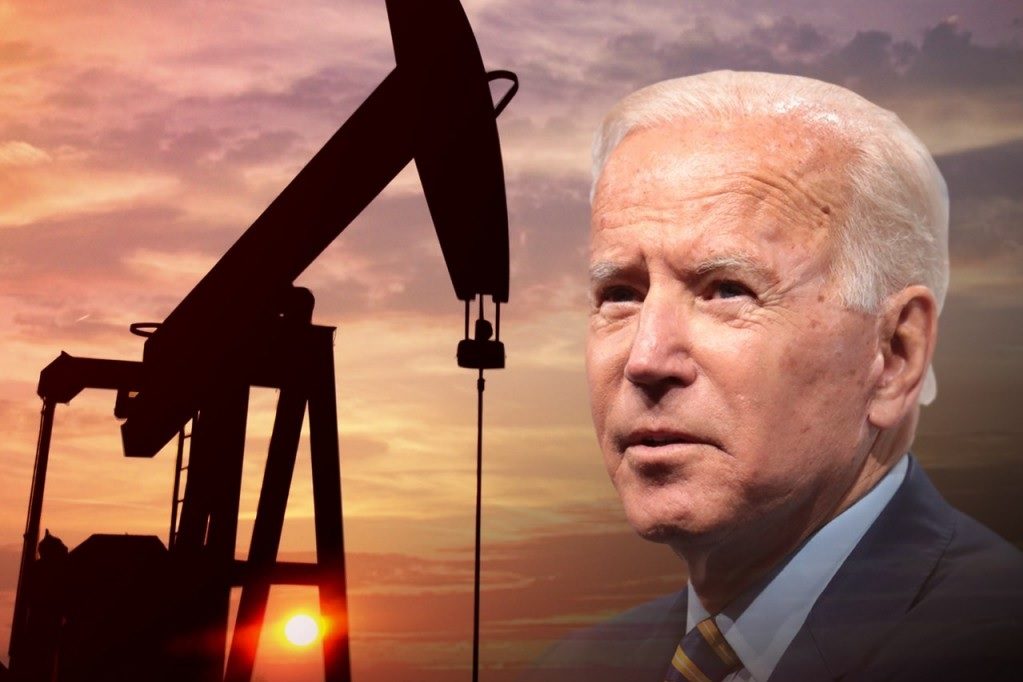
Biden Set To Jam Through Oil & Gas Reforms in 2022


IPAA (Jan. 5, 2022) – Thanks to the shale revolution, the United States went from energy scarcity to energy dominance. An abundance of natural gas produced domestically allowed the country to begin exporting liquefied natural gas (LNG) from the lower-48 in 2016 and within a few short years become a global LNG exporter.

As 2021 came to close, data show that the United States just became the world’s biggest exporter of LNG for the first time in history after a rapid rise the past five years.

According to Bloomberg:  “Output from American facilities edged above Qatar in December due largely to a jump in exports from the Sabine Pass and Freeport facilities, according to ship-tracking data compiled by Bloomberg. Cheniere Energy Inc. said last month that it achieved its first cargo from a new production unit at its Sabine Pass plant.”

Energy In-Depth:  #1 in LNG Exports

Forbes (Jan. 4, 2022) – Finally, the European Union has admitted the obvious: if decarbonization is the goal, natural gas and nuclear must be a big part of the continent’s energy mix. On Saturday, the European Commission released a statement which said “there is a role for natural gas and nuclear as a means to facilitate the transition towards a predominantly renewable-based future.” The move means that gas and nuclear could be classified as “sustainable investments” under certain conditions.

This is good news and a tacit acknowledgment by European policymakers of the energy disaster that is now shaking the region. But it’s also far too late in coming. Indeed, my immediate response was to ask: what the heck took them so long? If decarbonization is the goal, then natural gas and nuclear are the obvious ways forward. I have been making that point for more than a decade.

EU Finally Admits Natural Gas Is Key To Decarbonization