A New Day at IPANM


Newsroom

E&E News via Politico/Greenwire (April 24, 2024, Posted to IPANM Website on November 14, 2024) - A Trump administration Interior
E&E News via Politico (February 5, 2024, Posted to IPANM Website November 13, 2024) - A former Trump Interior Department
Roswell Daily Record (Nov. 9, 2024) - New Mexico Senate Republicans have elevated a longtime lawmaker from northwestern New Mexico
By Missi Currier, Jim Winchester, and Ben Shepperd | Nov 9, 2024 Published In Several State Newspapers (Nov. 9, 2024)
Washington Post via City Desk ABQ (Nov. 6, 2024) - President-elect Donald Trump’s return to the White House could reverse
CTEH Report (Nov. 1, 2024) - CTEH has releases a report summarizing their findings of existing data and studies on
Santa Fe New Mexico (Oct. 29, 2024) - Ozone pollution has been declining nationwide for decades. But there’s one location
Santa Fe New Mexican (Oct. 28, 2024) - The State Land Office wants to get top dollar for leasing prime
IPANM (October 8, 2024) - The Independent Petroleum Association of New Mexico (IPANM) offers our sincere condolences on the loss
The Hill (August 27, 2024) - A coalition of Republican-led states is asking the Supreme Court to halt the Biden

MEMBERS ONLY INFORMATION

You are currently in the IPANM Public Newsroom.
  MEMBERS: Please login below to access exclusive MEMBERS ONLY information, including

Regulatory updates
The IPANM Event Calendar
Information and Issues
IPANM Policy Positions
The IPANM Member Directory
Legislative Bill Tracking with BillTrack 50
Access to your IPANM Memberzone information page

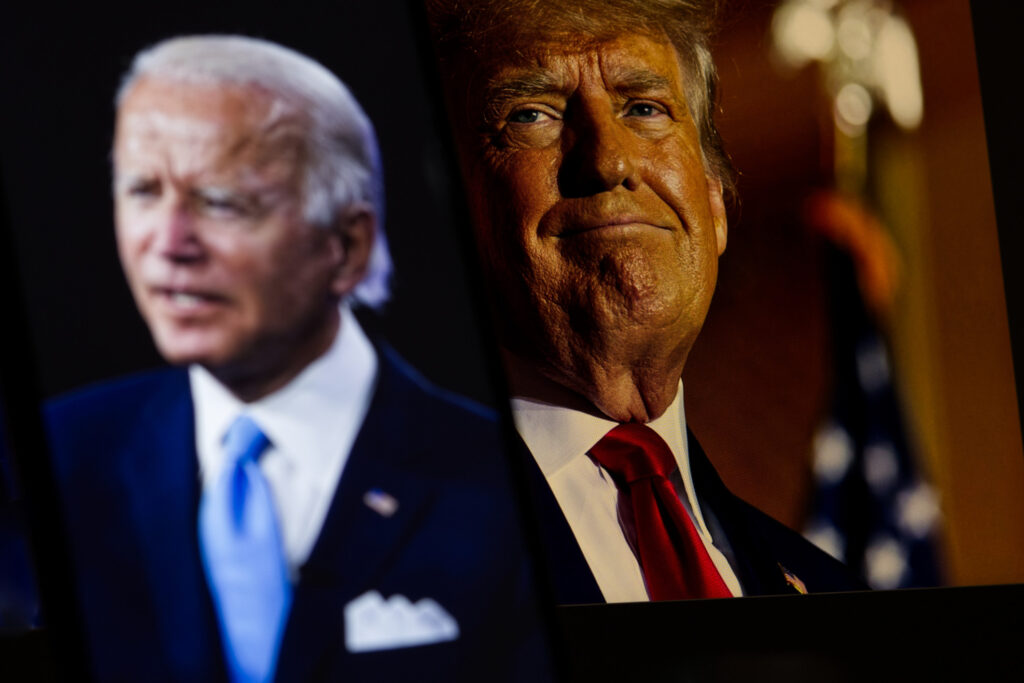
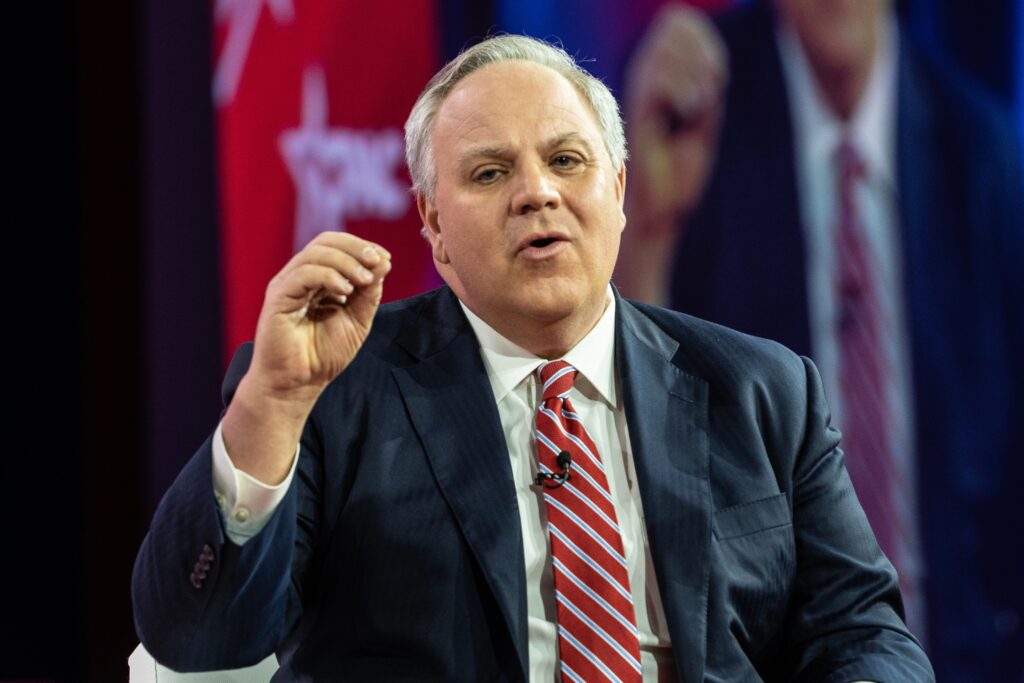
E&E News via Politico/Greenwire (April 24, 2024, Posted to IPANM Website on November 14, 2024) – A Trump administration Interior Department 2.0 — if it happens — could well turn out to be a reboot of the original.

Particularly at the department’s upper levels, Interior veterans of the first Trump administration are being cited by their former colleagues and others with skin in the game as strong potential candidates to serve again, if former President Donald Trump wins against President Joe Biden in November.

“I think there are going to be a lot of familiar faces that will want to go back,” said Cole Rojewski, Interior’s congressional liaison between 2019 and 2021. “I think a lot of people enjoyed their experience in the Trump administration.”

Many remain hesitant to publicly ‘fess up to specific Interior ambitions right now. But in interviews with former Trump administration officials, Capitol Hill veterans, GOP-connected lobbyists and others, a number of names keep popping up.

Those among the frequently mentioned range from former Interior Secretary David Bernhardt down to other political appointees now leading agencies in Republican-led states.

“I think there are some great people,” Rep. Ryan Zinke (R-Mont.), Trump’s first Interior secretary, told E&E News, adding that “there are a lot of areas where the president is going to need some help [and] there are some folks that served before and understand the issues.”

Zinke stepped down after two years in the top job in the face of ethics inquiries that he called partisan and unfounded. He was subsequently elected to a House seat that he had held previously. Zinke said both that he has “not been asked” about a possible second appointment and that a “president is hard to say no to.”

The former Navy SEAL officer further stressed that “there are a lot of variables” affecting the decisionmaking both of an incoming president and a potential appointee. Down-ballot election results, partisan balances in the House and Senate and the idiosyncrasies of Trump’s approach to team-building all play a role.

“There are a lot of people who [were] involved in his first term and played a significant role and made a great contribution. I’m sure they’d be keen on going back and completing the work that we began,” said former Trump-era Bureau of Land Management official William Perry Pendley.

For Full Article: Interior Alumni Eye Return For A Second Trump Term

E&E News via Politico (February 5, 2024, Posted to IPANM Website November 13, 2024) – A former Trump Interior Department official has one overarching recommendation for his old boss, should former President Donald Trump win a second bid at the White House: undo what President Joe Biden did.

That directive from William Perry Pendley — who served as the de facto head of Trump’s Bureau of Land Management from 2019 to 2021 — is part of a policy road map advanced by the Heritage Foundation along with dozens of conservative groups, called Project 2025, that would help Trump swiftly reestablish his policy prerogatives should he prevail in the November election.

The road map’s Interior section, written by Pendley, would reinstate some of the department orders from Trump’s first stint in the Oval Office that Biden reversed. Pendley’s plans include reopening most of the National Petroleum Reserve-Alaska to oil and gas developers, cutting new protections for migratory birds, and relocating the BLM national headquarters back to

Pendley called for a reinstatement of Trump-era secretarial orders, revoked by Interior Secretary Deb Haaland for being “inconsistent with protecting public health and the environment,” to limit National Environmental Policy Act reviews and expedite permitting for oil and gas developers.

For full story:  Trump Blueprint Would Revive Interior ‘Energy Dominance’ Push

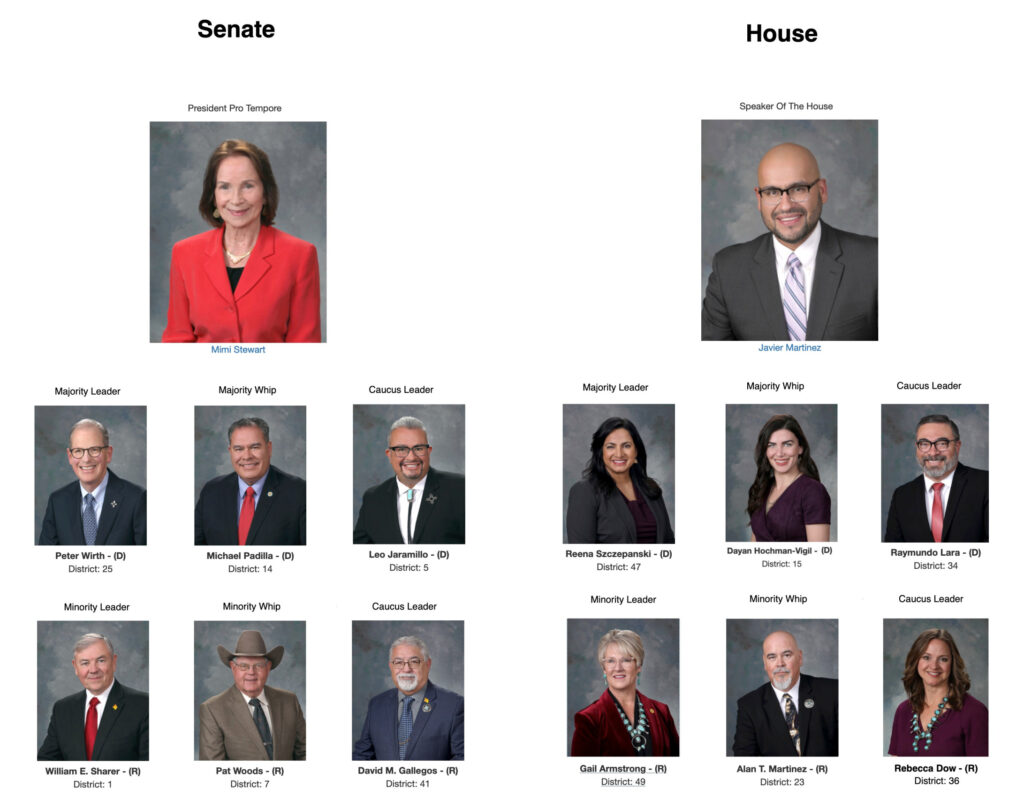
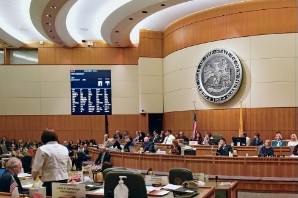
Roswell Daily Record (Nov. 9, 2024) – New Mexico Senate Republicans have elevated a longtime lawmaker from northwestern New Mexico to lead their ranks.

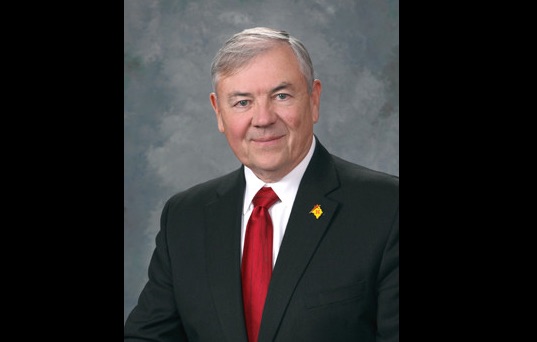
Senate Republicans elevated longtime Sen. William Sharer (R-Farmington) to the position of Senate Minority Leader, Sen. Pat Woods (R-Broadview) the Senate Minority Leader and Sen. David Gallegos (R-Eunice) Senate Republican Caucus Chair, according to a press release.

Sen-Elect Jim Townsend (R-Artesia), a house member who was elected Tuesday in Senate District 34, which includes Otero and Eddy counties, said the vote was taken during a call of Republican senators, where Sharer, Woods and Gallegos were each nominated and elected by acclamation to those leadership positions.

“There was a lot of unity within the caucus,” Townsend said.

Sharer replaces Sen. Greg Baca (R-Belen) who held the top post since 2021 but decided not to seek reelection in Senate District 29.

Following the leadership election, Sharer said that he was honored to be selected to lead the Senate Republican caucus.

“I intend to usher in an era of unity and conservative principles to the Senate Republican Caucus. The overtaxed and hardworking men and women will have a voice in this caucus,” Sharer said.

In the press release, Sharer also railed against “progressives” who he accused of creating a hostile business climate and that the education system in New Mexico must be “entirely reformed so that businesses will have skilled employees to hire.”

“We will act to bring New Mexico back from the brink with conservative solutions and leadership,” he said.

According to his campaign website, Sharer was born in Albuquerque and spent much of his life in Farmington, having graduated from Farmington High School. He is an alumnus of the New Mexico Military Institute in Roswell and New Mexico State University.

Sharer is a former U.S. Army officer who served as an infantry soldier and graduated from the Airborne Ranger and Special Forces School. He now operates a business in Farmington.

In 2000, Sharer was elected to the first of six terms in the Senate. Sharer represents Senate District 1, which encompasses San Juan County. He is currently the top-ranking member of the Senate Finance Committee, as well as the Legislative Finance Committee and the Interim Legislative Ethics Committee.

During the 30-day legislative session earlier this year, Sharer spearheaded opposition on the Senate floor to a proposal to make paid family and medical leave available to New Mexicans. Sharer and other opponents argued that the requirements would burden businesses. The measure did pass the Senate but was defeated in the House.

Republican senators also made Woods the number two Republican in the Senate, a position known as the minority whip. Woods has represented Senate District 7 since 2013. The district includes parts of Curry, Quay and Union counties.

Like Sharer, Woods is a member of the Senate Finance Committee and Legislative Finance Committee. He also sits on the Senate Legislative Council, the Transportation and Infrastructure Revenue Subcommittee and the Water and Natural Resources Committee.

In the press release announcing the results of the leadership election, Woods claimed that the rights of all New Mexicans have been under attack and that he and his colleagues must champion lower taxes, safeguarding what he calls “parental rights” and rights under the Second Amendment, and hold criminals accountable.

Republicans tapped Gallegos for the position of Republican Caucus chair. Gallegos was elected to the New Mexico House in 2013 and then the New Mexico Senate in 2020 in Senate District 41, which consists of Eddy and Lea Counties. He is the lead Republican on the Senate Conservation Committee and a member of the Senate Education Committee.

Additionally, Gallegos is a member of three interim committees: the Legislative Finance Committee, the Legislative Health and Human Services Committee and Radioactive and Hazardous Materials Committee.

Gallegos has been an ardent defender of the oil and gas industry and an opponent of abortion rights. In the press release, Gallegos said that Hispanics are conservative on political issues and need to be brought into the Republican camp.

“We wish to govern in a way that welcomes these voters,” he said. Gallegos also said the state needs to take action to secure the 184 miles of border that New Mexico shares with Mexico, which he calls “the number one issue right now for all New Mexicans.”

Currently, Democrats hold a 27 to 15 majority in the Senate, a margin that slightly shifted when Republicans had a net gain of one seat after voters went to the polls on Tuesday.

Unofficial returns show that Jay Block (R-Rio Rancho) won the Senate District 12 seat currently held by retiring veteran Sen. Gerald Ortiz y Pino (D-Albuquerque). The party also won a seat in Senate District 28, where Republican Gabriel Ramos will replace outgoing Sen. Siah Correa Hemphill (D-Silver City).

Democrats partially offset those gains by picking up Senate District 30, where Democrat Angel Charley was running unopposed for the seat now held by Sen. Joshua Hernandez (R-Bosque), who instead ran and won this year in Senate District 29.

The Senate will convene on Jan. 21 for its regular 60-day session.
By Missi Currier, Jim Winchester, and Ben Shepperd | Nov 9, 2024

Published In Several State Newspapers (Nov. 9, 2024) – The Oil Conservation Commission will consider changes to PFAS rules in New Mexico related to oil and gas use. This rulemaking request was made by WildEarth Guardians and New Energy Economy.

The New Mexico oil and gas trade associations and these environmental nonprofits (eNGOs) agree — PFAS should not be utilized in oil and gas production. However, we differ on what we see as fearmongering tactics that utilize half-truths and purposely ignore the best available science and PFAS facts. A common tactic used by eNGOs is playing on people’s fears in the pursuit of a much more sinister agenda — to shut down one of the most valuable industries in our beloved state.

PFAS are everywhere and are safely used in your everyday life. PFAS are a diverse class of thousands of fluorinated substances that have been used extensively in industrial, commercial and consumer applications, including electronics, gaskets and seals, friction reducers, outdoor gear and clothing, and nonstick coatings for household products.

PFAS are not intentionally used in fracking in New Mexico. Some PFAS are ubiquitous in the environment and come from sources such as municipal water, surface water and private well water. So, while your municipal water may have PFAS, so might the water used in fracking — and because of that, opponents of oil and natural gas claim fracking uses PFAS. This is a half-truth that conveniently leaves out the scientific research on PFAS in water sources.

Opponents of the industry are implementing additional scare tactics. For example, they are claiming oil and gas operators are not required to disclose their proprietary chemicals and they are actually trying to hide PFAS in their operations. These are false claims.

The New Mexico Hydraulic Fracturing Disclosure mandates all oil and gas operators report the composition of the hydraulic fracturing fluid used during hydraulic fracturing operations. FracFocus records everything from the trade name to the supplier to the purpose of the ingredient and maximum concentration. Proprietary ingredients are recorded in the national database in a way that does not waive recognized trade secret protections. Translation: The industry is already required by law to report their chemical usage and ensure that PFAS are not intentionally utilized while protecting proprietary information and trade secrets that keep American companies competitive.

Industry opponents continue to use fearmongering and your tax dollars to engage in an unnecessary and costly state rulemaking process to address an issue that is simply not an issue.

As leaders in the energy sector, we are committed to ensuring New Mexico remains a safe and healthy place for all residents. We will continue working with regulators and researchers to ensure the safest and cleanest operations based on the full, factual picture from the best available science. Most important, we are committed to working with facts, not fear.

Missi Currier is the president and CEO of the New Mexico Oil and Gas Association; Jim Winchester is the executive director of the Independent Petroleum Association of New Mexico; Ben Shepperd is the president of the Permian Basin Petroleum Association.


Washington Post via City Desk ABQ (Nov. 6, 2024) – President-elect Donald Trump’s return to the White House could reverse the gains the United States has made in fighting global warming, experts said, by cementing his plans to unleash domestic fossil fuel production, dismantle key environmental rules and scale back federal support for renewable energy and electric vehicles.

It has also raised fears amongU.S. allies and even some major energy executives who warn a U.S. exit from global climate efforts will hurt American industry as the rest of the world shiftsaway from fossil fuels.

Trump’s election creates “a very long pathway for fossil fuels,” Ben Cahill, an energy scholar at the University of Texas at Austin, said in a phone interview Wednesday. “Investors will feel the outlook is brighter. The industry will be under less pressure.”

While energy was not a focal point of a presidential campaign consumed by immigration, abortion and the future of democracy, it is a policy area where presidents have the authority to make sweeping changes.

Trump – who has dismissed climate change as a “hoax” and courted oil company executives throughout the campaign – has outlined plans that have the potential to boost oil and gas profits as well as greenhouse gas emissions that threaten the world’s climate goals.

Trump is expected to immediately take aim at the Paris climate accord. His plan to withdraw the United States from the pact – as he did during his first term – comes at a critical moment for the compact aimed at limiting warming to 1.5 degrees Celsius (2.7 degrees Fahrenheit)above preindustrial levels. Climate scientists are already warning the planet is on track to blow pastthat target: on Wednesday the European climate agency Copernicus announced that 2024 is assured to be the first calendar year where the global temperature rise has averaged 1.5 degrees Celsius.

Trump has planned a flurry of other actions to bolster U.S. oil and gas companies. He is expected to ease a suite of restrictions on the oil industry’s emissions of methane, a potent greenhouse gas. And he will probably cancel the Biden administration’s pause on permits for new liquefied natural gas export projects, clearing the way for the industry to build billions of dollars worth of infrastructure that could increase U.S. emissions and keep gas flowing to other nations for decades to come.

Oil companies welcome the radical policy shift. “Energy was on the ballot, and voters sent a clear signal that they want choices, not mandates, and an all-of-the-above approach that harnesses our nation’s resources and builds on the successes of his first term,” Mike Sommers, president of the American Petroleum Institute,said in a statement.

What Trump’s victory could mean for oil companies and climate change policy

CTEH Report (Nov. 1, 2024) – CTEH has releases a report summarizing their findings of existing data and studies on the health impacts of well production and whether setbacks are necessary or provide any measurable benefits.  Here are some key conclusions:

Leveraging Best Available Science for New Mexico

  • Health outcome studies of assumed exposures are largely inconsistent, lack cohesiveness of
    findings, and cannot be reliably used to show causal evidence that O&G emissions cause specific
    adverse health outcomes.
  • Measured exposure data collected in communities near oil and gas development in NM and other
    states, along with formal risk assessments, have shown chemicals NOT to been at levels of concern
    for adverse health risks.
  • Performance of additional environmental measurement and risk assessment analysis in NM would
    reduce scientific uncertainty and public concern for public health impacts.
  • A policy mandating a prescriptive, “one-size-fits-all” setback is NOT a public health policy based on
    best available science.
  • A process using established frameworks would allow best available science to inform policy to
    protect New Mexico citizens.

Setbacks: Decision Making Using Best Available Science (CTEH Report)

Water & Natural Resources Committee Handouts

Santa Fe New Mexico (Oct. 29, 2024) – Ozone pollution has been declining nationwide for decades. But there’s one location seeing an increase — and it’s here in New Mexico.

At a Monday meeting of the legislative Water and Natural Resources Committee, a Colorado researcher presented findings that Loving, in southeastern New Mexico’s oil and gas powerhouse Eddy County, has seen an increasing amount of ozone pollution. According to presenter Detlev Helmig, the ozone pollution was above National Ambient Air Quality Standards, and the village’s concentration of other pollutants was higher than that of comparison monitoring sites in Colorado. The average concentration of benzene was between nine and 11 times higher than the sites in Colorado, Helmig said.

According to the U.S. Centers for Disease Control and Prevention, long-term benzene exposure can damage bone marrow and decrease red blood cells, which can set off a cascade of symptoms. Ground-level ozone pollution can irritate asthma and other lung diseases.

The panel discussed the potential health benefits of adopting setbacks in the oil and gas industry from schools, homes and other structures. Jozee Zuniga, a 22-year-old Eddy County resident and daughter of an oil worker, pushed for setbacks from schools.

“Currently, there are only 800 wells within a mile of schools,” said Zuniga, who is an organizer for Youth United for Climate Crisis Action. “This is 800 wells out of about 70,000 productive wells in the state. We’re asking that the state prohibit all wells around schools and ask the new production to occur at least a mile from the schools. This is not a huge ask. It is a small ask but will do a lot to protect the health of the children in New Mexico.”

Not everyone who spoke Monday agreed. Michael Lumpkin, a toxicologist for Arkansas-based consulting company CTEH, said health outcome studies about oil and gas exposure were “inconsistent” and “thus unreliable to show causal evidence that oil and gas emissions cause specific adverse health outcomes in communities that have been studied.”

Lumpkin even said he would be comfortable living and raising his children near oil and gas production facilities. ”There’s an opportunity here now to leverage [the] best available science to inform the best setback distance policies for New Mexico,” Lumpkin said.

But Colin Cox, staff attorney for the Center for Biological Diversity, pointed to other studies that linked proximity to oil and gas production to low birth weights and cancer hospitalizations. ”They all show health risks from living too close to oil and gas production,” Cox said.

It’s the second time setbacks have been debated by a legislative committee in as many weeks. Last week, Legislative Finance Committee staff presented an analysis on the fiscal impact of proposed setbacks, which found the state would lose out on about $800 million by 2035.

But that doesn’t include existing health costs borne by New Mexicans, which by one estimate based on 2016 oil and gas production was between $624.4 million and $1.5 billion, although LFC staff said the amount paid by the state would likely be smaller. The study made waves last week as legislators debated how to balance the economic impact of the industry with public health.

On Monday, committee chairman Rep. Matthew McQueen, D-Galisteo, criticized the analysis focused on the costs and included very little on the potential benefits of setbacks. “I hear from both sides we need more information about the impact,” McQueen said. “I think [we] can’t just ignore the public health costs, [or] the public health benefits that will be included and realized by providing some level of protection to our students.”

Greg Bloom, assistant commissioner for mineral resources at the State Land Office, questioned if the expected fiscal impact on the state would be affected if different setback amounts were limited. Last year, State Land Commissioner Stephanie Garcia Richard issued a moratorium on new oil and gas leases within one mile of schools.

Lawmakers discuss oil, gas pollution in southeastern New Mexico

Santa Fe New Mexican (Oct. 28, 2024) – The State Land Office wants to get top dollar for leasing prime oil and gas land in New Mexico. If that sounds familiar, it’s probably because Monday marked the fourth time in recent years the agency has pushed for an increase in oil and gas royalties. Greg Bloom, assistant commissioner of mineral resources for the office, made the pitch once again Monday during a meeting of the Legislature’s Water and Natural Resources Committee in Mescalero.

The pitch comes after lawmakers failed to pass a bill aiming to increase oil and gas royalties during the 2024 legislative session. In response, State Land Commissioner Stephanie Garcia Richard announced in March the office would no longer lease the most valuable tracts of land until the Legislature plays ball, a pause that is still in effect. The current maximum rate, which Bloom called “antiquated,” hasn’t increased since the era of disco, falling behind the rates on state and private land in Texas as well as private land rates in New Mexico.

Increasing rates for the best tracts is anticipated to increase state revenues by a billion dollars in a 25-year period, including providing additional millions for the State Land Office and the Legislative Finance Committee and adding between $1.5 billion and $2 billion to the Land Grant Permanent Fund — which helps fund education needs — by 2050. The office is proposing increasing the maximum rates from 20% to 25%, with the higher rates only applicable to new leases (Editor’s Note: Higher Royalty Rates would also apply to leases that SLO cancels and then relists for bid, which is a tactic the SLO is aggressively using.)

Currently, about 99% of the land likely to include high-value tracts has already been leased. “It’s difficult to put an exact number on the amount of land we are talking about, as new parcels become available as leases expire and other leases go into effect,” State Land Office spokesperson Joey Keefe wrote in an email to The New Mexican. “However … there are not many premium lands to be had.”The majority of state land lessees are out-of-state companies. Just 1% of the leaseholders are based in New Mexico, with Colorado, Texas and Oklahoma companies making up the rest.

The office could be missing out on one-time bonus payments as a result of the delay in leasing the best tracts, Keefe wrote. Tracts are “nominated” for oil and gas leasing by private companies. If the office decides those tracts are viable, they go out to bid.

The winning bidder pays a bonus payment that “typically can range from tens of thousands of dollars up to a few million dollars.” “Currently, we are withholding the tracts that are nominated by industry that we determine would attract a 25% royalty rate on the open market,” Keefe wrote.

He added, “By withholding premium tracts temporarily, we are missing out on some of those initial payments. But the Commissioner is willing to forgo a few million dollars now if it potentially means billions more for school kids in the long run.”

Sen. Joe Cervantes, D-Las Cruces, said more analysis is needed to determine whether that strategy will pay off.

“Holding back on these leases, waiting for the Legislature, increasing royalty rates … that makes some sense,” Cervantes said. He added, “On the other hand, while you’re setting those leases, you’re depriving yourself of revenue and business in, perhaps, a market condition that exists today. It may not exist next year … as prices fall.”

State Land Office Pushes for Increased Royalty Rates — Again

IPANM (October 8, 2024) – The Independent Petroleum Association of New Mexico (IPANM) offers our sincere condolences on the loss of New Mexico State Senator John Arthur Smith, former Chair of the Legislative Finance Committee.

In reaction to the sad news, IPANM Executive Director Jim Winchester released the following statement:

“Senator John Arthur Smith will be remembered as one of the most respected legislators in the history of the New Mexico state legislature. He never flinched to give effusive praise and credit to New Mexico’s independent producers as the backbone of the oil & gas industry, and he fought tirelessly to defend the industry against frivolous legislation that would have disproportionately hurt our member companies.

As much as he will forever be respected for his political savvy, he was an even better individual of integrity who was generous with his time with not only our members, but anyone who walked into his office in Santa Fe.”

Several local publications have reported on the passing, including in today’s Albuquerque Journal.

The Hill (August 27, 2024) – A coalition of Republican-led states is asking the Supreme Court to halt the Biden administration’s effort to cut methane from oil and gas production.

The 23 state attorneys general and Arizona’s GOP-led Legislature are asking the Supreme Court to block the implementation of an Environmental Protection Agency (EPA) rule that requires oil and gas wells to control leaks of planet-warming methane.

Their appeal comes after a lower court declined to do so. It marks the latest in a string of efforts from Republican-led states to block pollution and climate rules through the high court.

The states argued the EPA overstepped its authority in the rule. They argued that although the federal government is allowed to set emissions limits, the rule is too prescriptive to the states in how to achieve methane emissions cuts.

Red States Ask Supreme Court to Halt EPA’s Methane Rule