A New Day at IPANM


Newsroom

New Mexico Environment Department (October 2, 2020) -  The Summary of Initial Public Input on Produced Water presents NMED’s compilation
Carlsbad Current Argus (September 26, 2020) - Eddy County Public Works Director Jason Burns has a major goal to complete
Carlsbad Current Argus (Sept. 21, 2020) - The discussion on how to manage New Mexico’s liquid oilfield waste recently entered
Carlsbad Current Argus (Sept. 21, 2020) - A facility that would inject liquid oilfield waste underground could be coming to
American Enterprise Institute (September 19, 2020) - The following article outlines the dangers of a fracking ban in the United
OneNewsNow (September 14, 2020) - The facts clearly prove that fracking and natural gas use is the leading cause of
Albuquerque Journal (September 11, 2020) - President Donald Trump has made domestic oil and gas production a centerpiece of his
Rio Grande Foundation (Sept. 2, 2020) - IPANM Board President Ryan Davis joins the Rio Grande Foundation's Paul Gessing to
Albuquerque Journal (August 30, 2020) - Oil companies in the Permian Basin of Texas and New Mexico need millions of
George Sharpe, IPANM Member (August 25, 2020) - IPANM Member, Columnist, Energy Instructor and Investment Manager at Merrion Oil & Gas

MEMBERS ONLY INFORMATION

You are currently in the IPANM Public Newsroom.
  MEMBERS: Please login below to access exclusive MEMBERS ONLY information, including

Regulatory updates
The IPANM Event Calendar
Information and Issues
IPANM Policy Positions
The IPANM Member Directory
Legislative Bill Tracking with BillTrack 50
Access to your IPANM Memberzone information page

New Mexico Environment Department (October 2, 2020) –  The Summary of Initial Public Input on Produced Water presents NMED’s compilation and careful analysis of over 760 messages NMED received from the public between October 11, 2019, and March 3, 2020.  NMED received these messages in response to information NMED posted to its produced water webpage and information NMED presented during five public engagement meetings held in October and November 2019.

Summary of Initial Public Input on Produced Water

Carlsbad Current Argus (September 26, 2020) – Eddy County Public Works Director Jason Burns has a major goal to complete nearly two dozen road construction projects in Eddy County when the current fiscal year ends in late June of next year.  Burns said county road crews have been keeping up a rapid pace for the past few months on road projects in the northern and southern portions of Eddy County.

Oil & Gas Industry Helps to Better Roadways

Carlsbad Current Argus (Sept. 21, 2020) – The discussion on how to manage New Mexico’s liquid oilfield waste recently entered into the state’s political arena with the passage of the Produced Water Act, and a research consortium which in January began studying how waste water from oil and gas operations could potentially be reused in other industries such as agriculture.

During a panel discussion on Thursday hosted by the New Mexico Association of Commerce and Industry, New Mexico State Rep. Nathan Small (D-36), who sponsored the Act said, said oil and gas waste water continued to present an opportunity to New Mexico as the state continues struggling with drought conditions.

The Produced Water Act clarified the definition of produced water – a mixture of water brought to the surface with oil and natural gas from underground shale and flowback from hydraulic fracturing – and established that the Oil Conservation Division would regulate its management within the industry while any future outside use would overseen by the New Mexico Environment Department.

“There’s all this water coming up and being re-injected in disposal wells. We think there’s a real opportunity,” he said. “I think we need to be very mindful of this incredible opportunity. We need to make sure that as we develop rules across these agencies that they don’t negatively impact the innovation within the industry.”

Small said some environmental groups expressed concerns about produced water being reused outside of the industry as many feared it was toxic and not treatable. He said such applications would not be allowed until they were supported by scientific research.

“There’s folks who want to see reuse outside the oilfield and folks who look at it very skeptically. We’re going to have to fight to make sure this research is able to continue and build momentum,” he said.

“I want to make sure New Mexico is known for putting science first and works with industry. My hope is that we continue even though as there are diverse perspectives, that there is leadership that says we have common interests.”

Mike Hightowner, program director at the New Mexico Produced Water Consortium said the research was especially important in the state’s worsening arid climate.

He said the state was about 150 years into a 300-year drought and that produced water could provide a solution to worsening water scarcity.

“We’ve got another century of what I would call unprecedented arid and dry conditions from a rainfall perspective,” Hightower said. “If you’re looking at areas of New Mexico that are already arid, water resources are going to be a big concern. I think we need to put produced water into that context.”

The water management industry in New Mexico saw significant growth in the last year, said Jennifer Bradfute, senior attorney with Marathon Oil.

She said state initiatives such as the Produced Water Act and the research consortium provided incentives for more investment from companies in the state.

“That wouldn’t have happened without market-based legislation that encourages investment,” Bradfute said. “You have certainty that you can keep your proceeds, you have certainty about liability. In a year where we have seen the market experience incredible volatility, we still see companies that want to invest in this.”

Carlsbad Current Argus (Sept. 21, 2020) – A facility that would inject liquid oilfield waste underground could be coming to the Delaware Basin in New Mexico after state regulators recently approved the needed permits for the facility.

Milestone Environmental Services announced the completion of the permitting process via the New Mexico Oil Conservation Division on Tuesday for a slurry injection facility located near Jal — the company’s first facility in New Mexico.

Milestone currently owns and operates similar facilities throughout the Permian Basin region in Texas in Midland, Pecos and Orla which also hosts a landfill for solid oilfield waste.

Milestone Chief Executive Officer Gabriel Rio said the company’s method of slurry injection targets deep, underground areas up to 6,000 feet deep that are isolated by geologically protected areas.

Slurry, which is mostly made of excess crude oil and drilling mud, has too much liquid to be disposed of in landfills without costly processes that typically involve mixing dirt with the liquid to solidify and leaves the waste on the surface to potentially emit air-polluting materials.

It also has too many solids for disposal through a saltwater disposal facility usually used for produced water and would also be too costly to treat and recycle, Rio said.

He said Milestone’s method of deep disposal injection provides a cost-effective and environmentally safe way to isolate the waste underground.

“It helps reduce cost, but it also has a very strong environmental benefit,” he said. “Instead of that material being put on the surface, that stuff is not going to be volatized and go into the air. It’s going to be sequestered a mile below the water table. It enables operators to reduce their environmental impact.”

Rio said the state was an important place for the company to operate as the industry recently boomed in the southeast region, and tighter environmental regulations could make a stronger market for waste management than in Texas.

In New Mexico, operators are barred from disposing of waste on-site, unlike Texas, and often must use a third party such as Milestone at a separate location.

“New Mexico will be a very important extension for us,” Rio said. “Environmental regulations are tighter, so New Mexico needs to be able to process more volumes of these waste streams.

“There’s also a lot of drilling activity in New Mexico. It’s been one of the more resilient areas. The northern Delaware (Basin) in New Mexico seems to be one of the more productive areas, despite the environmental regulations.”

But as the COVID-19 pandemic took hold of New Mexico and the world, global fuel demands slumped and the market for oil saw historic declines.

This led to a reduction in operations throughout the U.S. and in the Permian.

As of Sept. 11, New Mexico had 46 active rigs, down from 108 a year ago, per the latest data from Baker Hughes.

Texas was down to 105 rigs, records show, from 430 in September 2019.

The Permian Basin lost 295 rigs in the last year, from 419 a year ago to 124 on Sept. 11, the data showed.

“The impact on the industry has been profound,” Rio said. “We’ve certainly been affected just like everyone else in the oilfield. We’ve had to reduce costs and let people go. The oilfield is in a tough spot and I think it will take a few years for the industry to recover.”

But he said he was optimistic for the facility as a needed service for the oil and gas operations still ongoing in the region amid the pandemic.

“We don’t believe the rig county is going to go any lower than it is,” Rio said. “If we can make this facility work during these market conditions we should be able to when things return to normal.”
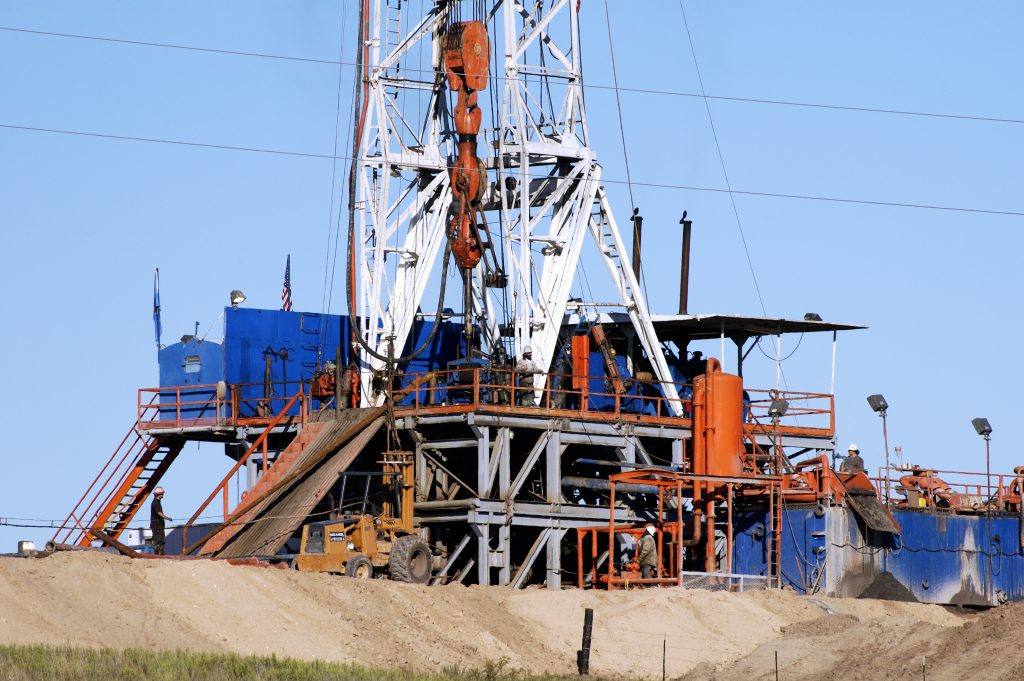
American Enterprise Institute (September 19, 2020) – The following article outlines the dangers of a fracking ban in the United States. The shale revolution has been one, if not the biggest contribution to US energy security, national security, and the United States’ position in the world. Were that to be demolished, the United States would lose the leverage needed to keep problematic countries like Russia and Iran in check. There are inconvenient truths that the climate-change zealots would prefer to ignore. The fact is there are real tensions between our national security interests and the environmental interests of the left. The shale revolution has produced a moment of American energy dominance, safety, and world security.  To mindlessly disarm that security would produce consequences that far too many environmentalists are simply choosing to ignore.

Fracking Is On The Ballot in November


OneNewsNow (September 14, 2020) – The facts clearly prove that fracking and natural gas use is the leading cause of emissions declines (yes, we said emissions DECLINES) in Oil & Gas producing basins throughout the world. Keep that in mind as fossil fuels will be discussed by political candidates between now and November 3rd.

With the presidential election just weeks away, a spokesman for a research, education, and public outreach campaign focused on getting the facts out about responsibly developing America’s onshore energy resource base says voters can expect to hear a lot more about natural gas between now and November 3rd.

Natural Gas & Fracking Contribute To Significant Emissions Reductions

Albuquerque Journal (September 11, 2020) – President Donald Trump has made domestic oil and gas production a centerpiece of his administration, moving the United States closer to energy independence. His position means the country is much less at the mercy of other oil-rich regimes but has attracted criticism for not focusing more on renewables.  Joe Biden, the former vice president who seeks to replace Trump in the White House, has a very different view on fossil fuels, pushing a version of the Green New Deal in a world grappling with climate change.

What Biden’s Energy Plan Means for New Mexico

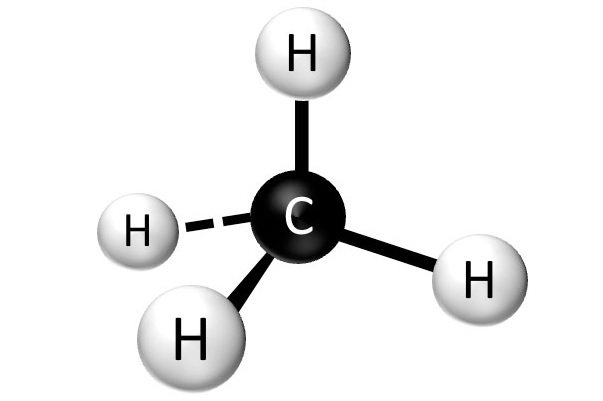
Rio Grande Foundation (Sept. 2, 2020) – IPANM Board President Ryan Davis joins the Rio Grande Foundation’s Paul Gessing to discuss the state’s proposed Methane rules. IPANM continues to work with the state to draft rules that will not be overly burdensome on independent producers while also reducing methane emissions. Click on the links below to here from Ryan Davis!

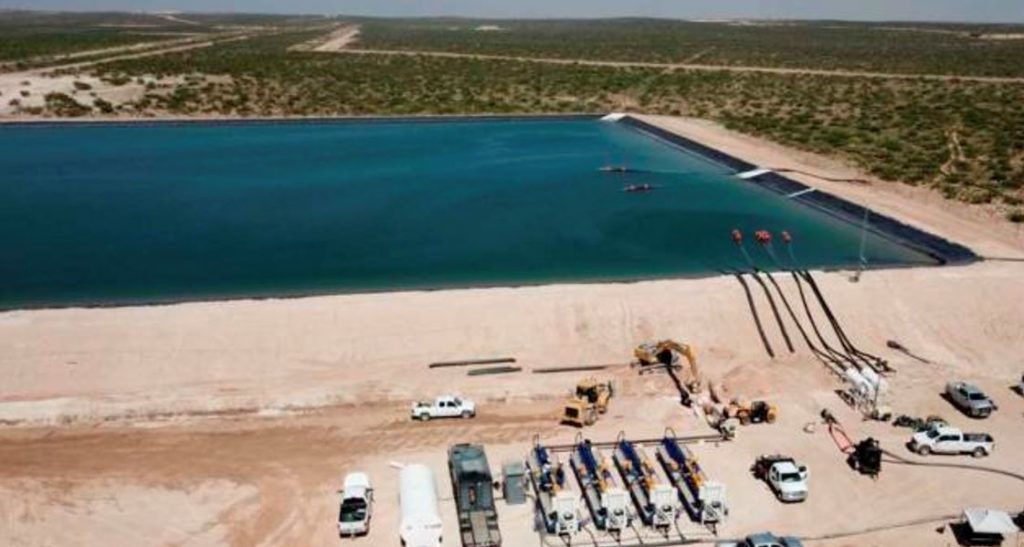
Albuquerque Journal (August 30, 2020) – Oil companies in the Permian Basin of Texas and New Mexico need millions of gallons of water to retrieve petroleum.  At the same time, the city of Lubbock, Texas, spends $1 million each year to dispose its treated wastewater at two city farms.  Enter Palisade Pipeline, a Houston-based company with plans for a 100-mile pipeline to transport wastewater from Lubbock to the Permian Basin.

Lubbock Wastewater Headed to the Permian Basin


George Sharpe, IPANM Member (August 25, 2020) – IPANM Member, Columnist, Energy Instructor and Investment Manager at Merrion Oil & Gas in Farmington recently released his latest educational video entitled Weighing the Evidence of Climate Change – A Fact-Based Case for a Rational Path Forward.

Please take a few minutes to watch this informative video, and then share the link (https://www.youtube.com/watch?v=xYAVf0U6wv4&feature=youtu.be) with your friends and co-workers!