A New Day at IPANM


Newsroom

EnergyNow.com (January 26, 2024) - The Biden administration on Friday halted the approval of new licenses to export US liquefied
Rio Grande Sun (January 25, 2024) - Editorial Submitted By Jim Winchester, IPANM Executive Director New Mexico Governor Michelle Lujan Grisham
IPANM (October 10, 2023) - Recent efforts by activist groups pushing state regulators to increase arbitrary setbacks through new statewide
Santa Fe New Mexican (January 19, 2024) - A Senate Finance Committee hearing about an agency budget turned testy Friday
Oilprice.com (Jan. 4, 2024) - The United States has become the world's largest exporter of liquefied natural gas, surpassing Qatar
NY Post (December 11, 2023) - The Biden administration made two virtue-signaling proclamations at last week’s COP28 conference in Dubai that
IPANM's statement in response to Saturday's release of revised federal Methane Rules is being released in conjunction with a consortium
Washington Examiner (Oct. 29, 2023) - Despite fear-mongering to the contrary, there is no evidence that seepage of fracking fluids,
IPANM (Oct. 25, 2023) -  In response to the announcement by State Sen. Stuart Ingle that he will step down at Noon today, after 38-years
IPANM (Oct. 18, 2023) - IPANM announces an exclusive opportunity for our members, as the New Mexico Society of CPAs

MEMBERS ONLY INFORMATION

You are currently in the IPANM Public Newsroom.
  MEMBERS: Please login below to access exclusive MEMBERS ONLY information, including

Regulatory updates
The IPANM Event Calendar
Information and Issues
IPANM Policy Positions
The IPANM Member Directory
Legislative Bill Tracking with BillTrack 50
Access to your IPANM Memberzone information page

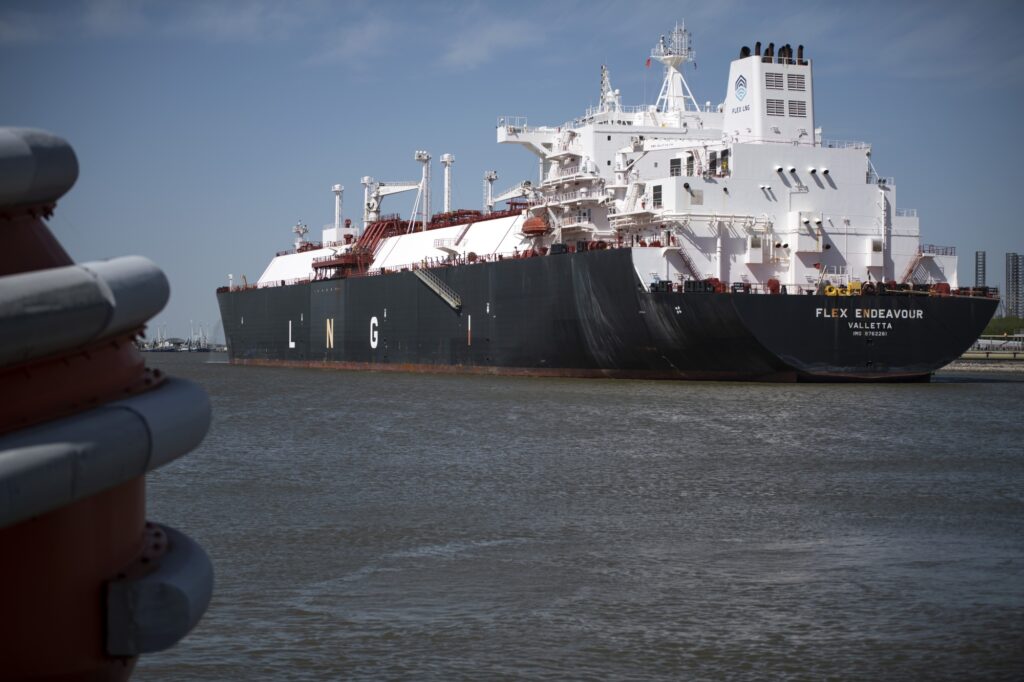
EnergyNow.com (January 26, 2024) – The Biden administration on Friday halted the approval of new licenses to export US liquefied natural gas while it scrutinizes how the shipments affect climate change, the economy and national security — a moratorium likely to disrupt plans for billions of dollars in projects.

The Energy Department study will build on an existing analysis that underpins the agency’s review of proposals to send more natural gas to European, Asian and other countries that are not US free-trade partners. New exports are now vetted on a case-by-case basis to see whether they are in the public interest.

“We will take a hard look at the impacts of LNG exports on energy costs, America’s energy security and our environment,” President Joe Biden said in a statement. “This pause on new LNG approvals sees the climate crisis for what it is: the existential threat of our time.”

The review, which won’t affect previously granted authorizations or immediately shake the US status as the world’s top LNG exporter, will be conducted by the Energy Department’s national labs.

It could stretch for months before a report is made available for public comment. Senior administration officials who briefed reporters on the plan would not put a firm timeline on the process, saying only that it would be done expeditiously and take some months.

The pause could have implications for more than a dozen proposals now awaiting review at the Energy Department, including ventures planned in Louisiana by Commonwealth LNG and Energy Transfer LP.

The issue is politically fraught for Biden — forcing him to balance an array of competing priorities. A months-long review would effectively foreclose decisions on additional LNG exports until after the Nov. 5 presidential election.

At the same time, Republicans — including former President Donald Trump — have accused Biden of making a priority of his climate agenda at the expense of domestic jobs and other economic concerns.

On Wednesday, Senate Republican leader Mitch McConnell asserted that limiting LNG exports would hinder the US goal of combating Russia’s influence as a global gas supplier.


Politics and Energy: Biden Freezes Approvals to Export Gas, Imperiling Major Projects Worth Billions of Dollars

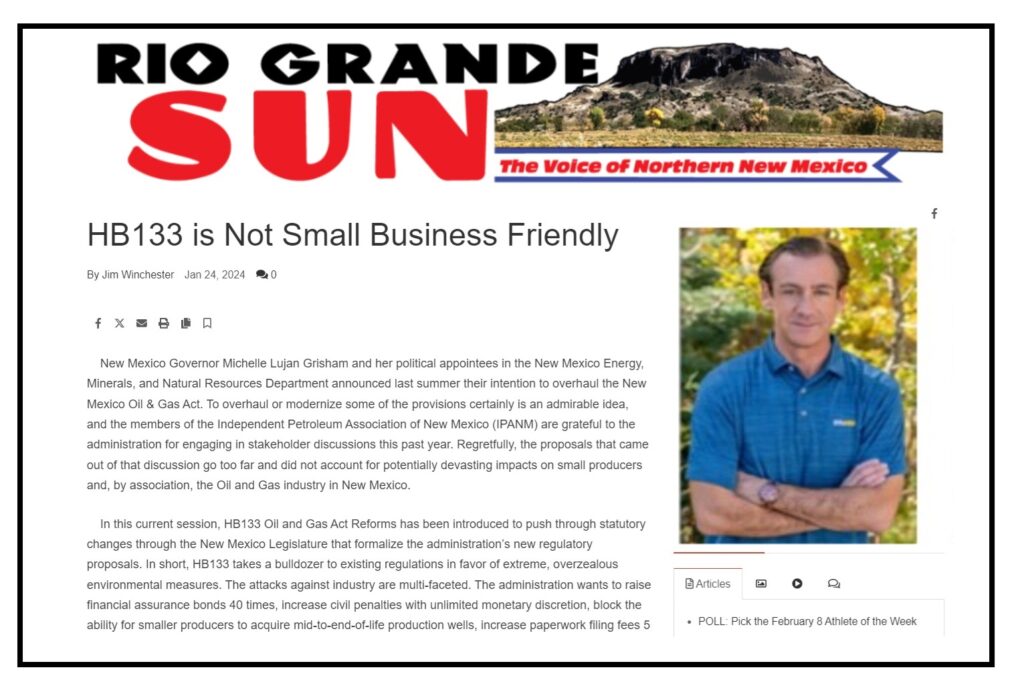
Rio Grande Sun (January 25, 2024) – Editorial Submitted By Jim Winchester, IPANM Executive Director

New Mexico Governor Michelle Lujan Grisham and her political appointees in the New Mexico Energy, Minerals, and Natural Resources Department announced last summer their intention to overhaul the New Mexico Oil & Gas Act. To overhaul or modernize some of the provisions certainly is an admirable idea, and the members of the Independent Petroleum Association of New Mexico (IPANM) are grateful to the administration for engaging in stakeholder discussions this past year. Regretfully, the proposals that came out of that discussion go too far and did not account for potentially devasting impacts on small producers and, by association, the Oil and Gas industry in New Mexico.

In this current session, HB133 Oil and Gas Act Reforms has been introduced to push through statutory changes through the New Mexico Legislature that formalize the administration’s new regulatory proposals. In short, HB133 takes a bulldozer to existing regulations in favor of extreme, overzealous environmental measures. The attacks against industry are multi-faceted. The administration wants to raise financial assurance bonds 40 times, increase civil penalties with unlimited monetary discretion, block the ability for smaller producers to acquire mid-to-end-of-life production wells, increase paperwork filing fees 5 times, adopt more restrictive gas capture rules than the already existing “strictest” state methane rules in the country, establish one half-mile setback zones around all wells, and restrict freshwater use to potentially unworkable levels.

Any one of these provisions, if accepted, has the potential to unleash the state’s activist regulators on select producers to the point of forcing them out of business. Those multi-generational, state-based companies who can survive may need to make the hard decision that oil and gas production in New Mexico is simply too burdensome, and head to other states.

For an administration that proclaims to be small business friendly, the extreme regulatory proposals in HB133 run counter to that claim. HB133 needs more analysis to determine the true impact on small New Mexico producers, overall Oil and Gas industry in New Mexico, and the 50 percent of New Mexico’s state budget that depends on Oil and Gas revenue. Urge your local legislators to kill the very destructive bill HB133.

Jim Winchester is the Executive Director of the Independent Petroleum Association of New Mexico

IPANM: HB133 Will Inflict Serious Damage To Small Producers
 

IPANM (October 10, 2023) – Recent efforts by activist groups pushing state regulators to increase arbitrary setbacks through new statewide regulations in New Mexico are based on falsehoods and debunked studies. Additional recent media reporting in New Mexico has also not adequately told the whole story regarding the disinformation campaign about setbacks being perpetuated by anti-oil & gas groups.  For that reason, IPANM has issued the following statement:

“IPANM supports existing municipal setback regulations in New Mexico that work best for the communities and populations they serve, and oil & gas operators already adhere to those restrictions out of respect of citizens’ health concerns.

Proposals that call for unnecessary setbacks from thousands of feet to upwards of miles are arbitrary, pushed by activist groups with motives to end all oil & gas use, and discompassionate to those who may depend on development royalties to stay out of poverty, such as what is occurring with denied access to leases around Chaco Canyon.

Activist groups repeatedly cite their own unaccredited studies as fact, point to other studies that purport illnesses that cannot be proven, or repeatedly push out findings have already been disavowed by top health officials.”  –Jim Winchester, Executive Director, IPANM

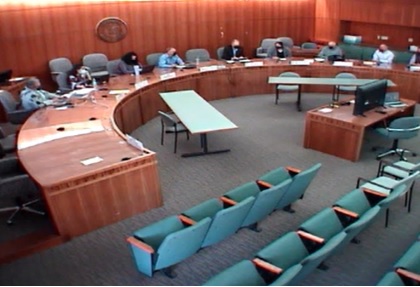
Santa Fe New Mexican (January 19, 2024) – A Senate Finance Committee hearing about an agency budget turned testy Friday as legislators ripped into the potential effects of a House bill dealing with New Mexico’s oil and gas industry.

During Friday’s meeting, Republican Sens. William Sharer of Farmington and Sen. Crystal Diamond Brantley of Elephant Butte put up a spirited defense of the industry in response to proposed legislation that would require all new wells to placed at least 2,250 feet — not quite a half-mile — from a health care and correctional facilities, multifamily residential buildings, homes and schools.

There is also a clause to set new wells back from natural bodies of water by either 300 or 660 feet.

What was supposed to be a hearing focusing on the budget of the state Energy, Minerals and Natural Resources Department quickly turned into an interrogation on how the proposed changes — which could go into effect later this year and include some exceptions — would affect the future of the oil and gas industry, which provides about 40% of the state’s revenues.

The roughly 45-minute back-and-forth between the two senators and Dylan Fuge, acting Cabinet secretary for the state’s Energy, Minerals and Natural Resources Department, focused on a single point of the 25-page House Bill 133. The byplay provided an opening salvo in what may well be a longer legislative battle over changes to oil and gas industry practices.

Many lawmakers have said oil and gas is responsible for the roughly $13 billion windfall the state is now working with to craft a budget.

Sharer, whose combative style can suddenly segue into recitations of poetry and references to American history, charged the legislation “is designed to destroy New Mexico,” though it was unclear if he was talking about the setback proposal or the entire bill. “One-hundred thousand people will lose their jobs. The economy of New Mexico will be destroyed.”

Fuge said the proposal is not intended to kill off the fossil fuel industry, adding as oil wells age, their emissions often get worse and threaten the health of people and the nearby environment.

“Wells are like people: They’re all different,” Fuge said. “Some are near water bodies that are fine and there’s another one in the San Juan Basin where the disposal pit is right next to an arroyo, and the pit is about to collapse into the arroyo.”

He said the exception clause in the provision could allow every new well operator to sidestep the proposed rule if their operations meet the bill’s requirements.

“We do not believe there is a well that will be impacted. There may be wells that require an exception,” he said. “You could build it right next to the school if standards were met for exception. I would not advise that.”

Brantley said the measure sends a bad message to new and longtime oil and gas operators in the state who may be adhering to all state environmental laws to keep the industry as clean as possible.

“With one sweep, we’re going to blanket the industry by saying, ‘You’re all bad apples. You’re all dirty,’” she said.

HB 133 is one of several bills related to changing or cleaning up the oil and gas industry in a state that is focused on reducing all carbon emissions by 2045.

Besides new rules for oil well placements, House Bill 133 calls for increased fines and higher royalty payments, among other measures.

The bill was scheduled to be heard in the House Energy, Environment and Natural Resources Committee on Saturday in the state Capitol, along with two other related bills.

Senate Republicans fire back at oil and gas bill

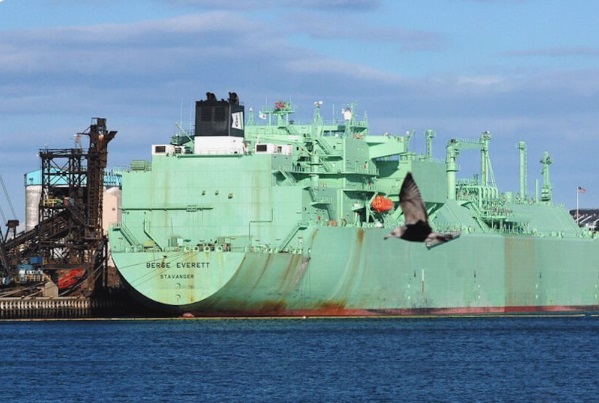
Oilprice.com (Jan. 4, 2024) – The United States has become the world’s largest exporter of liquefied natural gas, surpassing Qatar and Australia for the first time. This development is at odds with the Biden administration’s goal of becoming the world’s climate leader.

Bloomberg data compiled through Dec. 31 shows the US exported 91.2 million metric tons of LNG in 2023. This is a record for the Western country and was made possible by the restart of the Freeport LNG export terminal in Texas, which was closed for months after an explosion rocked the facility in June 2022.

The US surpassed Qatar, previously crowded ‘king of LNG exporters’ in 2022 after export volumes dropped for the first time since 2016 by 1.9%. Australia ranked second.

  • The U.S. exported a record 91.2 million metric tons of LNG in 2023.
  • Key factors contributing to this rise include the reopening of the Freeport LNG terminal and increased output from Venture Global LNG’s Calcasieu Pass facility.
  • The majority of U.S. LNG exports in 2023 were shipped from Gulf Coast terminals to European destinations like the Netherlands, the UK, and France.

Most US LNG exports depart from terminals across the Gulf Coast with top destinations in the Netherlands, the UK, and France for the first half of 2023.

The US only joined the LNG export scene in 2016 amid an abundance of shale gas and growing demand for gas globally.

More than a year later, the US stands as the largest beneficiary of the destruction of Russia’s Nord Stream pipeline system under the Baltic Sea to Europe.

U.S. Overtakes Qatar to Become World’s Top LNG Exporter


NY Post (December 11, 2023) – The Biden administration made two virtue-signaling proclamations at last week’s COP28 conference in Dubai that it says will help save the planet from climate change. The policies aren’t likely to change the planet’s temperature by even one-tenth of a degree, but they might just destroy the 21st-century American industrial economy as we know it. First, Team Biden announced it will stop production of all new coal plants in the United States. This comes on the heels of President Biden’s Environmental Protection Agency saying this year it would impose new power plant emission regulations that are virtually impossible for coal plants to comply with.

Federal Methane Rule Is Pledge To Shut Down U.S. Electric Power


IPANM’s statement in response to Saturday’s release of revised federal Methane Rules is being released in conjunction with a consortium of state and national oil & gas trade associations, simply denoted as the Producers Associations. Please see our joint statement below:

“IPANM and the Producers Associations will be evaluating the Environmental Protection Agency’s (EPA) federal New Source Performance Standards revisions (Subpart OOOOb) and its Emissions Guidelines (Subpart OOOOc) mandating new state existing source regulations. The new source requirements will impose complicated new requirements, and the 2022 proposed existing source requirements have been estimated to lead to the shutdown of 300,000 of the nation’s 750,000 low production wells, wells that are essential to our country’s energy production. The Producer Associations support the cost-effective management of methane and volatile organic compounds emissions related to the oil and natural gas production industry that achieve sound environmental benefits while reflecting the significant differences between aspects of the industry. The Producer Associations are comprised of national, regional, and state associations that represent the full range of oil and natural gas producers from large publicly traded companies to small privately held companies.”

The Producers Associations group is made up of the following national and state trade associations:

Independent Petroleum Association of America (“IPAA”)
Arkansas Independent Producers and Royalty Owners (“AIPRO”)
Domestic Energy Producers’ Alliance(“DEPA”)
Eastern Kansas Oil & Gas Association (“EKOGA”)
Illinois Oil & Gas Association (“IOGA”)
Gas & Oil Association of West Virginia (“GO-WV”)
Independent Petroleum Association of New Mexico (“IPANM”)
Indiana Oil and Gas Association (“INOGA”)
International Association of Drilling Contractors (“IADC”)
Kansas Independent Oil & Gas Association (“KIOGA”)
Kentucky Oil & Gas Association (“KOGA”)
Michigan Oil and Gas Association (“MOGA”)
National Stripper Well Association (“NSWA”)
North Dakota Petroleum Council(“NDPC”)
Ohio Oil and Gas Association (“OOGA”)
The Petroleum Alliance of Oklahoma (“The Alliance”)
Petroleum Association of Wyoming (“PAW”)
Pennsylvania Independent Oil & Gas Association (“PIOGA”)
Texas Alliance of Energy Producers (“Texas Alliance”)
Texas Independent Producers & Royalty Owners Association (“TIPRO”)
Western Energy Alliance

Washington Examiner (Oct. 29, 2023) – Despite fear-mongering to the contrary, there is no evidence that seepage of fracking fluids, oil, or natural gas from fracking wells contaminate water sources.  Since 2010, there have been more than two dozen peer-reviewed studies and assessments from experts determining the fracking process is not a systemic threat to groundwater. Some of these come from prestigious research institutions like Yale University, Stanford University, and the Massachusetts Institute of Technology. Others come from nonprofit agencies, and others still come from state and federal agencies.

Evidence of Fracking’s Safety Is Stronger Than Ever


IPANM (Oct. 25, 2023) –  In response to the announcement by State Sen. Stuart Ingle that he will step down at Noon today, after 38-years in the New Mexico State Senate, IPANM Executive Director Jim Winchester offered the following statement:

“Sen. Stuart Ingle has long been one of the most distinguished legislators in the history of New Mexico. His support of the oil & gas industry has been unwavering as evidenced through his strong and consistent advocacy on the many benefits of the industry to the State of New Mexico. Sen. ingle worked hard behind the scenes on important industry legislation for nearly 40-years, which included his many years as the Senate Minority Leader. His no-nonsense approach rightfully garnered the respect of many on both sides of the aisle. We congratulate him on his decision to step back from his work in Santa Fe. While his wise and steady hand in the state senate will be missed, IPANM knows he will continue to be a loyal advocate for independent producers in New Mexico.”

–Jim Winchester
Executive Director, Independent Petroleum Association of New Mexico


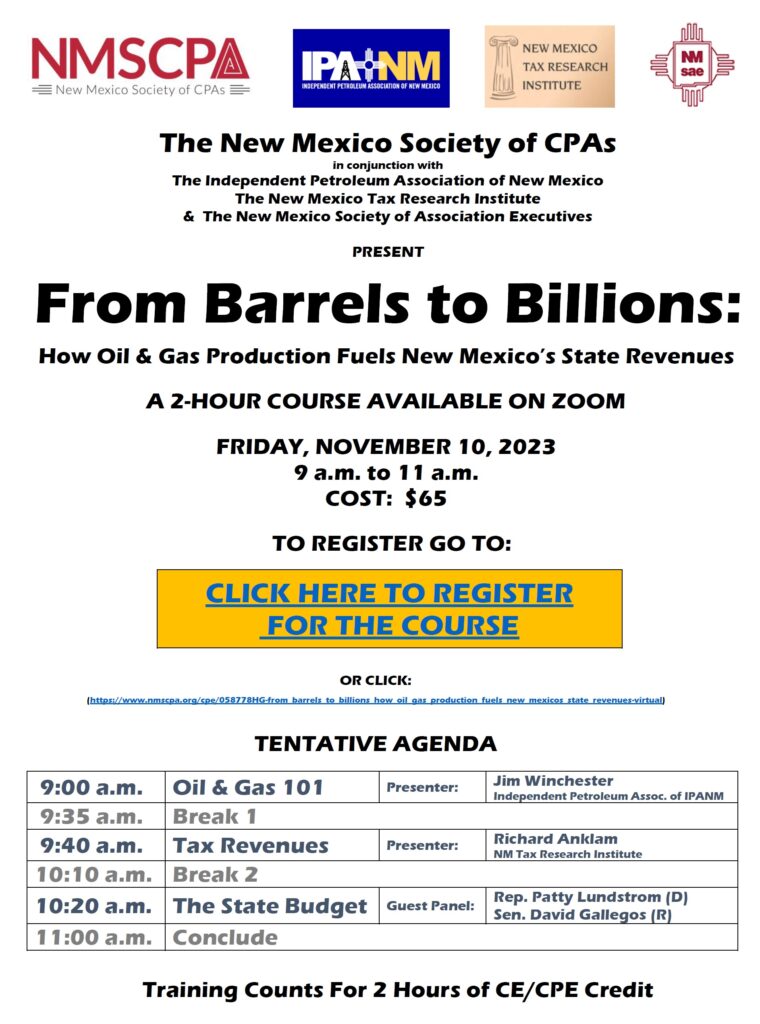
IPANM (Oct. 18, 2023) – IPANM announces an exclusive opportunity for our members, as the New Mexico Society of CPAs present “From Barrels to Billions: How Oil & Gas Production Fuels New Mexico’s State Revenues. All information is below: