A New Day at IPANM


Newsroom

ABQ Journal (March 16, 2024) - We have to give the governor credit for consistency. In six State of the
SANTA FE, NM (March 12, 2024) — Four Republican members of the New Mexico House of Representatives who sit on
Domestic Producers Energy Alliance (March 11, 2024): Today, the Domestic Energy Producers’ Alliance (DEPA) and Texas Alliance of Energy Producers
Ron Stein (March 9, 2024) - The more than 6,000 products in today’s societies are based on crude oil, which
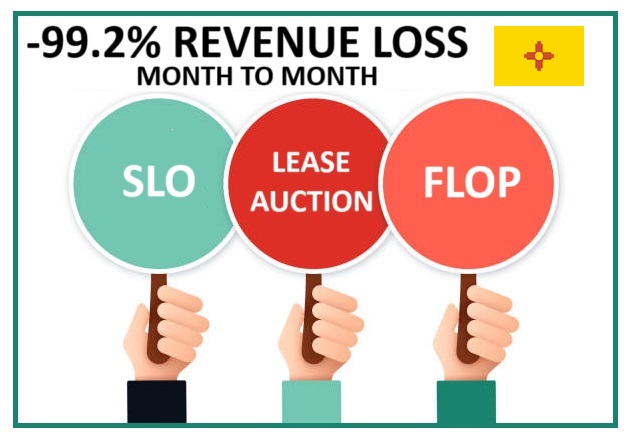
IPANM (Mar. 7, 2024) - The New Mexico State Land Office has abruptly notified the oil & gas industry that
IPANM (Mar. 6, 2024) | PDF - The following statement has been released by Jim Winchester, Executive Director of the Independent Petroleum Association
Jim Winchester, Executive Director of the New Mexico Independent Petroleum Association (IPANM) |  March 2, 2024 | PDF Format Recent
The Henderson News (Feb. 29, 2024) - Twenty years ago the United States imported more than half of the oil we
IPAA (February 16, 2024) - America’s oil and natural gas producers are innovating to produce more oil and gas than
Call it a tale of two energy bills. A bill that would have made the most significant changes in decades to

MEMBERS ONLY INFORMATION

You are currently in the IPANM Public Newsroom.
  MEMBERS: Please login below to access exclusive MEMBERS ONLY information, including

Regulatory updates
The IPANM Event Calendar
Information and Issues
IPANM Policy Positions
The IPANM Member Directory
Legislative Bill Tracking with BillTrack 50
Access to your IPANM Memberzone information page

ABQ Journal (March 16, 2024) – We have to give the governor credit for consistency.

In six State of the State speeches and counting, Gov. Michelle Lujan Grisham has never acknowledged the economic importance of the state’s oil and gas industry, or how property, royalty, sales, income and severance taxes from the industry are making many of her “cradle-to-career” social programs possible.

Lujan Grisham kept her hitless streak alive Tuesday when she gave a post-session legislative update to the Greater Albuquerque Chamber of Commerce at the Sandia Golf Club.

Attendees were promised an overview of the governor’s initiatives to combat crime, improve education and grow the state’s economy and workforce. However, once again, the governor didn’t mention the main driver of the state’s economy, oil and gas, nor our 92,000 energy workers.

ABQ Journal: Governor Refuses To Acknowledge Oil & Gas


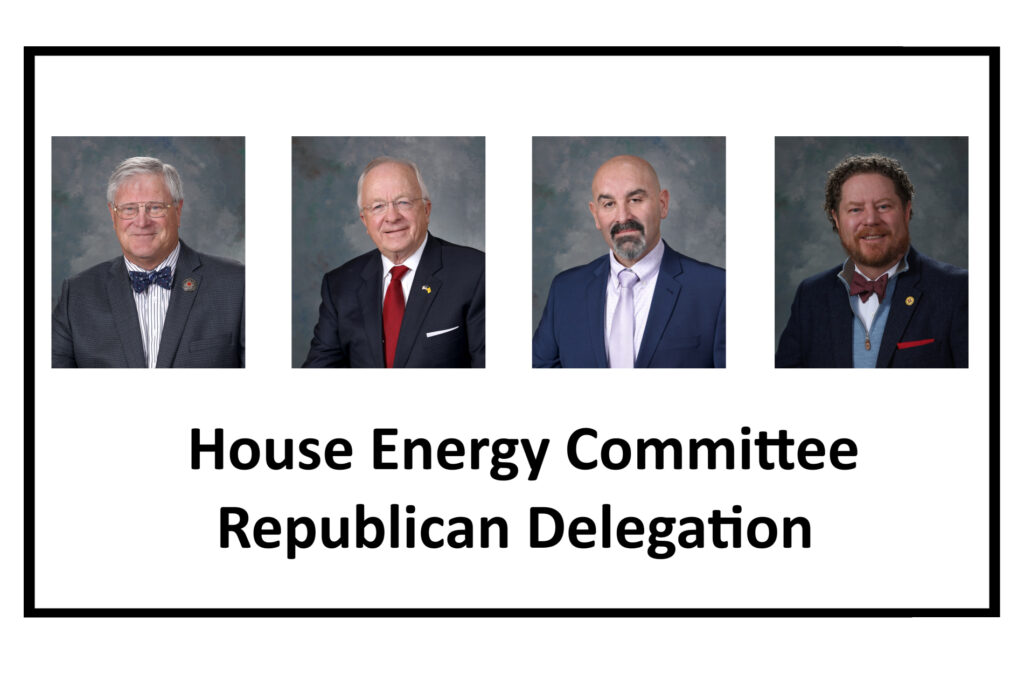
SANTA FE, NM (March 12, 2024) Four Republican members of the New Mexico House of Representatives who sit on the House Energy, Environment and Natural Resources Committee today sent a letter to State Land Commissioner Stephanie Garcia Richard expressing their strong opposition to a recent announcement that the State Land Office was placing an indefinite hold on new lease sales of the state’s “best tracts” of trust land for oil and natural gas development.  This moratorium on new lease sales, according to Commissioner Garcia Richards, is due to the failure of the Legislature to enact HB 48 during the recent session that would have increased the state’s oil and natural gas royalty rate from 20 percent to 25 percent.   State Representatives Jim Townsend (R- Artesia), Larry Scott (R-Hobbs),  Rod Montoya (R-Farmington), and Jared Hembree (R-Roswell) called this lease sale moratorium unacceptable as the commissioner is placing her personal political agenda ahead of the needs of schools, hospitals, universities and other public institutions who receive a portion of the revenues generated by these lease sales.  

“It is a dereliction of Commissioner Garcia Richard’s fiduciary responsibility to withhold these lease sales and cause worthy and essential public institutions to lose millions of dollars in operating funds simply because she did not get what she wanted from the Legislature,” said Rep. Townsend.   Rep. Scott added, “Commissioner Garcia Richard seems to think that it’s now her job to overrule a decision made by the Legislature not to increase the royalty rate, plus she has inserted unnecessarily politics into the trust land leasing process that should always be conducted in a nonpartisan manner.”

“Not only are millions of dollars of lease revenues going to be lost due to the commissioner’s action, but she has opened the door to potential unintended consequences that could reduce future lease bids for these “best tracts” which could have a negative effect on workers and local communities who depend upon oil and natural gas exploration for their economic well-being,” stated Rep. Montoya.   Rep. Hembree continued by saying, “Commissioner Garcia Richard must realize it is essential for the State Land Office to manage these trust lands in the best interest of all New Mexicans, and this lease moratorium is no way to get the Legislature to change its reluctance to increase this royalty rate.”

The letter calls on Commissioner Garcia Richard to reverse this ill-advised decision to ensure that no area of New Mexico or any public institution is punished because of her failure to convince the Legislature that a royalty increase is necessary.  The commissioner has advanced this royalty increase proposal numerous times since 2019, and each time legislators have rejected it.

A copy of the news release can be accessed here, and the copy of the actual letter to the State Land Office is also available.

# # #


Domestic Producers Energy Alliance (March 11, 2024): Today, the Domestic Energy Producers’ Alliance (DEPA) and Texas Alliance of Energy Producers filed suit to block the Securities and Exchange Commission’s new rule requiring publicly traded companies to make onerous disclosures about greenhouse gas emissions and other climate-related issues.

“The SEC’s mandate is to ensure that companies disclose important information so that investors can evaluate the health of companies. That’s not a license to publicly shame companies for business practices they don’t like,” said Luke Wake, an attorney at Pacific Legal Foundation. “Congress did not authorize the SEC to demand that companies report environmental or any other controversial issues completely unrelated to finance.”

Jerry Simmons President/CEO of DEPA said “We are thrilled to have the Pacific Legal Foundation representing us in this fight to push back at these government agencies and the dramatic regulatory overreach from their Congressionally mandated purpose. Congress authorized the SEC to protect investors from fraud, facilitate capital formation, and require only material disclosures related to investing. Simmons said “The new rule (almost 900 pages long) does nothing to help investors get a greater return or make any difference in the climate. This is simply to force a political and ideological position onto US companies.”

DOMESTIC ENERGY PRODUCERS’ ALLIANCE SUES SECURITIES EXCHANGE COMMISSION ON CLIMATE RULE


Ron Stein (March 9, 2024) – The more than 6,000 products in today’s societies are based on crude oil, which now supports:

  • Electricity that is being generated by hydro, nuclear, coal, and natural gas.
  • Airports that accommodate the 20,000 commercial aircraft, and more than  50,000 military aircraft.
  • Shipping terminals that accommodate 50,000 merchant ships.
  • Hospitals.
  • Communications.
  • Electronics.

All the above did not exist a few short centuries ago, before the 1800’s. We’ve become a very materialistic society over the last 200 years, and the world has populated from 1 to 8 billion because of all the products and different fuels for planes, ships, trucks, cars, militaries, and space programs that did not exist before the 1800s.

As technologies advance for more reduced carbon electricity generation and use, there will be more requirements for critical minerals such as copper, lithium, nickel, cobalt, and rare earth elements that are essential components in many of today’s rapidly growing electricity technologies – from wind turbines and electricity networks to electric vehicles. Demand for these minerals is growing quickly as electricity transitions gather pace. All those exotic minerals and metals only produce electricity, as they CANNOT make any PRODUCTS used in today’s economy.

Most government officials and policymakers are unaware that ALL electricity came AFTER the discovery of oil, starting with the light bulb made from oil. All electrical generation from hydro, coal, natural gas, nuclear, wind, and solar are ALL based on the products, components, and equipment made with PRODUCTS made from oil derivatives manufactured from crude oil.

It seems that we’re living in a time where intelligent CONVERSATIONS are silenced so that stupid people won’t be offended.

Read more of this excellent article:  A SIMPLE FACT: Electricity Came AFTER the Discovery of Oil

IPANM (Mar. 7, 2024) – The New Mexico State Land Office has abruptly notified the oil & gas industry that all future state premium tract lease offerings will be suspended indefinitely until a 25% royalty increase is approved by the state legislature. The maneuver comes as a result of the State Land Office not being able to pass their own legislation to raise royalty rates up to 25% on state leases. State legislators whom IPANM have spoken with since Thursday’s announcement were not aware of the State Land’s Offices demands on the Legislature to take action.

As a result of the notification, IPANM Executive Director has issued the following statement:

“The State Land Office has unilaterally decided to cut off future revenues to state beneficiaries and the general fund by suspending new leasing of premium tracts. IPANM strongly opposes this action especially considering the decision was abruptly announced without any consideration of the economic impact to all New Mexicans.”

IPANM has strongly opposed any increase to state royalties due to the fact that New Mexico is already the highest taxed state on oil & gas operations. An increase to 25% from the existing 20% would continue to put New Mexico small producers at an economic disadvantage in overall operating costs. While the state land office likes to point out that Texas’ royalty rates are at 25%, it is not an “apples to apples” state comparison given the higher overall operating costs for New Mexican operators.

IPANM is currently evaluating the legality of the Land Commissioner’s actions and will keep members informed of developments.

Announcement of Premium Leasing Suspension 


IPANM (Mar. 6, 2024) | PDF – The following statement has been released by Jim Winchester, Executive Director of the Independent Petroleum Association of New Mexico regarding Governor Michelle Lujan Grisham’s line-item veto of the bipartisan Stripper Well Tax Exemption from HB252 Tax Package.

“Governor Michelle Lujan Grisham continues her assault on small-business independent producers with her veto of the Stripper Well Tax Provision, which had bipartisan backing. This carefully crafted tax treatment would have provided measurable benefits to the environment by substantially reducing emissions from small producers’ low-production wells. The provision had the added benefit of increasing state revenues and protecting jobs provided by locally owned companies.”

–Jim Winchester, IPANM Executive Director

IPANM would like to thank Senator Ron Griggs of Alamogordo for his efforts in sponsoring the bill.

Please refer to IPANM’s March 2, 2024 Opinion Editorial for more detailed information on the benefits of the Stripper Well Tax Exemption.

Carlsbad Current Argus: Governor Lujan Grisham Vetoes Oil & Gas Well Tax Exemption

This content is for members only.

Please login here! If you have any questions about your membership, please email megan@ipanm.org.

The Henderson News (Feb. 29, 2024) – Twenty years ago the United States imported more than half of the oil we consumed each day. Today, primarily through innovative technology developed by the American oil and natural gas industry, the U.S. exports more oil than it imports. In 2004, the U.S. imported 13.7 million barrels of oil per day (b/d) while producing 5.2 million b/d, resulting in a negative 8.5 million b/d. Currently, the U.S. imports just 6 million b/d while producing 13.3 million b/d, resulting in the U.S. becoming a net exporter of oil. Natural gas also has become a net exporter with liquefied natural gas (LNG) traveling to Japan to the west and Europe to the east and many other countries.

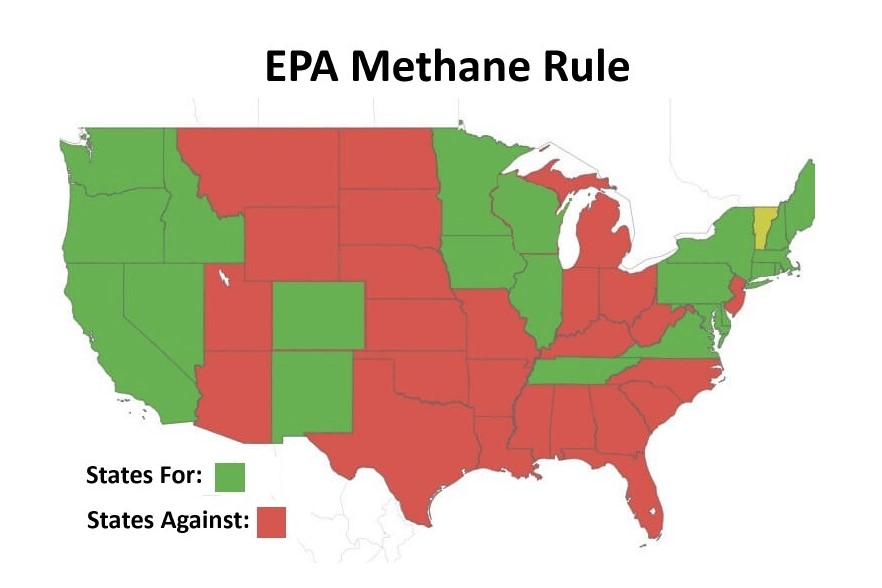
The industry began experimenting with new technology in the 1990s that involved drilling vertically into shale formations and then drilling horizontally and then hydraulic fracturing the shale to free the oil and gas to flow to the surface. Around 2008 the rush to drill using this new technology took off. However, some of the politicians in Washington, D.C. are using the regulatory weapon against the oil and gas industry. President Joe Biden has used his power in an attempt to make it more difficult and expensive for the oil industry. The Biden administration recently implemented a complicated new methane tax, proposed new emission standards for vehicles, limited exploration on public lands, and proposed limiting LNG exports.

The American Petroleum Institute (API) this week released a new national poll demonstrating widespread concern over Washington’s approach on energy policy. The poll, conducted Feb. 9-13 of 1,132 registered voters, found 86% believe producing oil and natural gas here in America helps make our country more secure against action by countries such as China and Russia. Also, the survey found 84% believe producing more oil and natural gas in the U.S. could help lower energy costs for American consumers and small businesses. Two out of three American voters say the country is on the wrong track on energy policy, and following the administration’s recent pause on LNG export permits, the poll found nine in 10 Americans believe the U.S. should continue to supply natural gas to our allies overseas, API said. With recent reports that the administration plans to impose a de-facto ban on new gas-powered vehicles, the poll found that the majority of Americans (75%) would oppose such regulations restricting consumer choice.

“While the U.S. continues to lead the world in energy production, it’s clear the American people see that misguided policy choices today can sow the seeds of tomorrow’s energy crisis,” API President and CEO Mike Sommers said.

“Whether it’s partisan decisions to restrict American natural gas as a source of strength around the world and good-paying jobs here at home, or regulatory plans to dictate the type of cars consumers can drive—voters on both sides of the aisle know we are on the wrong path on energy policy. With much at stake for our economy and national security, it’s time for Washington to change course and forge a bipartisan path that embraces all reliable and affordable American energy,” Sommers said.

IPAA (February 16, 2024) – America’s oil and natural gas producers are innovating to produce more oil and gas than ever while generating less emissions and bringing reliable, affordable energy to Americans and our global allies. In its latest short-term energy outlook, the Energy Information Administration estimated that U.S. crude oil production reached “an all-time high in December of more than 13.3 million barrels per day.”

That production helps stabilize prices for consumers. Oil and natural gas are sold on global markets, and prices can be affected by events or decisions — frequently by bad actors — on the other side of the world. However, having strong U.S. output helps reduce the shock of those actions for Americans.

Our record level of energy production does face threats — specifically by the U.S. government, whose leaders have sought to shut down oil and gas producers with an all-of-government approach, but the industry pushes forward.

Last year, the oil and natural gas sectors continued to innovate and reach record-breaking levels of production. After becoming a net energy exporter in 2019, the United States has emerged as a behemoth in the global energy market, hitting prolific levels of oil and natural gas production and exports in the past year. U.S. liquefied natural gas had a tremendous 2023, with the United States becoming the top LNG exporter in the world.

These record-breaking levels of production have not come at the expense of Americans, as some claim. On the contrary, record energy production levels have successfully met domestic and international demand, providing crucial energy security at home and abroad, all while keeping prices stable.

The American oil and natural gas industry continues to prioritize environmental progress. The workers producing the energy we use daily live in homes surrounded by the oilfield, breathing the air and drinking the water from aquifers above the oil reservoirs where they produce; thus, they are highly motivated to preserve and protect the environment for today and for future generations.

Data from the Environmental Protection Agency showed stunning drops in methane emissions across the board in oil- and natural gas-producing basins. The … Permian (Texas and New Mexico) had 32% less emissions. All show that even with record production, U.S. operators continue to produce oil and gas responsibly and with an eye toward methane reduction.

Voluntary initiatives like the Environmental Partnership, representing nearly 70% of U.S. onshore oil and gas operations, showcase the industry’s commitment to responsible operations through innovation and collaboration.

Considering the uncertain regulatory environment, these accomplishments and innovations are even more impressive. Nowhere has this been more apparent than in the Biden administration’s illegal actions regarding onshore and offshore leasing.

In the Gulf of Mexico, offshore production provides the lowest carbon barrels of oil, generates millions of dollars in funding for parks and recreation programs, and supports hundreds of thousands of jobs across every state. Yet the administration released an offshore plan 450 days late that only offered three lease sales over the next five years — the fewest in history.

Onshore, it’s a similar story. There are widespread administrative efforts to limit access for development despite disagreement from local groups, including tribes. The president and leaders who control the Senate want to limit capital access for producers, add new taxes and increase federal regulations. …

The bottom line is a thriving American oil and gas industry means increased energy and economic security at home and abroad and progress toward global emission reduction goals. While administration regulatory hurdles add challenges, U.S. oil and natural gas producers continue to produce record-setting, responsible oil and natural gas.

Point: Record Production Means Energy and Economic Security

Call it a tale of two energy bills.

A bill that would have made the most significant changes in decades to the New Mexico Oil and Gas Act died on the House floor without a vote, even though Gov. Michelle Lujan Grisham backed it.

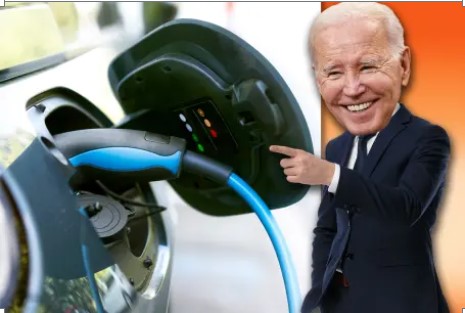
But a bill that will create a clean transportation fuel standard made it through the Legislature, mostly along party lines and not without a fight. Lujan Grisham has expressed support for the bill and is expected to sign it.

The fossil fuel industry didn’t support either bill. It simply attacked the proposed Oil and Gas Act changes more fervently. That measure would have hit drillers’ pocketbooks more directly by raising bonding insurance rates on wells and removing the cap on penalties they would pay for breaking rules.

Operators and industry representatives decried how the bill would have eliminated the cap on penalties and increased the maximum bonding amounts drillers pay upfront as insurance to $10 million from the current $250,000.

Opponents said the bill would disproportionately hurt smaller operators. Several business owners said they would either go under or would have to move to a neighboring state.

The legislation to change the Oil and Gas Act “had too many complex issues bundled into one massive bill that would have decimated small producers and dramatically stalled overall future oil and gas production in New Mexico,” Jim Winchester, executive director of the Independent Petroleum Association of New Mexico, wrote in an email. “[Association] members are grateful that the Legislature recognized the overreach of the numerous regulatory proposals packed into this monstrous, activist-driven bill.”

A Tale of Two Energy Bills