Santa Fe New Mexican (Feb. 4, 2026) – For the duration of the 2026 legislative session — which ends at noon Feb. 19 — Earth, Wind and Fire will focus on a different environment-related bill each week.
This week’s legislation, House Bill 80, Oil and Gas Conservation Tax Act Changes, was recommended by two newsletter readers. Thanks for suggesting!
House Bill 80: Oil and Gas Conservation Act Tax Changes
The state is on the hook to clean up hundreds of “orphaned wells,” abandoned and unplugged oil and gas wells with no responsible owner or operator who can clean them up.
Two drilling rigs sit in Eddy County in 2020.
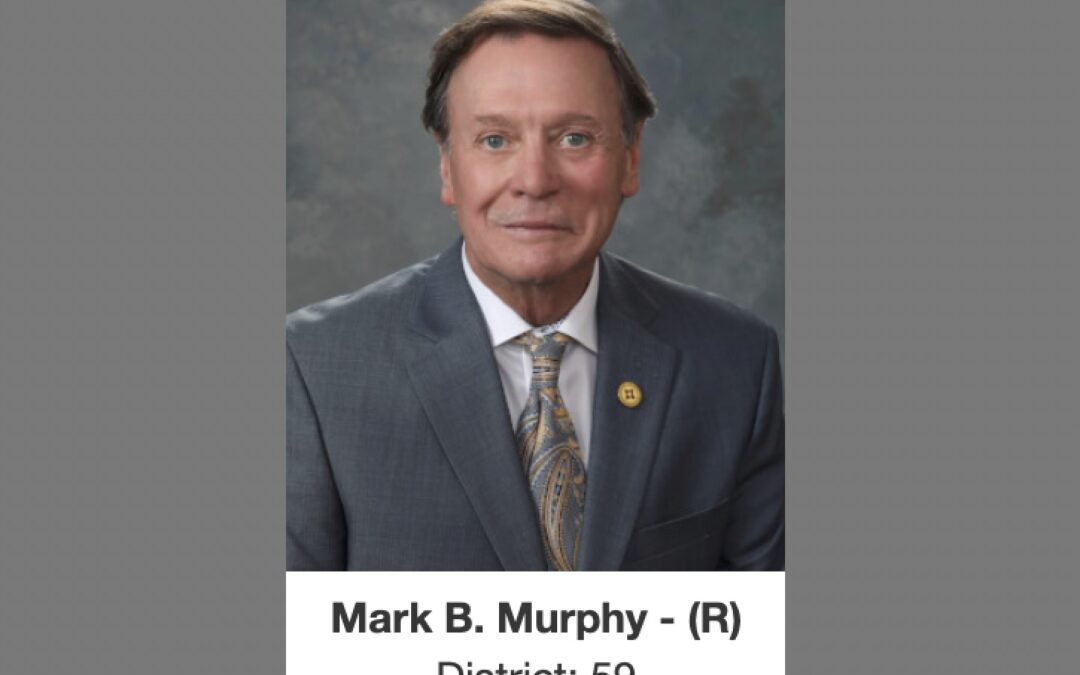
But the fund to clean those wells up has been “swept” several times in its history, said Rep. Mark Murphy, R-Roswell, most recently during the 2008 financial crisis.
Currently, about 20% of the tax on oil and gas operators that funds the Oil and Gas Reclamation Fund is sent to the fund itself.
House Bill 80 would, over time, increase that proportion of the tax that is sent to the reclamation fund, starting with 50% in mid-2027. By 2029, 100% of the tax would be distributed to the reclamation fund. In 2037, that would drop back down to 50% — allowing the fund to build up over that 10-year period, the sponsor Murphy said.
The reclamation fund was established in the 1970s. Funded with the Oil and Gas Conservation Tax, the intent is to raise money to clean up orphaned wells. Last year, the Legislative Finance Committee reported the Oil Conservation Division had plugging authority for about 700 abandoned wells around the state.
The June 2025 report stated there were an additional 1,400 inactive wells the state would likely need to plug but hadn’t yet sought the regulatory authority to do so.
Last week, the House Energy and Natural Resources Committee advanced a committee substitute for House Bill 80, which added back in a provision that would allow up to $250,000 per year in the fund to go toward energy education in the state.
Question: There is a phased approach to increasing the distributions, over time, into the reclamation fund. What is the benefit of doing this in different phases [and] slowly increasing the proportion? And why in 2037 does that amount drop back to 50%?
Answer: It appears to us that the maximum extent of the potential liability is somewhere in the $1 billion range. You’ll hear numbers as high as $1.3 [billion] and probably as low as $300-$400 million. My personal opinion is it’s probably going to be in the $400-$500 million phase over the next 10 to 20 years.
The reason it does that is to allow the agency to ramp up the administrative side, and then the money will begin coming in, and then we want to build up a balance. And we feel like at the end of that 10-year period, first off, we’ll have a better idea of what the liability looks like — and by we, I mean the legislators, Legislature and the relevant agencies.
But the goal is to get somewhere up in the $1 billion range, and if it looks like we need more than that, then we can simply extend that period. If we don’t we can shorten it, but the idea is they’ll ramp up, and then it drops back down … in order to maintain, really, the corpus of the principal amount, and also to provide just ongoing operating funds.
Question: This legislation has been run a couple of times in the past, in different iterations. Are there any substantial differences in this year’s version?
Answer: The version that was run last year and this year are essentially the same. The one that was run last year deleted the energy education portion, and that was brought back in the committee substitute.
Now, how those two differ from the previous iterations, I recall Rep. Nibert … he sort of did it in dollars instead of percentages, is what I recall. He had like $40 or $50 million this year, and then $100 [million] or something. So those would be the basic differences.
Question: In some of the discussions about this bill and about the reclamation fund in general, you’ve brought up that the cleanup process has been impacted by by red tape. … Do you feel like there needs to be other actions taken to address some of those problems in getting that money out the door?
Answer: There’s really only one or two vendors, primarily based in the San Juan County/Farmington area, that have been plugging these wells. So from the procurement side, and I’ve been working with Director [Albert C.S.] Chang and his staff at the Oil Conservation Division on expanding those procurement guidelines, which they were already working on before I even undertook the effort.
But they are now coming out with a statewide pricing sheet and basically, a very robust informational program to service providers to make sure they get registered with the state, go through the paperwork of being an approved vendor, and then start bidding on this work. So there’s a procurement side, there’s some due process issues that have to be undertaken. So the division is going to ramp up to undertake those. … They’ve been plugging about 25 to 50 wells a year, and the goal is to try to get it ramped up to possibly 100 or more, possibly even 200. And that will take care of the backlog pretty quickly. …
If there is legislation, we have not yet been able to identify legislation that will really fix it. … The procurement system in the state is extremely complicated, and I think it would be a huge effort. But I think that the changes and the things [the Oil Conservation Division] have done internally with respect to procurement should solve that issue, and then in terms of sort of the due process side, what I recommended and has the precedent, is that they look at hiring outside counsel to pursue those cases.
So we’re looking at that as well. They might need some additional budget authority to do that, but there is a lot of precedent for situations like this.
Question: There’s a bipartisan group of sponsors, and I believe there was as well last year. Why do you feel like this has … brought in a diverse group of representatives?
Answer: I think that everybody, regardless of what side of the aisle you’re on, has heard a lot in the news and from the regulators about these wells … not being plugged quickly. It’s, I think, in the state’s best interest, in the industry’s best interest, when we have the funds and the ability to do what … needs to be done. I think just everybody agrees that it’s a worthwhile activity, and money is being generated to support it. It’s something that a lot of people have talked about for a long time, and I think we all agree that it’s time to really do something here.
Question: It seems like there’s been some concern from the Energy, Minerals and Natural Resources Department that … changing some of the language around the reclamation fund may require them to clean up wells that would typically fall under the operator’s responsibility. Do you share that concern? Do you think it’s unfounded? Is there a way to address that?
Answer: I believe it’s unfounded, because if the operator has the resources to plug the well, then the last thing they want is to be sued by the Oil Conservation Division and driven into bankruptcy. And if they are in bankruptcy, then then obviously don’t have the resources.
I think that we can look at history and see that the operators, the oil and gas producers in New Mexico, have a long history of responsibly plugging the wells. As a matter of fact, for every well the OCD plugs, industry plugs, I want to say, nine. I think they plug about 10% of the wells.
I don’t see how, under what circumstances, that OCD would be forced into plugging wells that have a legitimate operator with financial resources.
Reclaiming the reclamation fund? Five questions with Rep. Mark Murphy